A Tang dynasty tomb dated to 736 AD, found during a 2018 road reconstruction in Shanxi, is covered with vivid murals that depict everyday activities such as grinding grain, making noodles and pounding rice. The eight panels are painted in the Tang "figures under the tree" style and likely represent the tomb owners — a man who died at about 63 and his wife. One striking figure — a bearded, blond‑haired man shown with camels — is identified as a likely Sogdian 'Westerner,' highlighting Tang‑era Silk Road connections. The murals’ style may link them to the artist associated with Wang Shenzi's tomb, offering new insight into art and cross‑cultural exchange in mid‑Tang China.
Blonde 'Westerner' Discovered in 736 AD Tang Tomb — Vivid Murals Reveal Silk Road Life
Chinese Tomb Mural from 8th Century Has Blonde ManXH4D - Getty Images
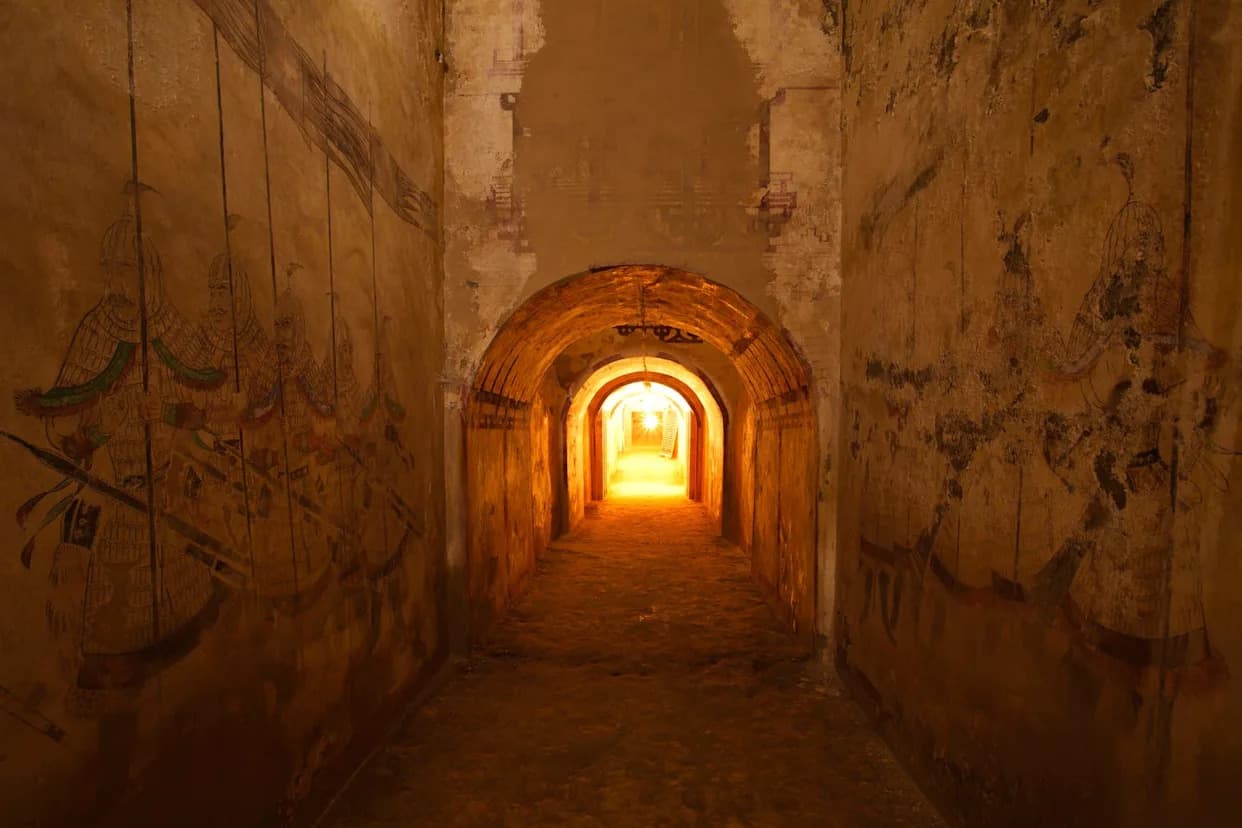
A 736 AD Tang dynasty tomb uncovered during a 2018 road reconstruction in Shanxi Province has yielded an unusually rich set of murals that illuminate daily life and long-distance connections in mid‑Tang China.
Officials only recently disclosed details of the find. Long Zhen, director of the Jinyang Ancient City Research Institute at the Taiyuan Cultural Relics Protection Research Institute, said the tomb’s painted decoration continues from the entrance throughout the burial chamber, with pairs of figures flanking the doorway and narrative scenes along the walls.
Xinhua News Agency - Getty Images
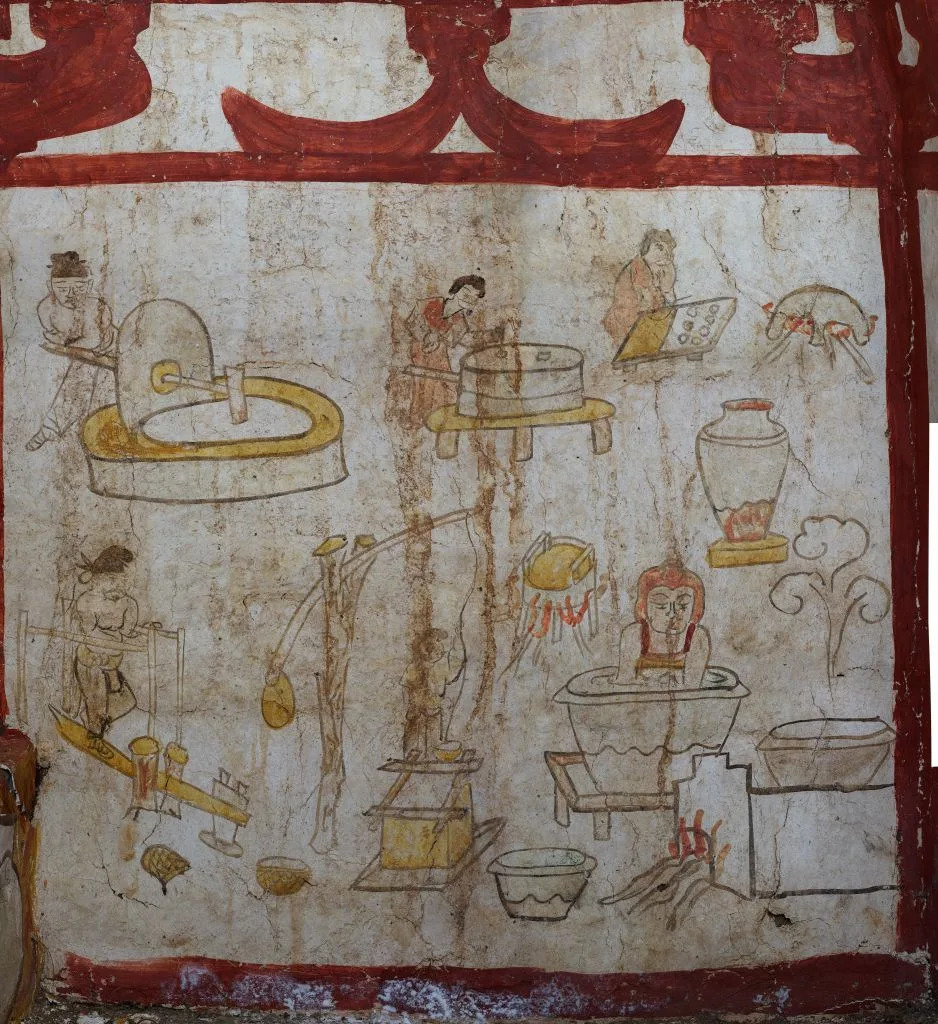
Scenes of Everyday Life
The murals comprise eight narrative panels executed in the popular Tang motif known as “figures under the tree,” which places domestic activities beneath stylized trees. Vivid scenes show women grinding grain with stones, men preparing dough and making noodles, people pounding rice, and others carrying boxes or ceremonial bowls. One report describes women "using oranges" to fetch water — likely a translation ambiguity that probably refers to small water vessels or containers depicted in the paintings.
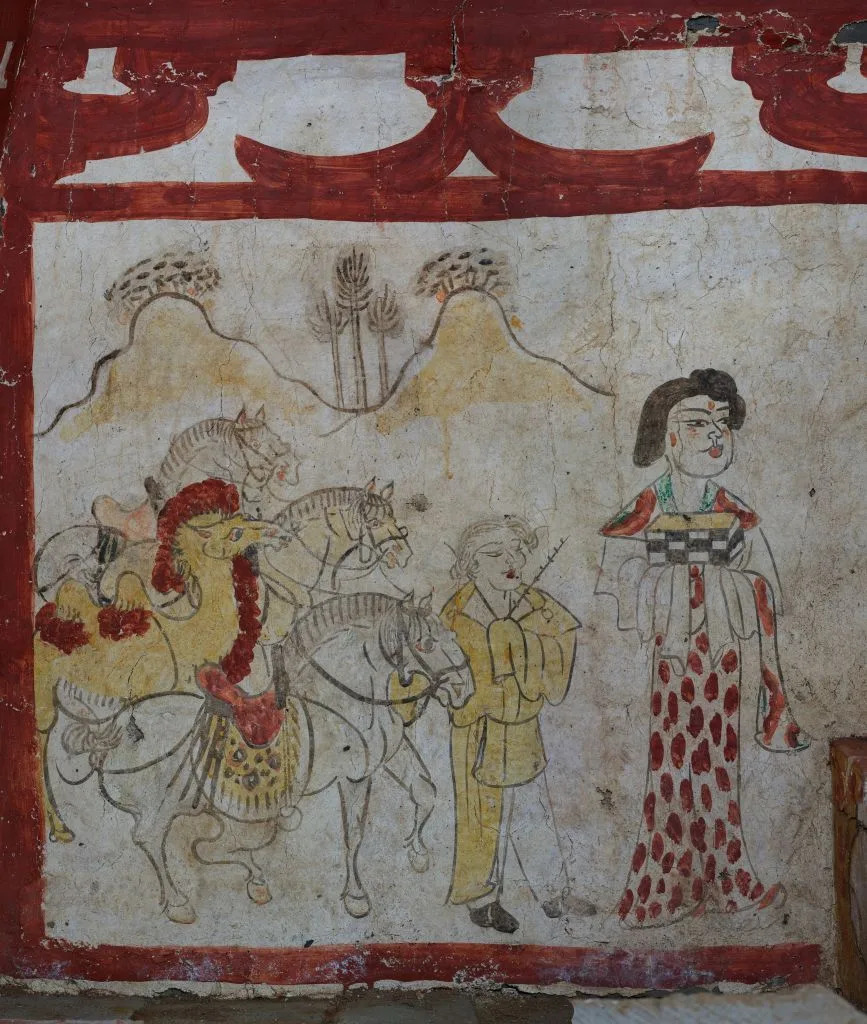
A Surprising 'Westerner'
Most figures appear to be Han Chinese, but one bearded, blond‑haired man stands out. Victor Xiong, a history professor at Western Michigan University who was not part of the excavation team, told Live Science that the painted figure — shown leading camels — is best interpreted as a Central Asian ‘‘Westerner,’’ likely a Sogdian based on facial features and dress. The Sogdians, an Iranian‑speaking people from regions that are now part of Tajikistan and Uzbekistan, were prominent Silk Road merchants and cultural intermediaries in the Tang era.
Xinhua News Agency - Getty Images
Decoration, Style, And Possible Artist
The murals cover nearly every vertical surface of the small brick tomb, including the gates, corridor and the platform that held the coffins; only the floor is undecorated. The domed ceiling departs from domestic scenes with a dragon‑like motif, and painted figures at the gate — wearing yellow robes and swords at their waists — may serve as guardians. Observers note the paintings’ strong outlines, restrained shading and flat perspective typical of Tang mural conventions.
Long Zhen suggested the style resembles murals in the tomb of Wang Shenzi, a significant late‑Tang figure, to such a degree that the same master painter might have been involved — a possibility that, if confirmed, would help trace artists’ networks in this period.
Who Was Buried Here?
Archaeologists estimate the tomb belonged to a man who died in 736 at about age 63; he was buried with his wife. Many scenes repeatedly feature the same two individuals, which led researchers to conclude these recurring figures are probably the interred couple. Because the murals depict mundane tasks in great detail, scholars say they provide rare, intimate insight into domestic routines and responsibilities in mid‑Tang society.
Why It Matters
Beyond the vivid record of chores and household life, the presence of a clearly non‑Han, likely Sogdian figure — depicted with blond hair, a beard and camels — underscores the Tang dynasty’s cosmopolitanism and active Silk Road exchanges. The discovery enriches our understanding of cultural contact, artistic practice and daily life in eighth‑century China, while raising intriguing questions about artists, patrons and international connections at the time.
Note: Some descriptive details (for example, the phrase "using oranges" in field reports) reflect translation choices in media coverage and may refer to small carrying vessels rather than fruit.
Help us improve.