Researchers reconstructed a lost Silk Road corridor — the Great Mongolian Road — using century-old Japanese military maps called gaihōzu. Field verification confirmed about 750 miles of mapped features and at least 50 precise points such as wells, springs, and monasteries that supported camel caravans. The maps, compiled from Russian and Chinese sources and drawn between 1901 and 1922, reveal alternate seasonal tracks and water spacing (~15 miles) that enabled desert travel. Now preserved in libraries and universities, these documents are valuable records for historical geography, cultural heritage, and environmental studies.
Secret Japanese Maps Rebuild a Lost Silk Road: Researchers Trace the Great Mongolian Road
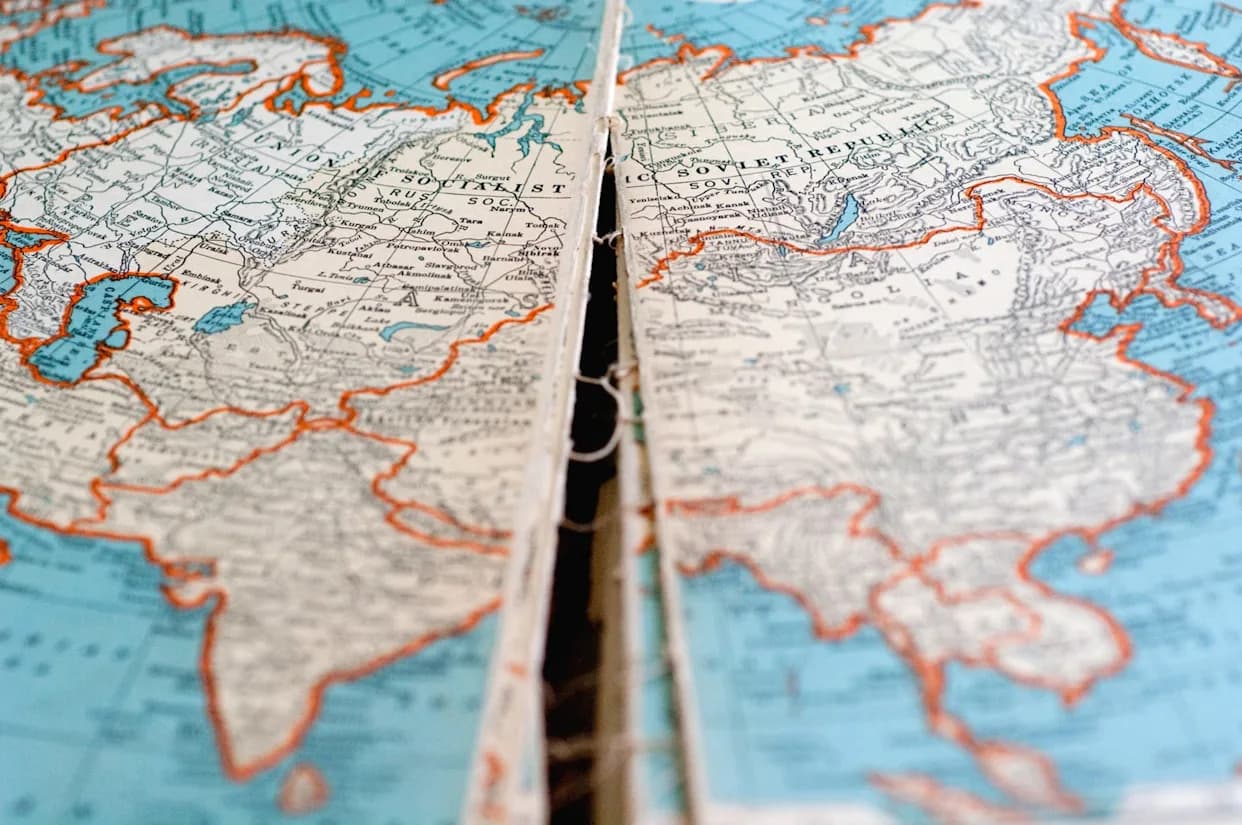
Scholars Found a Lost Trade Route on a Secret MapGlasshouse Images - Getty Images
Researchers have used century-old Japanese military maps to reconstruct a long-lost Silk Road corridor across the Gobi Desert, revealing the detailed network of routes, water points, and settlements that once sustained camel caravans.
How These Maps Were Created
Between 1873 and 1945 the Imperial Japanese Army compiled gaihōzu — literally “maps of outer lands.” Although produced for imperial military planning, these sheets aggregated Russian, Chinese, and other contemporary sources to form one of the most complete cartographic records of East and Inner Asia. The new study focuses on four sheets from the Toa Yochizu ("Maps of East Asia") drawn between 1901 and 1922, covering territory from Mongolia's eastern border with China westward across the Gobi.
What the Maps Reveal
The gaihōzu show the Great Mongolian Road in striking detail: track lines, settlements, oases, wells, springs, and monasteries that together formed an infrastructure enabling long-distance desert travel. Contemporary fieldwork verified roughly 750 miles of mapped features and found at least 50 critical points that matched the historic map locations.
Field teams also observed that water sources along the corridor were spaced at roughly 15-mile intervals — the typical daily distance for a camel caravan — and that the maps sometimes offer alternate tracks reflecting seasonal conditions, water availability, or security concerns. These details demonstrate that historical routes were adaptive, not arbitrary, calibrated to environmental constraints and human needs.
"The gaihōzu capture not merely routes but complete support systems, including water sources, terrain features, and settlements vital for navigation and survival in these harsh arid environments," the study's authors wrote. "By mapping this historical corridor, these once-secret military documents provide valuable baseline data for historical geography, cultural heritage preservation, and environmental change assessment across the landscapes of Asia."
Why This Matters
Although many gaihōzu were classified during World War II and some were destroyed at war's end, thousands of pages survived and were deposited in universities and libraries. Those surviving maps now serve as geographical time capsules: they are valuable for historians, archaeologists, conservationists, and researchers studying environmental change, cultural heritage, and ancient trade networks.
What began as military cartography has thus transcended its original purpose, offering an irreplaceable record of human mobility, trade infrastructure, and landscape transformation across a major but previously obscure segment of the Silk Road.
Help us improve.