Archaeologists excavating near Sizewell in Suffolk discovered an Anglo‑Saxon burial complex featuring unusual "sand burials": sandy silhouettes of two adults and a horse, the latter interred with tack and metal fittings. The human graves included weapons and metal vessels, indicating elite status and possibly a ritual horse sacrifice. The site also yielded a hoard of 300+ 11th‑century silver coins and evidence of activity from the Bronze Age through the medieval period. Further research is underway to learn more about the people who used this prominent coastal ridge.
Eerie 'Sand Burials' of Elite Anglo‑Saxons — and a Sacrificed Horse — Found Near Sizewell Nuclear Site
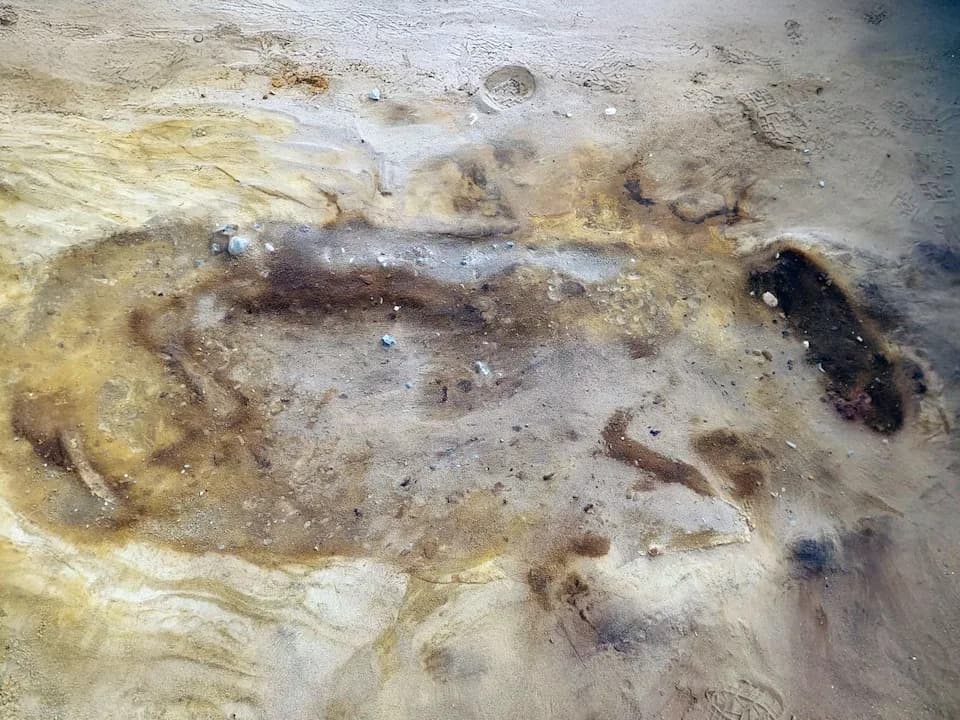
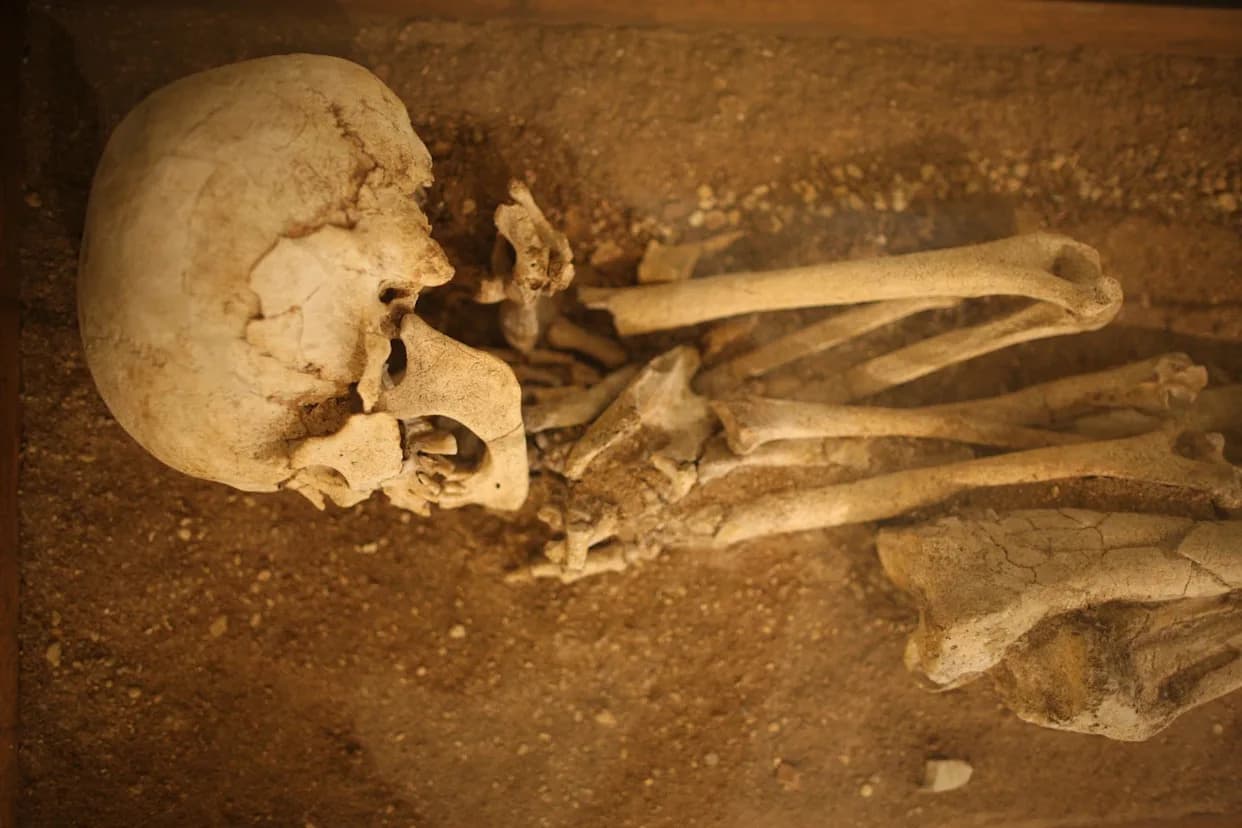
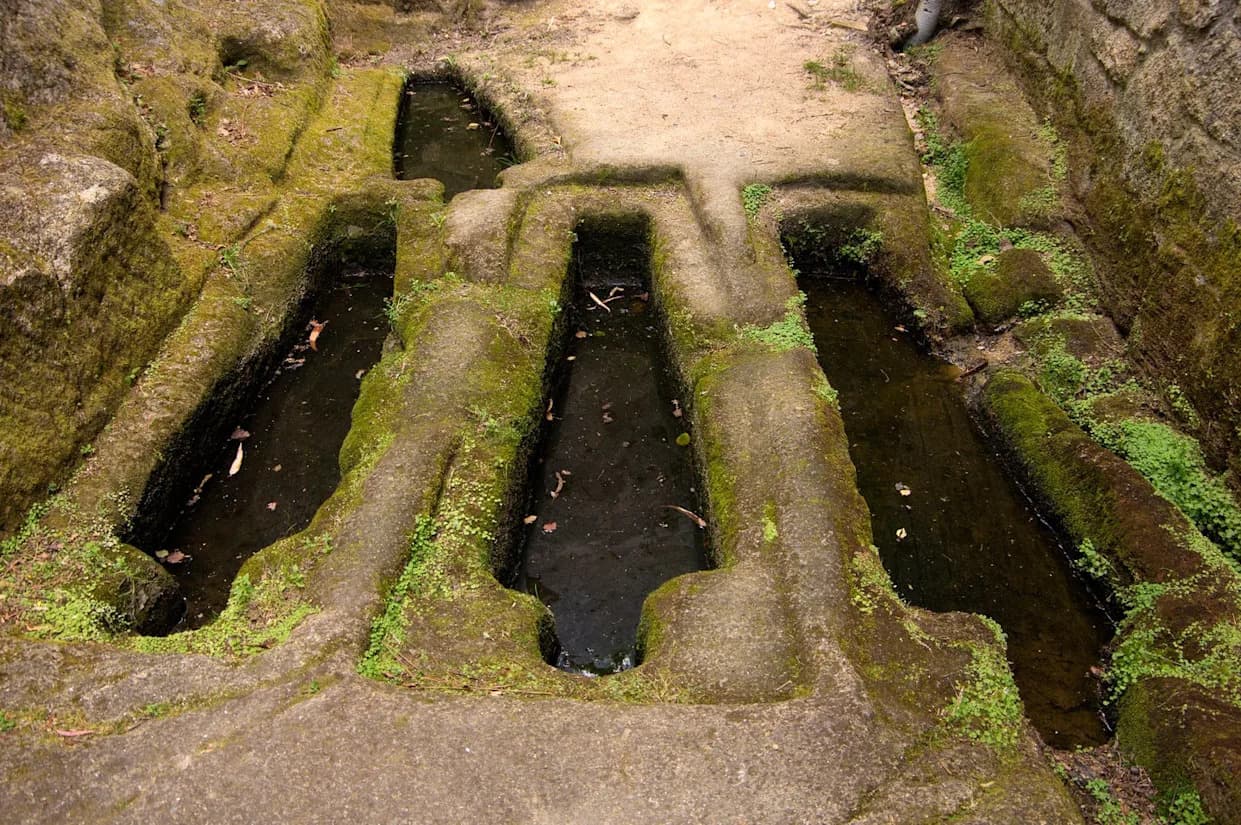
The outline of a horse that was buried with two people in the sixth or seventh century A.D. The acidic soil destroyed the skeletons, so only the outlines remain. . | Credit: Copyright Oxford Cotswold Archaeology
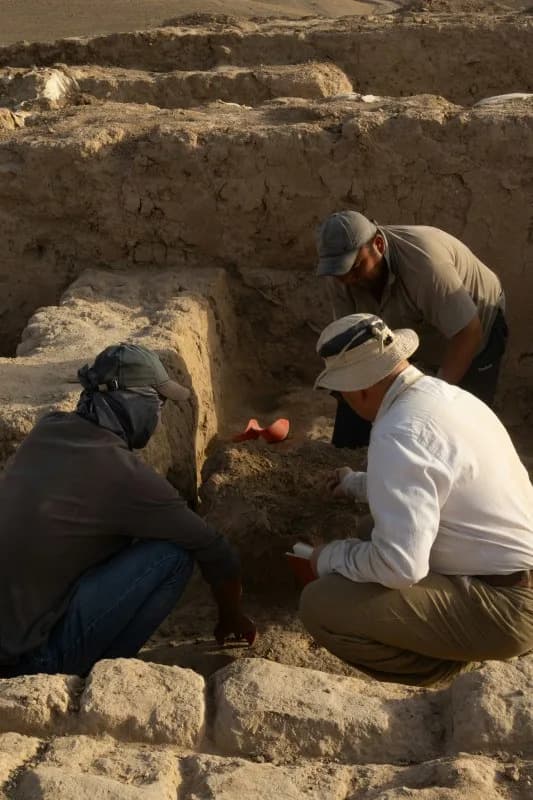
Archaeologists working ahead of planned construction near the Sizewell nuclear site in Suffolk have uncovered a complex burial landscape dating to the Anglo‑Saxon period that includes dramatic "sand burials": sandy silhouettes of two high‑status individuals and a horse.
The excavation, led by Oxford Cotswold Archaeology, revealed at least 11 barrows (burial mounds) along with both cremation and inhumation graves. Much of the site lies on acidic soil that normally destroys bone, but in two graves the faint outlines or impressions of skeletons were preserved in the sand. One pit showed the silhouette of a horse; an adjacent grave preserved the impressions of two humans. Archaeologists describe these as "sand burials" because the organic material is gone and only the sandy outlines remain.
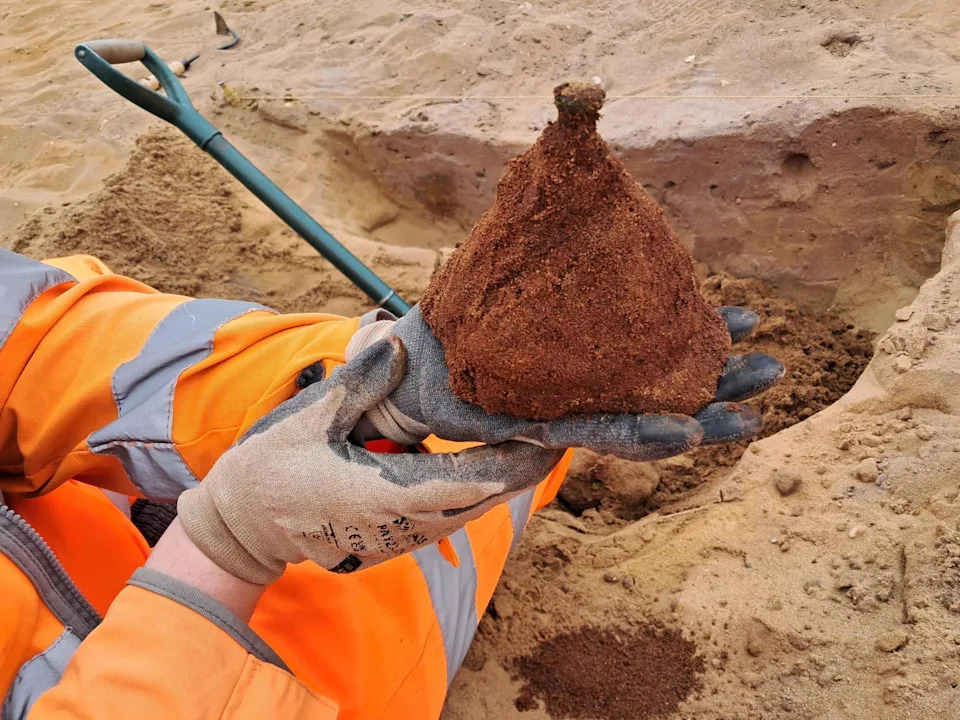
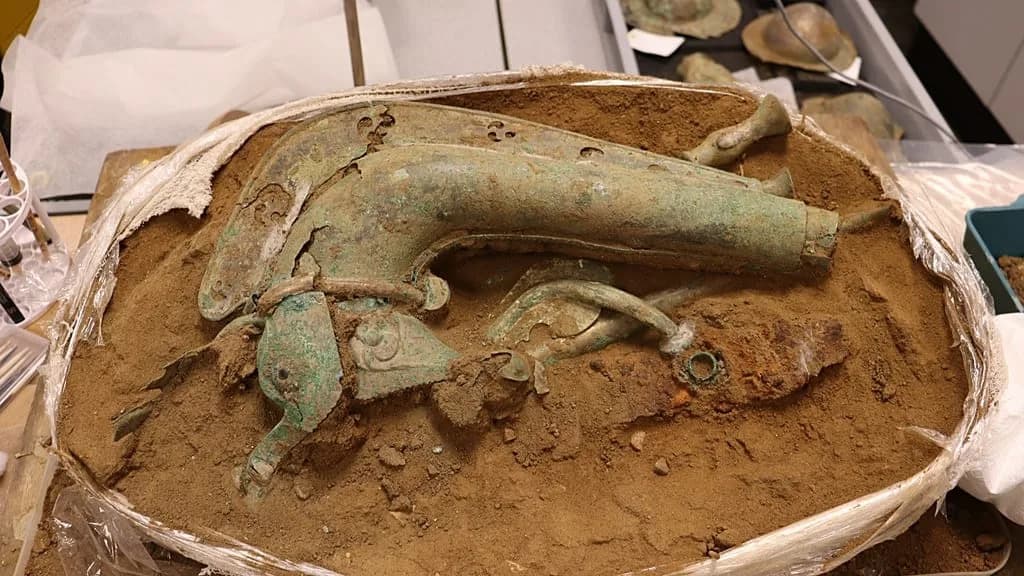
A shield boss was found with the two buried people. It would have been attached to the center of a shield. | Credit: Copyright Oxford Cotswold Archaeology
Rich Grave Goods Suggest Elite Status
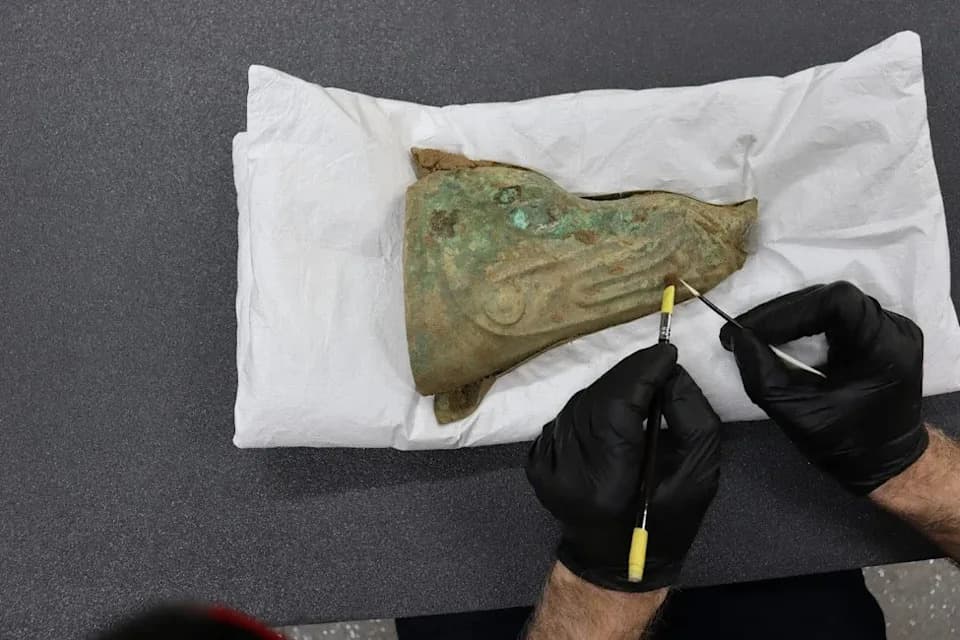
Despite the loss of bones, the graves retained a range of metal and other artifacts. According to Maria Bellissimo, a spokesperson for Oxford Cotswold Archaeology, the horse was buried with its tack intact, including copper‑alloy decorative fittings and what appears to be an iron bit. The two people were interred with a sword, a spear, two shields, an iron‑banded bucket, and both copper and silver vessels — items commonly associated with high status in early medieval England.
"We cannot tell their age as accurately from sandy silhouettes as from preserved skeletons," Bellissimo said, "but it looks like they were both probably full‑grown adults. Evidence indicates the two individuals were buried at the same time, so it is very likely they died together."
Rituals, Landscape And Dating
The burials appear to date to the sixth or seventh century A.D., a period when England consisted of multiple regional kingdoms and soon after the end of Roman rule in Britannia. The presence of weaponry, a horse burial, and copper and silver vessels within a barrow all point to people of elite status. Bellissimo suggested the horse may have been ritually killed to accompany its owners into the grave.
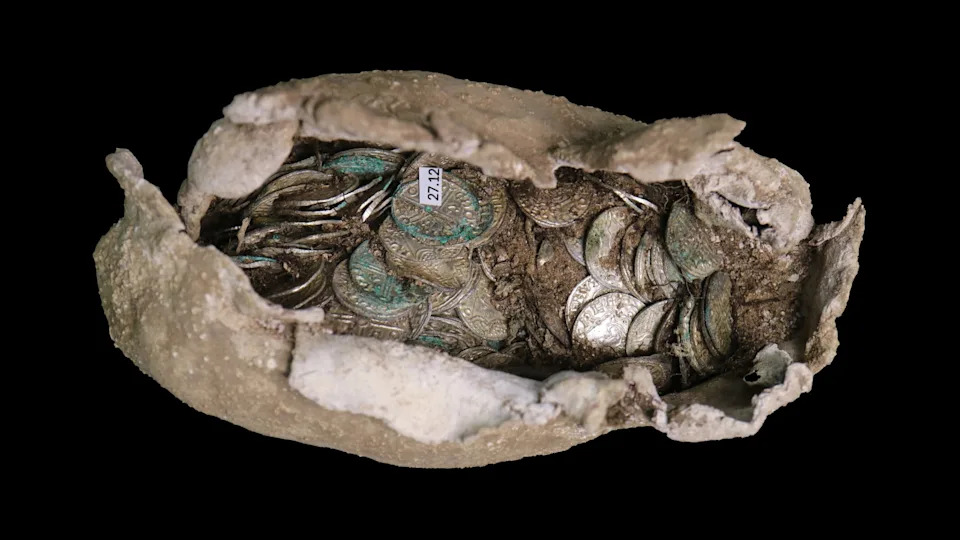
This coin hoard consists of more than 300 coins and was found near the nuclear power plant site. It dates to several centuries after the sand burials. | Credit: Copyright Oxford Cotswold Archaeology
Howard Williams, professor of archaeology at the University of Chester (not involved in the dig), noted that the barrows sit on a ridge "prominent in the local landscape for those travelling inland" from the coast and that the finds fit a pattern of maritime and inland connections along England's east coast during this era.
Other Finds From Multiple Periods
The site has produced material spanning millennia. Excavators recovered a hoard of more than 300 silver coins dating to the 11th century, bundled in lead and cloth — likely a buried savings pot hidden during a period of unrest. Earlier activity at the location includes a Roman‑period pottery kiln (A.D. 43–410), an oak ladder dated to the Iron Age (c. 800 B.C.–A.D. 50), settlement remains with Bronze Age features (c. 2300–800 B.C.), and numerous medieval ovens (roughly A.D. 600–1500).
Research and conservation work on the finds is ongoing. Together, the discoveries promise to add important detail to our understanding of funerary practice, social status, and long‑term landscape use in the emerging East Anglian kingdom after Roman Britain.
Help us improve.