The fragmented suit unearthed in Qinghai Province has been confirmed as gilded armor belonging to a Tuyuhun king, dating to about 1,200 years ago. Conservators disassembled, cleaned, stabilized and cataloged each plate, revealing the metal to be gold rather than bronze. Modern methods — including 3D scanning, microscopy and AR/VR — enabled a careful digital and physical reconstruction. Additional finds included a gold-edged lacquered horse armor and an ornate lacquer tray with gold-and-silver inlay.
Legendary Tang-Era Golden Armor Confirmed and Digitally Restored
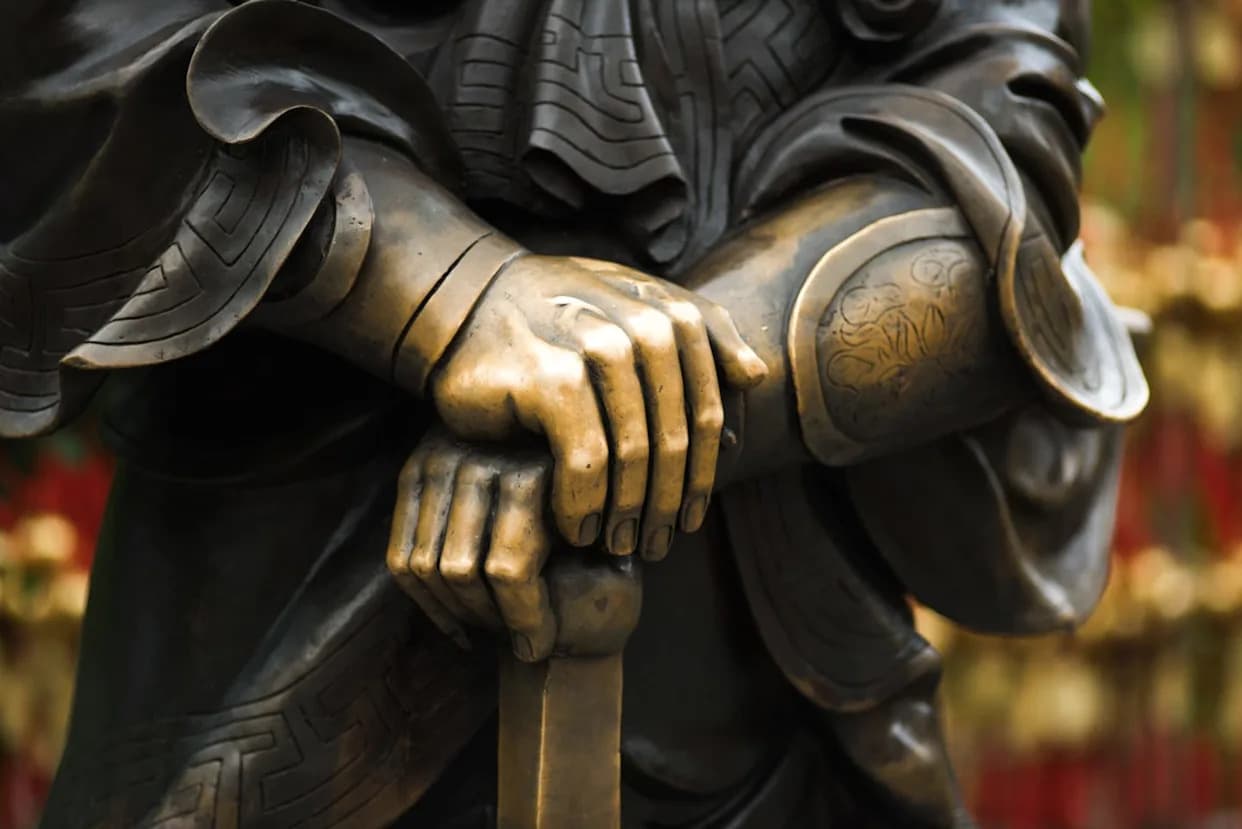
Archaeologists Found a Set of Legendary Gold ArmorMC Yeung - Getty Images
Archaeologists have confirmed that a fragmented suit of gilded armor recovered from a Tibetan plateau tomb belonged to a Tuyuhun king, transforming a long-held Tang dynasty poetic image into archaeological reality.
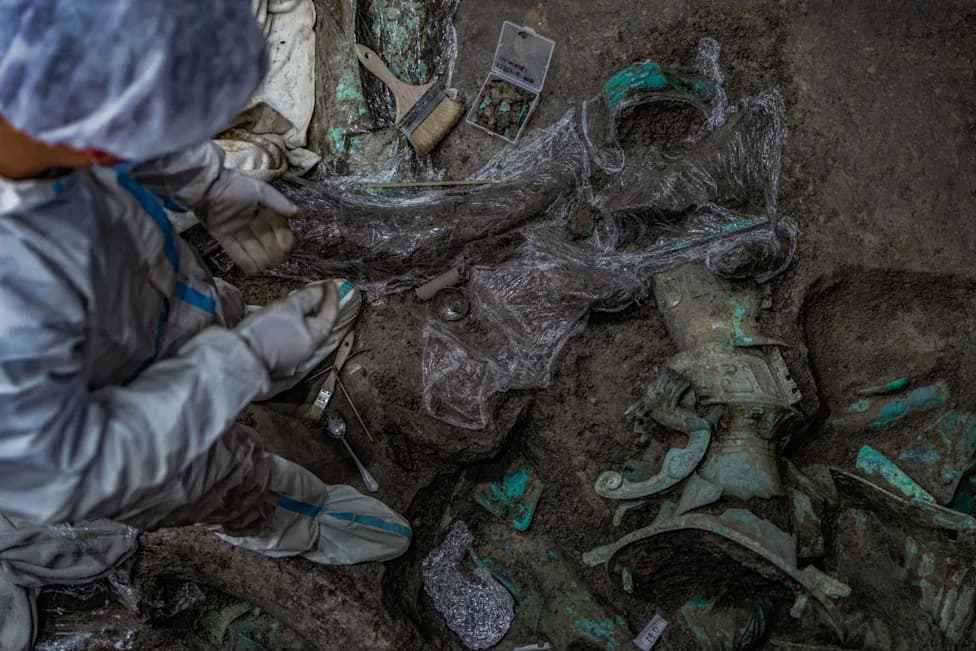
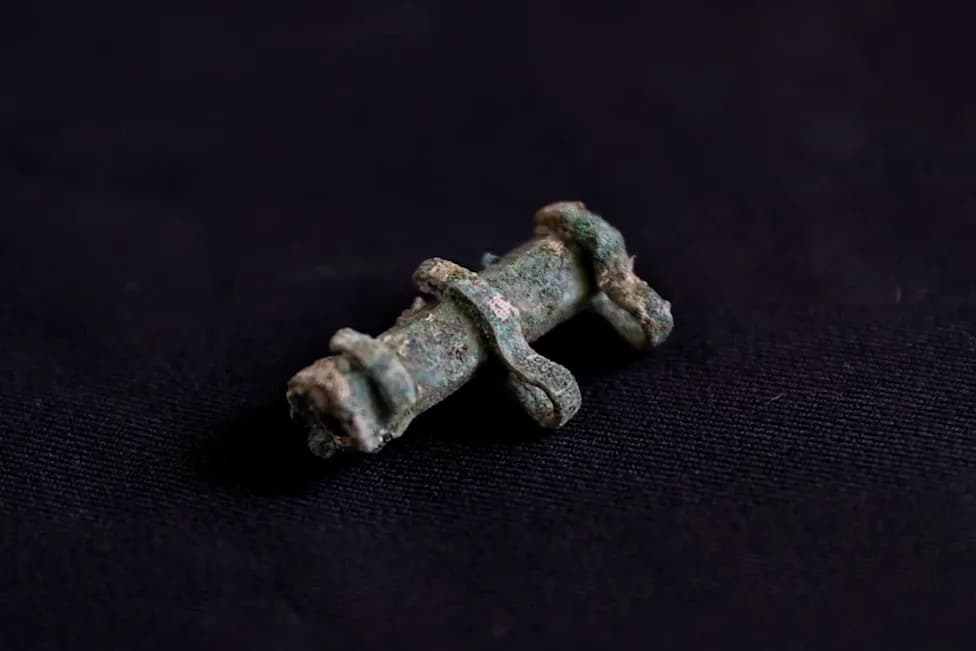
The discovery began in 2018 at the Xuewei No. 1 Tomb in Dulan County, Qinghai Province, when excavation teams unearthed hundreds of thin, rectangular metal plates — many with semicircular lower edges — that were initially thought to be bronze. Fragile and partially looted, the fragments required years of careful study and conservation. Detailed analysis by the Chinese Academy of Social Sciences (CASS) dated the burial to roughly 1,200 years ago and determined the plates were in fact gold.
Conservation and Digital Reconstruction
Conservators used a meticulous workflow of disassembly, layered cleaning, stabilization, and cataloging to preserve each damaged plate. "We adopted a strategy of disassembling the whole into parts and reassembling the parts into a whole, conducting layered cleaning, extraction, and protection while meticulously cataloging each armor plate," said conservator Guo Zhengchen at a CASS press briefing.
To visualize the armor as it likely appeared in life, the team combined traditional conservation with modern techniques: high-resolution microscopy, 3D scanning, and virtual and augmented reality. CASS said this multidisciplinary approach enabled the scientific restoration of "several sets of precious cultural relics that were severely damaged and structurally complex," producing what researchers call the only known physical example of Tang dynasty golden armor.
Context and Associated Finds
Researchers identified the tomb as that of a Tuyuhun king, a ruler from a powerful kingdom on China’s western frontier. The burial’s location along historic Silk Road corridors linked the Tubo empire and the Tang court to regions east and west, underlining the tomb’s geopolitical and cultural significance. The gilded coat of armor—likely ceremonial or elite martial regalia—gives tangible form to Tang-era literary descriptions of "golden armor."
The excavation also recovered a damaged lacquered horse armor trimmed with gold and a lacquered tray for serving grapes with intricate gold-and-silver inlay. Together, these objects illuminate the ceremonial opulence and material culture of frontier elites during the Tang period.
Why This Matters
Beyond rarity, the find bridges poetry and material evidence: an iconic image from Tang literature is now corroborated by archaeology. The combination of painstaking conservation and advanced digital reconstruction preserves fragile originals while making a vivid reconstruction accessible to scholars and the public.
Help us improve.