Technion researchers report SafeWax, a biodegradable, superhydrophobic spray that forms a transparent leaf coating to block fungal spores and reduce disease. Trials on tomatoes, peppers, grapevines and bamboo showed protection without harming photosynthesis, while also filtering harmful UV. Published in Small and funded by an EU‑EIC Pathfinder grant, the team estimates SafeWax could cut pesticide use by over 50%, though scaling, supply and reapplication require more study.
Technion’s SafeWax: A Biodegradable Leaf Coating That Could Cut Pesticide Use by Over 50%
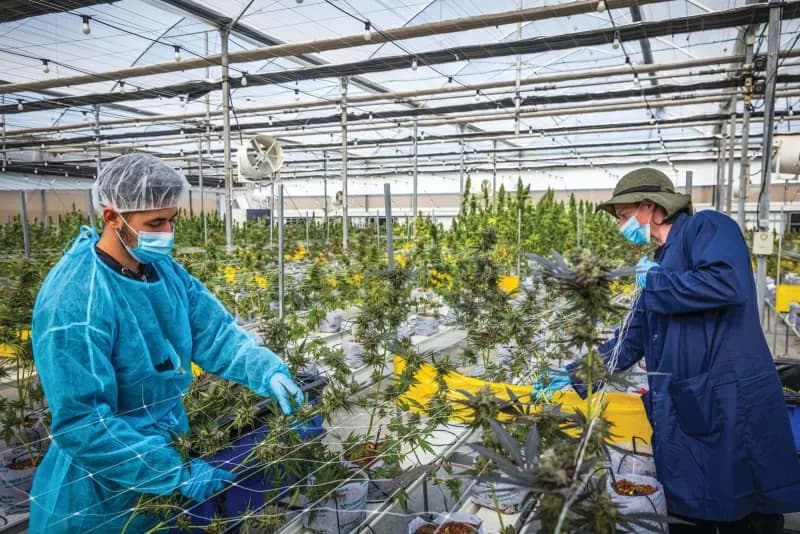
WORKERS TAKE care of cannabis plants at a farm in central Israel, late last year. (photo credit: YOSSI ALONI/FLASH90)
Researchers at the Technion–Israel Institute of Technology have developed SafeWax, a sprayable, biodegradable coating that forms a superhydrophobic barrier on plant surfaces and may reduce chemical pesticide use by more than 50%. The work, led by Dr. Iryna Polishchuk and coordinated by Prof. Boaz Pokroy, was published in the journal Small and funded by an EU‑EIC Pathfinder grant.
What Is SafeWax?
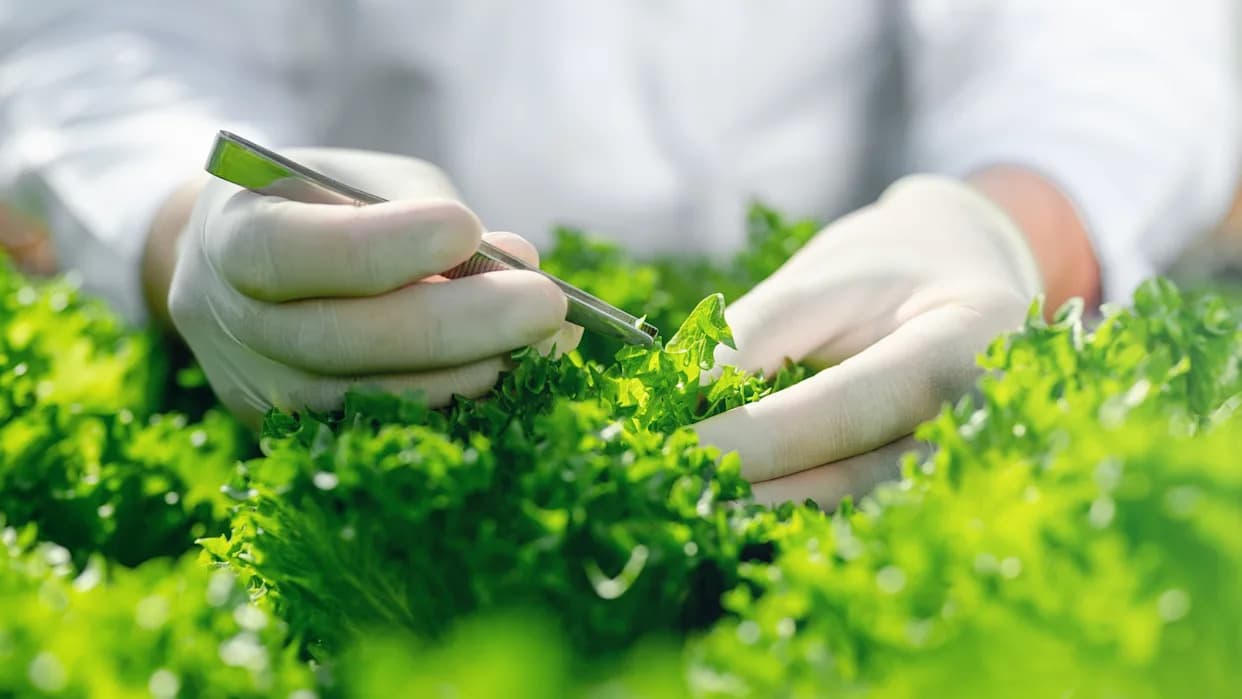
SafeWax is a thin, transparent coating based on biodegradable fatty acids, which can be sourced from food waste. Applied as a simple spray, it creates a uniform, water‑repellent layer inspired by natural plant cuticles (for example, lotus leaves), helping leaves repel contaminants and preventing fungal spores from germinating.
How It Works
The coating’s superhydrophobic surface passively reduces the ability of fungal spores to adhere and germinate on foliage. Because the formulation is transparent to visible light, it does not hinder photosynthesis, while its UV‑filtering properties help shield plants from intense radiation and slow dehydration.
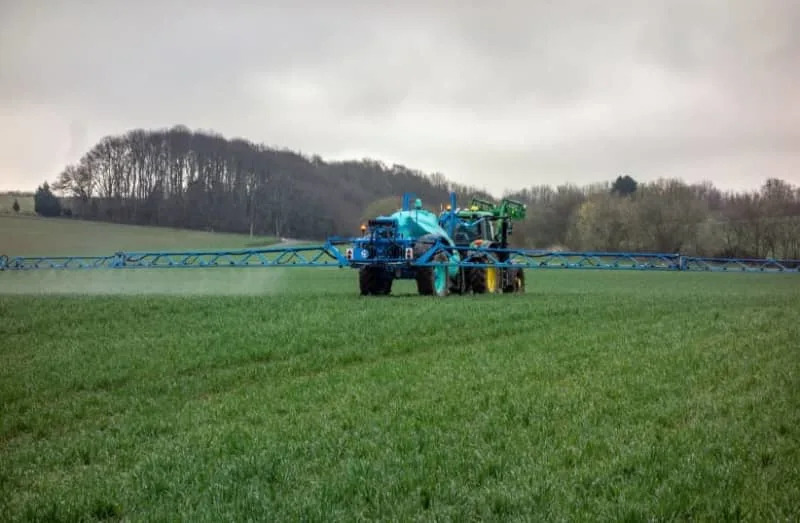
Spray Fertilizer Pesticide Tractor Agriculture. (credit: MAX PIXEL)
Trials and Results
SafeWax was tested on tomatoes, peppers, grapevines and bamboo. Trials showed feasible application and protective effects against fungal disease without measurable impacts on key physiological processes such as photosynthesis. Based on these experiments the research team estimates SafeWax could halve chemical pesticide applications under certain conditions.
Collaborations and Context
The project involved interdisciplinary collaboration at the Technion and with international partners including BASF (Germany), the University of Bologna (Italy), the French Wine and Vine Institute and Eurofins (France). The work aligns with the EU’s Farm to Fork strategy, which targets a 50% reduction in pesticide use and risk by 2030.
Benefits and Caveats
Potential benefits: reduced pesticide dependency, lower environmental contamination, UV protection, and the use of biodegradable, potentially waste‑derived raw materials. Limitations and challenges: SafeWax is not currently formulated to control insects, and broader adoption requires solutions for raw‑material sourcing, large‑scale production, economic competitiveness, and validated reapplication schedules as plants grow new foliage.
"This is an ecological, efficient, and multifunctional alternative for crop protection, especially in view of the challenges that climate change poses to modern agriculture," said Prof. Boaz Pokroy.
Next Steps
While the initial results are promising, the team emphasizes the need for additional field trials, long‑term efficacy studies (including reapplication frequency), supply‑chain development, and scale‑up of manufacturing. Prof. Pokroy expects further development and regulatory steps could bring implementation within a few years if challenges are resolved.
Help us improve.