Researchers using Reflectance Transformation Imaging (RTI) have uncovered nearly 80 previously unseen inscriptions on a plastered corridor wall in Pompeii, including love notes, insults and a faint sketch of gladiators. The corridor — linking the theatres to Via Stabiana and first exposed over 230 years ago — yielded about 300 inscriptions in total, 79 newly documented. The "Corridor Whispers" project, led by teams from Sorbonne and Québec universities with Pompeii authorities, is also building a 3D platform to visualise and annotate the graffiti.
Digital Scans Reveal Hidden Love Notes, Insults and Gladiator Sketches on Pompeii Wall
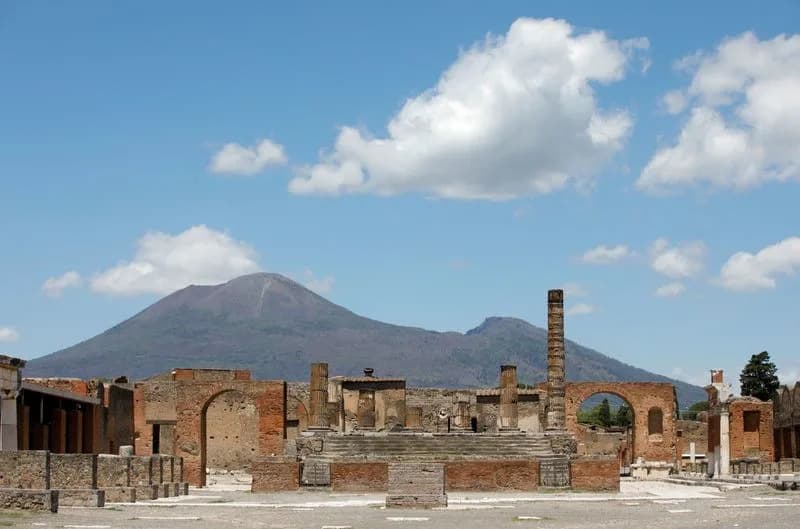
FILE PHOTO: The archaeological site of the ancient Roman city of Pompeii is seen, as it reopens to the public with social distancing and hygiene rules, after months of closure due to an outbreak of the coronavirus disease (COVID-19), in Pompeii, Italy, May 26, 2020. REUTERS/Ciro De Luca/File Photo
New imaging technology has exposed a trove of faint inscriptions on a plastered corridor wall in Pompeii, bringing to light love notes, insults, everyday confessions and a faint gladiator sketch that had been invisible to the naked eye for centuries.
The long corridor links Pompeii's theatres to the busy Via Stabiana. Although it was first uncovered more than 230 years ago, researchers using advanced computational photography have identified roughly 300 inscriptions on the plaster surface — including 79 that had not been documented before.
Archaeologists applied Reflectance Transformation Imaging (RTI), a method that captures an object under many lighting angles to accentuate tiny surface variations. The technique revealed scratches and incisions worn down by time and erosion, allowing scholars to read marks that were previously undetectable.
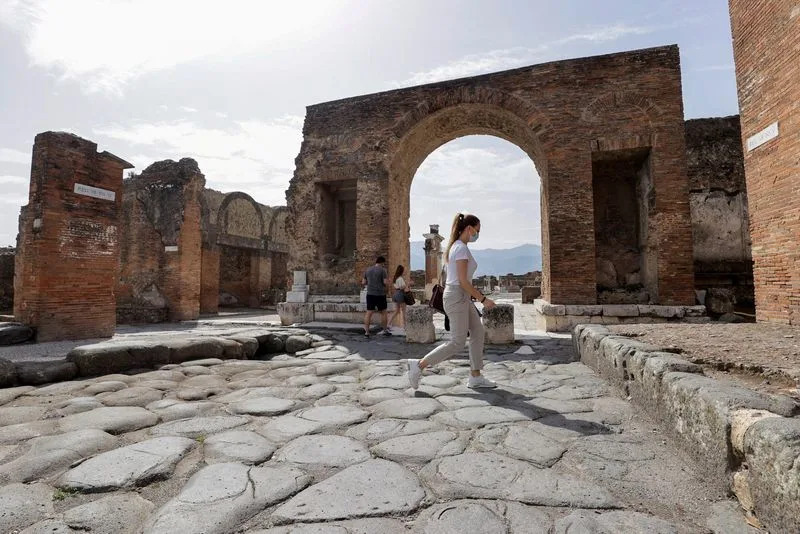
FILE PHOTO: Tourists visit the archaeological site of the ancient Roman city of Pompeii, as it reopens to the public after much of the country became a "yellow zone", loosening coronavirus disease (COVID-19) restrictions, in Pompeii, Italy, April 27, 2021. REUTERS/Ciro De Luca/File Photo
The initiative, called the "Corridor Whispers" project, was led by Louis Autin and Eloïse Letellier-Taillefer of Sorbonne University and Marie-Adeline Le Guennec of Université du Québec, in collaboration with the Pompeii site authorities. Gabriel Zuchtriegel, director of the Pompeii archaeological park, described the work as evidence that "this technology is the key that opens new rooms of the ancient world," noting Pompeii's corpus of more than 10,000 known inscriptions.
Examples of previously recorded graffiti include a hurried farewell: "I am in a hurry. Farewell, my Sava, make sure you love me!" and the plea of a slave, Methe of Atella, asking Venus to favour her beloved Cresto. Among the new finds are the faint outline of two gladiators fighting and the beginning of an intimate line, "Erato loves..."
The research team is developing a 3D platform that will combine photogrammetry, RTI data and epigraphic metadata to enable full visualisation and scholarly annotation of the graffiti, making these everyday traces of ancient life widely accessible to researchers and the public alike.
Why it matters: These discoveries deepen our understanding of daily life and personal expression in Roman Pompeii, demonstrating how modern imaging tools can revive voices from the past.
Help us improve.