Key finding: Scientists decoded structural details of SPARDA, a bacterial self‑destruct system based on argonaute proteins, identifying a conserved "beta‑relay" switch that triggers filament assembly and massive DNA degradation. Methods: The team used AlphaFold plus lab experiments on SPARDA from Xanthobacter autotrophicus and Enhydrobacter aerosaccus transplanted into E. coli. Potential: Because SPARDA appears PAM‑independent, it may enable more flexible diagnostic tools — but the approach is still at an early, exploratory stage.
SPARDA Uncovered: A Bacterial Self‑Destruct System That Could Power Next‑Gen Diagnostics

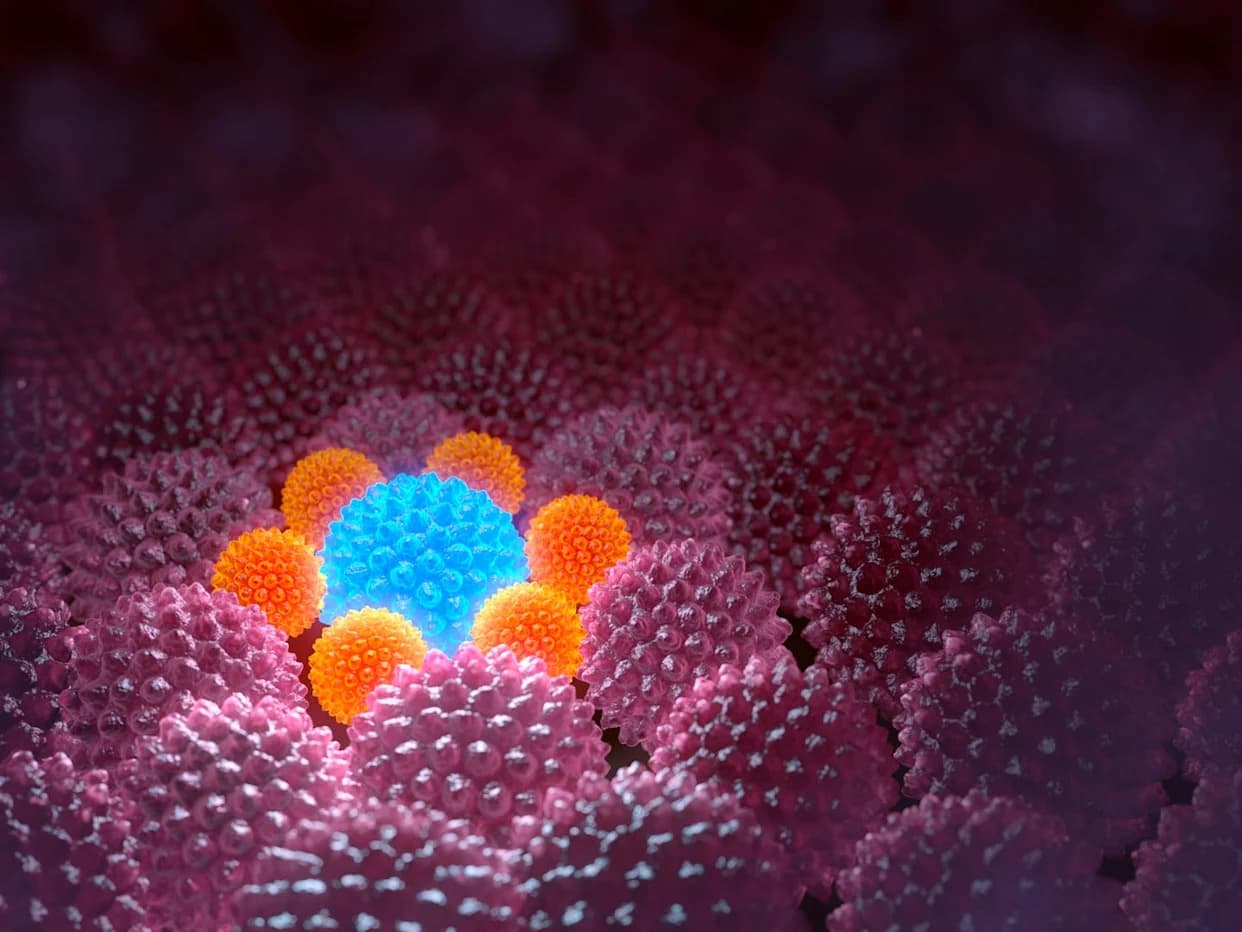
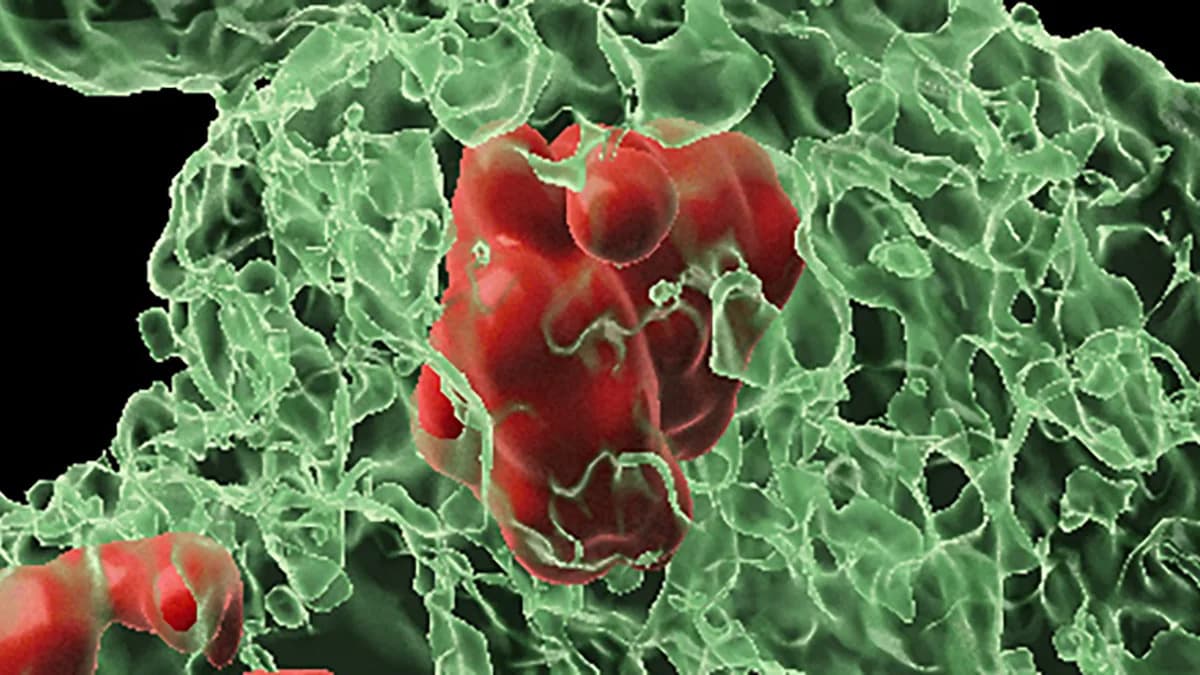
An artist's depiction of SPARDA defending a bacterial cell against an invading virus. | Credit: Justinas Griciunas
Researchers have mapped key structural features of a little‑known bacterial immune mechanism called SPARDA (Short Prokaryotic Argonaute, DNase Associated) and shown how it can trigger extreme DNA degradation to stop infections from spreading. The findings, reported in Cell Research, reveal a conformational switch — a "beta‑relay" — that activates argonaute proteins to form DNA‑shredding filaments. Because SPARDA does not rely on short flanking motifs called PAMs, it could offer a more flexible platform for future diagnostic tools.
What Is SPARDA?
SPARDA is an abortive‑infection defense system found in some bacteria. When these systems detect foreign genetic material such as plasmids or phages, they initiate a self‑sacrifice: degrading the cell's own DNA (and the invader's DNA) to prevent the infection from spreading through the population. This “last‑resort” strategy protects the wider bacterial community at the cost of individual cells.
How the New Study Mapped the Mechanism
Mindaugas Zaremba and colleagues used a combination of laboratory experiments and computational protein modeling — including the AI predictor AlphaFold — to study SPARDA variants from two species, Xanthobacter autotrophicus and Enhydrobacter aerosaccus, after transplanting their gene clusters into Escherichia coli for controlled study. Their molecular analysis identified a conserved "activating region" in argonaute proteins that they named the beta‑relay.
"SPARDA systems were demonstrated to protect bacteria from plasmids and phages by degrading the DNA of both infected cells and invaders, thereby killing the host cell but at the same time preventing further spread of the infection within the bacterial population," said study co‑author Mindaugas Zaremba.
Beta‑Relay and Filament Formation
When the beta‑relay senses a qualifying foreign sequence, it undergoes a conformational change that enables argonaute proteins to interact and assemble into long, helical chains. These filamentous assemblies have potent DNase activity: they nonspecifically cleave nearby DNA, destroying both host and invader genomes to stop phage replication or plasmid propagation.

An argonaut octopus, for which argonaute proteins are named. | Credit: atese/Getty Images
Broader Occurrence and the Role of AlphaFold
Using AlphaFold, the team scanned related argonaute proteins and repeatedly found the beta‑relay motif, suggesting it is a widespread structural feature in this class of bacterial defense proteins. The combination of computational prediction and experimental validation strengthened their model of how SPARDA is activated and executes DNA degradation.
Potential Biotech Applications — And Important Caveats
The authors propose that SPARDA could be repurposed for biotechnology, particularly diagnostics. Unlike many CRISPR systems that require short PAM sequences adjacent to the target, SPARDA appears PAM‑independent, which could allow detection of a broader range of genetic targets without needing to match PAM requirements.
However, SPARDA research is at an early stage. Practical applications would require engineering to control activation, ensure safety, avoid unintended self‑destruction, and meet regulatory and biosecurity standards. Delivery, specificity, and off‑target effects are realistic technical hurdles. Any translation into diagnostics or therapeutics will need extensive validation and ethical oversight.
Why This Matters
CRISPR transformed biotechnology and earned a Nobel Prize, but it is only one of many microbial defense systems with engineering potential. SPARDA's distinct mechanism—an accuracy‑tuned, last‑resort self‑destruct triggered by a conserved beta‑relay—adds to the toolbox of molecular systems scientists can study and, possibly in time, adapt for human applications.
Bottom line: The study clarifies how SPARDA's argonaute proteins use a beta‑relay switch to form DNA‑degrading filaments, and it highlights the system's potential advantages for diagnostics — while underscoring that practical use is still speculative and will require further research.
Help us improve.