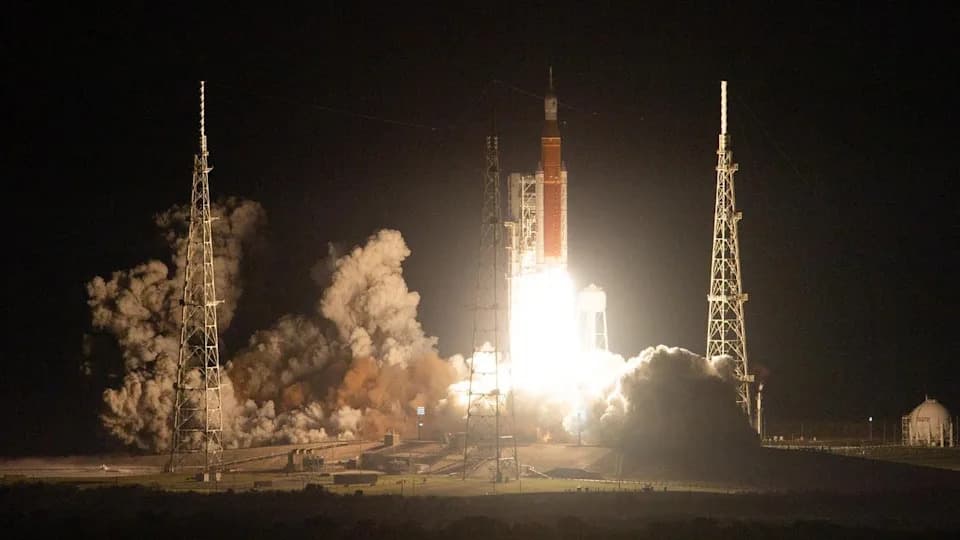
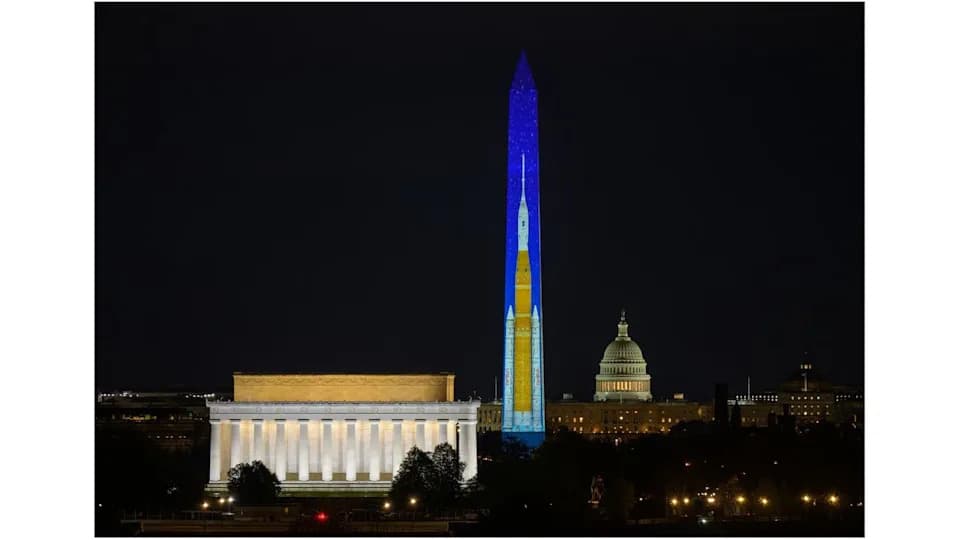
NASA is preparing to roll the fully stacked SLS rocket and Orion capsule to Launch Pad 39B as it closes in on Artemis 2, the agency’s first crewed lunar mission in over 50 years. The 10-day mission will carry four astronauts on a flyaround that will send Orion about 4,700 miles beyond the far side of the moon to validate systems for future landings. NASA has named three launch periods between Jan. 31 and Apr. 10, with specific short windows in February, March and early April. Teams will complete a wet dress rehearsal and a flight readiness review before a final launch date is chosen.
Artemis 2 Nears Launch: NASA Rolls Out SLS Stack and Names Flight Windows for Moon Flyaround
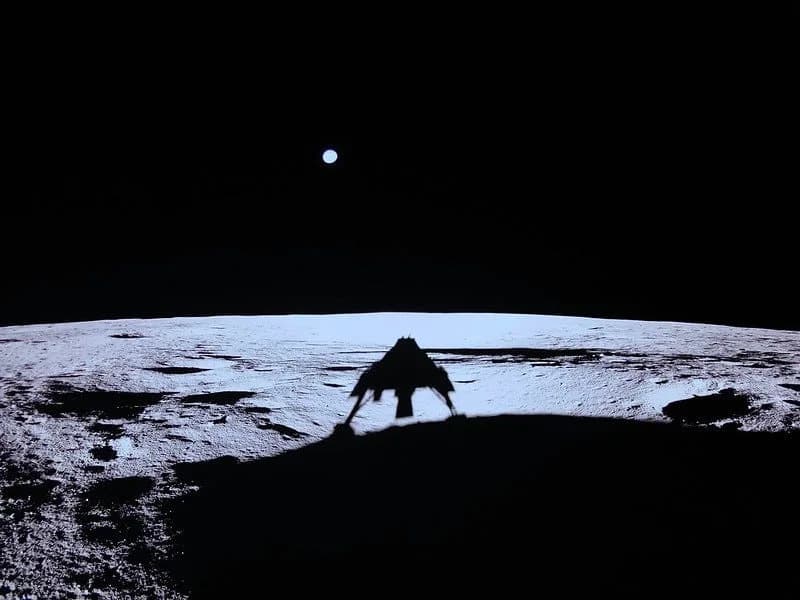
Firefly's Blue Ghost lunar lander captures its shadow on the moon's surface after completing a successful landing March 2 near a volcanic feature on the moon called Mons Latreille. The vehicle became the first of two landers manufactured by a U.S. company to reach the moon is 2025 in crucial missions to lay the groundwork for NASA to return humans to the lunar surface in the years ahead.
The United States is moving swiftly toward its first crewed moon mission in more than half a century. In the coming days, NASA plans to roll the fully stacked Space Launch System (SLS) rocket and Lockheed Martin-built Orion capsule to Launch Pad 39B at Kennedy Space Center in Florida as final preparations accelerate for the Artemis 2 lunar flyaround.
What Artemis 2 Will Do
Artemis 2 will carry four astronauts on a roughly 10-day mission to circle the moon and validate systems and procedures needed for future lunar surface landings. The Orion capsule is expected to travel about 4,700 miles beyond the far side of the moon before returning to Earth. The crew will not land on the surface, but their flight will be a critical end-to-end test of crewed operations in cislunar space.
The Vehicle And The Rollout
The combined stack stands about 322 feet tall. Boeing and Northrop Grumman built the SLS, while Lockheed Martin built the Orion crew capsule. Once the capsule is mated to the SLS, the integrated vehicle will be moved — a roughly four-mile journey that could begin as soon as Saturday, Jan. 17 — on NASA’s crawler-transporter to Launch Pad 39B. The rollout typically takes several hours; teams will then connect cryogenic propellant lines and conduct pad checks, including a pad ignition test to verify hardware and systems operation.
Launch Windows And Prelaunch Tests
NASA has identified three launch periods that align with the moon’s orbit and the mission’s trajectory and safety requirements. Launch opportunities fall in short windows within those periods; mission managers will pick a final target date after a wet dress rehearsal and a flight readiness review.
Wet Dress Rehearsal: The SLS will be loaded with roughly 700,000 gallons of cryogenic propellants and subjected to a full simulated countdown.
Launch Periods And Opportunities
- Jan. 31–Feb. 14 — Opportunities: Feb. 6–8 and Feb. 10–11
- Feb. 28–March 13 — Opportunities: March 6–9 and March 11
- March 27–April 10 — Opportunities: April 1 and April 3–6
“We have important steps remaining on our path to launch and crew safety will remain our top priority at every turn, as we near humanity’s return to the moon,” said Lori Glaze, acting associate administrator for NASA’s Exploration Systems Development Mission Directorate, in a Jan. 9 statement.
The Crew
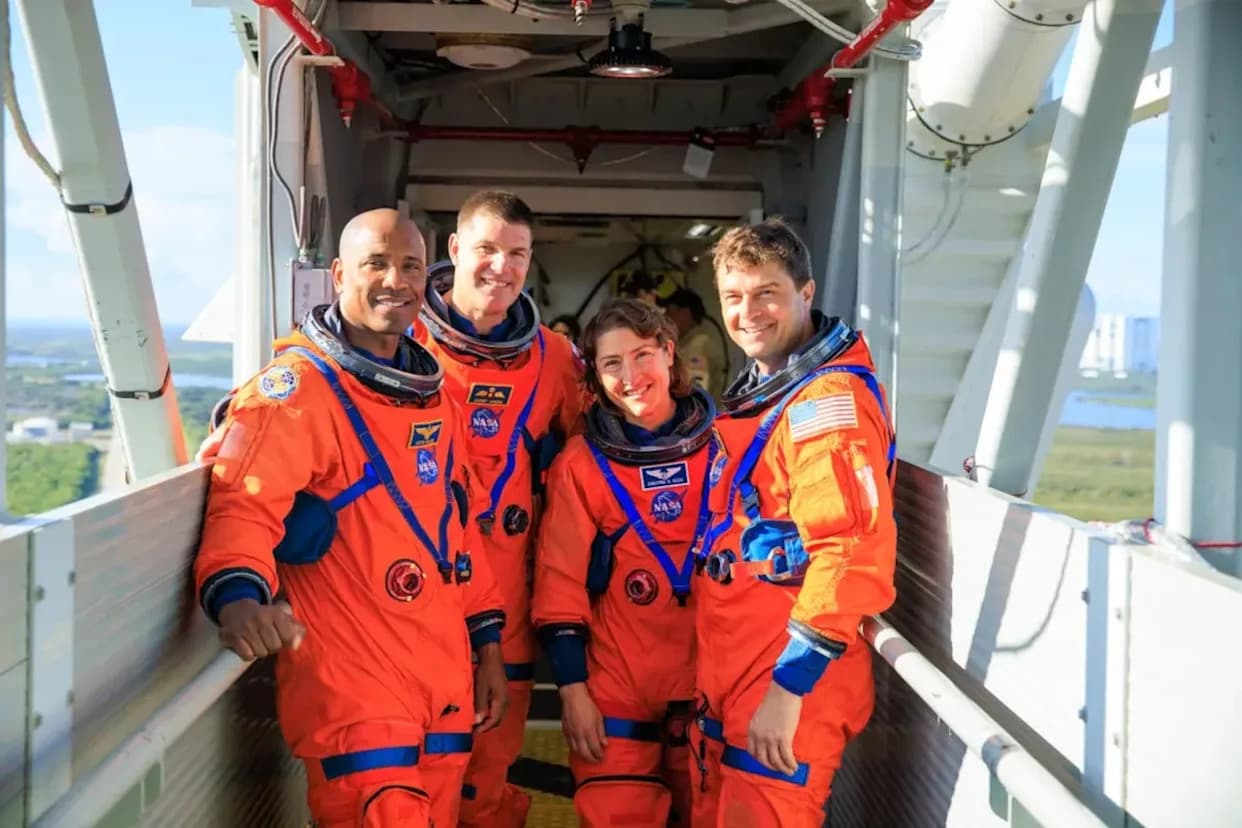
The Artemis 2 crew comprises NASA astronauts Reid Wiseman, Victor Glover and Christina Koch, and Canadian Space Agency astronaut Jeremy Hansen. Koch and Glover are the first woman and first African American, respectively, assigned to a NASA lunar mission; Hansen would become the first Canadian to fly near the moon.
Why Artemis Matters
The Artemis campaign aims to establish a sustainable human presence on the moon — focused on the lunar south pole where water ice may be abundant — to support science and to serve as a stepping stone for future crewed missions to Mars. The program also unfolds amid intensifying global competition in lunar exploration.
As teams complete the wet dress rehearsal and flight readiness review, NASA will announce the final launch date. Artemis 2 follows Artemis 1, which launched Nov. 16, 2022, as an uncrewed test of Orion and the SLS.
Reporting note: This article was adapted from a USA TODAY report and consolidated for clarity and readability.
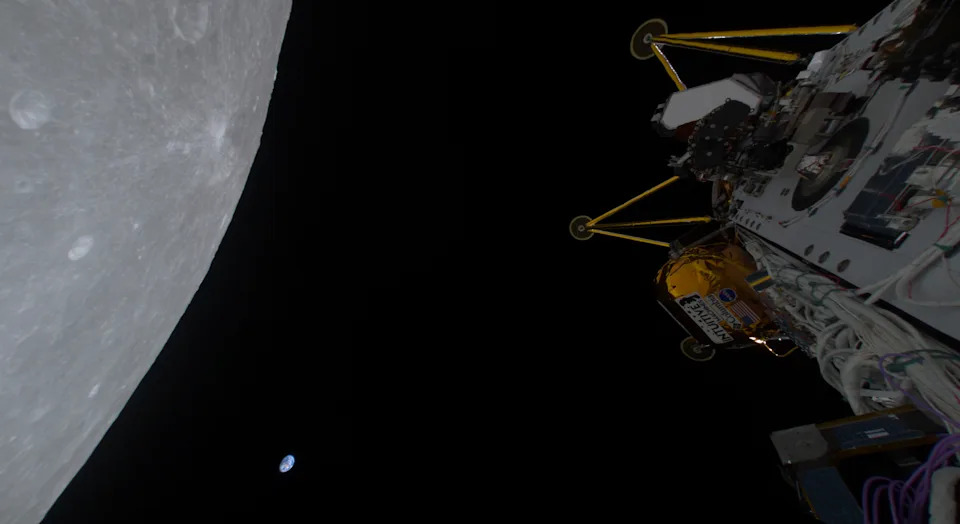
Athena, the lunar lander on Intuitive Machines' IM-2 mission, captured this image of the moon's surface with Earth seen in the distance ahead of a March 6 landing attempt. While the lander was the second U.S. vehicle to reach the moon within a week, it ultimately landed on its side, which hindered much of its mission.

NASA astronaut Suni Williams is helped out of a SpaceX Dragon spacecraft March 18 following a return to Earth after a nine-month stay at the International Space Station. She and NASA astronaut Butch Wilmore crewed the Boeing Starliner, which had launched in June 2024 on a failed test flight that was meant to return them to Earth a few days later.
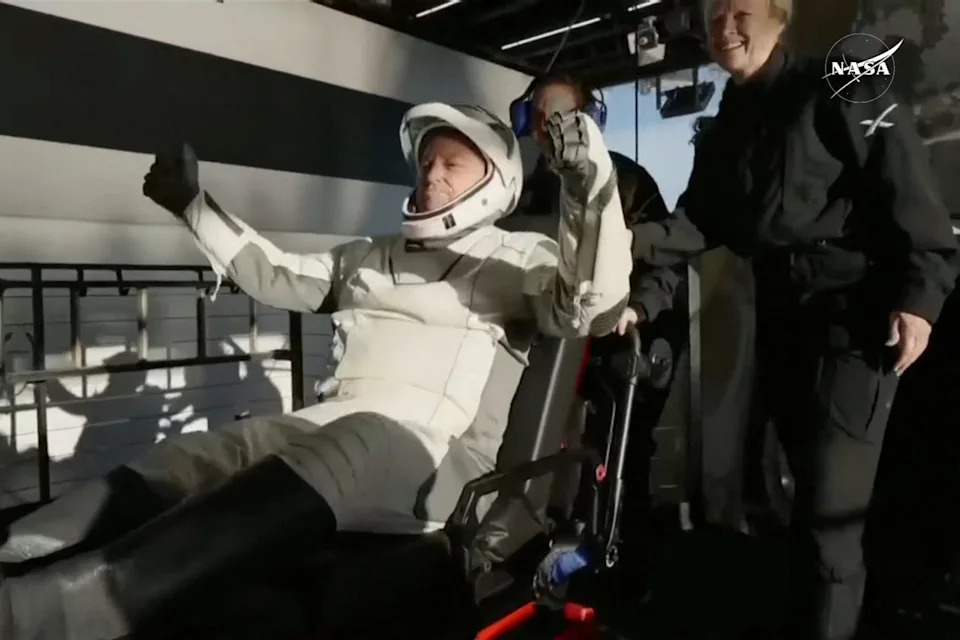
Butch Wilmore reacts after he and Suni Williams and two other astronauts splashed down March 18 in a Crew Dragon space capsule following their return to earth from the International Space Station off the coast of Florida. The astronauts' extended stay at the orbital outpost dominated the news cycle for months.
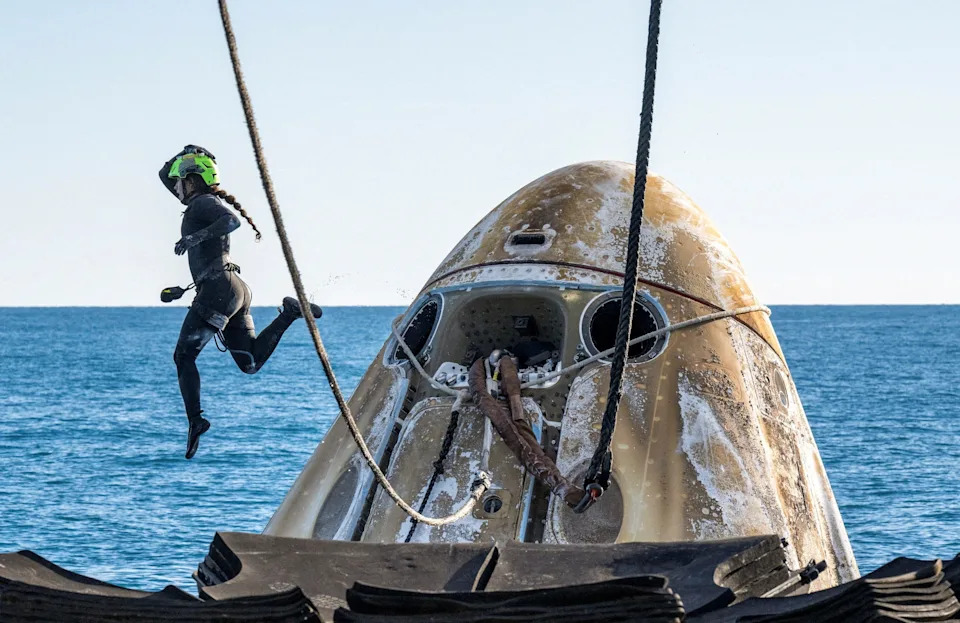
A SpaceX support team member is seen airborne while working to lift the SpaceX Dragon capsule that returned the Starliner astronauts and two others onto a recovery vehicle following its landing off the coast of Florida.

This picture shows the crew of a privately-funded mission known as Fram2, from left to right, mission specialist and medical officer Eric Philips, mission commander Chun Wang, pilot Rabea Rogge and vehicle commander Jannicke Mikkelsen on March 19, 2025 in Hawthorne, California. Launched March 31 from Florida using a SpaceX Dragon capsule, the mission became t first ever human spaceflight over the Earth's polar regions.
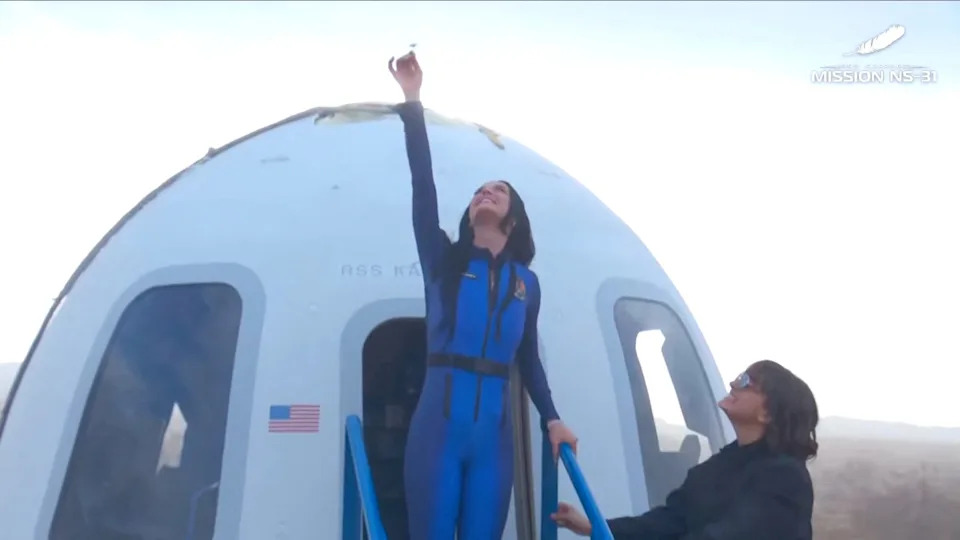
Pop musician Katy Perry emerges April 14 from Blue Origin's New Shepard capsule in West Texas following a brief flight to the edge of space. Perry was part of an all-women crew that also included broadcast journalist Gayle King that took the ride from Blue Origin's facility called Launch Site One. The high-profile launch attracted plenty of headlines and even drew some backlash from those who viewed the mission as a wasteful publicity stunt.
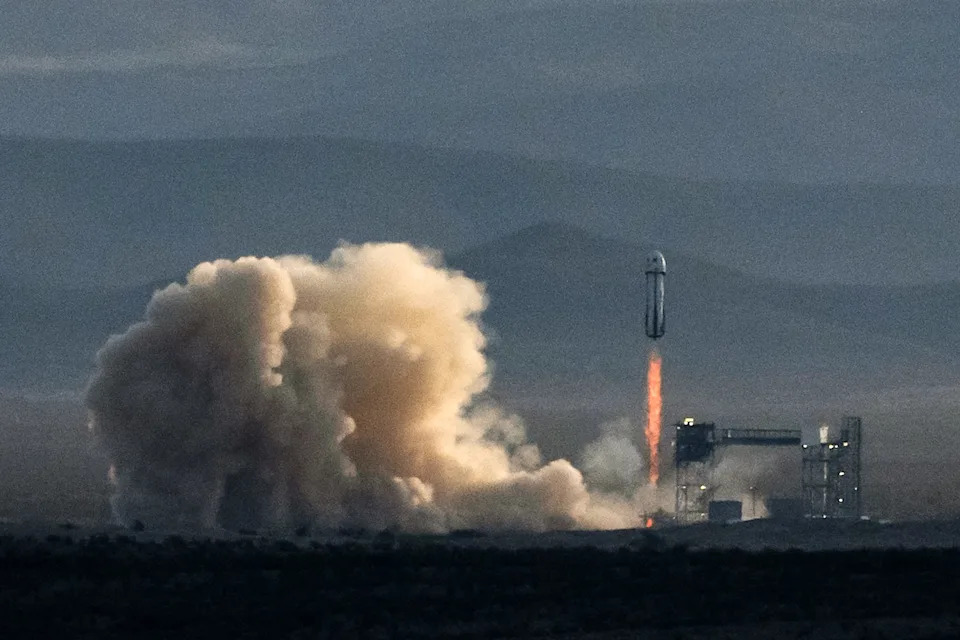
Blue Origin's New Shepard rocket carrying astronauts Aisha Bowe, Amanda Nguyen, Kerianne Flynn, Gayle King, Katy Perry, and Lauren Sanchez lifts off April 14 from Launch Site One near Van Horn, Texas. Blue Origin has since launched five more human spaceflights on the New Shepard in 2025.
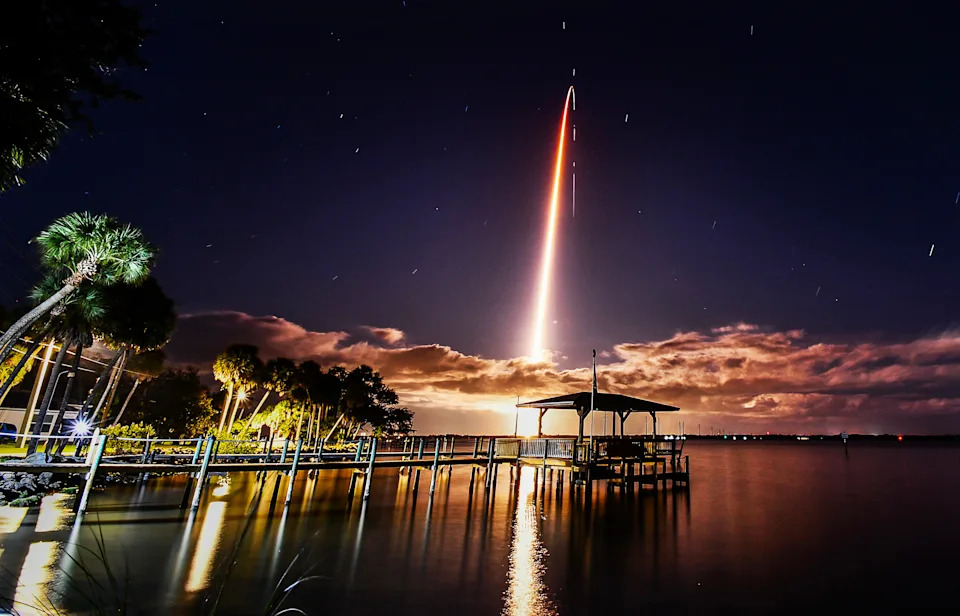
This photo depicts a United Launch Alliance Atlas V rocket carrying the latest batch of Amazon's broadband satellites on Dec. 16 to low-Earth orbit after launching from the Cape Canaveral Space Force Station in Florida. Formerly called Project Kuiper, the venture has since been renamed Amazon Leo. Since its debut April launch, Amazon Leo has deployed 180 of 3,000 satellites planned for its first constellation, which could challenge SpaceX's Starlink.
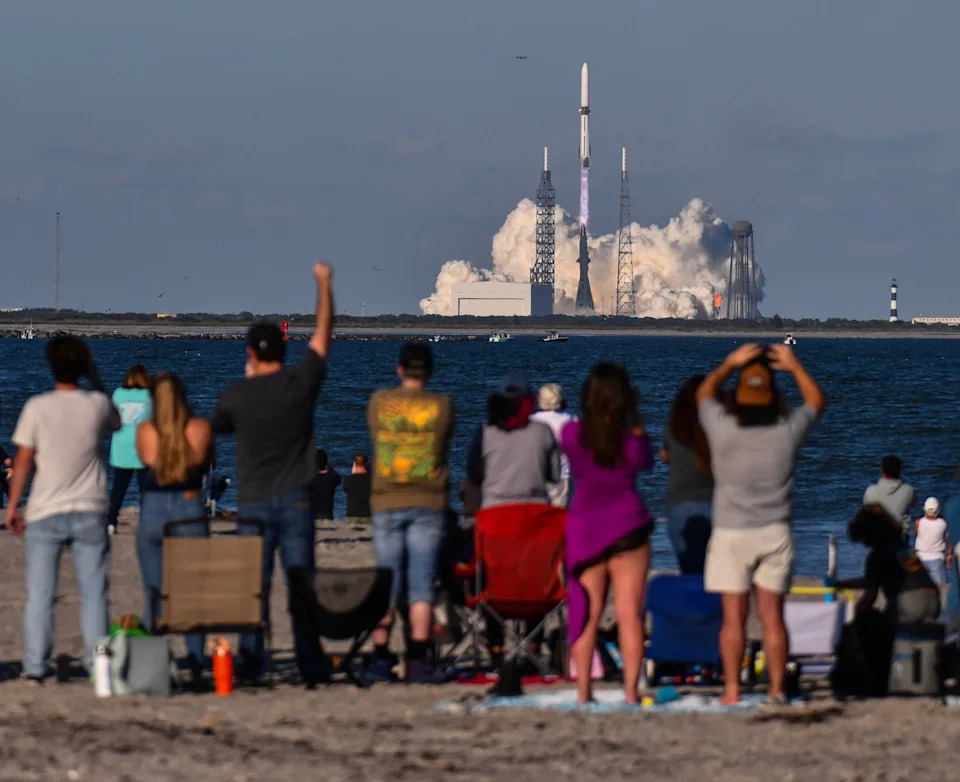
A group of Blue Origin employees with their friends and families gather on the beach in Cape Canaveral for the launch of Blue Origin's second New Glenn rocket in 2025. Following its January debut, the rocket launched for the second time Nov. 13 from Launch Complex 36 at Cape Canaveral Space Force Station, sending NASA's twin ESCAPADE spacecraft on their trek to Mars.
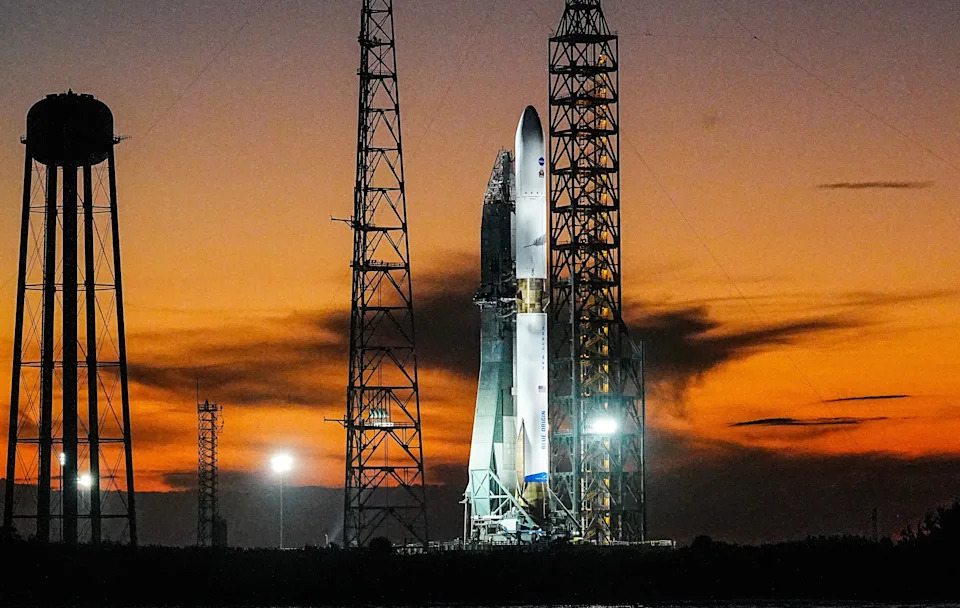
Darkness falls Nov. 9 as a Blue Origin New Glenn rocket is prepped for its second-ever launch from the Cape Canaveral Space Force Station. Blue Origin is developing the towering rocket for heavy-lift missions that could see Jeff Bezos' company compete with Elon Musk and SpaceX.
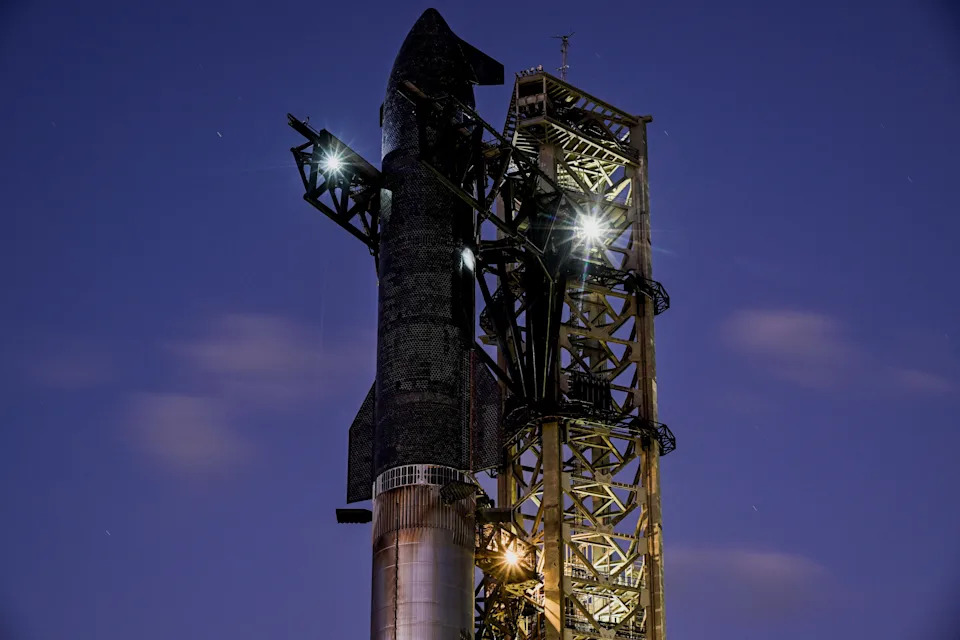
The SpaceX Starship spacecraft sits Oct. 12, 2025 atop the Super Heavy booster before sunrise as preparations continue for its 11th test flight from the company's complex in Starbase, Texas.
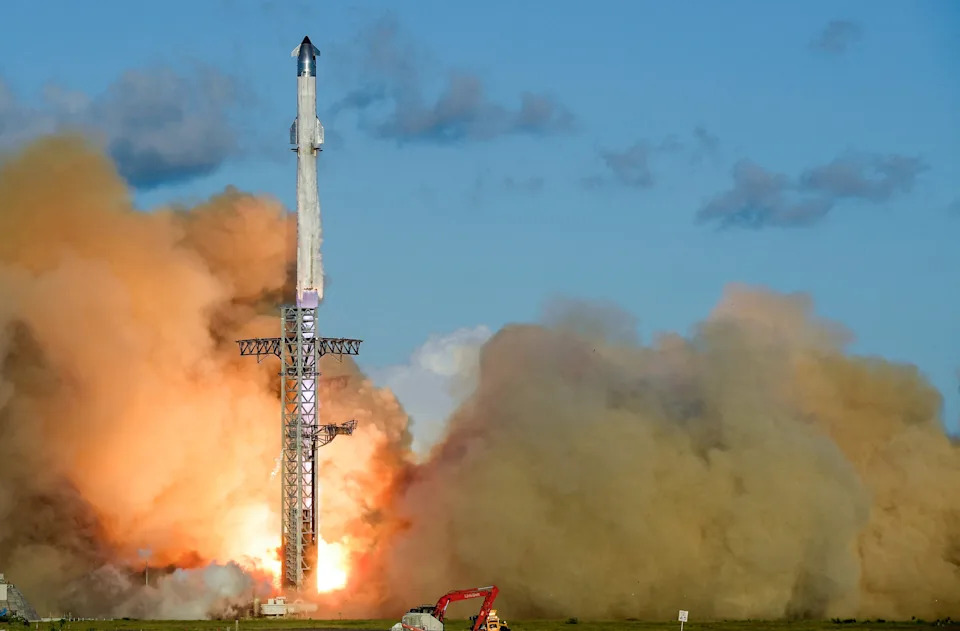
A SpaceX Super Heavy booster carrying the Starship spacecraft lifts off Oct. 13, 2025, on its 11th ever test flight at the company's launch pad in Starbase, Texas. The launch was Starship's fifth of 2025, and second consecutive successful test flight following a year that was early on marked by explosive failures. SpaceX is developing the rocket for future missions that would help NASA astronauts land on the moon and also potentially transport the first humans to Mars.
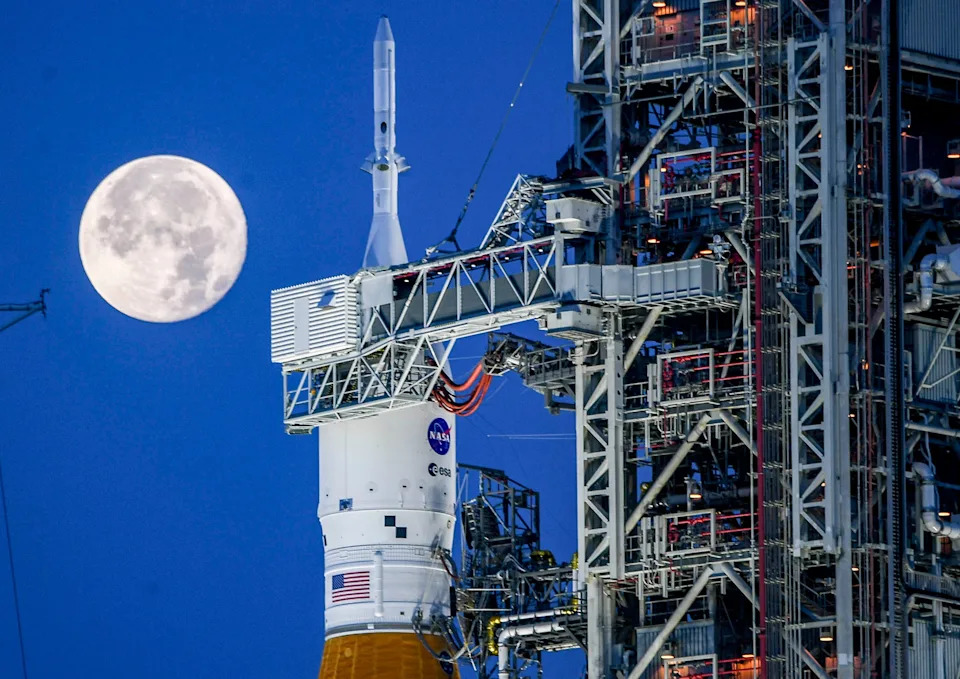
A full moon in June 2022 sets over the Orion capsule atop NASA's Space Launch System rocket just before dawn at Kennedy Space Center. The rocket had been rolled out to launch on the Artemis 1 uncrewed moon mission. Now, the towering rocket will soon be rolled out ahead of Artemis 2, which will have astronauts aboard.
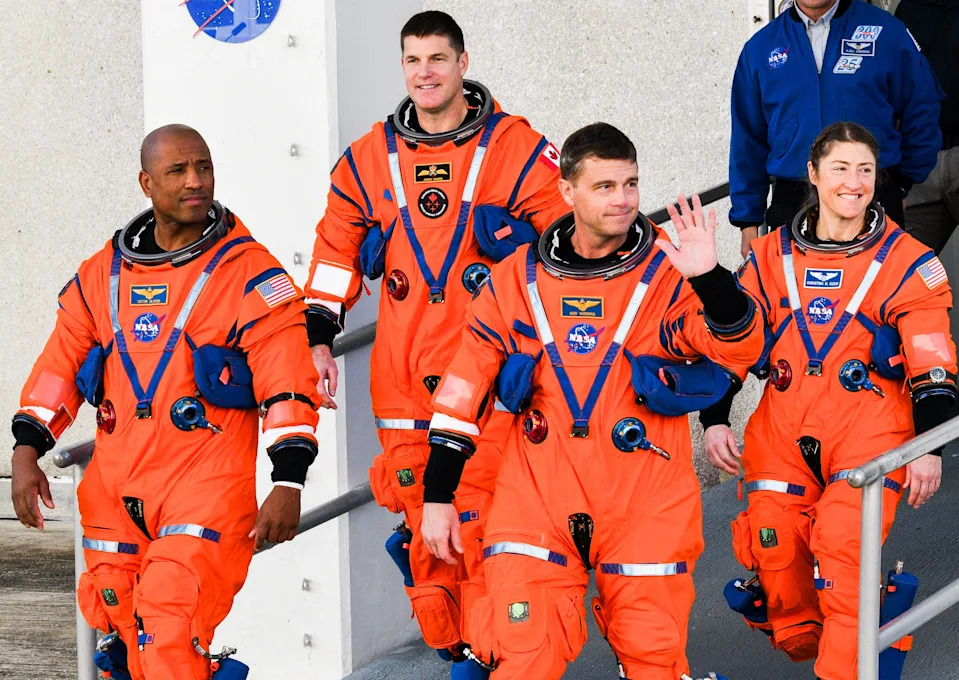
The astronauts of Artemis II (from left) Victor Glover, Jeremy Hansen, Reid Wiseman and Christina Koch leave crew quarters December 20, 2025 during their pre-launch rehearsal. Craig Bailey, FLORIDA TODAY via USA TODAY NETWORK
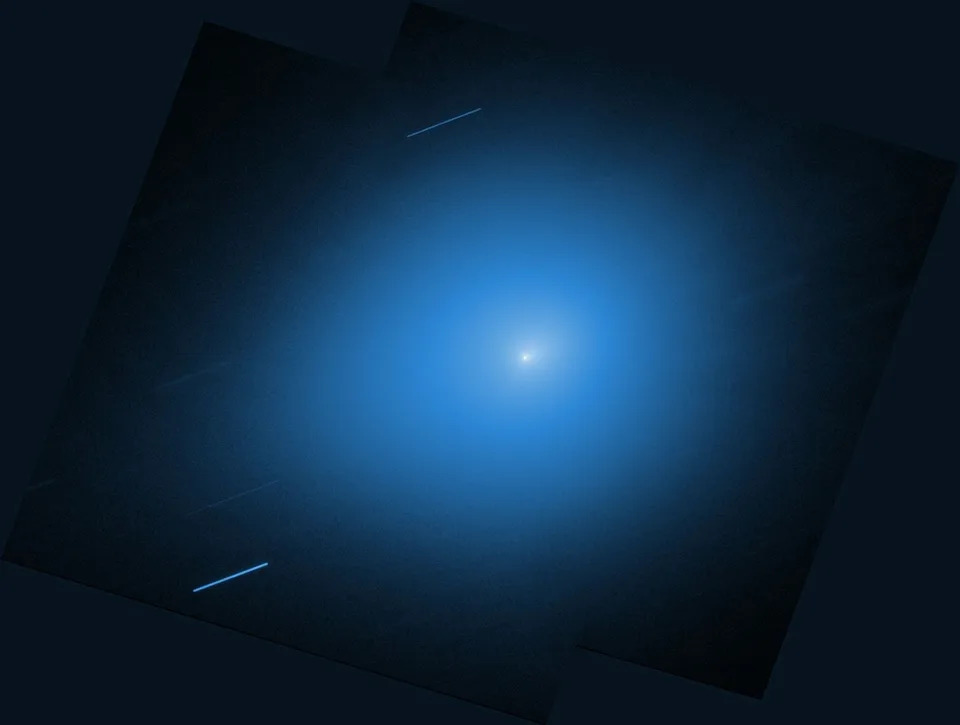
NASA’s Hubble Space Telescope last observed come 3I/ATLAS on Nov. 30, about four months after Hubble's first look at the interstellar comet. 3I/ATLAS became one of the biggest cosmic stories of the year when astronomers deemed it to be the third-ever discovered interstellar object in our solar system originating from an entirely different part of the galaxy.
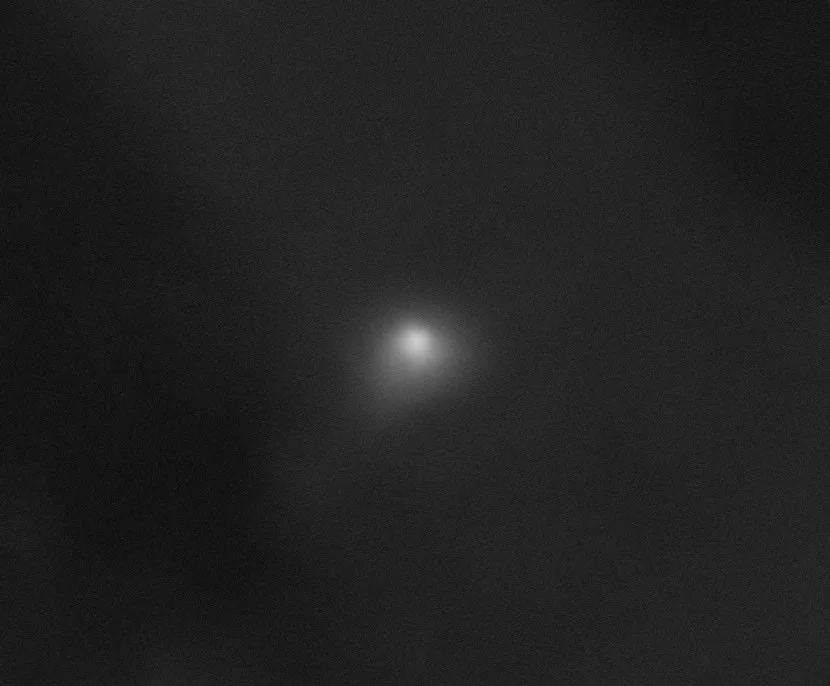
The High Resolution Imaging Science Experiment (HiRISE) camera aboard NASA’s Mars Reconnaissance Orbiter captured this image of interstellar comet 3I/ATLAS on Oct. 2, 2025. At the time it was imaged, the comet was about 19 million miles from the spacecraft. The comet didn't come nearly as close to Earth, when it reached a distance of 170 million miles from our planet on Dec. 19.
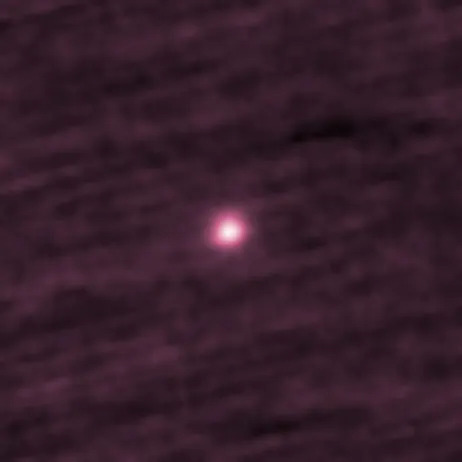
This image shows the 3I/ATLAS interstellar comet as a bright, fuzzy orb in the center. Traveling through our solar system at 130,000 miles per hour, 3I/ATLAS was made visible by using a series of colorized stacked images from Sept. 11-25, using the Heliocentric Imager-1 (H1) instrument, a visible-light imager on the STEREO-A (Solar Terrestrial Relations Observatory) spacecraft. The colorization was applied to differentiate the image from other observing spacecraft images.
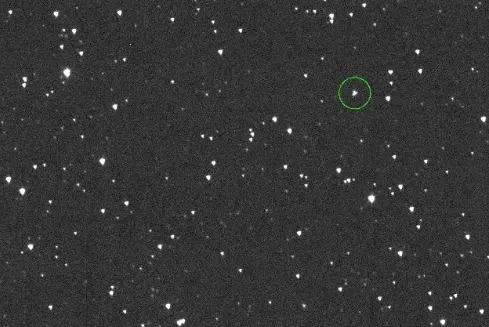
Because it's big enough to be deemed a "city killer," asteroid 2024 YR4 became a source of alarm due to the uncommonly high risk it had of colliding with Earth on Dec. 22, 2032. For a time, it was the only object among more than 37,000 known large space rocks with any chance of hitting Earth anytime soon – with its probability of impact even rising to a record level of 3.1%.That began to change in late February as more precise observations allowed scientists to effectively winnow down the asteroid's odds of impact to a number so low, it might as well be zero.
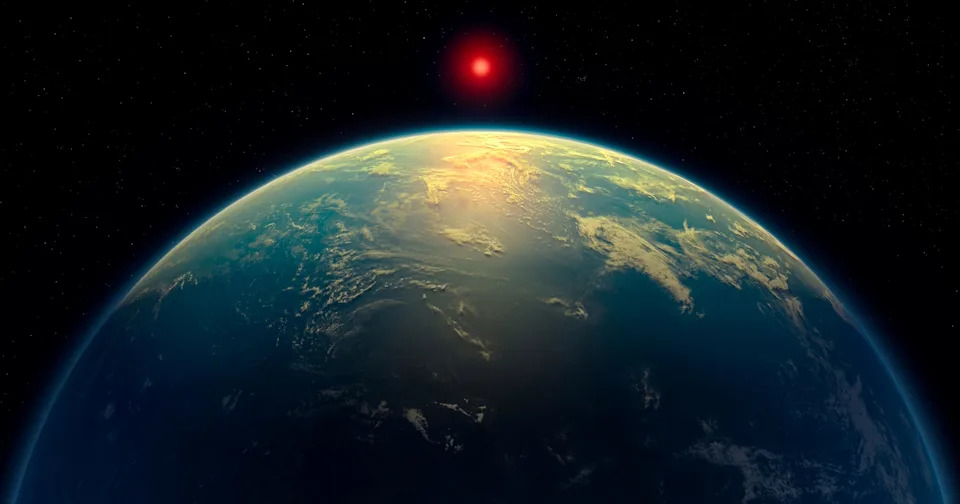
An exoplanet known as K2-18b achieved a degree of fame in April when a team of astronomers claimed to have found in its atmosphere "the strongest evidence yet" that life exists anywhere else besides Earth. Other scientists have since cast doubt on the findings – putting a damper on the notion that humanity finally had proof that we aren't alone in the cosmos.
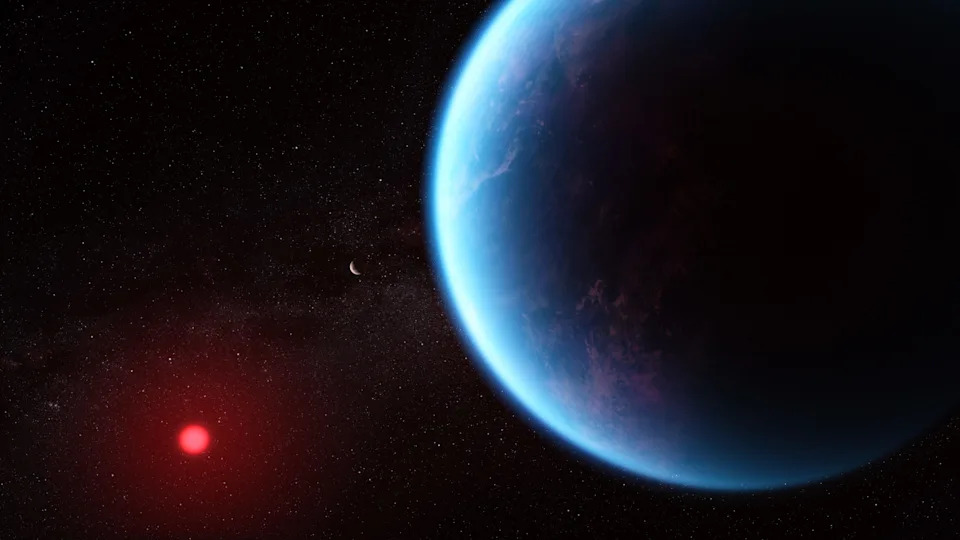
This artist's concept shows what exoplanet K2-18b could look like based on scientific data. NASA's James Webb Space Telescope has observed K2-18b, an exoplanet 8.6 times as massive as Earth, revealing conditions that could support life on the exoplanet.
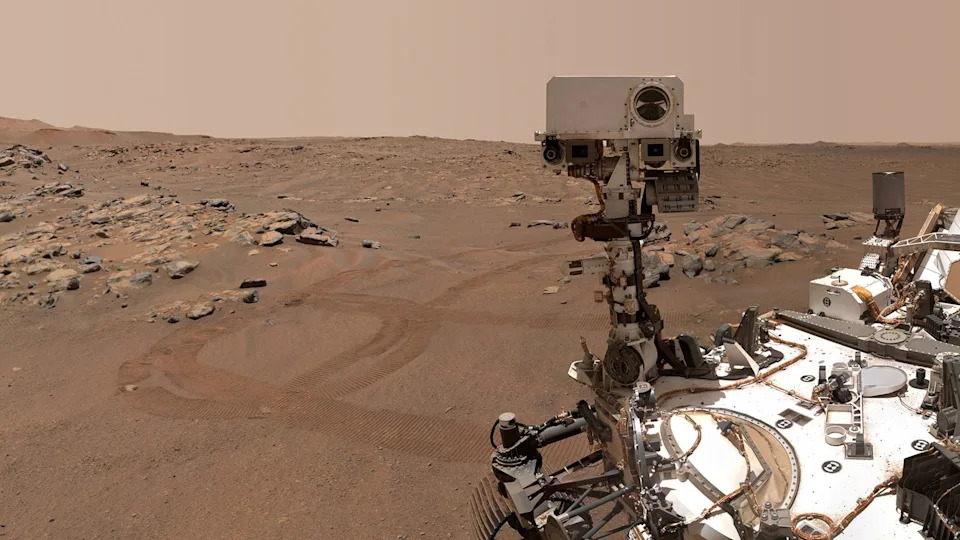
NASA’s Perseverance Mars rover is seen in a "selfie" that it took over on Sept. 10, 2021. Perseverance rover, along with Curiosity, is one of the agency's two car-sized robots exploring the Martian surface for signs that the planet was once habitable. And in September, NASA officials confirmed that one of the rovers’ finds contained a potential biosignature.
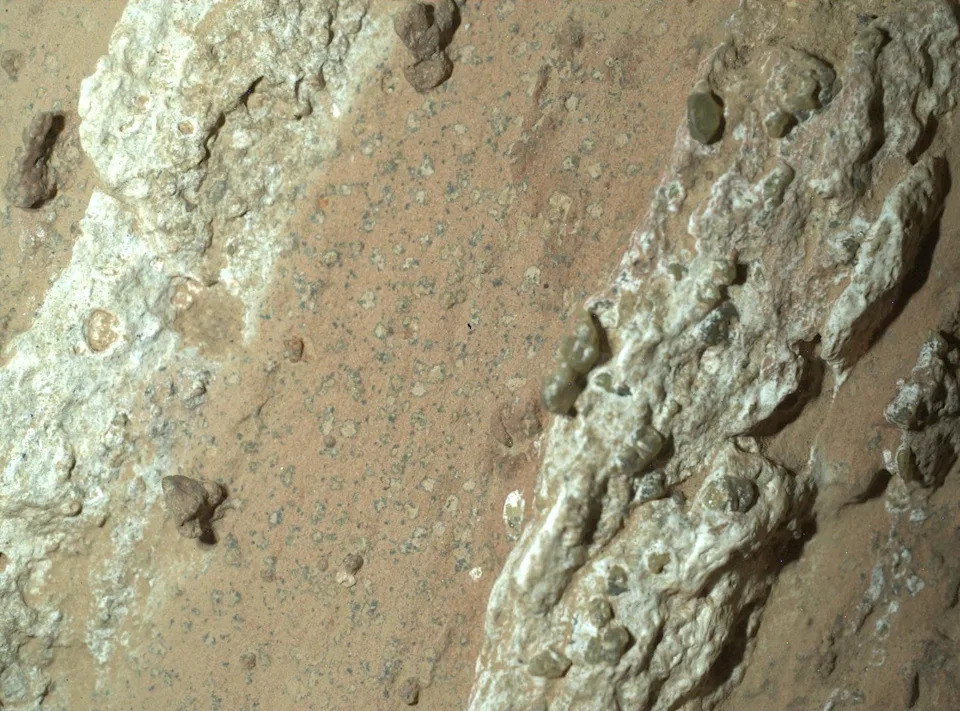
A reddish rock nicknamed "Cheyava Falls", with features resembling leopard spots was discovered by NASA's Perseverance rover in Mars’ Jezero Crater in July 2024, in this handout photograph released on September 10, 2025.

The northern lights, also known as the aurora borealis, light up the night sky Nov. 11 east of Denver, Colorado. A powerful geomagnetic solar storm in November blasted Earth and created the conditions necessary to reveal the auroras much further south in the United States than is typical.
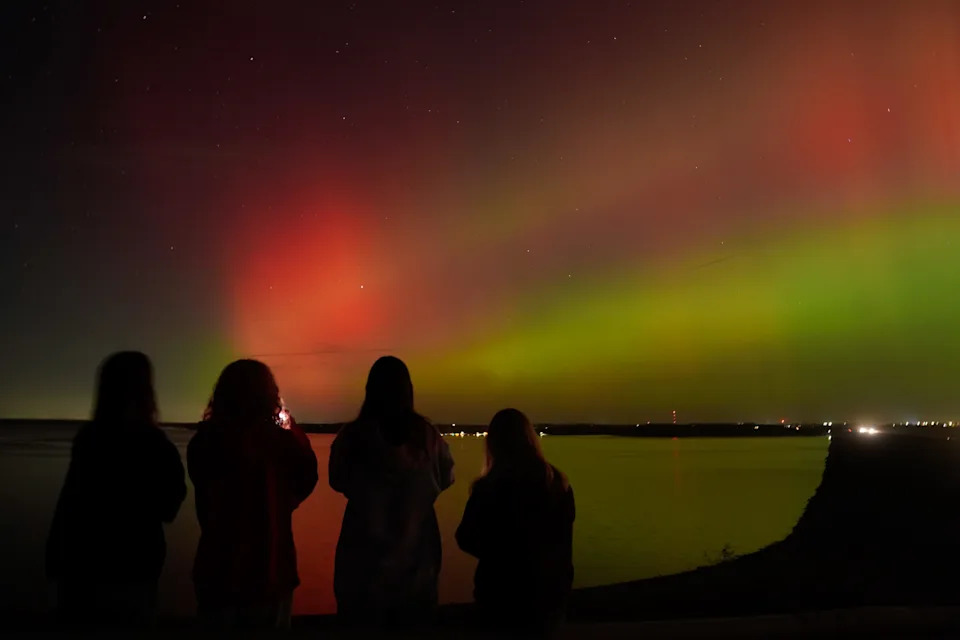
A group of friends take photos of the northern lights Nov. 11 as they appear over Clinton Lake in Lawrence, Kansas. After NOAA's Space Weather Prediction Center issued a "severe" geomagnetic storm watch in November, many people in the Northern Hemisphere, which includes the U.S., had an extraordinary opportunity to gaze upon some breathtaking red and green auroras in their own backyard.
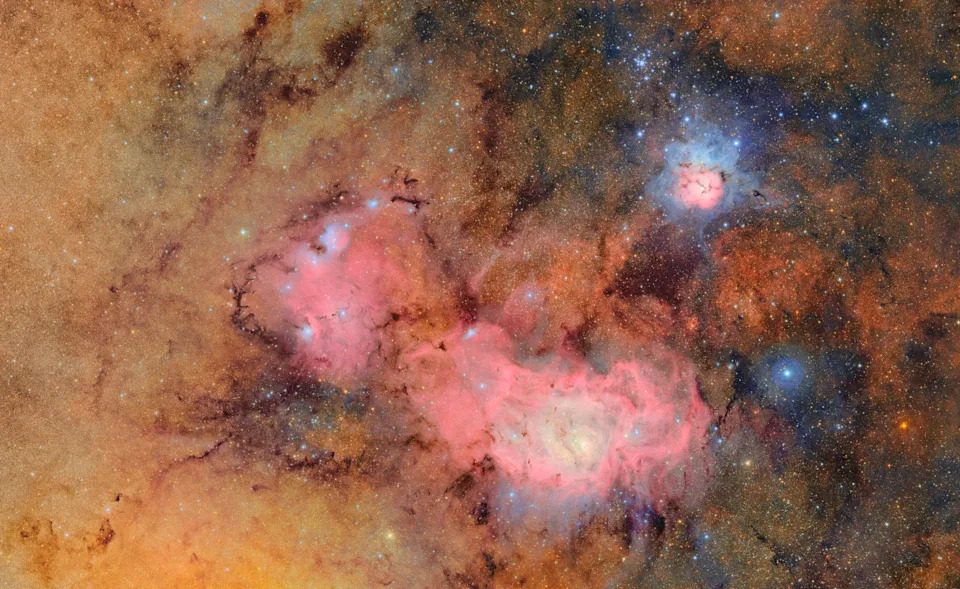
In June, the state-of-the-art Vera C. Rubin ground telescope in Chile unveiled its first stunning images of the cosmos. This particular image combines 678 separate images taken by the observatory in just over seven hours of observing time. Combining many images in this way clearly reveals otherwise faint or invisible details, such as the clouds of gas and dust that comprise the Trifid nebula (top) and the Lagoon nebula, which are several thousand light-years away from Earth.
Help us improve.