
Artemis II could send four astronauts on a roughly 10-day flyaround of the Moon as early as February–April 2026 to test NASA’s SLS rocket and Orion capsule with humans aboard for the first time. The mission will validate life-support systems, docking procedures and other technologies needed for future lunar landings. It paves the way for Artemis III, currently aimed at a 2027 landing near the Moon’s south pole — a region believed to host water ice in permanently shadowed craters.
Artemis II Could Return Humans to Lunar Orbit in 2026 — A Critical Test for SLS and Orion

The Artemis II astronauts pause during a demonstration test at the Kennedy Space Center in Cape Canaveral, Fla., on Saturday. (Gregg Newton / AFP via Getty Images)
If NASA’s plans hold, 2026 could be the year astronauts circle the Moon again. Artemis II is slated to be a roughly 10-day crewed flight that will test the agency’s next-generation Space Launch System (SLS) rocket and the Orion crew capsule — hardware that has never carried people into space.
What Artemis II Will Do
The mission will send four astronauts into lunar orbit to validate life-support systems, docking procedures and other technologies first in Earth orbit and then around the Moon. While Artemis II will not land, it will be the first time humans fly on the combined SLS–Orion system, building confidence for later landing missions.
The Crew
The planned crew includes NASA astronauts Reid Wiseman, Victor Glover and Christina Koch, alongside Jeremy Hansen of the Canadian Space Agency. Wiseman, Glover and Koch are veteran flyers; Hansen will make his first spaceflight. The team completed a detailed launch-day rehearsal recently, donning flight suits, boarding Orion and running through the countdown up to the point just before liftoff.
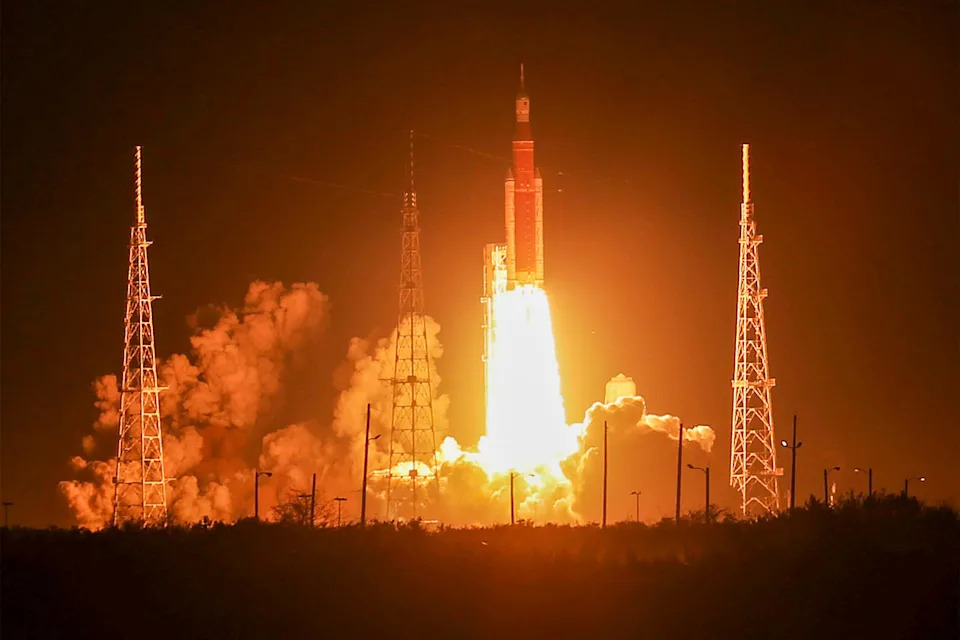
NASA's Artemis I Space Launch System rocket, with the Orion capsule attached, launches toward the moon in 2022 from NASA's Kennedy Space Center in Cape Canaveral, Fla. (Red Huber / Getty Images)
Why This Mission Matters
Artemis II is an essential stepping-stone toward the program’s longer-term goal: sustained human operations on the Moon and eventually crewed missions to Mars. The mission will help assess performance of the SLS and Orion with humans on board and exercise the systems and procedures future missions will rely on.
"There’s a lot riding on this, both good and bad," said Casey Dreier, chief of space policy for The Planetary Society. "Everything seems to be coming together, but this will be the first time humans fly on this rocket, and we’ve never tested this life-support system in space."
Scientific and Strategic Importance
Beyond technology checks, the Artemis program aims to enable science that can answer long-standing questions about the Moon’s formation, the history of the early solar system and the source of lunar water. Scientists hope future Artemis missions — especially those targeting the lunar south pole — will return samples from permanently shadowed craters that may contain water ice and ancient terrain dating back some 4.5 billion years.
"Earth is kind of a terrible record-keeper," said planetary scientist Brett Denevi. "Plate tectonics and weather have erased much of its earliest history. The Moon preserves that early record on the surface for us to study."
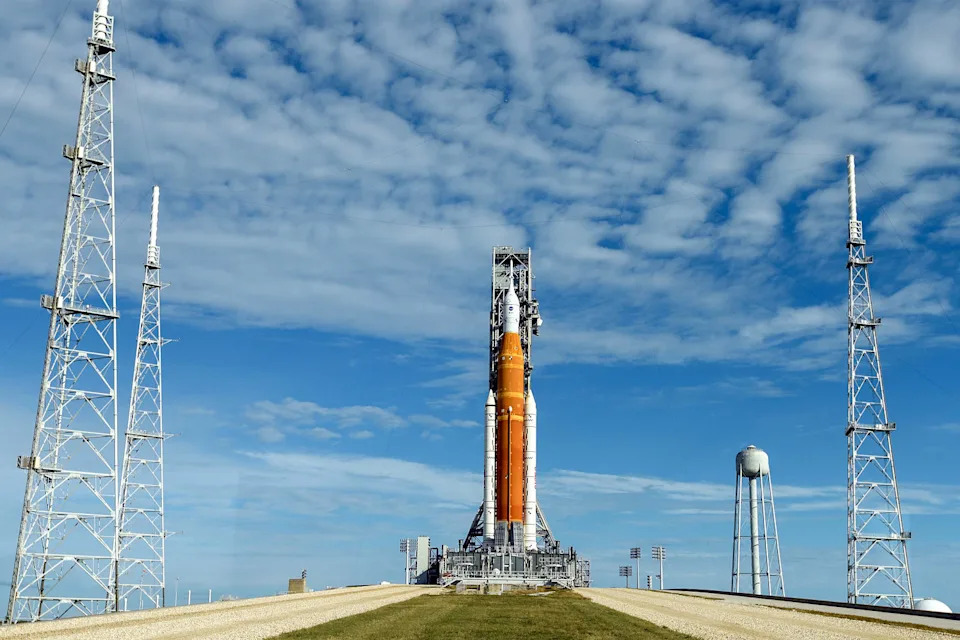
The Space Launch System and Orion spacecraft sit on the launch pad ahead of liftoff in November 2022 at the Kennedy Space Center in Cape Canaveral, Florida. (Red Huber / Getty Images)
Schedule, Politics and Program History
NASA flew an uncrewed test of the SLS rocket and Orion capsule on Artemis I, a 3½-week mission around the Moon in 2022. Artemis II had once been targeted for 2024 but was delayed by technical challenges and budgetary setbacks; planners now expect a launch window between February and April 2026.
The Artemis program was established in 2019 and repurposed hardware and concepts from earlier programs, including work on a heavy-lift booster that began around 2010 and the Orion spacecraft, whose design traces to the Constellation era. The program is also part of a broader push to demonstrate and expand human presence in space amid growing global competition.
Looking Ahead: Artemis III And Beyond
Artemis II is intended to pave the way for Artemis III, currently targeted for 2027, which aims to land astronauts near the Moon’s south pole. That region’s permanently shadowed basins could hold water ice — a vital resource for long-duration lunar operations and future deep-space missions.
Success on Artemis II would mark a major milestone for the program; failure or a major anomaly could prompt significant reassessments of the schedule and strategy. For scientists and mission planners alike, the next few flights will determine how quickly sustained human exploration of the Moon can be realized.
Note: This article summarizes reporting originally published on NBCNews.com and incorporates quoted commentary and technical details about the Artemis program.


