Indiana will see 13 full moons in 2026, including three supermoons, two lunar eclipses and a monthly blue moon on May 31. Major events: a total lunar eclipse with the Worm Moon on March 3 (maximum ~6:33 a.m. ET in Indianapolis) and a partial eclipse with the Sturgeon Moon Aug. 27–28 (greatest ~12:12 a.m. ET Aug. 28). Peak illumination times for the Indianapolis area are listed for every full moon; check the Old Farmer's Almanac and Time And Date for precise local timings and moonrise/moonset data.
Indiana’s 2026 Moon Guide: 13 Full Moons, 3 Supermoons, 2 Eclipses and a Blue Moon
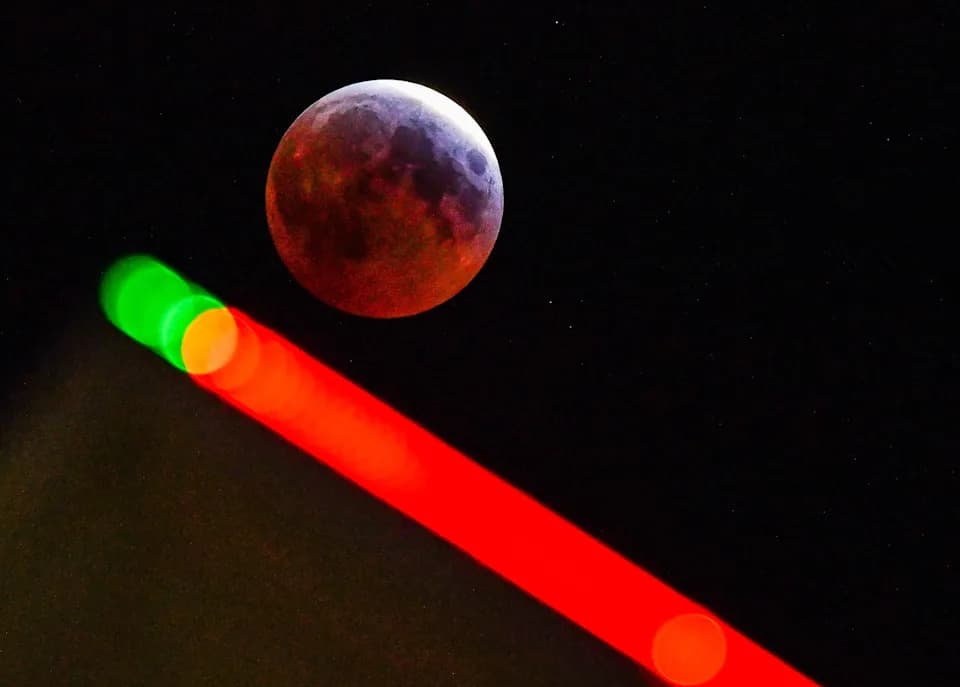
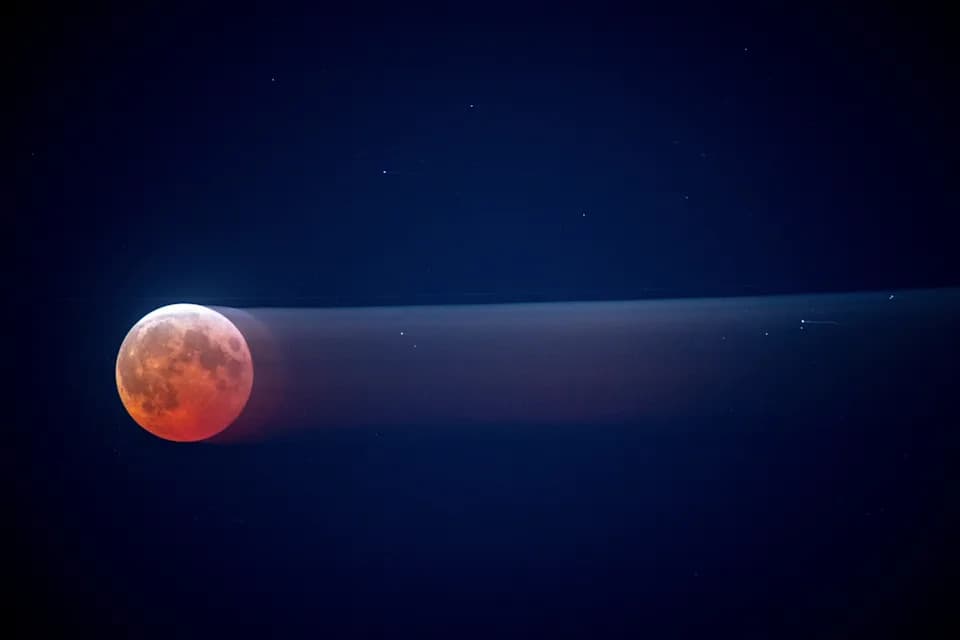
The moon approaching the total eclipse phase with the neon lights that framr the Cocoa Beach Hampton Inn in the foreground. The eclipse of the blood worm moon lunar eclipse Friday morning.
Skywatchers across Indiana have plenty to look forward to in 2026: the calendar records 13 full moons, including three supermoons, two lunar eclipses and a rare monthly blue moon. Below is a clear, month-by-month guide with traditional full-moon names, notable events and peak illumination times for the Indianapolis area. For exact local moonrise and moonset times, check the Old Farmer's Almanac; for phase and eclipse timings, see Time And Date, NASA and EarthSky.
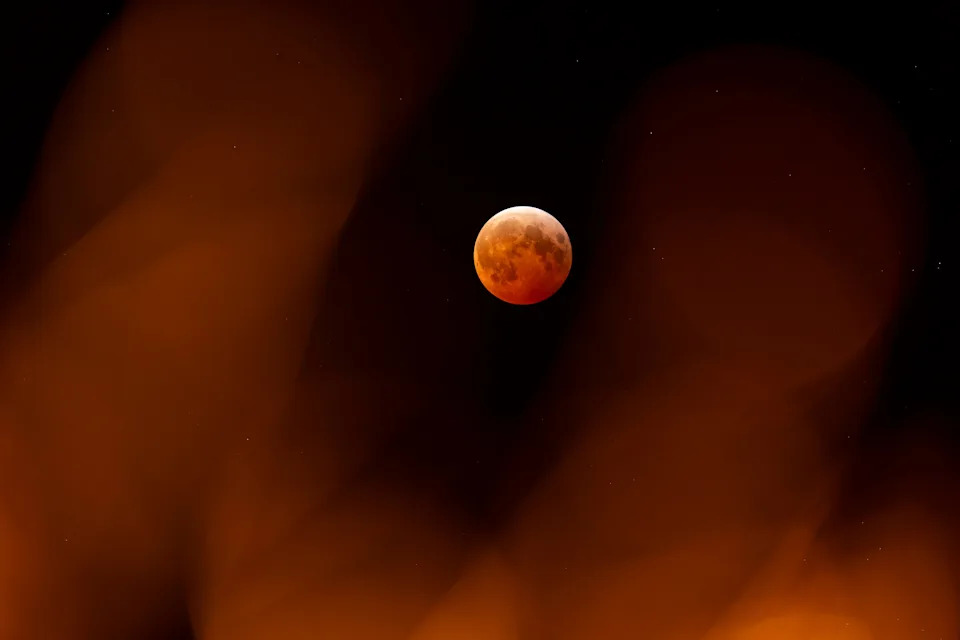
A blood moon total lunar eclipse occurs in Columbus, Ohio on March 14, 2025. Totality for the eclipse lasted just over an hour and could be seen throughout most of North and South America.
Full Moon Dates & Major Highlights
- Jan. 3 — Wolf Moon (Supermoon)
- Feb. 1 — Snow Moon
- March 3 — Worm Moon (Total Lunar Eclipse)
- April 1 — Pink Moon
- May 1 — Flower Moon
- May 31 — Blue Moon (Second full moon in May)
- June 29 — Strawberry Moon
- July 29 — Buck Moon
- Aug. 28 — Sturgeon Moon (Partial Lunar Eclipse Aug. 27–28)
- Sept. 26 — Harvest Moon
- Oct. 26 — Hunter's Moon
- Nov. 24 — Beaver Moon (Supermoon)
- Dec. 23 — Cold Moon (Supermoon)
Month-by-Month Notes
Jan. 3 — Wolf Moon (Supermoon)
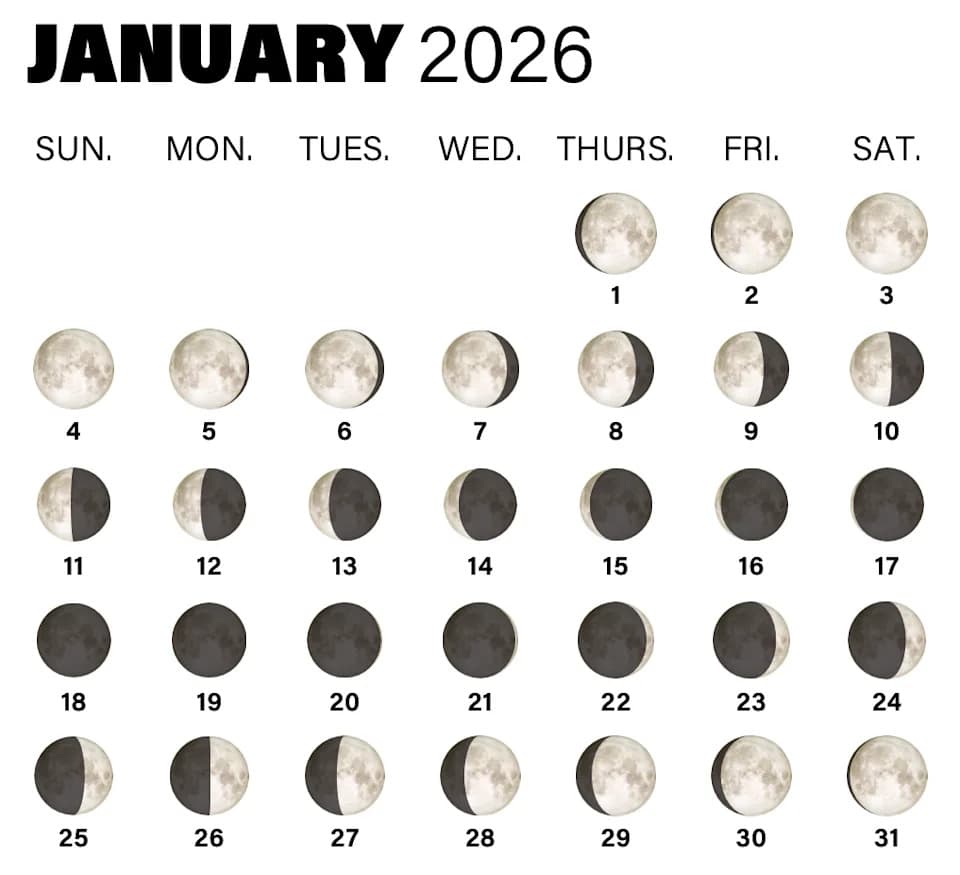
January opens with the Wolf Moon, which also qualifies as a supermoon. January phases: Full Jan. 3; Last Quarter Jan. 10; New Jan. 18; First Quarter Jan. 25. Peak illumination for the Indianapolis area is estimated at about 5:02 a.m. (Time And Date). Traditional names such as Center Moon, Freeze Up Moon and Hard Moon reflect deep winter conditions.

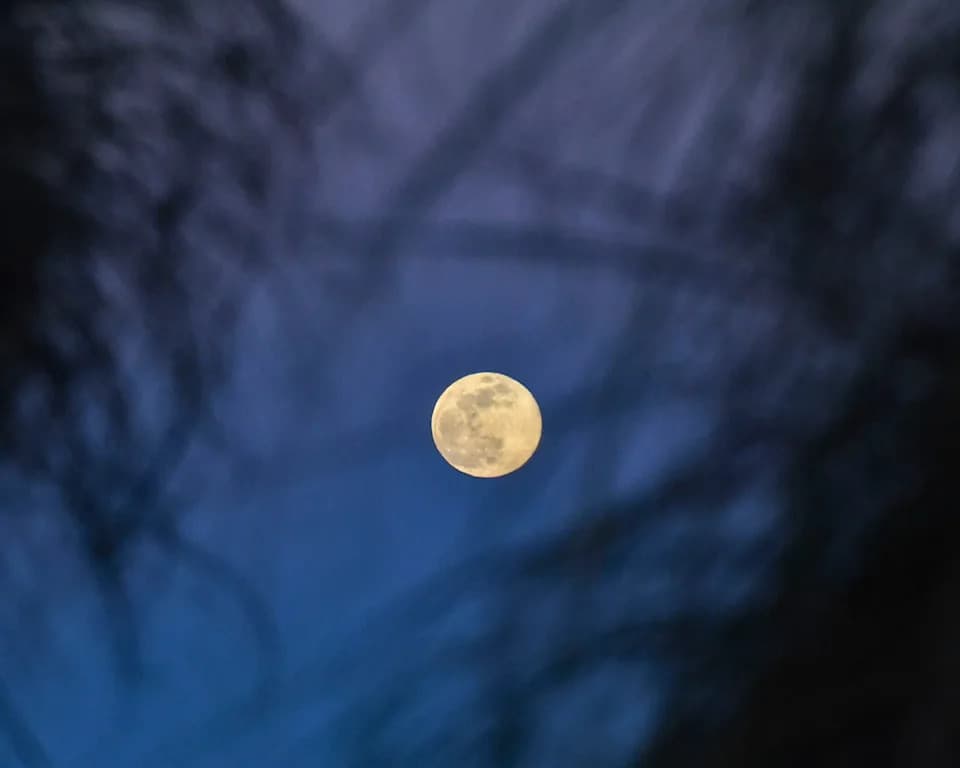
Tree leaves silhouetted by a strawberry moon on June 10, 2025, in De Pere, Wis.
Feb. 1 — Snow Moon
February brings the Snow Moon. Phases: Full Feb. 1; Last Quarter Feb. 9; New Feb. 17; First Quarter Feb. 24. Peak illumination for Indianapolis is roughly 5:09 p.m. The name traces to historically heavy snowfall and early records by explorers and Native Americans.

A partial lunar eclipse is seen above the fronds of a palm tree during the Blood Moon Lunar Eclipse in Palm Springs, California, on March 13, 2025. (Photo by Patrick T. Fallon / AFP) (Photo by PATRICK T. FALLON/AFP via Getty Images) ORG XMIT: 776296194 ORIG FILE ID: 2204429235
March 3 — Worm Moon & Total Lunar Eclipse
The Worm Moon coincides with a total lunar eclipse visible across the Americas, Asia, Australia and the Pacific Islands (NASA). March phases: Full March 3; Last Quarter March 11; New March 18; First Quarter March 25. Eclipse activity for Indianapolis should be visible beginning near 3:44 a.m. ET. Totality begins for much of Indiana around 6:04 a.m. EST, lasting about an hour, with maximum redness near 6:33 a.m. EST. The full moon peak for Indianapolis is listed at about 6:37 a.m. Observers should ensure a clear western horizon since the moon will be relatively low.
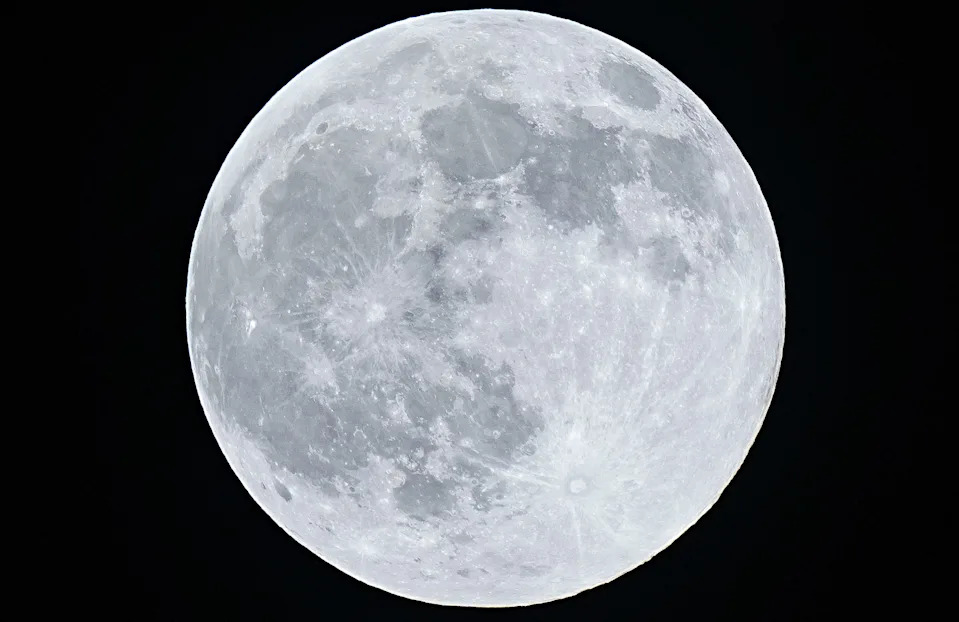
The Harvest moon reaches peak illumination just before 9 p.m. PDT as it is photographed from Palm Springs, Calif., Oct. 6, 2025.
April 1 — Pink Moon
April's Pink Moon takes its name from spring ground phlox, not the moon's color. April phases: Full April 1; Last Quarter April 10; New April 17; First Quarter April 23. Indianapolis peak illumination: about 10:11 p.m.
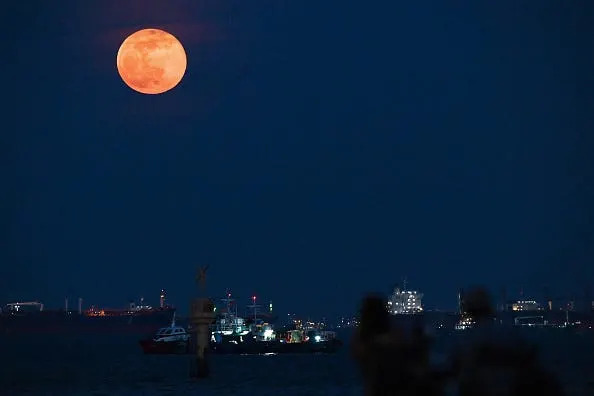
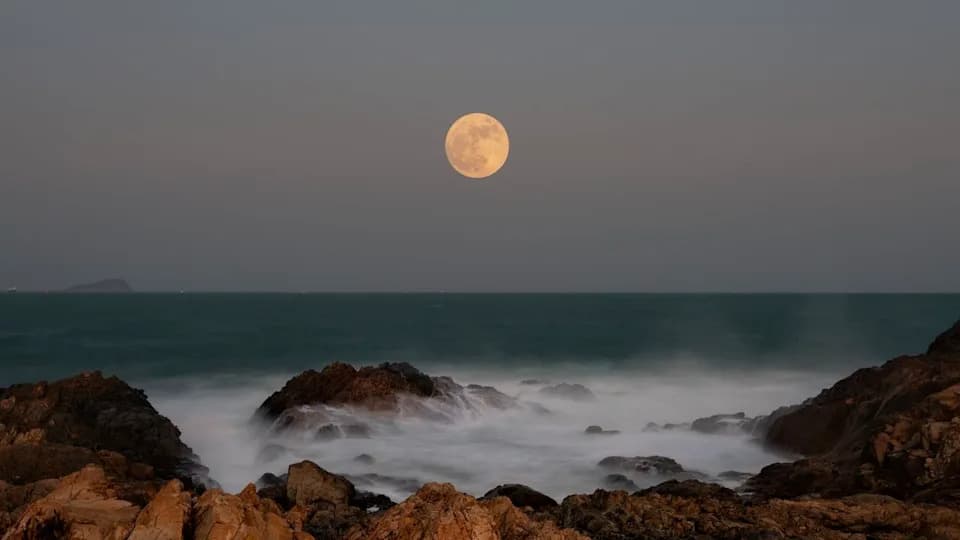
The full moon, also known as the "Hunter's Moon", rises over vessels in Singapore on Oct. 7, 2025.
May 1 & May 31 — Flower Moon and Blue Moon
May is unusual: it starts and ends with full moons. May phases: Full May 1; Last Quarter May 9; New May 16; First Quarter May 23; Full May 31. May 31 is a monthly blue moon — the second full moon in a calendar month. Peak times for Indianapolis: May 1 at about 1:23 p.m. (the exact instant of peak illumination) and May 31 at approximately 4:45 a.m. The moon rarely appears literally blue; blue tones in images usually come from filters or editing.
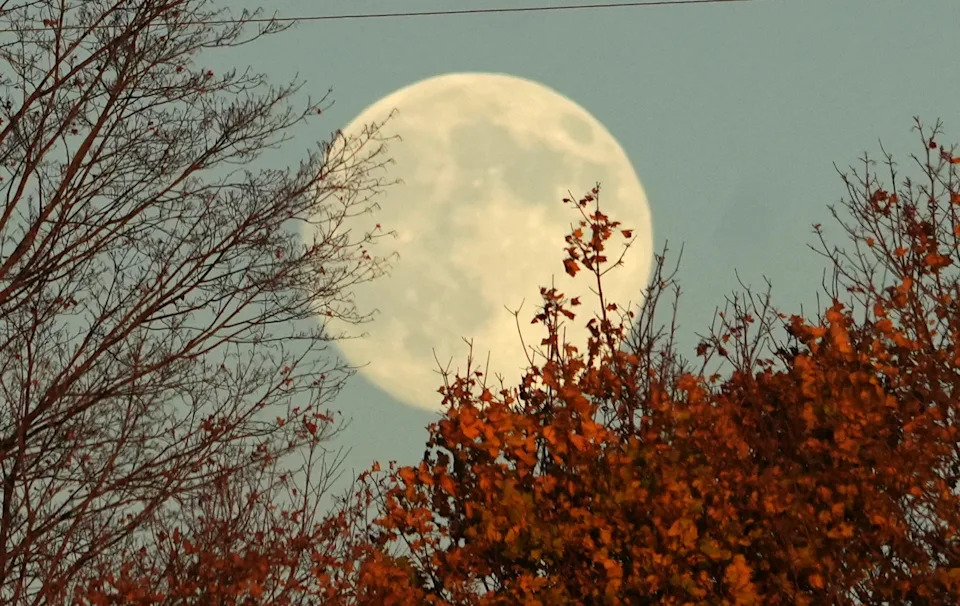
The beaver full moon rises over the horizon while the setting sun shines on trees in their Autumn colors in Blauvelt Nov. 4, 2025.
June 29 — Strawberry Moon
June phases: Last Quarter June 8; New June 14; First Quarter June 21; Full June 29. The Strawberry Moon name comes from traditional berry harvests. Indianapolis peak illumination: about 7:56 p.m. ET.
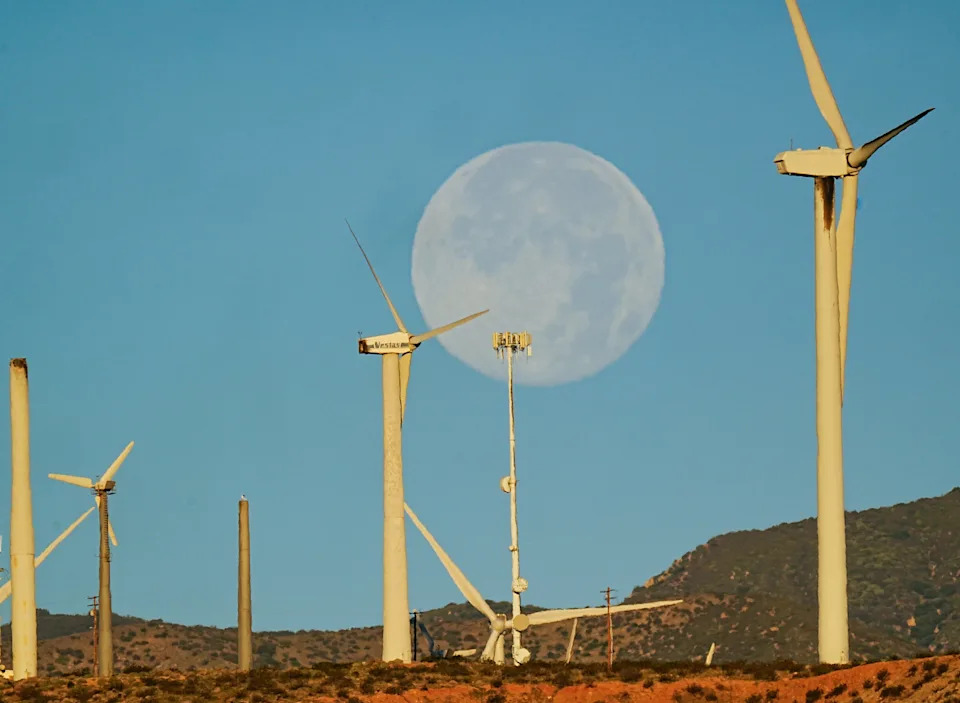
The cold moon supermoon looms large over old wind turbines near Whitewater, Calif., Dec. 5, 2025.
July 29 — Buck Moon
July phases: Last Quarter July 7; New July 14; First Quarter July 21; Full July 29. Named for bucks' antler growth; peak for Indianapolis ~10:35 p.m. ET.
Aug. 27–28 — Sturgeon Moon & Partial Lunar Eclipse
A partial lunar eclipse spans Aug. 27–28 and should be visible from the Americas, Europe, Africa and Western Asia (NASA). August phases: Last Quarter Aug. 5; New Aug. 12; First Quarter Aug. 19; Full Aug. 28. For Indianapolis the partial eclipse begins around 9:23 p.m. ET on Aug. 27, with the greatest eclipse near 12:12 a.m. ET on Aug. 28; the event should conclude by about 3 a.m. Local full-moon peak illumination is listed near 12:18 a.m. ET on Aug. 28.
Sept. 26 — Harvest Moon
September phases: Last Quarter Sept. 4; New Sept. 10; First Quarter Sept. 18; Full Sept. 26. The Harvest Moon falls closest to the autumnal equinox (Sept. 22, 2026). Indianapolis peak illumination: about 12:49 p.m. ET.
Oct. 26 — Hunter's Moon
October phases: Last Quarter Oct. 3; New Oct. 10; First Quarter Oct. 18; Full Oct. 26. Traditionally linked to fall hunting; peak illumination for Indianapolis ~12:11 a.m. ET on Oct. 26.
Nov. 24 — Beaver Moon (Supermoon)
November phases: Last Quarter Nov. 1; New Nov. 9; First Quarter Nov. 17; Full Nov. 24. The Beaver Moon is also a supermoon, the second supermoon of 2026. Supermoons occur near lunar perigee and may appear up to about 14% larger and 30% brighter than the smallest full moon, and they can contribute to higher tides. Indianapolis peak illumination is roughly 9:53 a.m. ET on Nov. 24.
Dec. 23 — Cold Moon (Supermoon)
December phases: Last Quarter Dec. 1; New Dec. 8; First Quarter Dec. 17; Full Dec. 23; Last Quarter Dec. 30. The Cold Moon (also called Winter Maker Moon or Long Night Moon in some traditions) is the third supermoon of the year. Peak illumination for Indianapolis: about 8:28 p.m. ET on Dec. 23.
Tips For Observers
- Check local moonrise and moonset times for your exact ZIP code at the Old Farmer's Almanac.
- For phase timings, eclipses and peak illumination instants, consult Time And Date and NASA. EarthSky is useful for background and context on blue moons and seasonal definitions.
- For eclipses, arrive early and find an unobstructed view of the horizon if the moon will be low. Use binoculars or a small telescope for the best detail.
This guide compiles traditional moon names, 2026 dates and timing estimates for the Indianapolis area. Verify exact local times and weather conditions before planning viewing events.
Help us improve.