A San Francisco photographer documented a striking optical illusion when the Transamerica Pyramid's shadow seemed to flip into the sky as the sun rose behind it. The effect was caused by crepuscular rays — sunbeams scattered by haze or particles — and was accentuated by the Pyramid's sharp silhouette. A strong temperature inversion has trapped pollutants near the ground and triggered a Spare the Air alert, increasing haze that can create such light displays. Related fog phenomena, including fog bows and Brocken spectres, are also common around local landmarks like Sutro Tower.
Stunning Illusion: Transamerica Pyramid's Shadow Flips Into the Sky
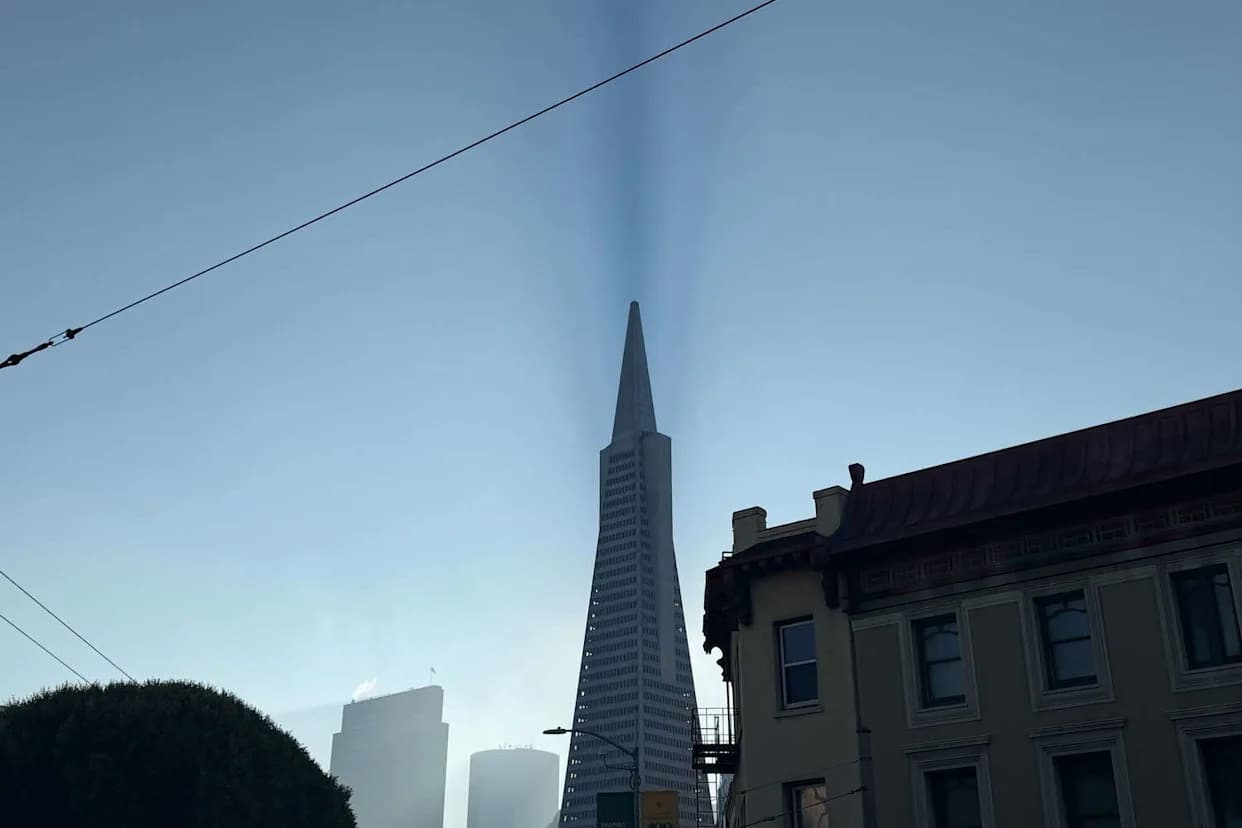
Sunbeams appear to emanate from Transamerica Pyramid on Thursday morning, an optical effect known as crepuscular rays caused by haze in the atmosphere. (Courtesy Kelli McGrath)
A San Francisco photographer captured a striking optical display Thursday morning when the Transamerica Pyramid's shadow appeared to flip upward into the sky as the sun rose behind the skyscraper.
What Happened
The scene, photographed by San Francisco artist Kelli McGrath just before 9 a.m. while she walked along Columbus Avenue, is an example of crepuscular rays: sunbeams made visible when sunlight is scattered by smoke, haze or other airborne particles. In this case, the Pyramid's sharp silhouette helped define and amplify the triangular pattern.
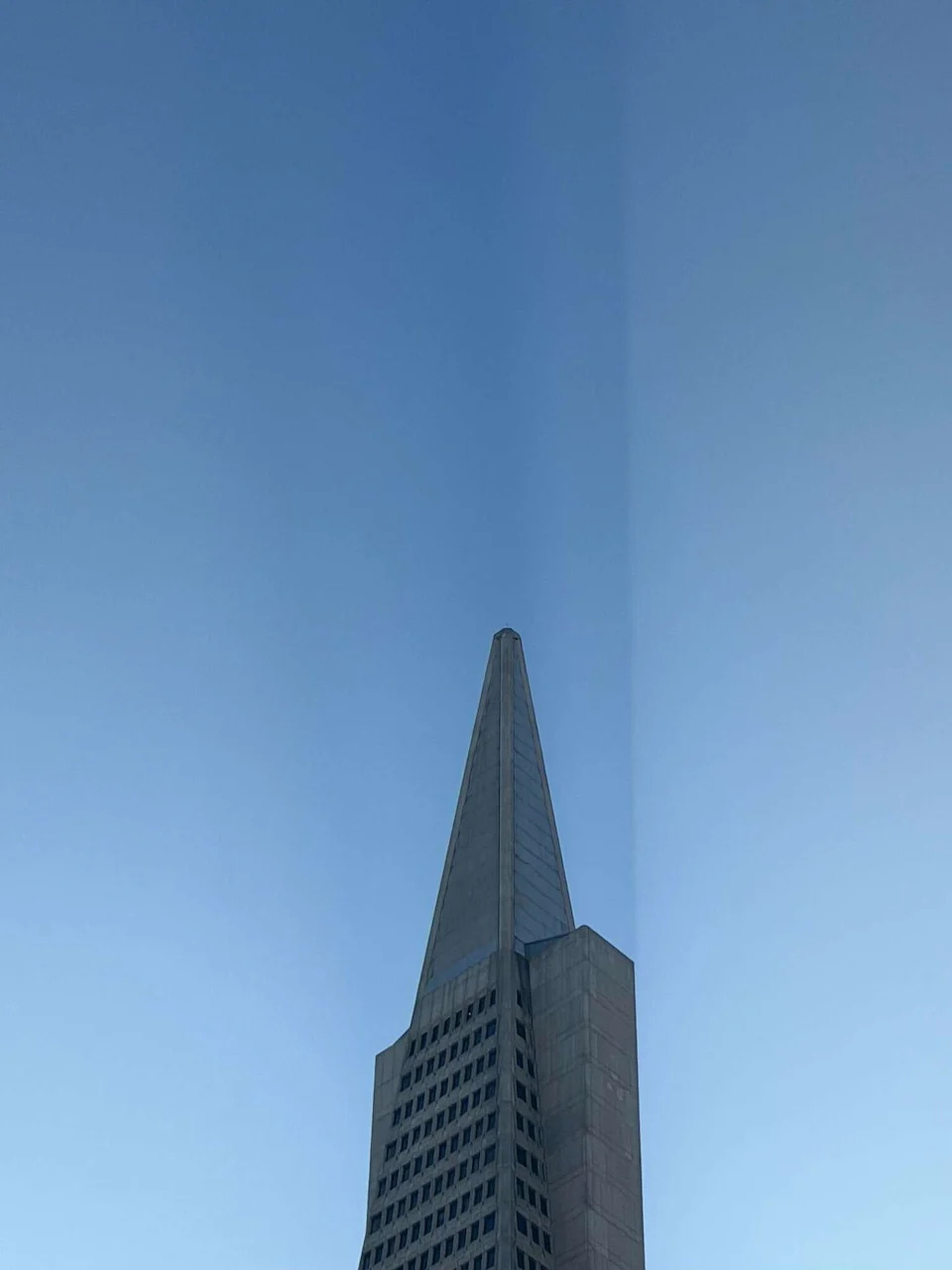
An optical effect known as crepuscular rays was visible above San Francisco's Transamerica Pyramid on Thursday morning. (Courtesy Kelli McGrath)
'I was like, 'Wait, there's definitely something going on that's different than normal,' ' McGrath said. 'I just saw the inversion of the triangle and I didn't really know how it was happening.'
Why the Rays Look the Way They Do
Crepuscular rays are most pronounced when the sun is low on the horizon at sunrise or sunset. The beams appear to radiate from the Transamerica Pyramid and fan outward, but that apparent spreading is an effect of perspective: parallel rays look wider the farther they are from the observer, much like road lanes seeming to converge toward the horizon.
Weather And Air Quality Context
This week a pronounced temperature inversion settled over the Bay Area, trapping pollutants near the ground and prompting the Bay Area Air Quality Management District to issue a Spare the Air alert. While trapped haze can harm respiratory health, the same particles that create haze can also scatter sunlight and produce dramatic visual effects such as crepuscular rays.
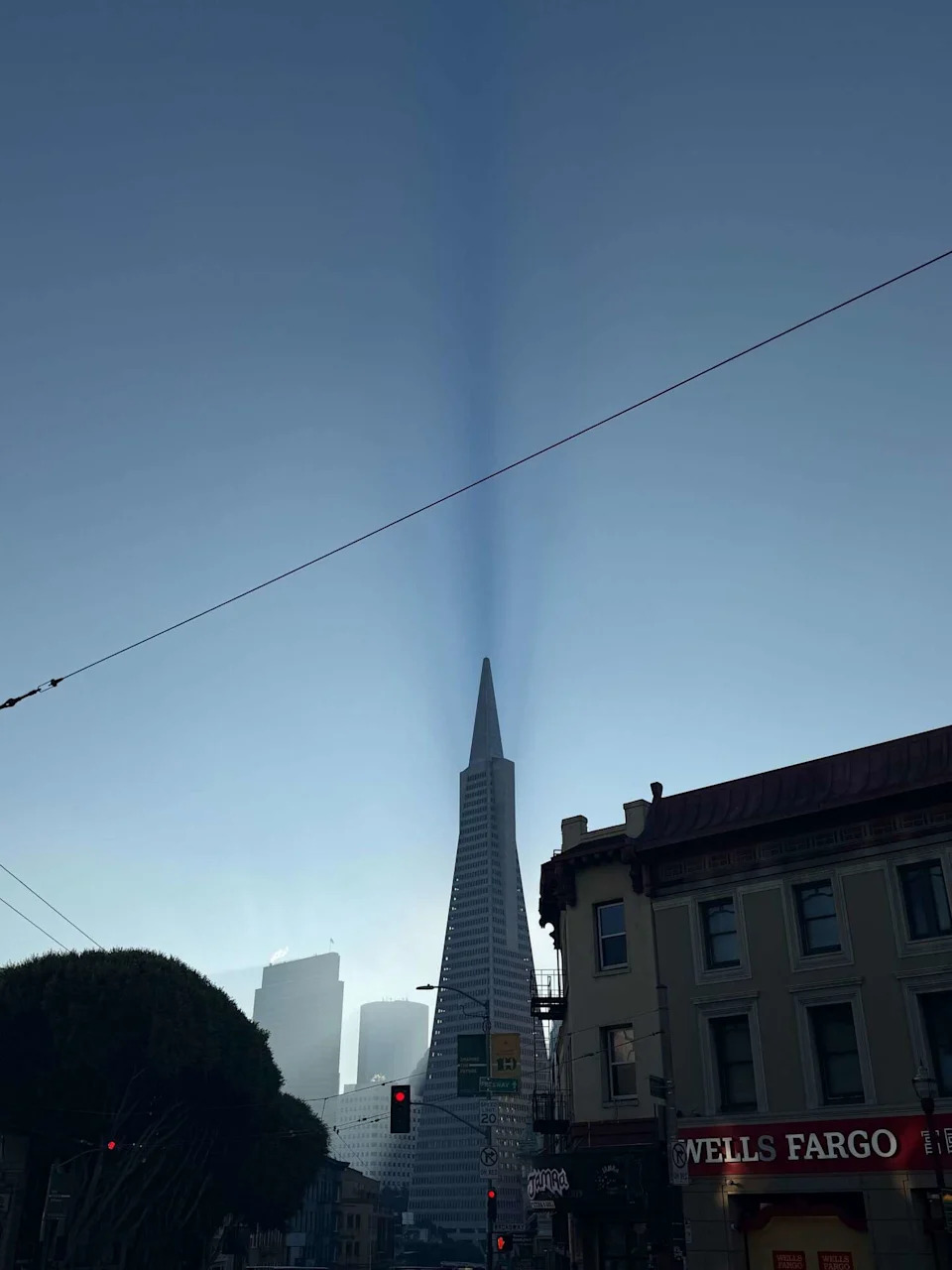
Hazy skies over San Francisco scattered light and created ideal conditions for crepuscular rays Thursday morning. (Courtesy Kelli McGrath)
Related Local Phenomena
San Francisco's frequent fog contributes to other atmospheric displays, including fog bows and Brocken spectres — rainbowlike rings or halos that can form around a viewer's shadow. Foggy conditions near Sutro Tower have also been known to cast crepuscular rays similar to those seen at the Transamerica Pyramid.
Photographers and residents who watch familiar landmarks day to day often notice how changing light and atmosphere can transform the cityscape, turning ordinary scenes into moments of unexpected beauty.
Help us improve.