An ISS crewmember photographed a striking nighttime scene over Florida, the Caribbean and parts of Central America at 2:23 a.m. ET on March 19, 2025, showing city lights and a concentrated band of moonglint produced by a 78% illuminated waning Moon. The wide-angle shot (Nikon Z9, 28 mm) from about 248 miles (400 km) up also reveals a thin green airglow layer along the horizon. Scientists use such nighttime imagery to study urban growth, light pollution and sea-surface conditions, and moonglint helps reveal wave patterns and improve ocean–atmosphere models.
ISS Astronaut Captures Stunning Night View of Florida, Cuba and Moonglint From Orbit
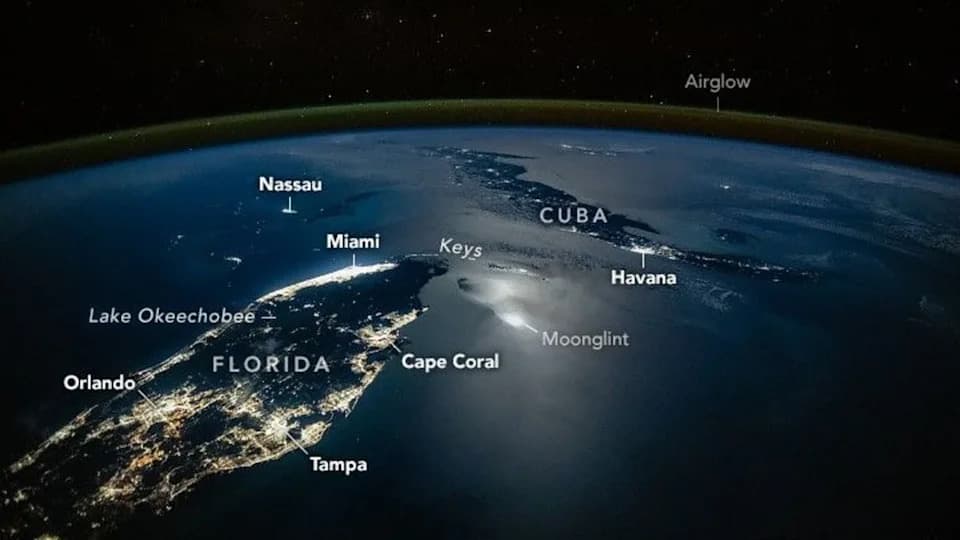
Airglow and city lights come together in this image. . | Credit: NASA/Expedition 72 crew
At 2:23 a.m. Eastern on March 19, 2025, a crewmember aboard the International Space Station photographed a dramatic nighttime panorama that shows moonlight skimming across dark ocean waters while clusters of city lights trace Florida, the nearby Caribbean and parts of Central America.
Moonglint and airglow are both phenomena featured in this image. | Credit: NASA/Expedition 72 crew
What the Photo Shows
Dense concentrations of light reveal major population centers: the bright corridor from Miami to Fort Lauderdale along Florida's southeastern coast, the Tampa–St. Petersburg area on the Gulf Coast, and the Orlando metropolitan region near the center of the peninsula. Smaller but clearly visible light patterns mark the Florida Keys, Nassau in the Bahamas and Havana along with other Cuban cities.
Beyond the urban glow, the image is notable for a vivid band of moonglint—the nighttime counterpart to sunglint—where moonlight reflects off the sea at an angle that directs a concentrated reflection back to the observer. At the time the Moon was waning and about 78% illuminated, bright enough to produce a distinct reflection across waters near the Florida Keys and Cuba.
Atmospheric and Optical Details
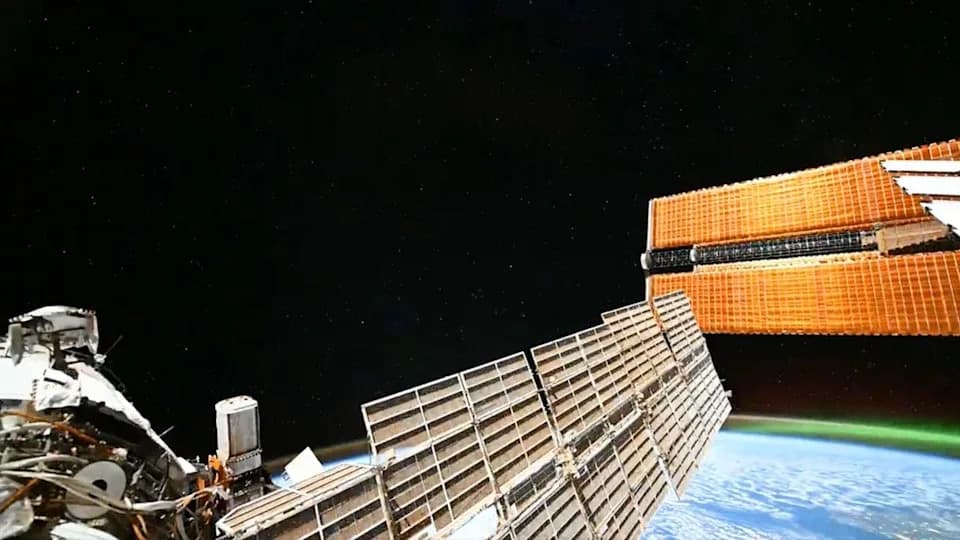
The photograph was taken with a Nikon Z9 camera and a 28 mm lens, providing a wide field of view that helps convey the planet's curvature. Along the horizon a thin, faint green layer of airglow is visible—the subtle luminescence produced by chemical reactions in Earth's upper atmosphere that creates a soft band of light against the darkness of space.
Scientific Value
Nighttime imagery like this is valuable for both Earth-observation and atmospheric research. Scientists use such photos to track urban growth, energy consumption and light pollution. Moonglint can reveal sea-surface conditions—including roughness and wave patterns—even at night, helping oceanographers and climate scientists refine models of ocean–atmosphere interactions when combined with other datasets.
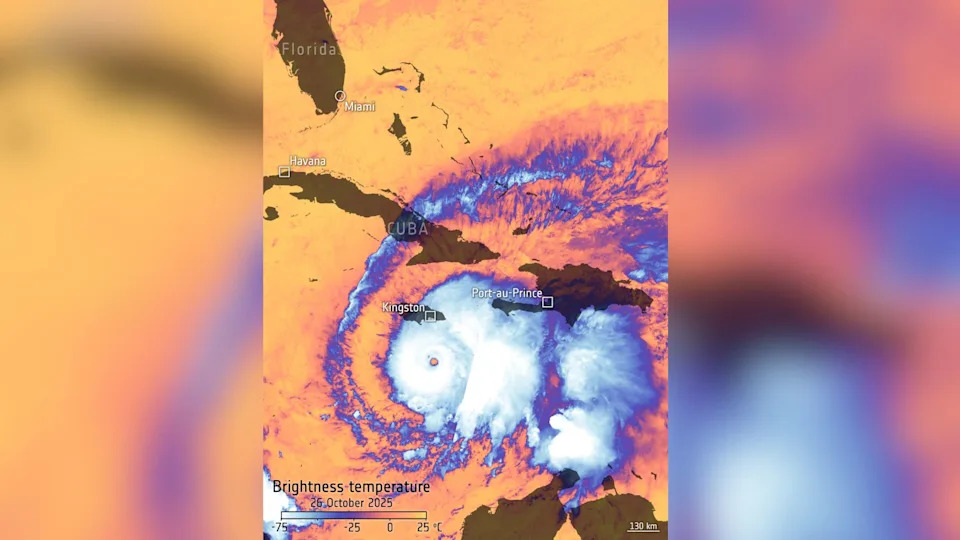
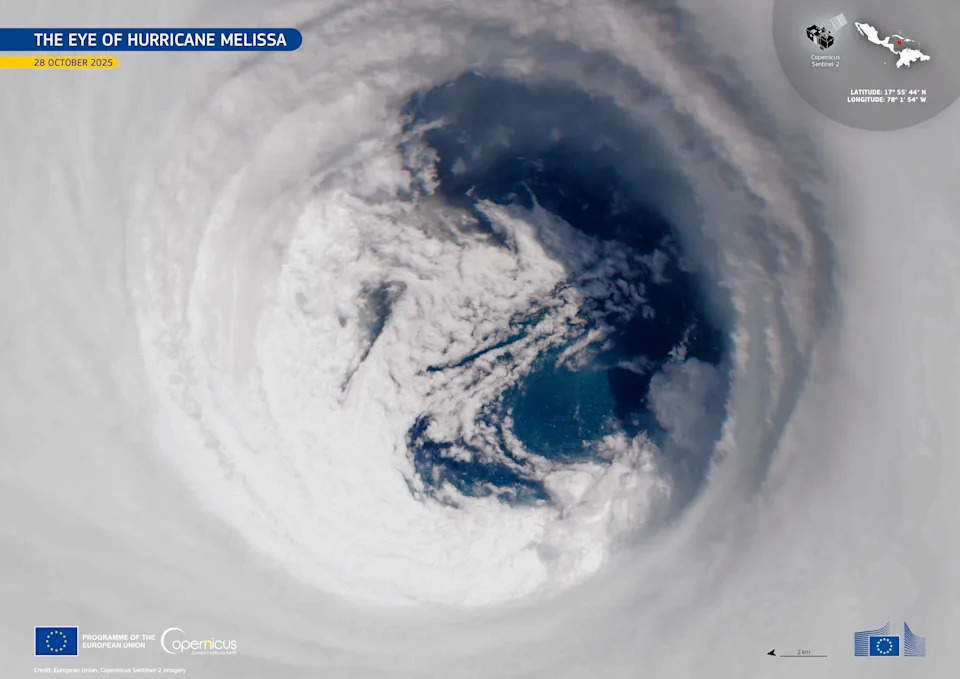
Nighttime observations can also highlight meteorological contrasts: for example, thermal and structural differences between storm tops and bases may be more apparent in certain satellite and nighttime imagery, providing additional context for studying hurricanes and severe storms.
Related Phenomena
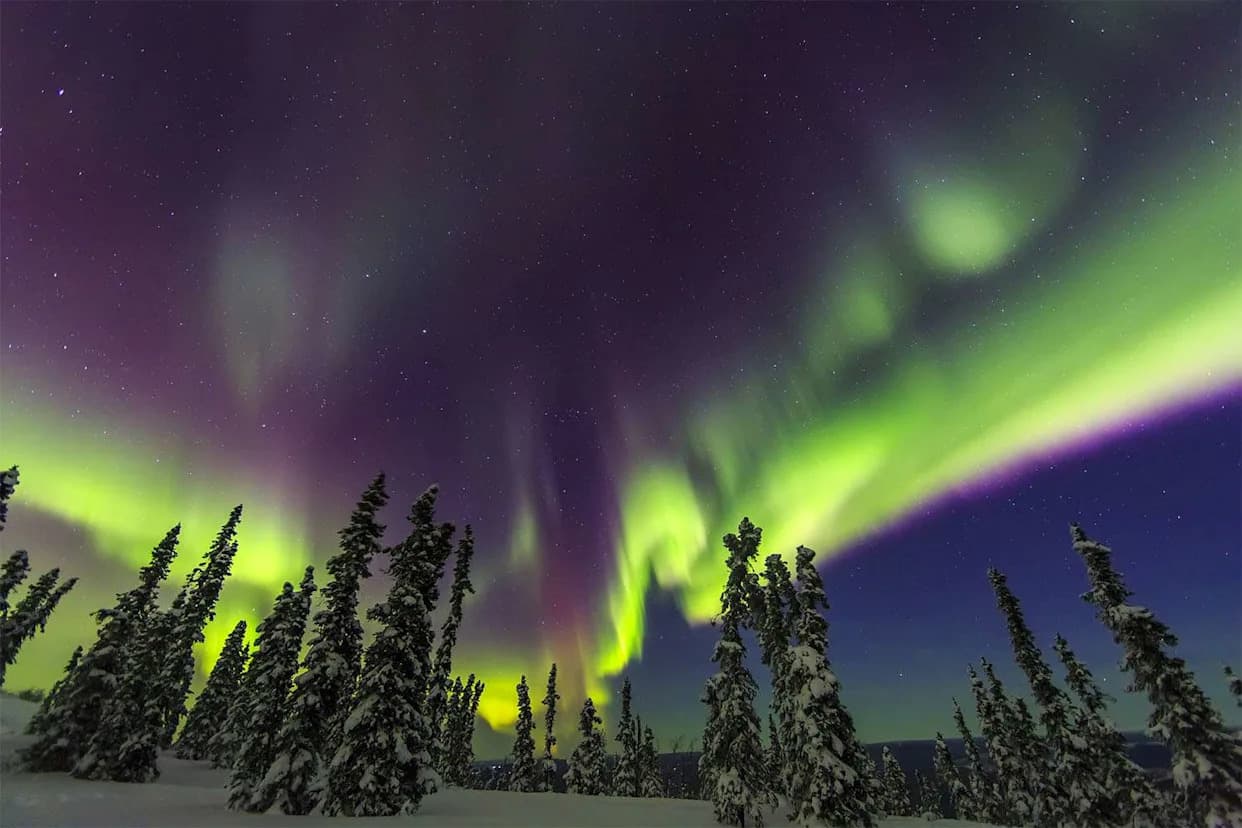
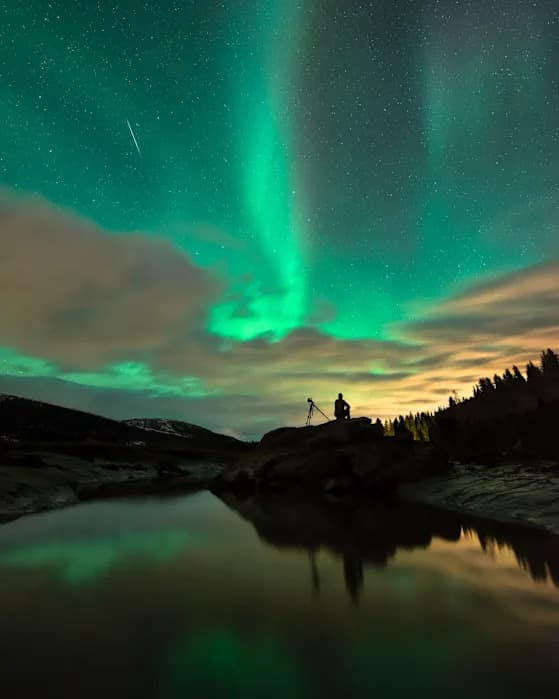
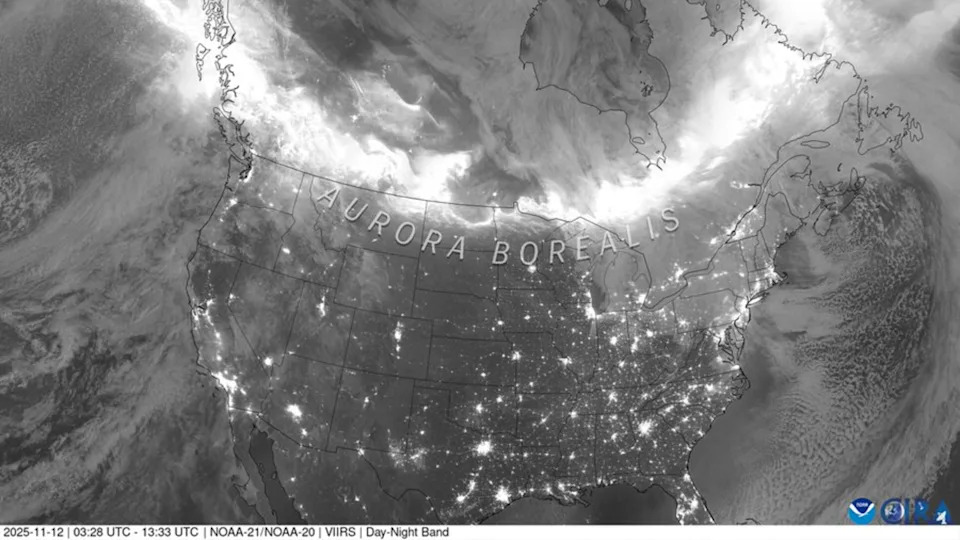
Separately, a recent strong geomagnetic storm produced brilliant auroras visible across parts of North America, offering another striking example of Earth–space interactions observable from both the ground and orbit.
This image was captured from roughly 248 miles (400 kilometers) above Earth while the ISS passed overhead.
Help us improve.