The U.S. Navy will stand up three early-command unmanned surface vessel (USV) divisions next week and deploy two medium USVs—Seahawk and Sea Hunter—under fleet control this year. Capt. Garrett Miller said the medium vessels, each about 135 feet long and optimized for surveillance, will support anti-submarine warfare and reconnaissance; Seahawk is slated to join a carrier strike group. The Navy also expanded its small USV inventory from four to hundreds in 2025 and created a dedicated warfare officer career path for unmanned systems.
U.S. Navy To Stand Up Three USV Divisions; Seahawk and Sea Hunter Set For Fleet Deployment This Year
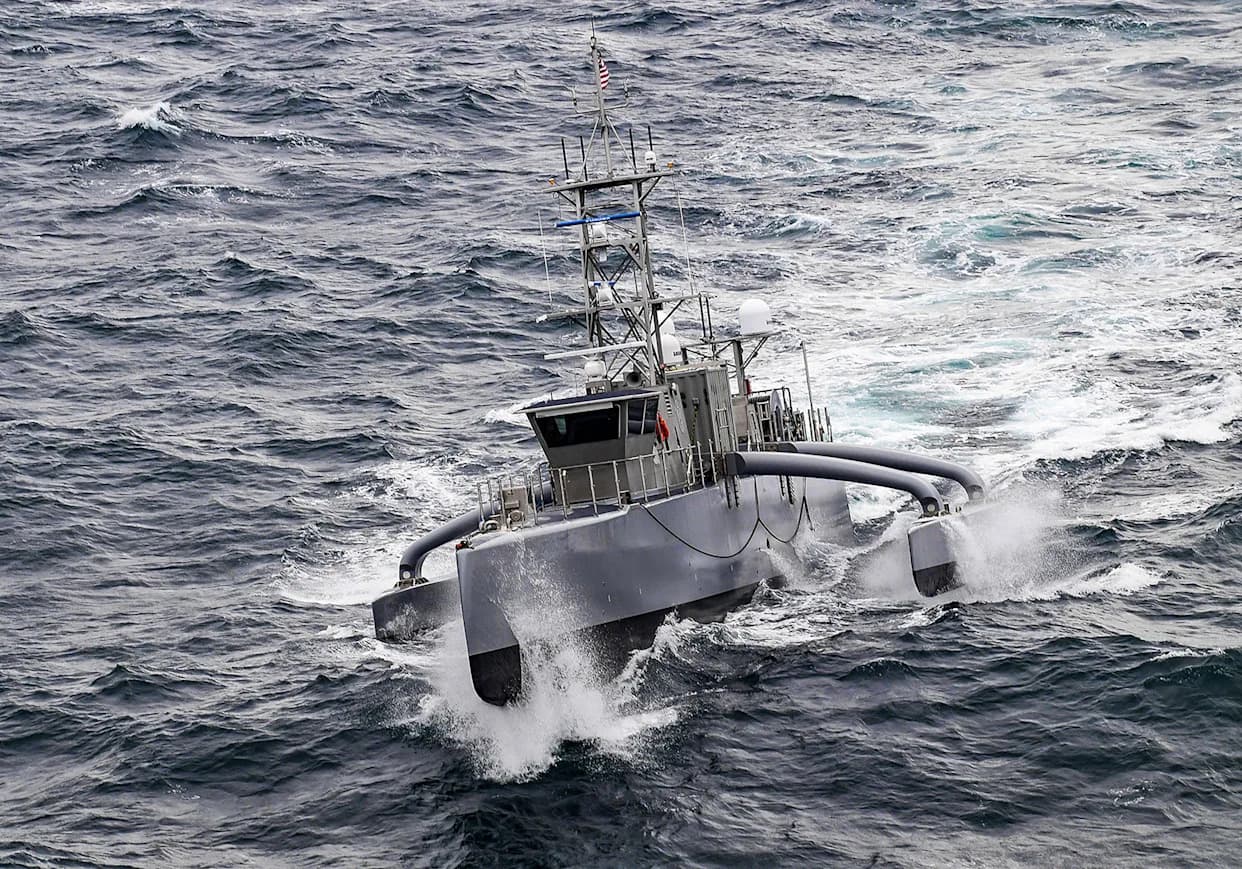
A Seahawk USV participates in a U.S. Pacific Fleet exercise, April 2021. (CMCS Shannon Renfroe/U.S. Navy)
The U.S. Navy is accelerating the integration of unmanned surface vessels (USVs) into fleet operations, announcing the formation of three early-command USV divisions next week and the transition of two medium USVs out of experimental status for fleet-controlled deployments this year.
Announcements from the Surface Navy Association Symposium
Capt. Garrett Miller, commodore of Surface Development Group One, announced the moves Wednesday at the Surface Navy Association’s 38th National Symposium in San Diego. "My command is really focused on operationalizing USVs for the fleet. We’re driving that really hard," Miller said, noting that operating fully autonomous vessels requires a "completely different mindset."
Organizational and Operational Steps
Miller confirmed to Defense News that three early command USV divisions will be stood up, with assumption of command scheduled for next week in San Diego. These divisions are intended to provide the command-and-control structure needed to operate USVs at scale alongside manned forces.
Seahawk and Sea Hunter: Moving Into the Fleet
The Navy’s medium USVs, Seahawk and Sea Hunter—each nearly 135 feet long—will transition from experimental platforms to operational assets this year. Miller said deployments will begin within the next month and that the Seahawk is planned to join a carrier strike group. Both vessels are optimized for persistent surveillance and to share sensor data with manned ships, bolstering anti-submarine warfare and reconnaissance capabilities.
Growth In Small USVs and Career Path Development
Miller also said the Navy rapidly expanded its small USV inventory from just four to hundreds in 2025 alone. To support that growth, the Navy has established a dedicated warfare officer career path focused on unmanned systems, signaling a long-term commitment to integrating these platforms into maritime operations.
Payloads and Future Capabilities
The Navy will continue acquiring USVs with containerized payloads, enabling flexible mission modules that could deliver a variety of effects, including kinetic options if required. These modular approaches are intended to make USVs adaptable to a wide range of missions as concepts of operations evolve.
Bottom line: The Navy is moving from experimentation to operational use of medium and small USVs, building organizational structures, career paths, and modular capabilities to employ unmanned surface vessels alongside traditional fleet assets.
Help us improve.