
The U.S. carried out coordinated operations to seize two oil tankers linked to Venezuela: the Marinera (ex-Bella-1) in the North Atlantic and the M/T Sophia in the Caribbean. The Marinera was boarded under a federal warrant after being tracked by USCGC Munro; U.S. officials say Navy SEALs executed the boarding. The Sophia was described as a stateless, sanctioned "dark fleet" tanker and is being escorted to the U.S. by the Coast Guard. Russia protested the Marinera seizure, citing its temporary registration under the Russian flag. U.S. officials say both actions target vessels allegedly violating sanctions and are part of efforts to disrupt a global shadow fleet.
U.S. Forces Seize Two Oil Tankers Linked to Venezuela in Atlantic and Caribbean

Locator map
U.S. forces carried out coordinated operations on Wednesday to seize two oil tankers tied to Venezuela — one in the North Atlantic and another in the Caribbean Sea, officials said.
Marinera (ex-Bella-1) — The U.S. European Command confirmed that the tanker Marinera, formerly known as Bella-1 and long associated with Venezuelan crude shipments, was boarded and seized under a U.S. federal warrant after being tracked by the cutter USCGC Munro. U.S. officials told reporters that Navy SEALs carried out the boarding; the assault force was reportedly transported to the ship by the 160th Special Operations Aviation Regiment, the "Night Stalkers." Authorities said the seizure was executed for alleged violations of U.S. sanctions.
M/T Sophia — U.S. Southern Command said a second vessel, identified as the motor tanker M/T Sophia, was intercepted before dawn in the Caribbean. The command described the ship as a "stateless, sanctioned dark fleet motor tanker" that had been operating in international waters and was judged to be in violation of the U.S. embargo on Venezuela. U.S. officials said the Sophia had been flying a Cameroonian flag and departed Venezuela with oil aboard; the Coast Guard is escorting the vessel to the United States "for final disposition."
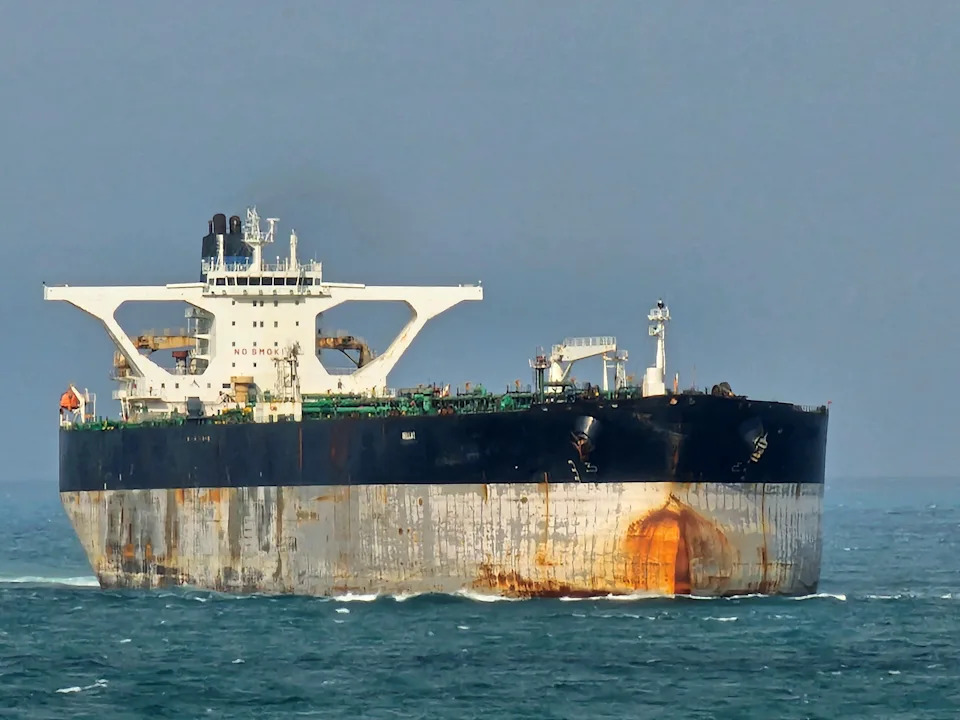
File photo: The vessel tanker Bella 1 at Singapore Strait in a picture taken from social media on March 18, 2025. / Credit: Hakon Rimmereid/via REUTERS
Operational and Legal Context
U.S. officials said they had been tracking the Marinera for weeks and that the operation followed an intensified U.S. pressure campaign related to Venezuela. The Marinera was sailing under the Russian flag at the time of the seizure and had previously flown other registries, including Panama. U.S. authorities say the vessel had been sanctioned for prior involvement in Iranian and Venezuelan oil transfers.
Two U.S. officials told reporters that Russian naval vessels, including a submarine, had been deployed in the area as the U.S. followed the Marinera. Russian authorities protested the boarding: the Russian Ministry of Transport said the ship had been granted temporary permission to sail under the Russian state flag and invoked the 1982 U.N. Convention on the Law of the Sea to criticize the use of force against a vessel it considered lawfully registered. Russia also reportedly asked Washington to halt interdiction attempts.
Wider Pattern and Aftermath
U.S. officials said the seizures are part of ongoing efforts to disrupt a so-called "shadow fleet" of tankers that allegedly move oil from sanctioned countries including Venezuela, Iran and Russia. The U.S. has seized other tankers in recent weeks, and officials indicated a preference for taking ships intact rather than resorting to destructive measures. The operations reportedly completed without injury to U.S. personnel.
White House and other U.S. officials characterized the operations as carefully coordinated law-enforcement actions taken under U.S. authority to enforce sanctions. Venezuelan leaders have denied wrongdoing and accused the United States of unlawful seizures; diplomatic tensions are likely to follow.
The situation remains fluid. U.S. authorities are escorting the vessels to U.S. ports for processing under U.S. law, and further legal and diplomatic developments are expected as investigations continue.
Help us improve.


