President Trump unveiled plans for a new "Trump‑class" battleship — large surface combatants up to 880 feet long and 30,000–40,000 tons that would carry heavy offensive payloads including 12 nuclear‑capable hypersonic cruise missiles and 128 VLS cells. Analysts warn the U.S. shipbuilding base, workforce, program management and unproven weapon technologies (like railguns) present major hurdles. Cost estimates reach up to $15 billion per ship, and critics question whether large, concentrated platforms are survivable against modern missile, drone and undersea threats. Making the program feasible would require significant industrial investment, managerial reform and likely allied cooperation.
Trump Unveils 'Trump‑Class' Battleships — Could Revive U.S. Naval Power Or Strain It To The Breaking Point

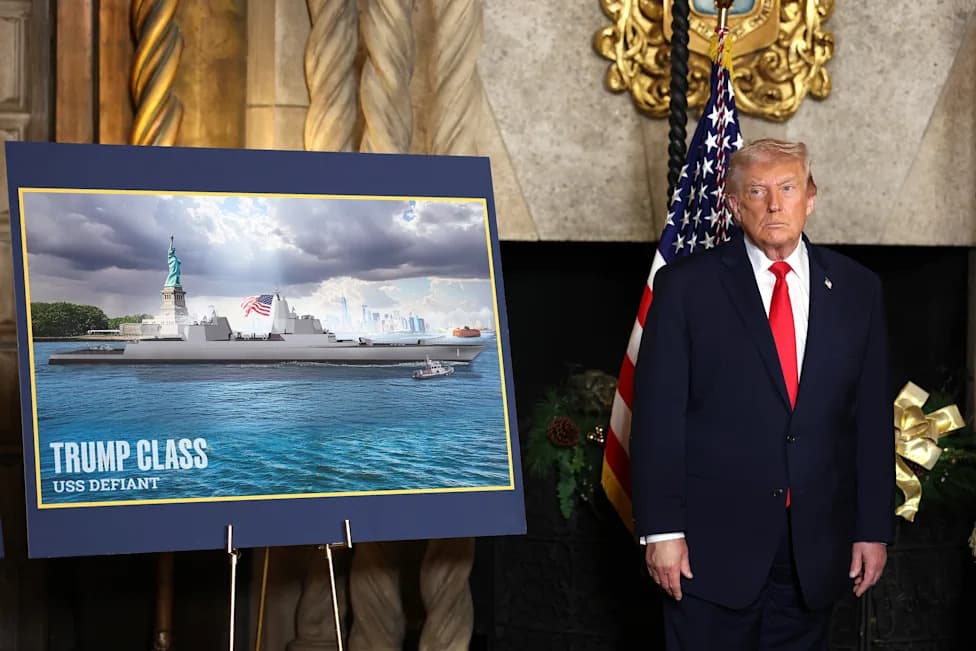
US President Donald Trump makes an announcement about the Navy's "Golden Fleet," as Secretary of State Marco Rubio listens, at Mar-a-lago in Palm Beach, Florida, on December 22, 2025. - Jessica Koscielniak/Reuters
President Donald Trump announced a plan to build a new class of surface warships bearing his name, thrusting fresh attention on a U.S. shipbuilding sector that has struggled in recent years to deliver large, complex vessels on time and on budget. The Navy’s fact sheet calls the proposed "Trump‑class" the "most lethal warship to ever be built," but analysts warn serious industrial, technical and strategic obstacles stand in the way.
What The Trump‑Class Would Feature
According to Navy materials, each Trump‑class hull could measure up to 880 feet and displace 30,000–40,000 tons — making them the largest U.S. surface combatants since World War II. The concept promises heavy firepower: 12 deck‑launched, nuclear‑capable cruise missiles described as hypersonic and maneuverable; 128 vertical launch system (VLS) cells for Tomahawk‑style cruise missiles, anti‑ship missiles or interceptors; a proposed railgun; conventional five‑inch guns; lasers; and an array of smaller defensive weapons.
"We make the greatest equipment in the world, by far, nobody's even close. But we don't produce them fast enough,"
Trump also said the ships would be up to 100 times more powerful than World War II battleships and that he intends to take a direct role in the design process. The administration has not provided a timeline for design or construction of the first hulls.
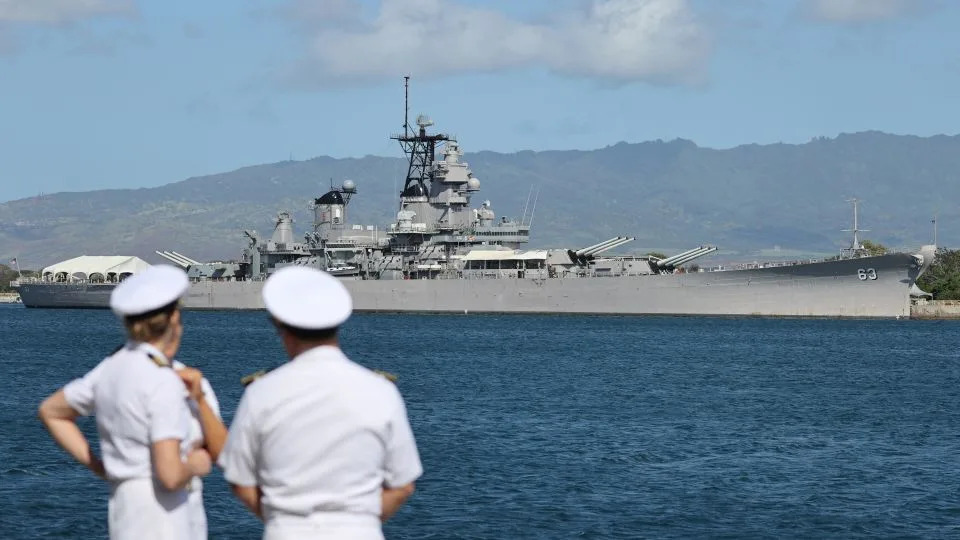
With the USS Missouri batteship memorial in the background, US Navy personnel await the start of the US Indo-Pacific Command (INDOPACOM) change of command ceremony on Kilo Pier at Joint Base Pearl Harbor-Hickam in Honolulu, Hawaii, on May 3, 2024. - Marco Garcia/AFP/Getty Images
Industrial, Workforce And Management Hurdles
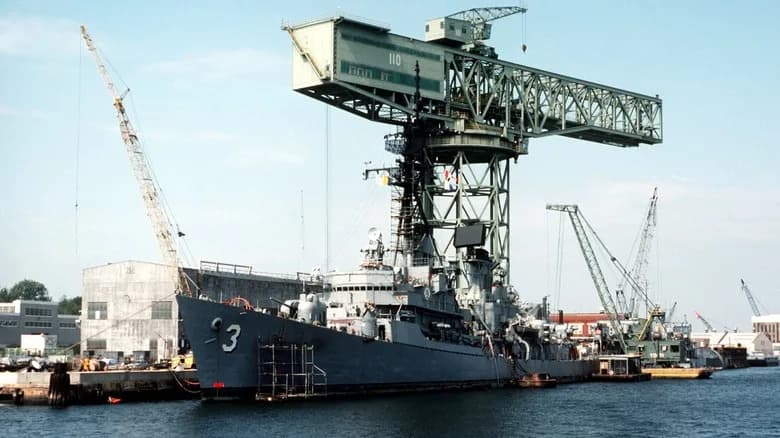
Experts and senior Navy officials point to multiple constraints. Navy leadership has acknowledged recent programs are late and over budget; senior Navy testimony cited programs running months behind and more than 50% over planned costs. The Constellation‑class frigate program was recently canceled after slipping years behind schedule, and the new carrier USS John F. Kennedy has encountered a roughly two‑year delay tied to complex systems certification.
Shipyards are already committed to new construction, maintenance and overhauls, and yards capable of handling 30,000‑ton hulls are limited. Carl Schuster, a former Navy captain and analyst, warned that the U.S. no longer has the maritime industrial infrastructure to add several ships of this size quickly, and that dock space for large amphibious and logistics ships competes directly with a Trump‑class program.
Workforce shortages and recruiting challenges amplify the problem. Building and equipping these ships would require a national‑scale recruitment and training effort for shipyard trades and technical specialists — a difficult task when commercial employers often compete on pay and hiring speed.
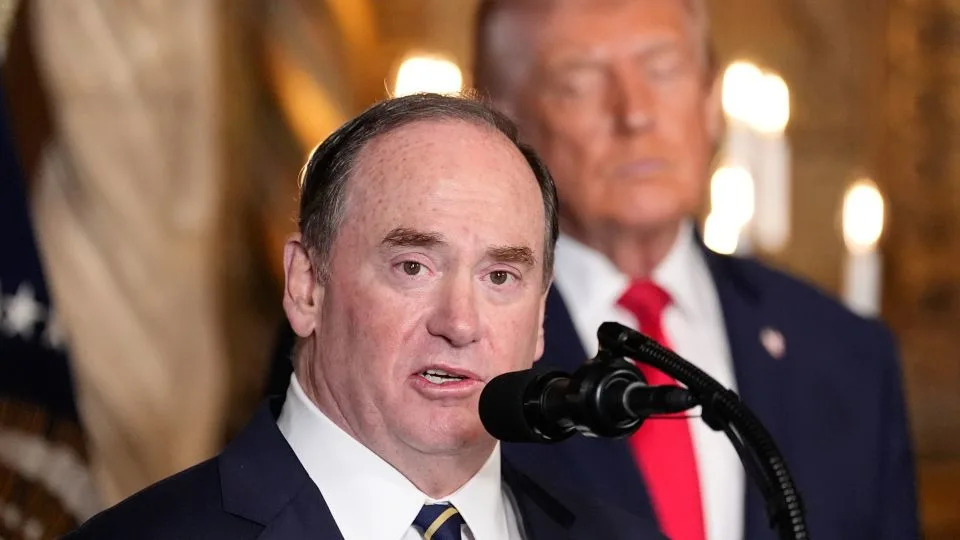
Secretary of the Navy John Phelan speaks, as President Donald Trump listens, at Trump's Mar-a-Lago club in Palm Beach, Florida on December 22, 2025. - Alex Brandon/AP
Technical And Cost Risks
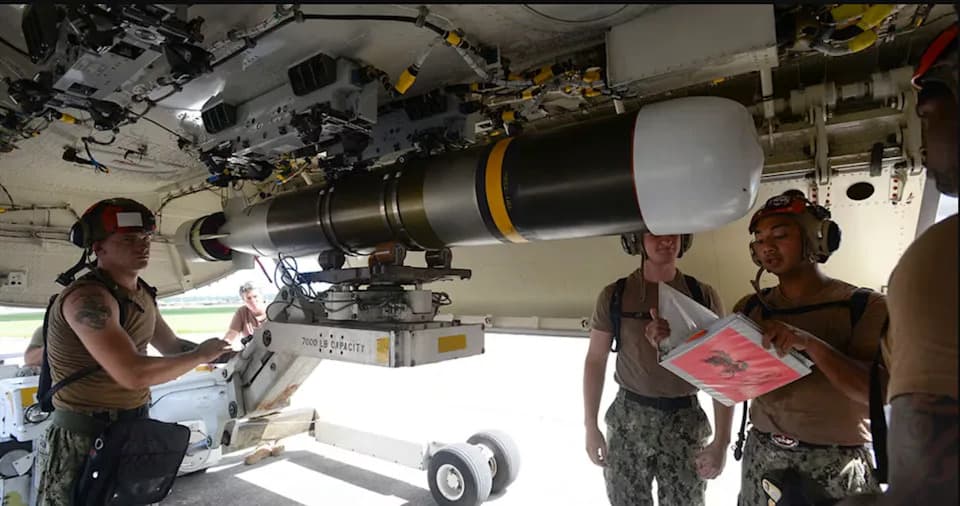
Some weapons planned for the ships remain unproven or have been shelved. The Navy halted its railgun program in 2021 after persistent technical and power‑generation challenges. Hypersonic, nuclear‑capable cruise missiles and other advanced systems would also require sustained development and budgeting.
Cost estimates vary, but analysts suggest a Trump‑class hull could cost as much as $15 billion — several times the roughly $2 billion price of an Arleigh Burke‑class destroyer. The Navy’s recent history of cutting planned class sizes (e.g., Zumwalt and Constellation) and programs that produced hulls with limited operational success (e.g., Littoral Combat Ship) raises questions about whether an ambitious new class could be delivered as envisioned.
Strategic Questions: Survivability And Operational Fit
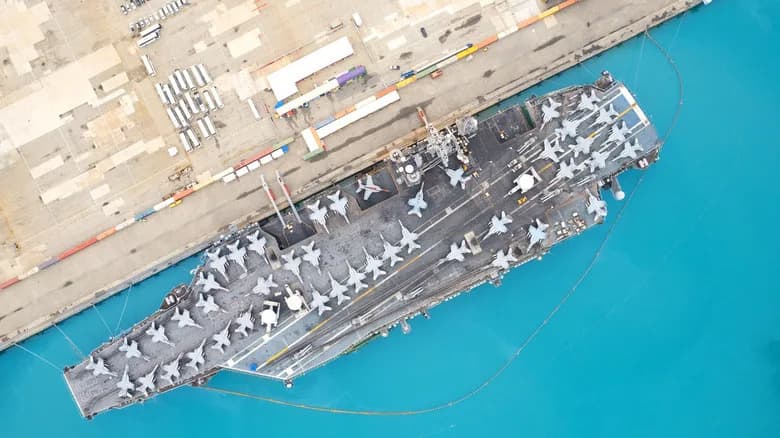
Even if built, large surface combatants face evolving threats. Critics note the same vulnerability debates that surround aircraft carriers apply to giant surface ships: advanced ballistic missiles such as China’s DF‑26, long‑range anti‑ship weapons, and affordable unmanned systems (air, surface and undersea) complicate the utility and survivability of concentrated, high‑value platforms.
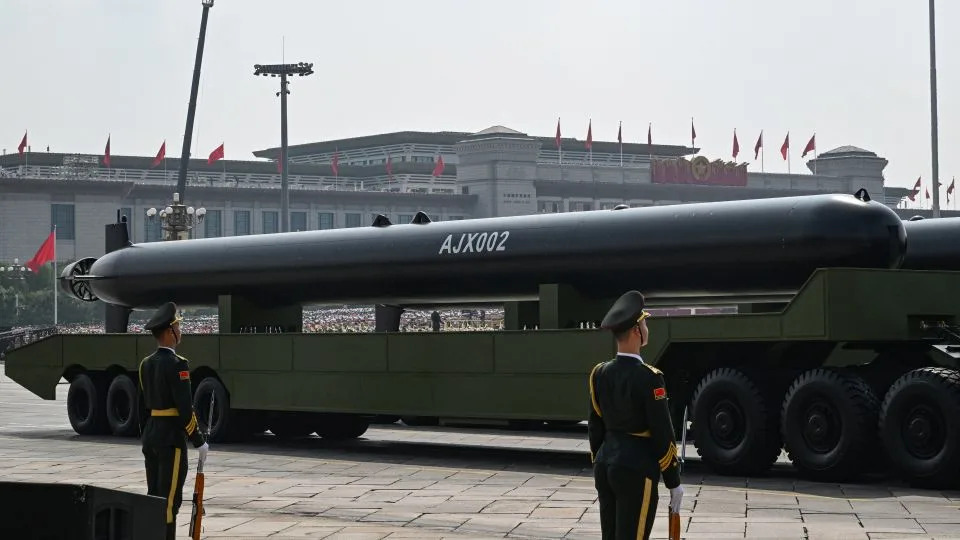
An AJX002 unmanned underwater vehicles is seen during a military parade marking the 80th anniversary of victory over Japan and the end of World War II, in Beijing's Tiananmen Square, on September 3, 2025. - Greg Baker/AFP/Getty Images
Some analysts advocate instead for distributed fleets of smaller, more numerous ships and unmanned systems that increase resiliency by dispersing force and complicating an adversary’s targeting calculus. Others say allies with shared interests — notably Japan and South Korea — could play a role in expanding shipbuilding capacity and industrial cooperation, though legal and policy barriers remain.
Bottom Line
The Trump‑class proposal is politically bold and evocative of past U.S. industrial mobilizations, but turning the concept into an operational fleet would demand major investments in shipyards, skilled labor, program management reform and weapons development. Success would likely require clear funding commitments, management changes within naval acquisition organizations, and potentially international industrial partnerships.
Notable Details: proposed length up to 880 ft; displacement 30,000–40,000 tons; 12 deck‑launched nuclear‑capable hypersonic missiles; 128 VLS cells; estimated cost up to $15 billion per hull; railgun program previously canceled in 2021.
Help us improve.