Researchers at the University of Illinois used a new instrument, Stomata In‑Sight, to film stomatal opening and closing in real time while measuring CO2 uptake and water loss. The system links microscopic pore movements to gas exchange, revealing the trade‑off between photosynthesis and water conservation. These measurements can guide breeding of crops that require less water, improving resilience in drought‑prone regions.
Watch: New 'Stomata In‑Sight' System Films Plant 'Breathing' in Real Time
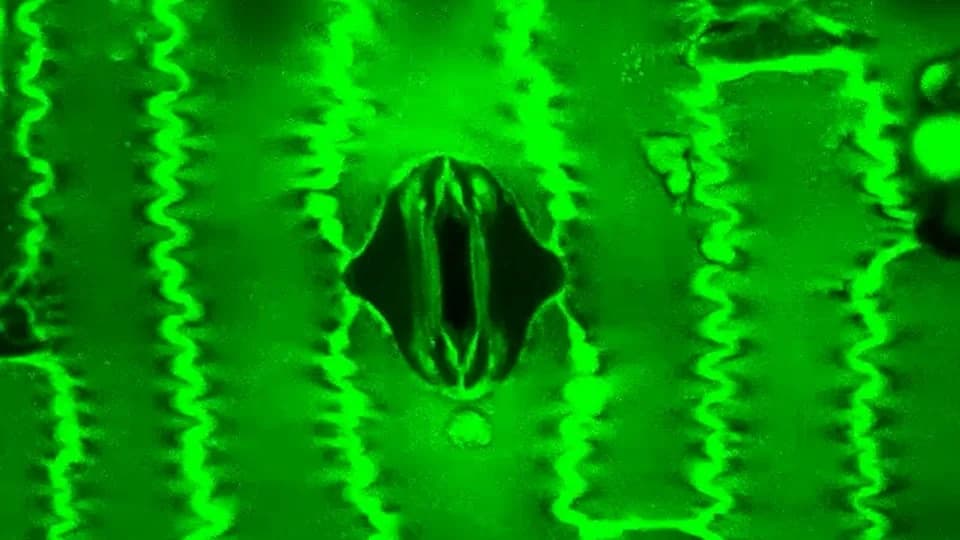
Still image taken from video showing stomata on plant opening and closing/breathing. (Credit: University of Illinois at Urbana-Champaign Institute for Sustainability, Energy, and Environment)
Researchers at the University of Illinois at Urbana‑Champaign have, for the first time, filmed a plant "breathing" in real time using a novel instrument called Stomata In‑Sight. The video captures microscopic openings on leaf surfaces—stomata—opening and closing while the device simultaneously measures carbon dioxide uptake and water loss.
How the Tool Works
The Stomata In‑Sight system combines high‑resolution imaging with gas measurements to quantify the trade‑off between photosynthesis and water conservation. Cameras record the tiny movements of stomatal pores while sensors measure how much CO2 is entering and how much water vapor is leaving the leaf.
Guard Cells and Plant Physiology
Specialized guard cells flank each stomatal pore and respond to light, humidity and water availability by opening or closing the pore. Andrew Leakey of the Department of Plant Biology and the Institute for Genomic Biology at the University of Illinois explained how this regulation balances carbon gain with water loss.
"For example, stomata open in the light to allow photosynthesis and close in the dark or during drought to minimize water loss. When plants lack sufficient water—because conditions are hot and dry or because they aren't watered—they begin to wilt and growth suffers," Leakey said.
Why This Matters
Directly visualizing stomatal dynamics and measuring the associated gas exchange gives breeders and physiologists actionable data. Those insights can speed the development of crop varieties that maintain productivity with less water—helping stabilize food, biofuel and other plant‑based supplies in drought‑prone regions.
Source: The findings are reported in a study published in Plant Physiology on Nov. 17, 2025. This story was reported from San Jose.
Help us improve.