The two-week nationwide protests in Iran have continued into a third week amid an internet and phone blackout. U.S.-based activists report at least 538 dead and roughly 10,600 detained as demonstrations spread from Tehran to cities such as Mashhad and Kerman. Hard-line leaders have threatened harsh reprisals and warned the U.S. and Israel could become "legitimate targets" if Iran is attacked, while U.S. officials said military options were presented to former President Trump. The unrest, sparked by the rial's collapse, has evolved into a major challenge to the theocratic system.
Iran Threatens Protesters and U.S. Forces as Nationwide Unrest Enters Third Week
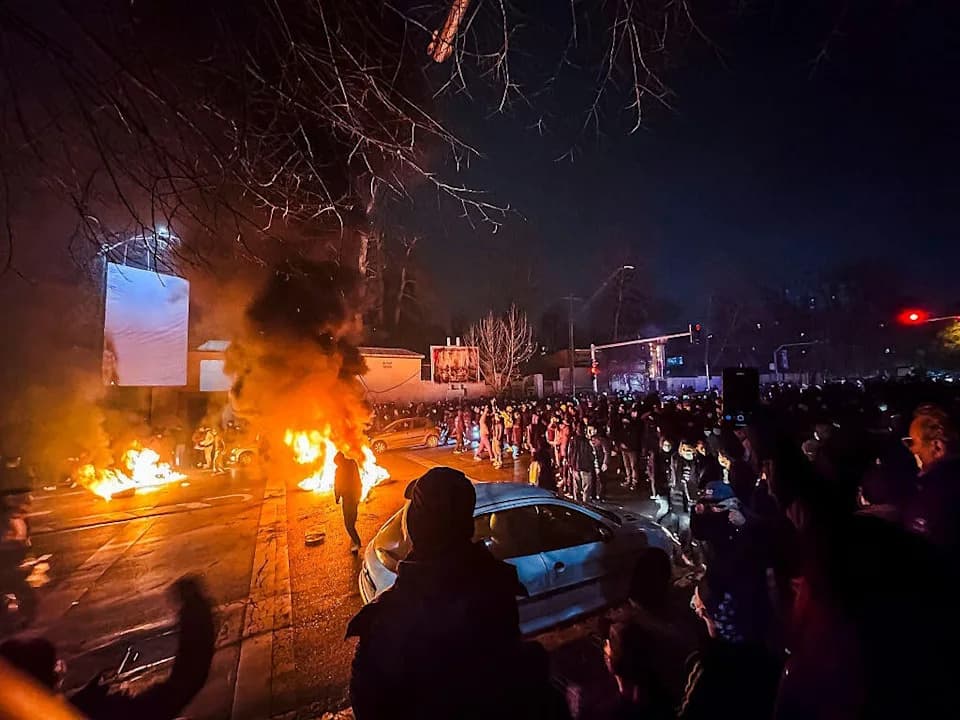
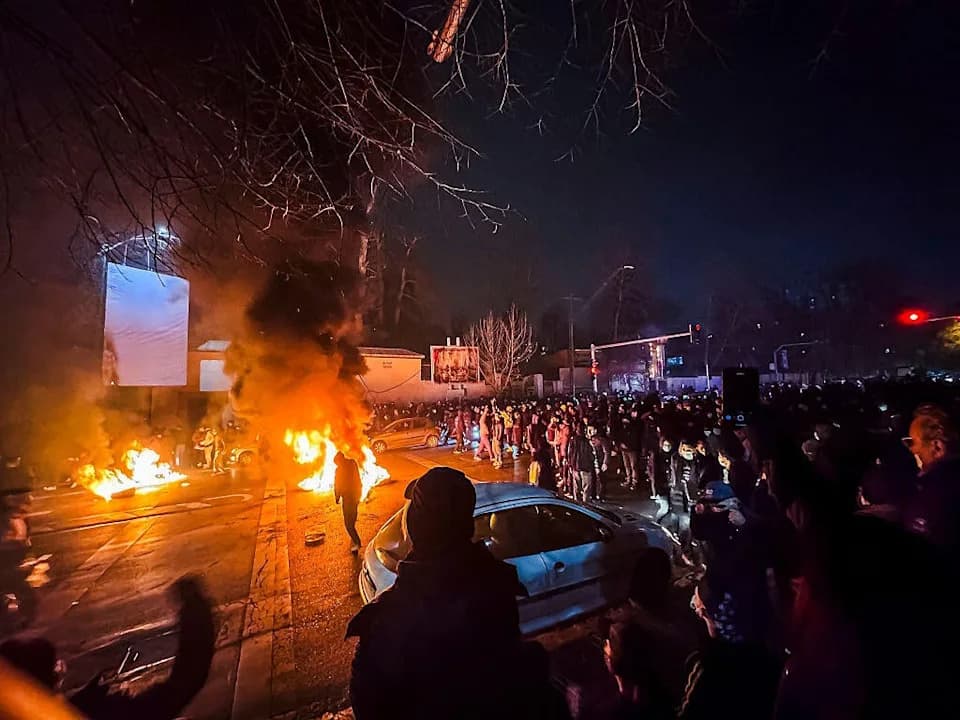
Iranians gather while blocking a street during a protest in Tehran, Iran, on Jan. 9, 2026. / Credit: MAHSA/Middle East Images/AFP via Getty
Dubai, United Arab Emirates — Nationwide protests challenging Iran's theocratic system entered a third consecutive week as crowds filled the streets of Tehran and other major cities from Saturday night into Sunday morning. U.S.-based activists reported that at least 538 people have died in violence linked to the demonstrations, and thousands more have been detained amid a widespread communications blackout.
Casualties, Detentions and Information Blackout
The U.S.-based Human Rights Activists News Agency (HRANA), which relies on a network of contacts inside Iran, reported that 490 of the dead were protesters and 48 were members of security forces and warned the toll may rise. HRANA also said about 10,600 people have been detained during the two weeks of unrest. Iranian authorities have not published comprehensive casualty figures.
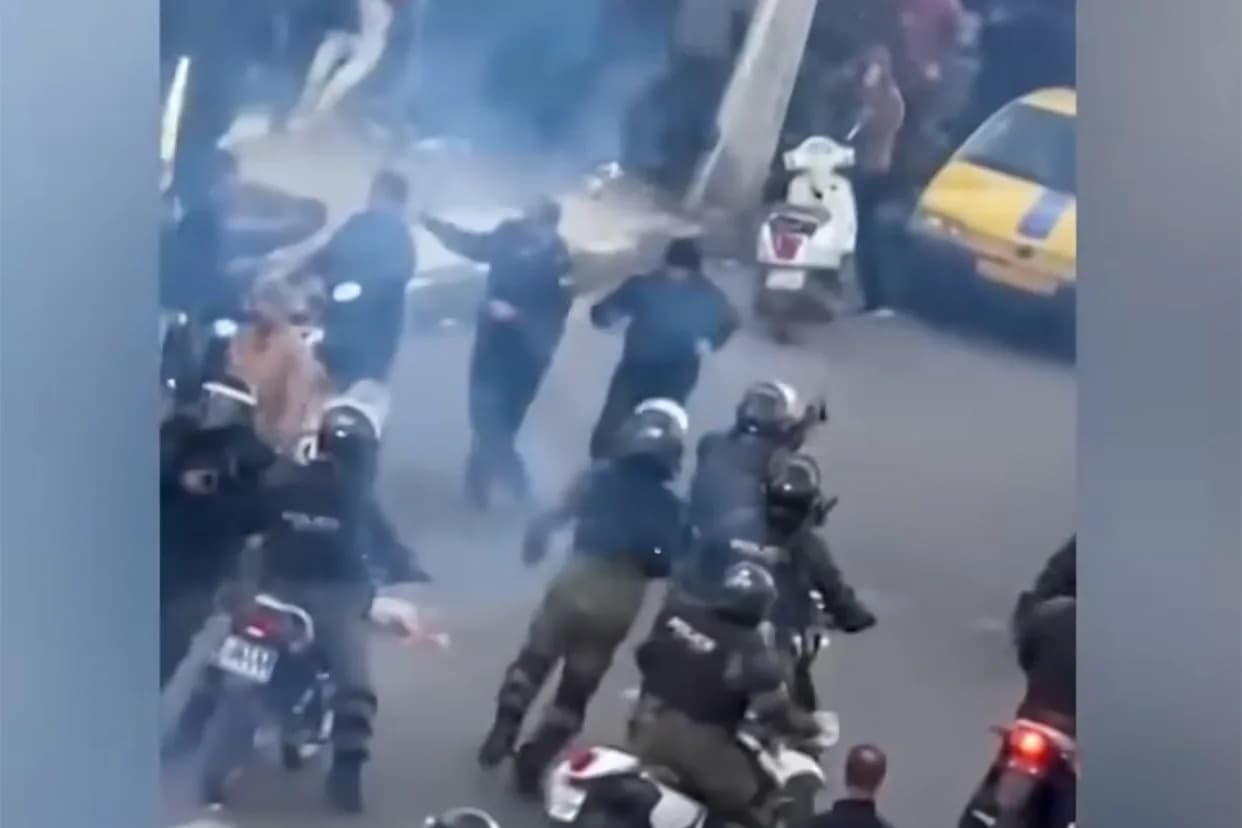
Authorities cut internet access and international telephone service, complicating efforts by foreign media and human rights groups to verify events on the ground. Observers say the communications blackout may enable a more forceful security response.
Government Rhetoric and Threats Abroad
Iran's theocratic leadership has issued stern warnings against protesters and accused foreign governments—particularly the U.S. and Israel—of fomenting unrest. In a televised parliament session, Speaker Mohammad Bagher Qalibaf praised police and the paramilitary Revolutionary Guard and threatened that, "In the event of an attack on Iran, both the occupied territory and all American military centers, bases and ships in the region will be our legitimate targets."
Attorney General Mohammad Movahedi Azad said participants in the protests could be deemed "enemies of God," an accusation that carries the death penalty under Iran's laws, and warned that those who "helped rioters" could face severe punishment.
U.S. Response and Regional Tensions
On social media, former President Donald Trump wrote that "Iran is looking at FREEDOM, perhaps like never before. The USA stands ready to help!!!" U.S. officials told media outlets that Trump had been briefed on military options, though no final decision was reported. The U.S. military said forces in the Middle East are "postured with forces that span the full range of combat capability to defend our forces, our partners and allies and U.S. interests."
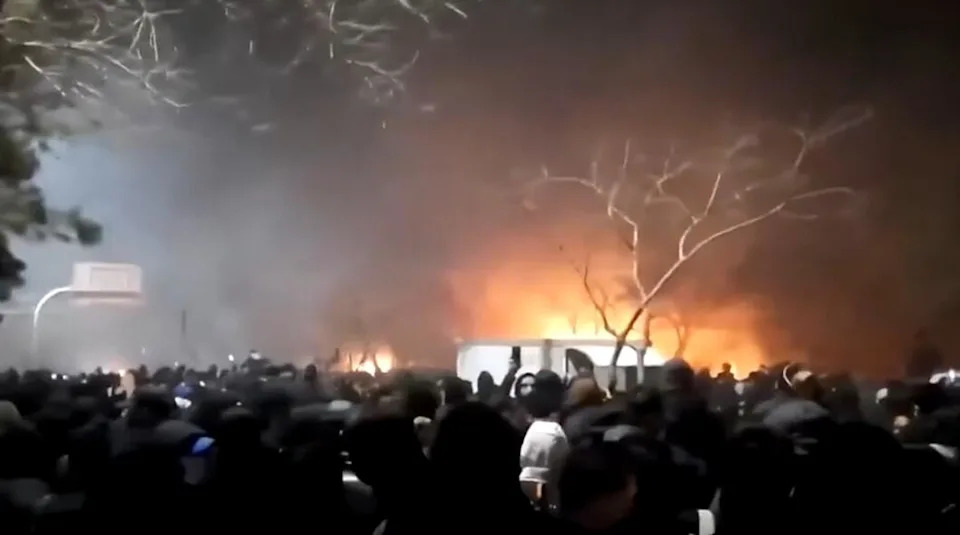
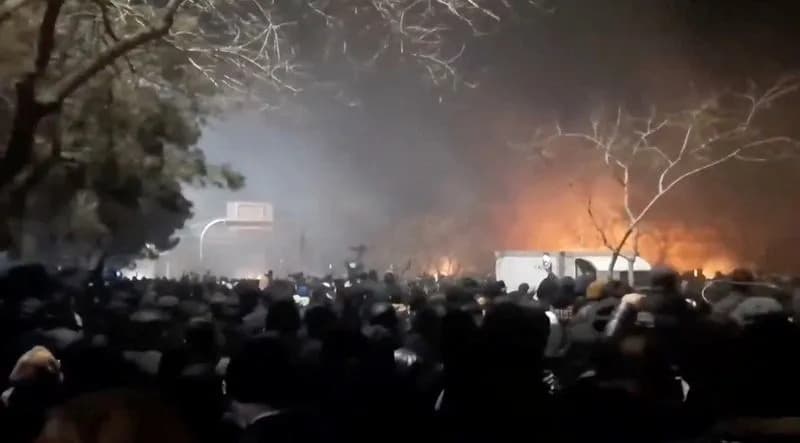
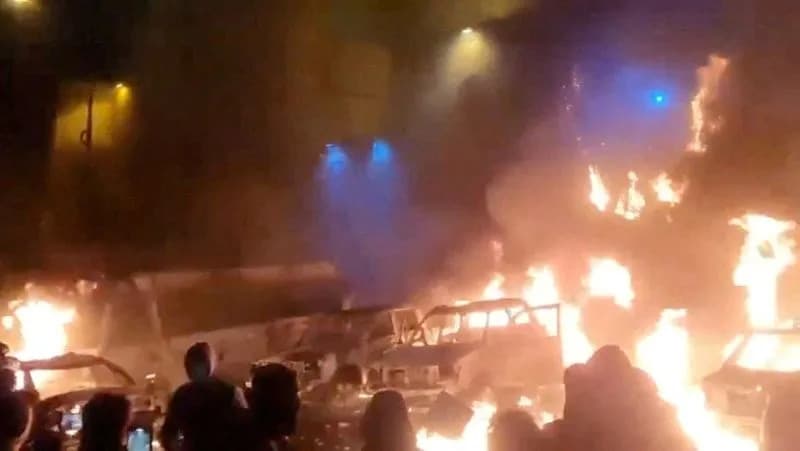
An image from a video posted on social media on Jan. 10, 2026, shows large crowds of protesters gathered along the Vakil Abad highway in Iran's northeast city of Mashhad, chanting slogans as fires burn. / Credit: Reuters/Social media
Regional actors, including Israel, said they were monitoring the situation closely. Israeli officials, speaking anonymously to the press, confirmed high-level consultations with U.S. counterparts.
Protests Across Cities and Local Dynamics
Online videos—some likely transmitted via satellite terminals—showed scattered gatherings in Tehran's Punak neighborhood, where residents waved lit mobile phones and banged metal. In Mashhad, Iran's second-largest city and home to the Imam Reza shrine, footage showed confrontations and flaming debris blocking streets. Demonstrations were also reported in Kerman and other cities.
HRANA described the protests in Tehran as "scattered, short-lived and fluid," a strategy shaped by the heavy presence of security forces and surveillance, including reports of drones and security patrols around protest sites. State television sought to portray calm by sending reporters to selected cities and showing pro-government demonstrations.
Opposition Voices and Roots of Unrest
Exiled figures such as Crown Prince Reza Pahlavi urged supporters to carry pre-1979 national symbols, including the lion-and-sun flag, to reclaim public spaces. Pahlavi's past interactions with foreign governments, including Israel, have been controversial and remain a point of debate among demonstrators.
The protests began Dec. 28 amid a collapse in the value of the Iranian rial — trading at more than 1.4 million to $1 — and growing economic hardship exacerbated by international sanctions. What began as demonstrations over economic conditions has evolved into broader, more political challenges to the country's theocratic governance.
Outlook
With a communications blackout, escalating rhetoric, and thousands detained, the situation remains volatile. Analysts warn the combination of domestic unrest and regional tensions raises the risk of further violence or miscalculation. Much depends on decisions by Iran's leadership, the response of security forces on the ground, and actions by international actors watching closely.
Help us improve.