As Uganda heads to the polls, troops and armored vehicles are patrolling Kampala while mobile internet services were ordered suspended less than 48 hours before voting. Incumbent Yoweri Museveni is campaigning for a seventh term against main challenger Bobi Wine amid allegations of security force intimidation and past claims of electoral misconduct. Observers say Museveni remains the favorite, while growing military influence — and the prominent role of his son, General Muhoozi Kainerugaba — has intensified concerns about dynastic and authoritarian drift.
Troops Patrol Kampala and Mobile Internet Cut Days Before Uganda’s High-Stakes Presidential Vote
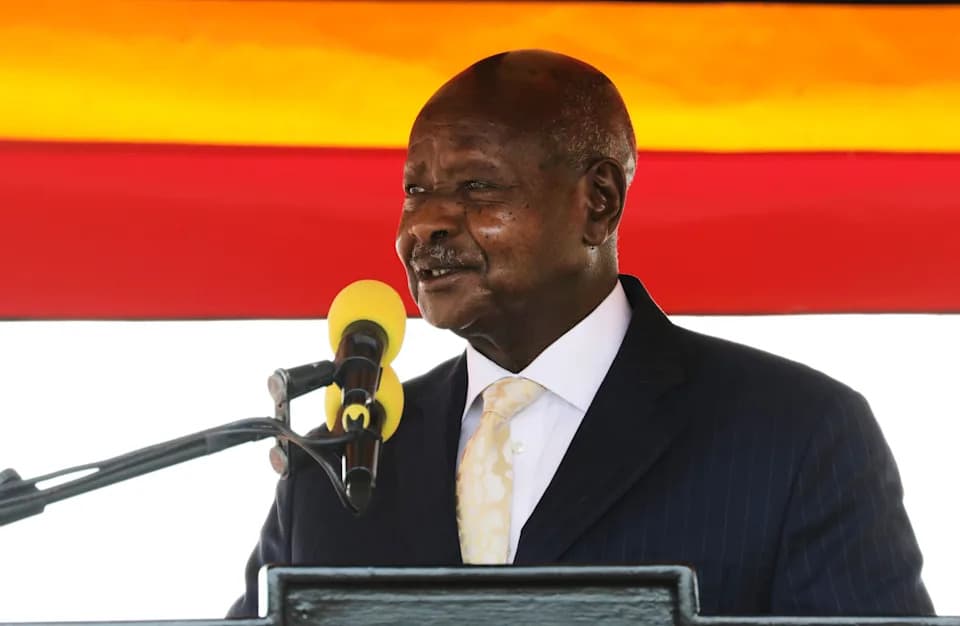
FILE - Ugandan President Yoweri Museveni speaks during the 60th Independence Anniversary Celebrations, in Kololo, Uganda, Sunday Oct. 9, 2022. (AP Photo/Hajarah Nalwadda, file)(ASSOCIATED PRESS)
Kampala — Uganda prepared for a pivotal presidential election while troops and armored vehicles patrolled the capital and mobile internet services were ordered suspended less than 48 hours before polling. The security posture and communications blackout have heightened concerns among opposition leaders and international observers about the conduct of the vote and the role of the military in politics.
Security Deployment and Internet Shutdown
The Uganda Communications Commission on Tuesday instructed mobile internet providers to temporarily suspend services, citing risks of misinformation, electoral fraud and incitement to violence. A letter to providers said services would be restored only after the commission issues a formal notice.
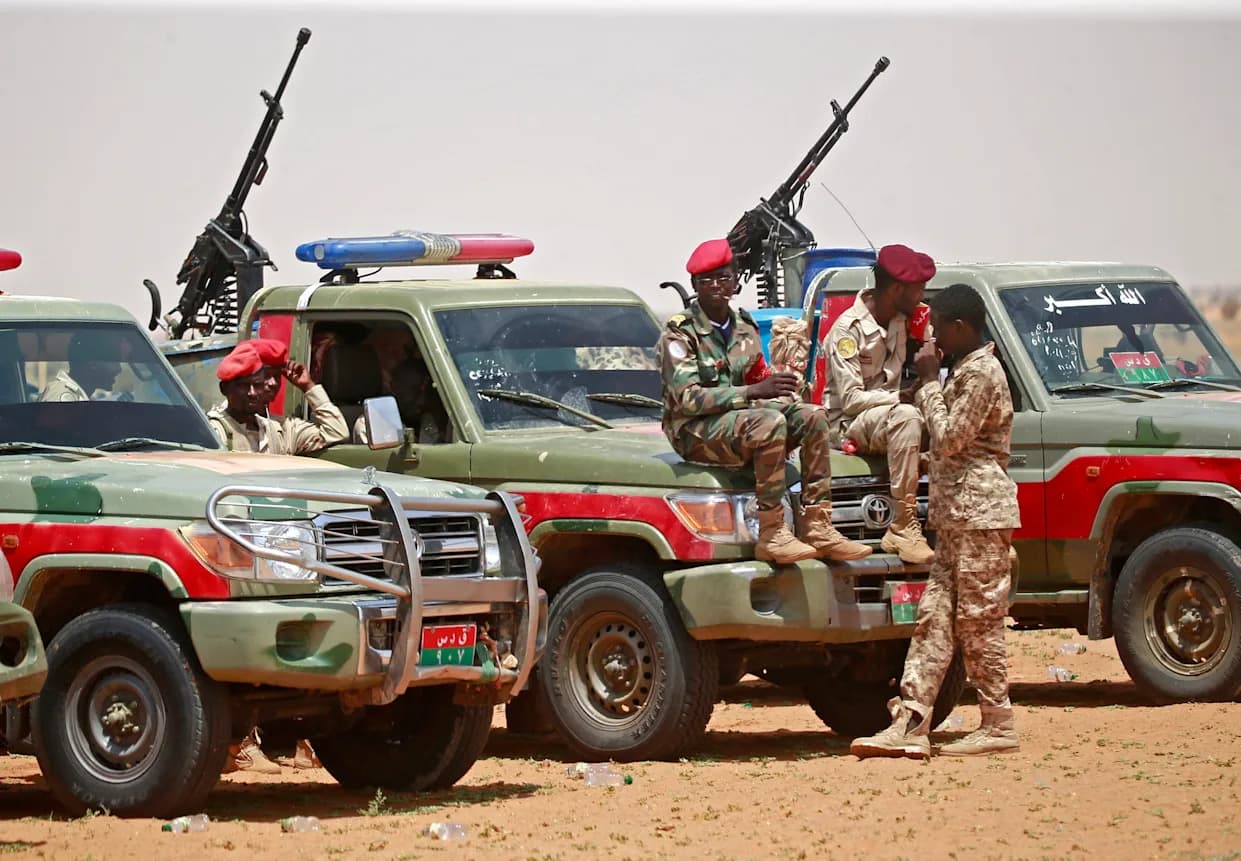
Security forces began visible deployments in parts of Kampala on Saturday, with armored trucks moving into neighborhoods and soldiers conducting street patrols. Military spokesman Col. Chris Magezi said the troops were deployed to deter violence and dismissed suggestions the mobilization was anti-democratic.
“No cause for alarm,” Col. Chris Magezi said, adding that threats of violence during the election period by some political actors and their supporters would not be taken lightly.
Candidates, Voters and International Views
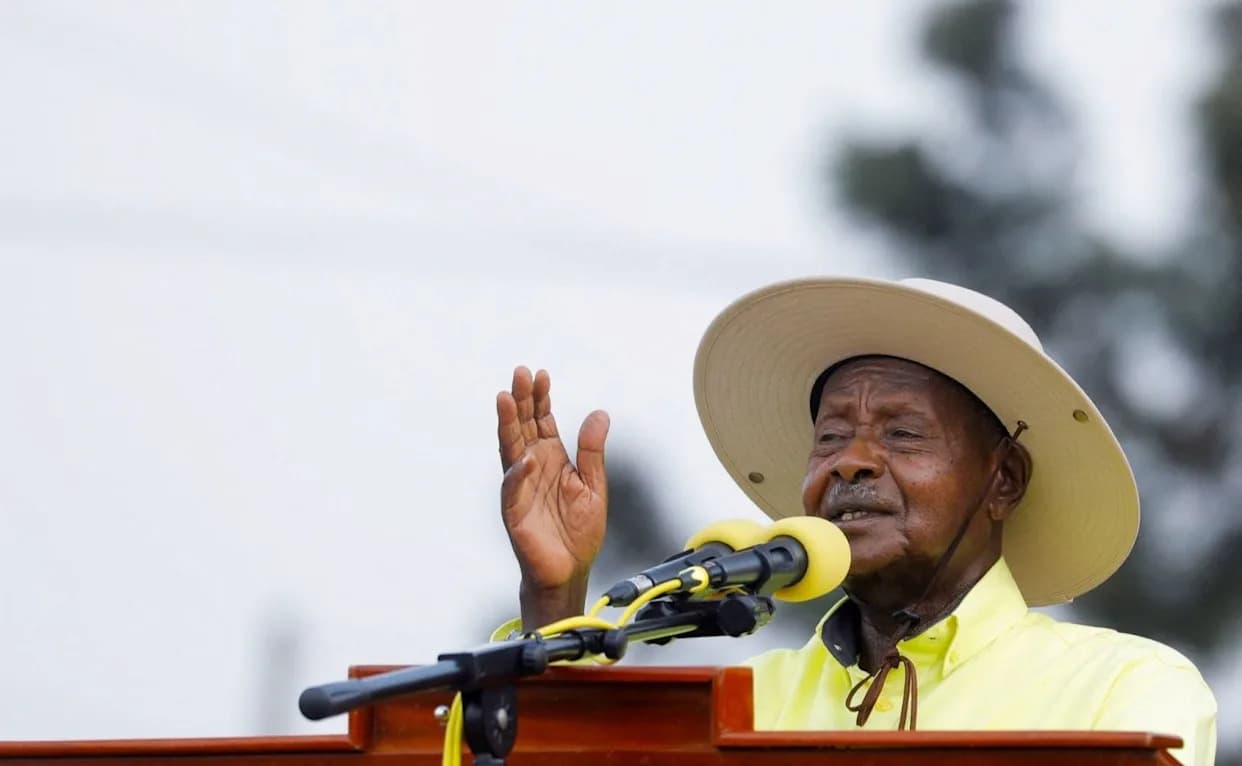
Incumbent President Yoweri Museveni, Africa’s third-longest serving head of state, is seeking a seventh term to extend his rule into a fifth decade. His principal challenger is singer-turned-politician Bobi Wine (Kyagulanyi Ssentamu). Six other candidates are also on the ballot.
Electoral authorities report roughly 21.6 million registered voters in a country of about 45 million people. The Brussels-based International Crisis Group has said Museveni “will likely retain power in forthcoming polls,” reflecting international expectations that the incumbent is favored.
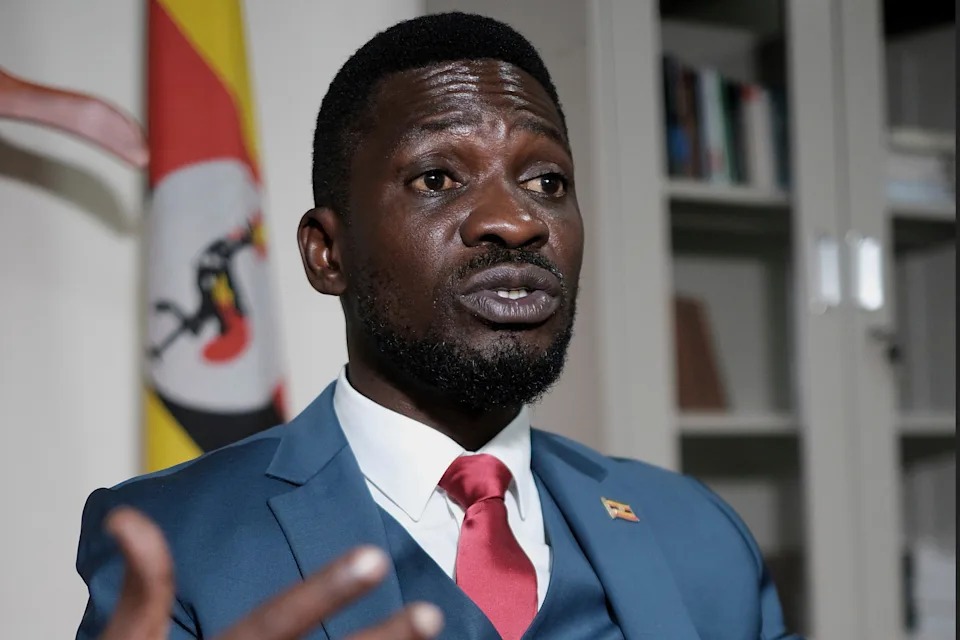
FILE - Ugandan singer, politician, and opposition figure Bobi Wine speaks to The Associated Press at his political party office (National Unity Platform) in Kampala, Uganda, Thursday, July 24, 2025. (AP Photo/Hajarah Nalwadda, file)(ASSOCIATED PRESS)
Campaign Climate and Voter Concerns
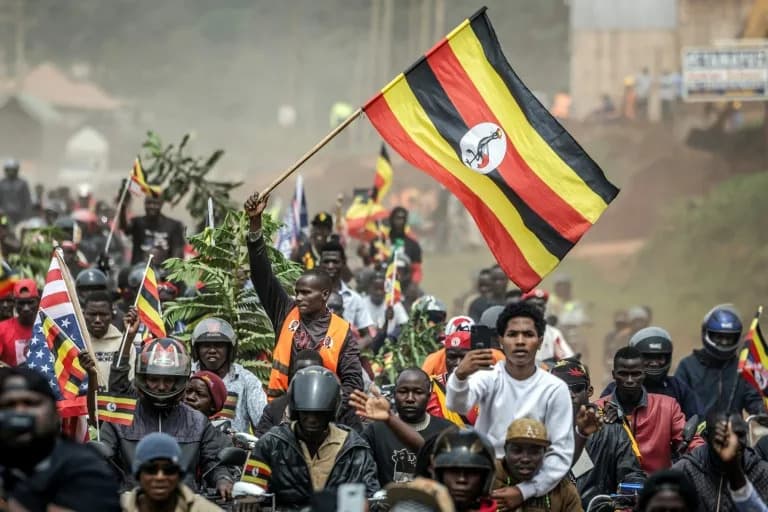
The contest renews the rivalry that gained intensity in the 2021 election, when Bobi Wine energized many young urban voters. Turnout in 2021 was about 59%, with Wine receiving roughly 35% of the vote to Museveni’s 58% — Museveni’s narrowest margin since he first ran decades ago. Wine, 43, has continued to draw large rallies in parts of Kampala and eastern Uganda and has, at times, worn a flak jacket and helmet at public events citing security concerns.
Wine and his supporters have accused security forces of using tear gas and, in some instances, live ammunition against demonstrators, allegations echoed by Amnesty International. Museveni has publicly dismissed Wine as unpatriotic and an agent of foreign interests, claims Wine denies. Elements within the ruling National Resistance Movement have suggested Museveni would not willingly hand power to Wine if he prevailed.
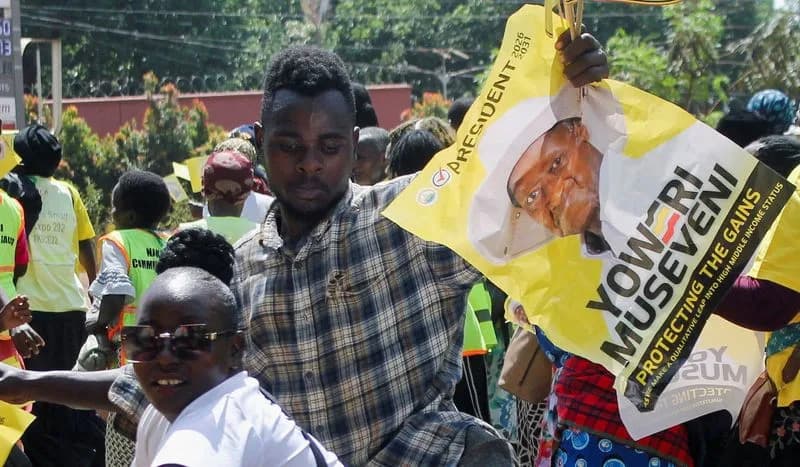
Many voters interviewed by reporters said jobs and economic opportunity are top priorities. Farouk Mugaya, 37, who works as a motorcycle taxi operator in Kampala, told reporters: “They have had enough time to protect the gains. I want to see change.” Denis Oraku, a mason, added: “Uganda is very hard. Getting money is not easy. Despite relative peace, we have no jobs.”
Historical Context and Dynastic Concerns
Museveni first came to power leading a guerrilla movement that ended periods of brutal rule and civil strife. He has been elected six times since 1996 amid frequent accusations of election irregularities and interference by security forces.
Critics warn that Museveni’s hold on power increasingly depends on the military leadership, notably his son, Muhoozi Kainerugaba, a four-star general whose high profile and controversial social media posts have drawn international attention. Muhoozi has publicly suggested he expects to succeed his father, fueling worries about dynastic succession and erosion of democratic norms.
“Time is not on his side,” analyst Robert Kabushenga said on a popular podcast. “For the first time he is actually, really an outsider. Why? Because he doesn’t represent the future.”
The election will be closely watched at home and abroad for signs of whether it will be free, fair and peaceful amid heavy security presence and limited communications.
Help us improve.