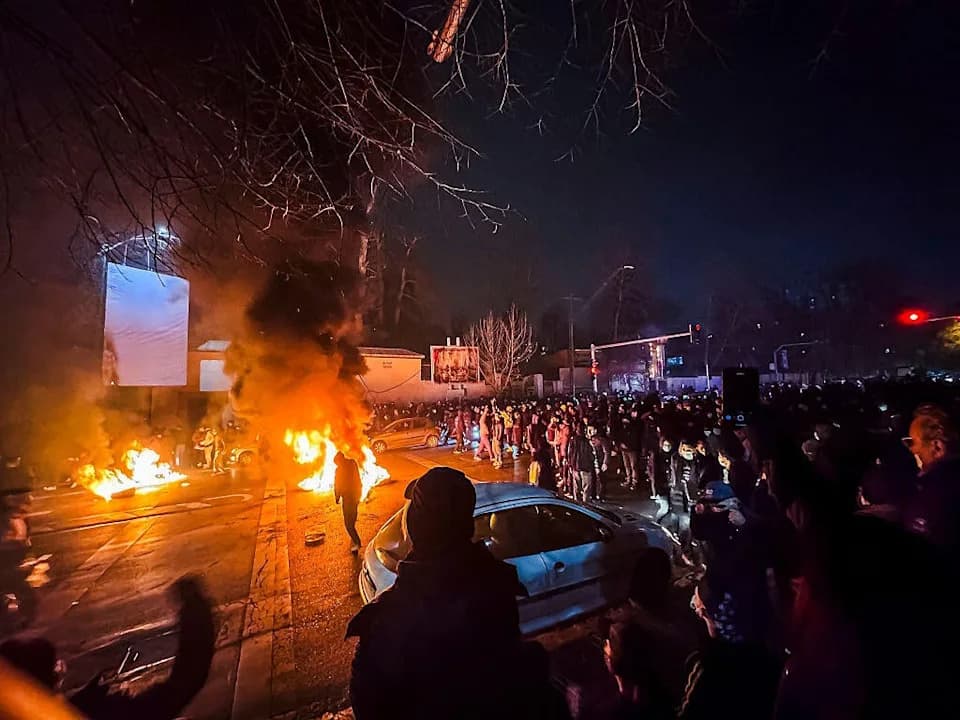
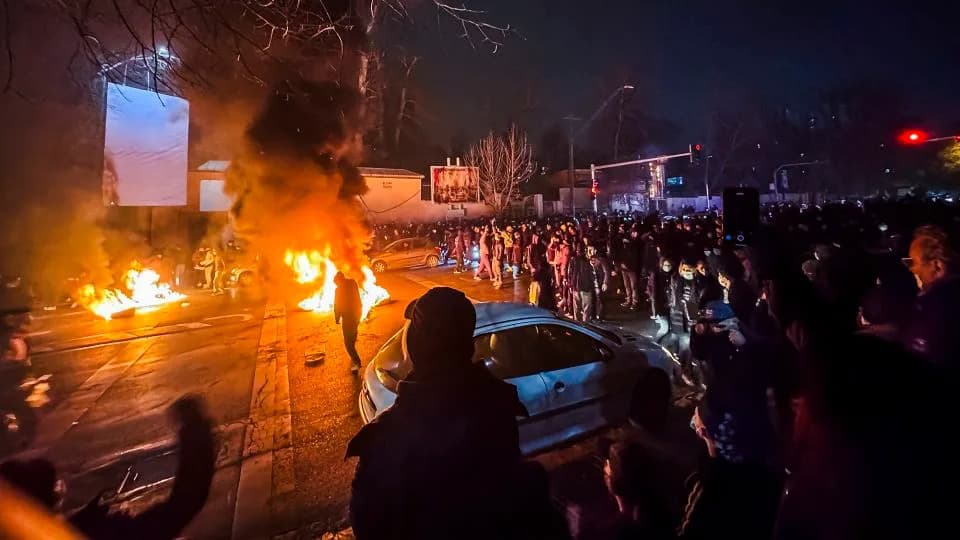
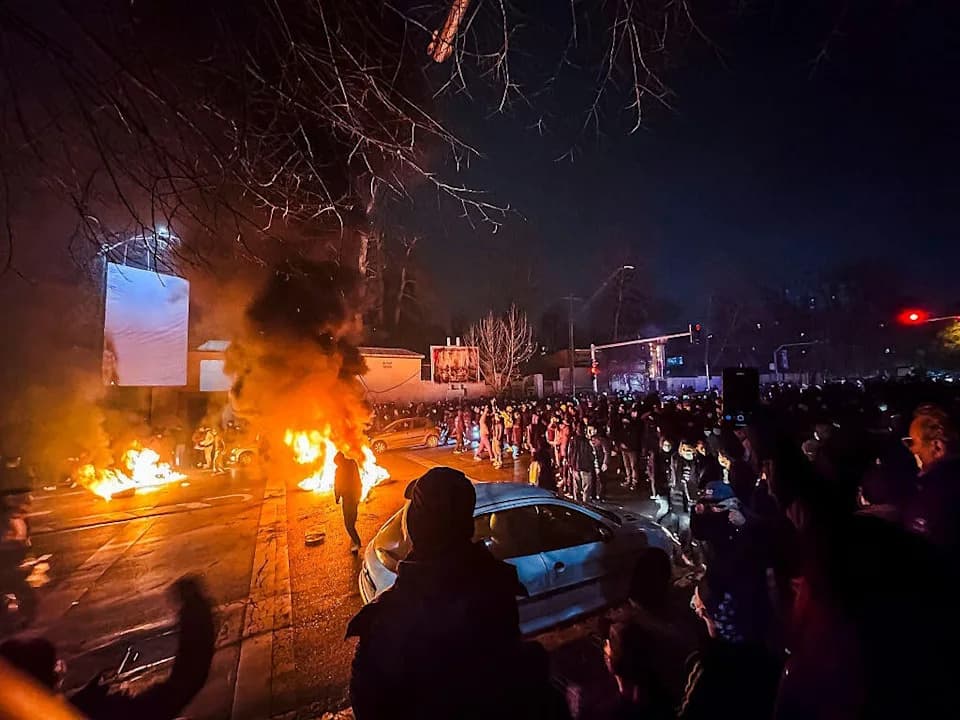
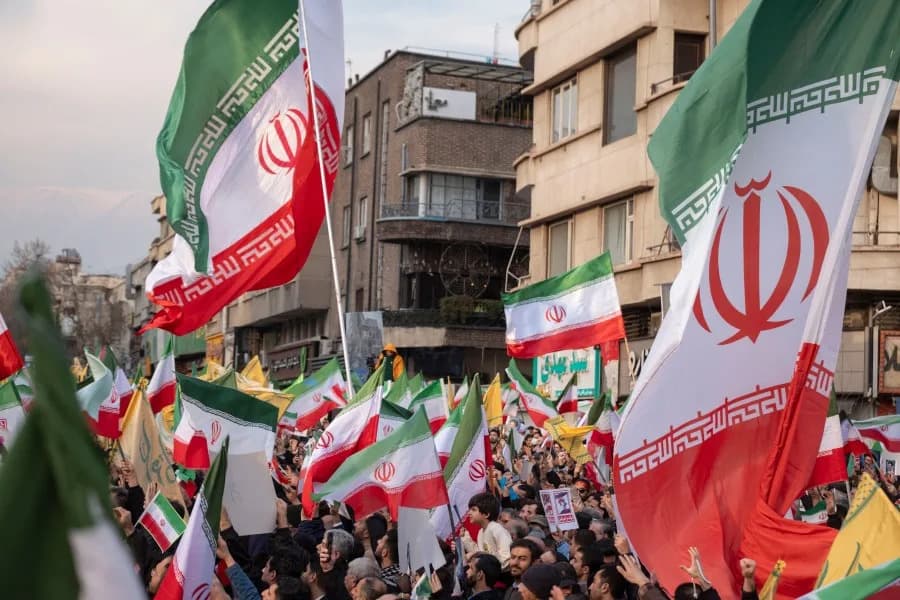
Protests that began over economic grievances have spread into nationwide anti-regime demonstrations across all 31 provinces of Iran, with the death toll believed to be in the thousands amid a state-imposed internet blackout. Diaspora communities staged solidarity rallies worldwide — from Los Angeles to London and Paris — some peaceful and others marked by violence, including a U-Haul collision in L.A. and an embassy flag being replaced in London. World leaders have condemned the killings and urged restraint while the U.S. has signaled it is weighing 'very strong options' even as Tehran warns it is 'prepared for war' but open to talks if no foreign intervention occurs.
Global Solidarity Rallies Erupt As Deadly Protests Engulf Iran
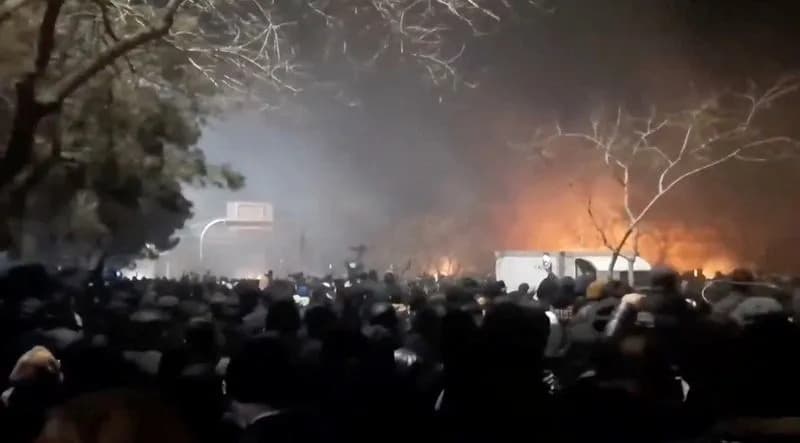
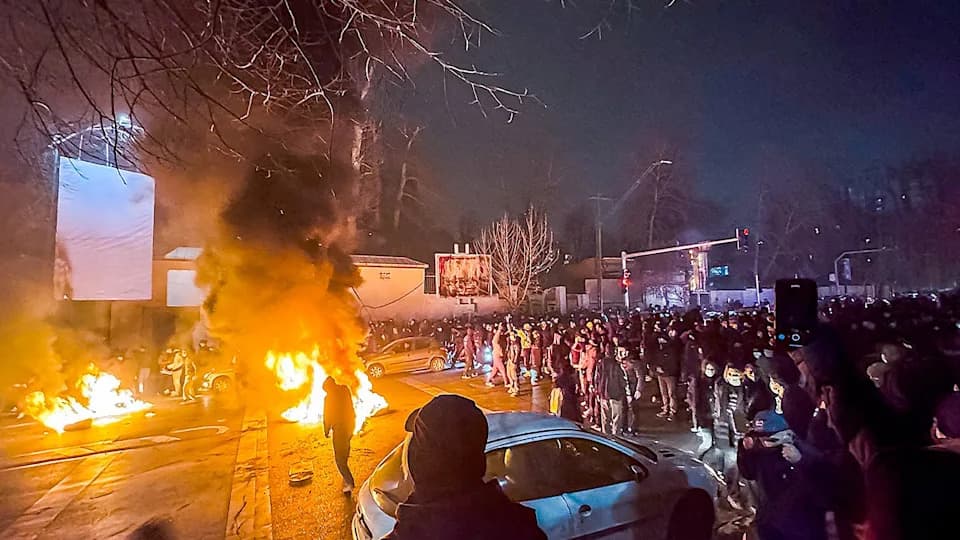
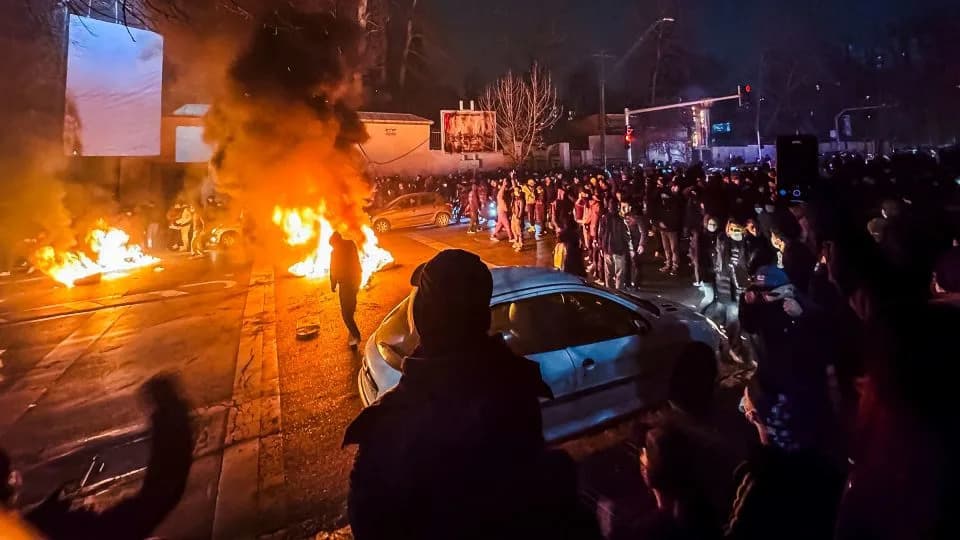
Deadly protests have spread across all 31 provinces of Iran as demonstrations that began over economic hardship have broadened into nationwide calls to end the Islamic Republic that has ruled since 1979. Authorities have imposed a near-total internet blackout and launched a harsh crackdown; the death toll is believed to be in the thousands amid continuing restrictions on communications and independent reporting.

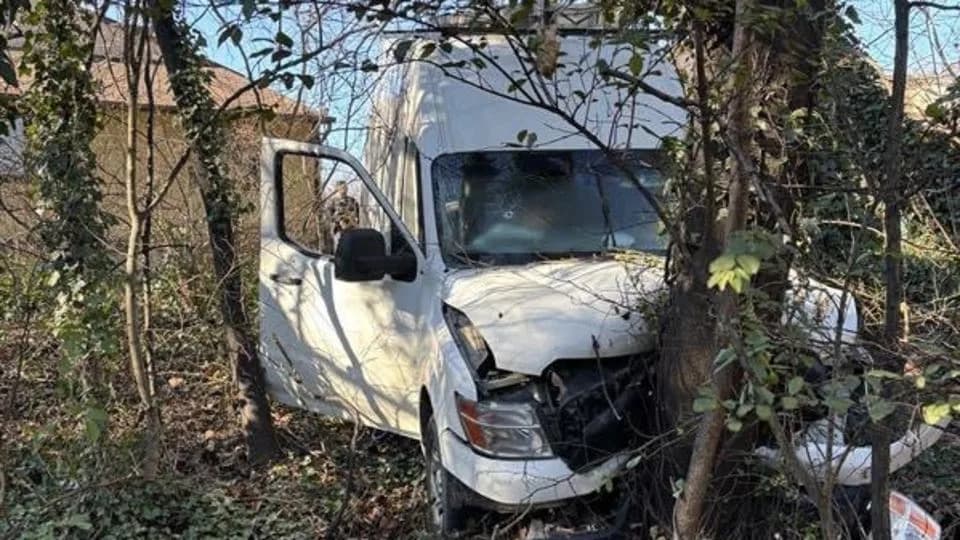
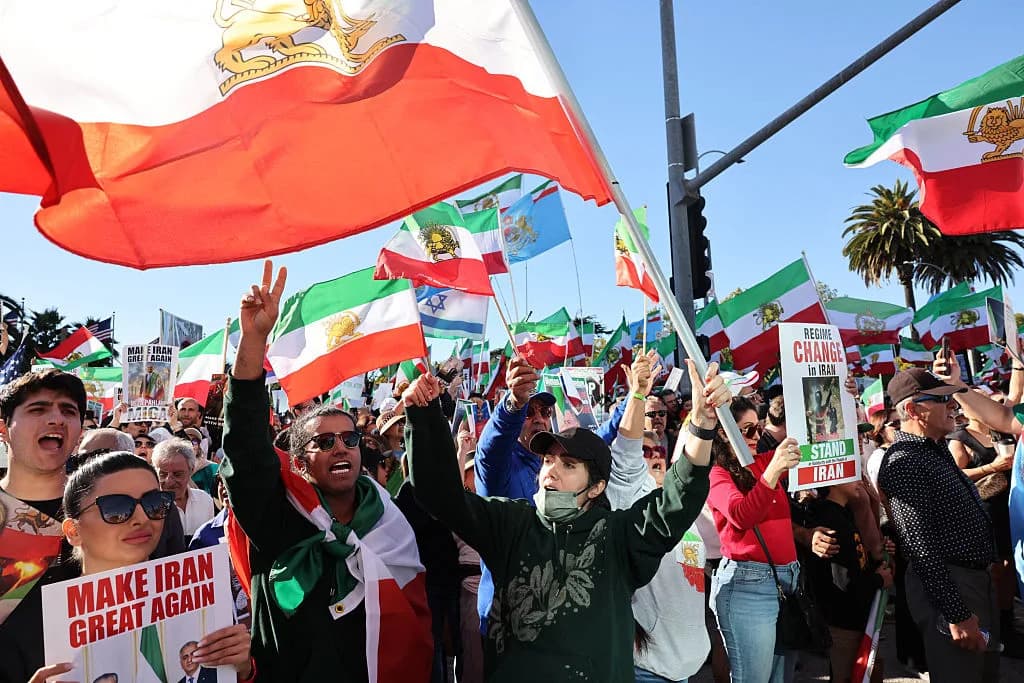
People walk near a U-Haul truck that reportedly was driven into a crowd during an anti-Iranian regime rally on Jan. 11, 2026 ,in Los Angeles, Calif.Jonathan Alcorn—Getty Images
Photo credit: Jonathan Alcorn—Getty Images

Activists take part in a "Free Iran Rally" at Lafayette Square, across from the White House, in Washington, D.C. on Jan. 10, 2026.Mandel Ngan—Getty Images
Background
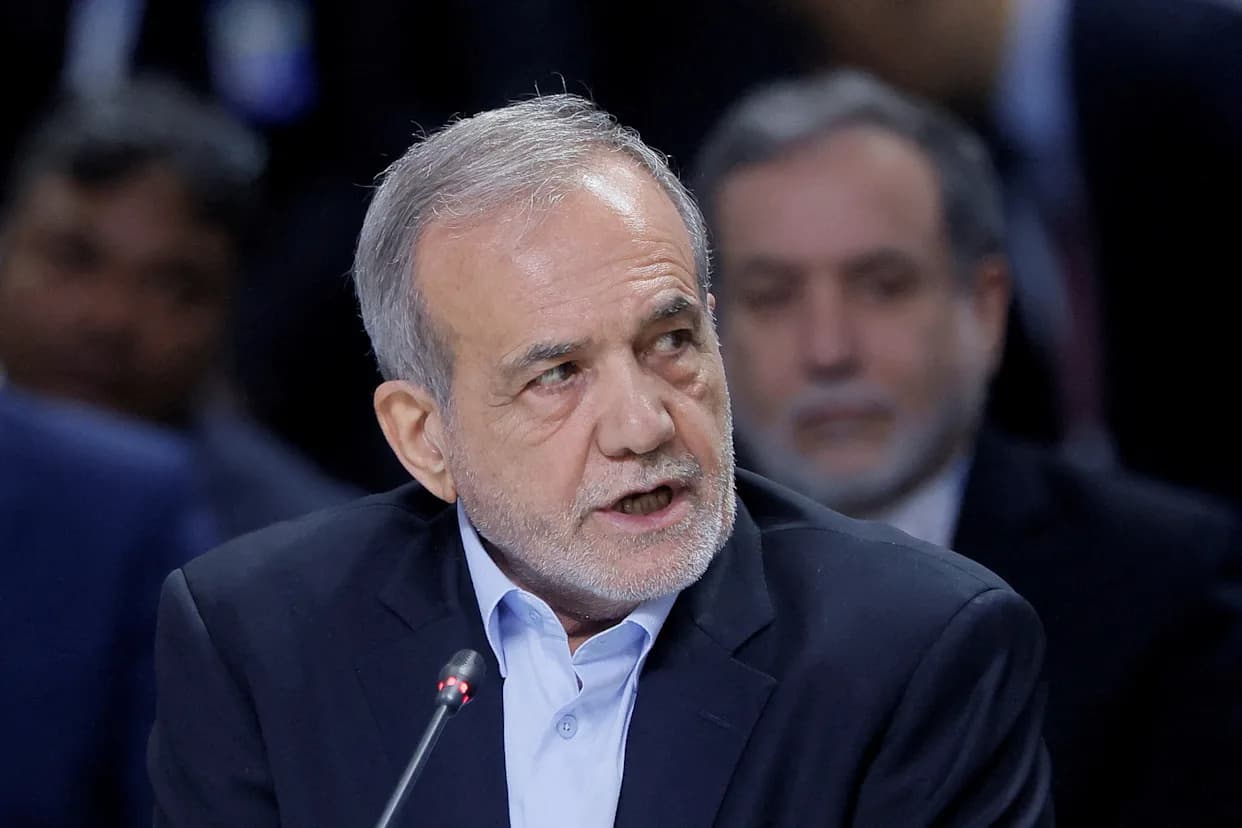
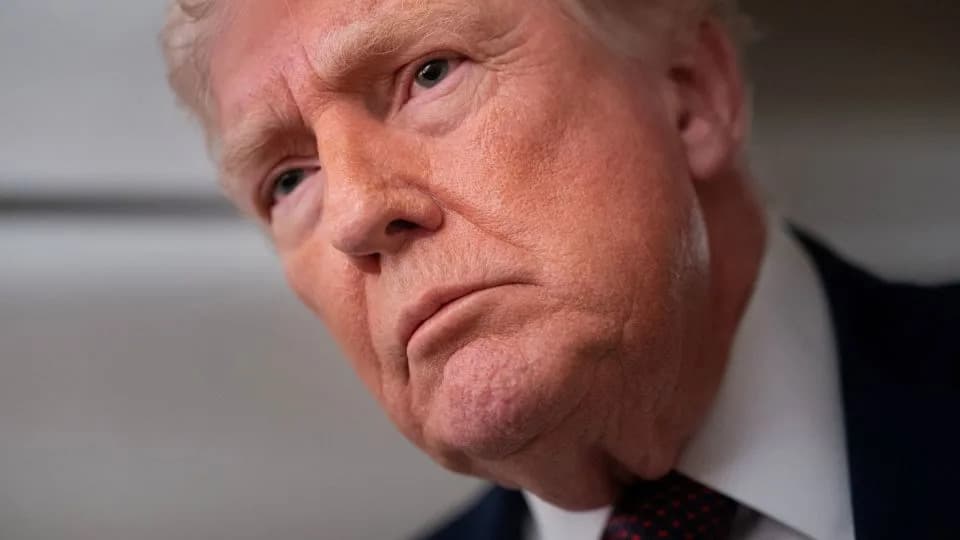
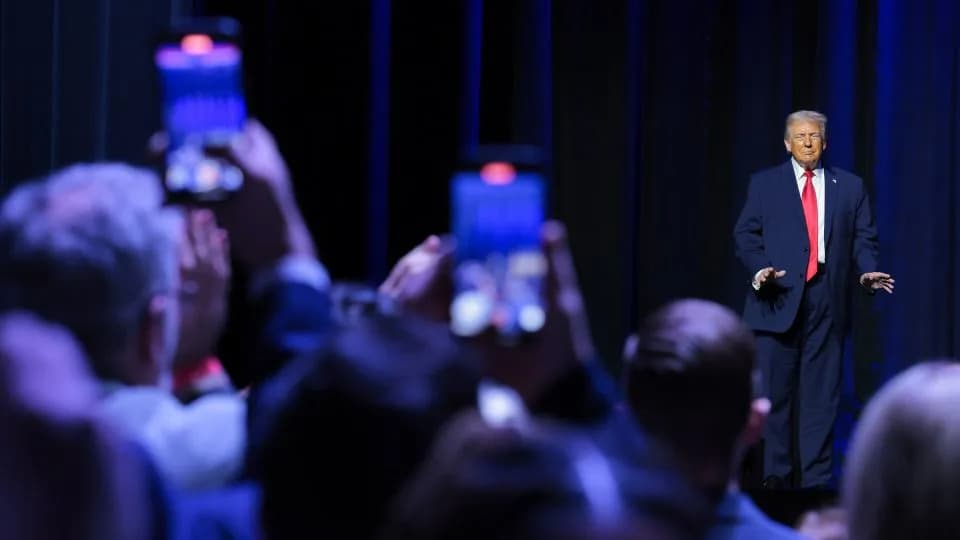
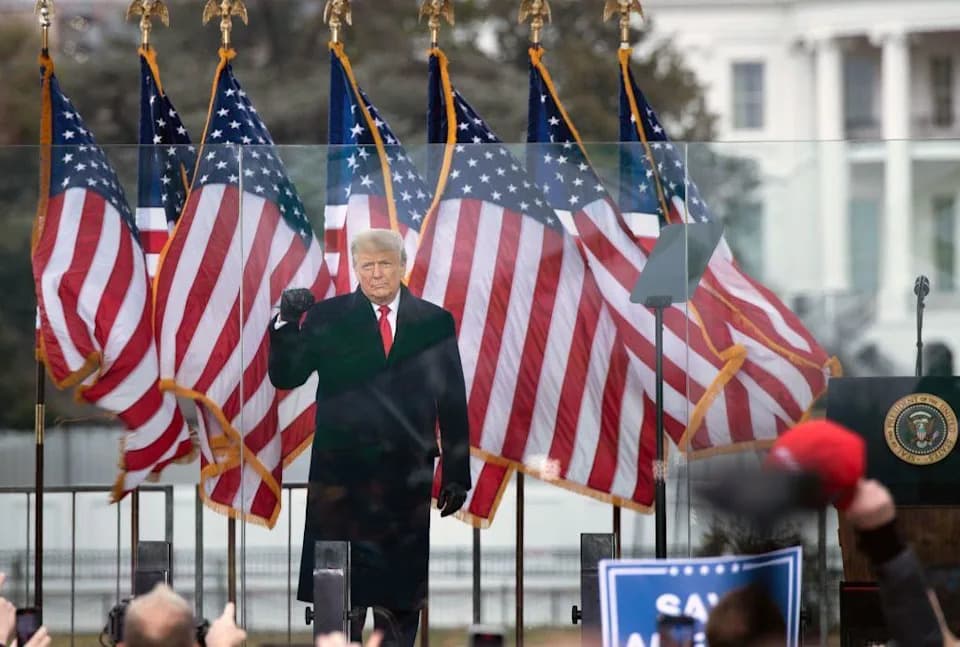
The unrest inside Iran is reverberating internationally. U.S. President Donald Trump has said he is considering what he called 'very strong options' after having warned previously that he might intervene if protesters were killed. Tehran has warned it is 'prepared for war' while also saying it would be open to negotiations with Washington if no foreign intervention takes place.
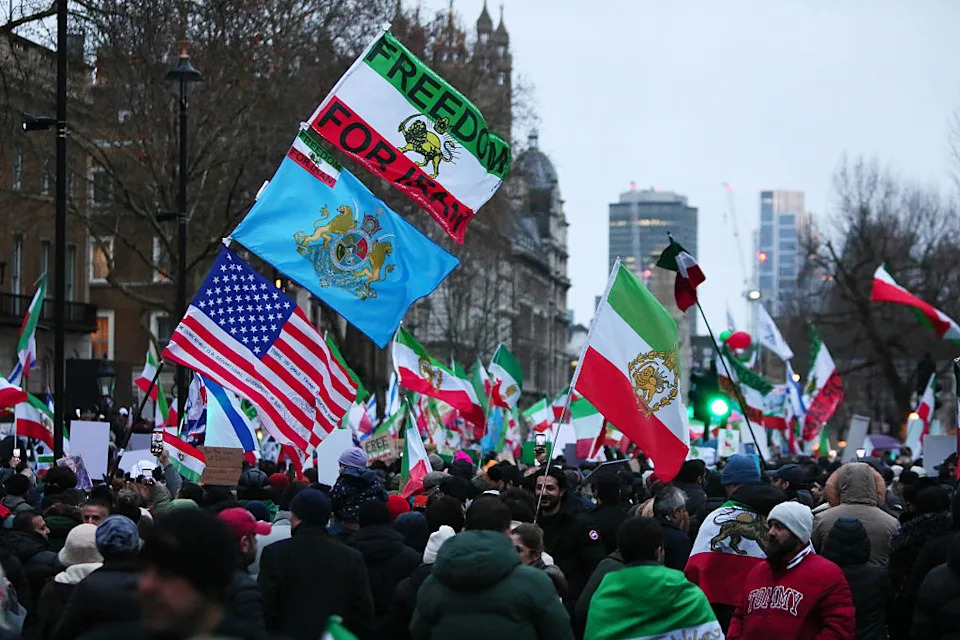
People take part in a rally in solidarity with protesters in Iran on Jan. 11, 2026, in London, U.K.Alishia Abodunde—Getty Images
Diaspora Protests Around the World
Los Angeles
On Jan. 11 demonstrators marched through Los Angeles holding anti-regime signs; some placards echoed U.S. political rhetoric with messages such as 'Make Iran Great Again.' The rally turned dangerous when a U-Haul drove into the crowd, injuring at least one man who received on-scene treatment for minor wounds, the Los Angeles Police Department said. LAPD Capt. Richard Galbadon said the driver was taken into custody and sustained injuries during an altercation after the collision; officers said they were investigating the incident as a possible assault with a deadly weapon. Video circulated showing slogans on the truck referencing the 1953 U.S.-backed coup that toppled Prime Minister Mohammed Mossadegh.
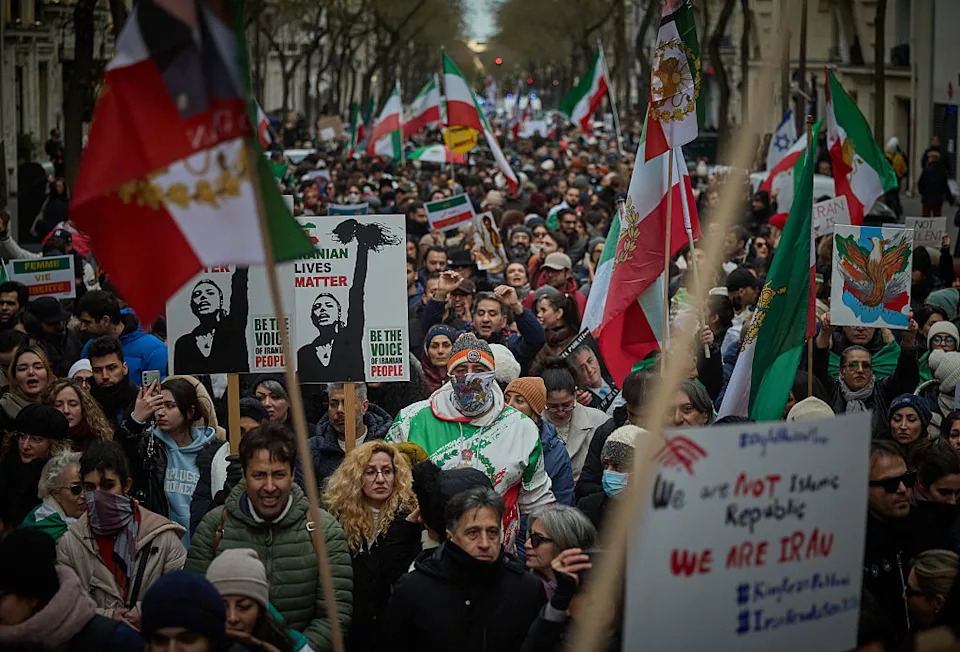
Protesters march along a street during a demonstration to support mass rallies denouncing the Islamic Republic in Iran in Paris on Jan. 11, 2026.Kiran Ridley—Getty Images
Washington, D.C.
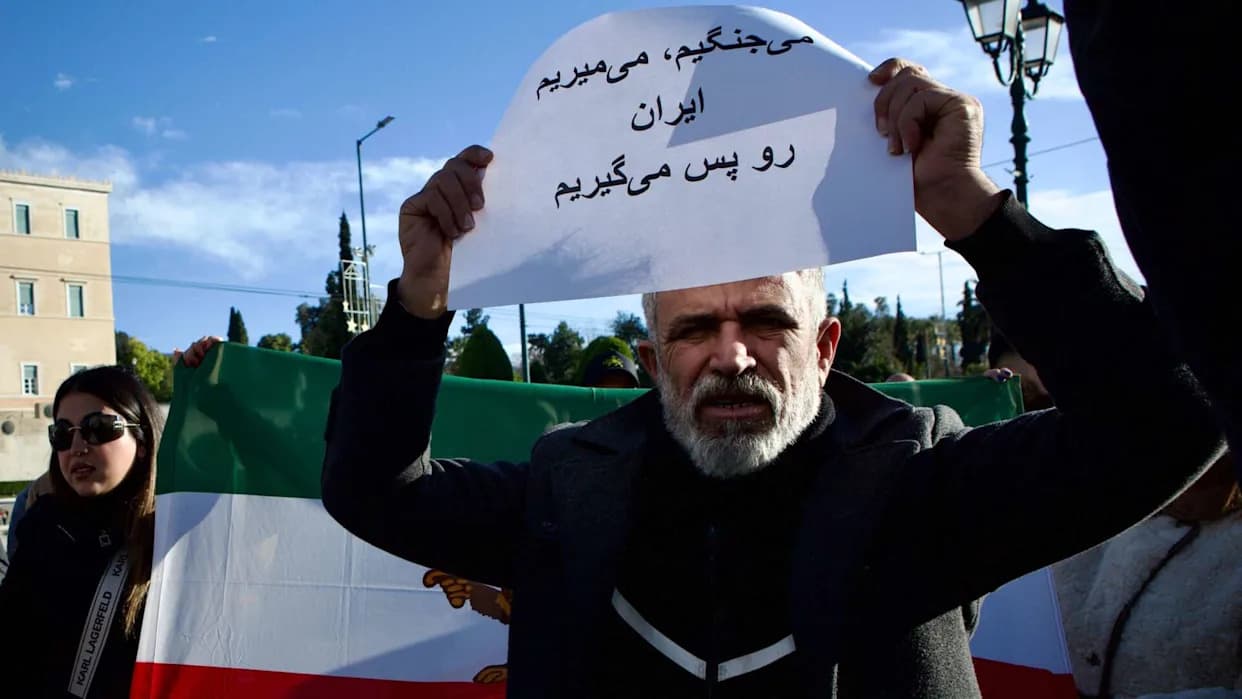
Demonstrations have been staged in the U.S. capital since early January, with the Interests Section of Iran in the United States serving as a focal point. Protesters outside the White House displayed banners reading 'Support the Iranian people’s uprising for a Democratic Republic' and carried signs calling for regime change. Organizers under the name D.C. Protests For Iran announced additional gatherings at Lafayette Square.
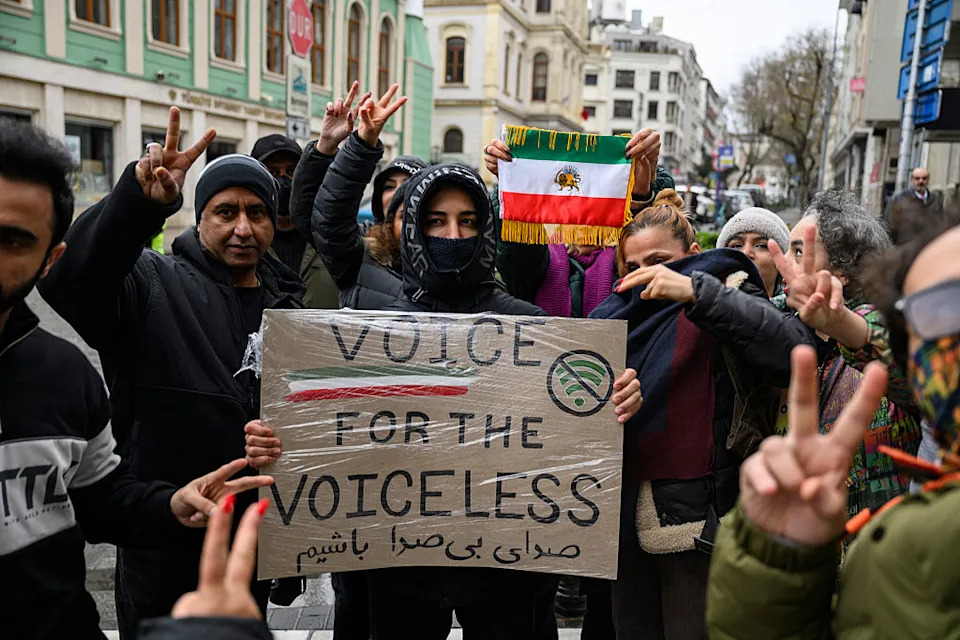
Anti-Iranian regime protesters hold a placard reading "Voice for the voiceless" during a demonstration outside the Iranian Consulate in Istanbul on Jan. 11, 2026.Yasin Akgul—Getty Images
London
Multiple crowds gathered outside Iran’s embassy in London. A widely shared image showed a protester climbing onto the embassy entrance and replacing the Islamic Republic’s flag with the pre-revolutionary Pahlavi banner, a symbol used by many anti-regime exiles. Metropolitan Police said they had made two arrests — one for aggravated trespass and assault on an emergency worker and another for aggravated trespass — and were seeking a further suspect; the embassy later posted a photograph of the Islamic Republic flag restored on Sunday. Iran’s state media reported that the U.K. ambassador was summoned and reminded of Britain’s responsibilities to protect diplomatic staff and missions.
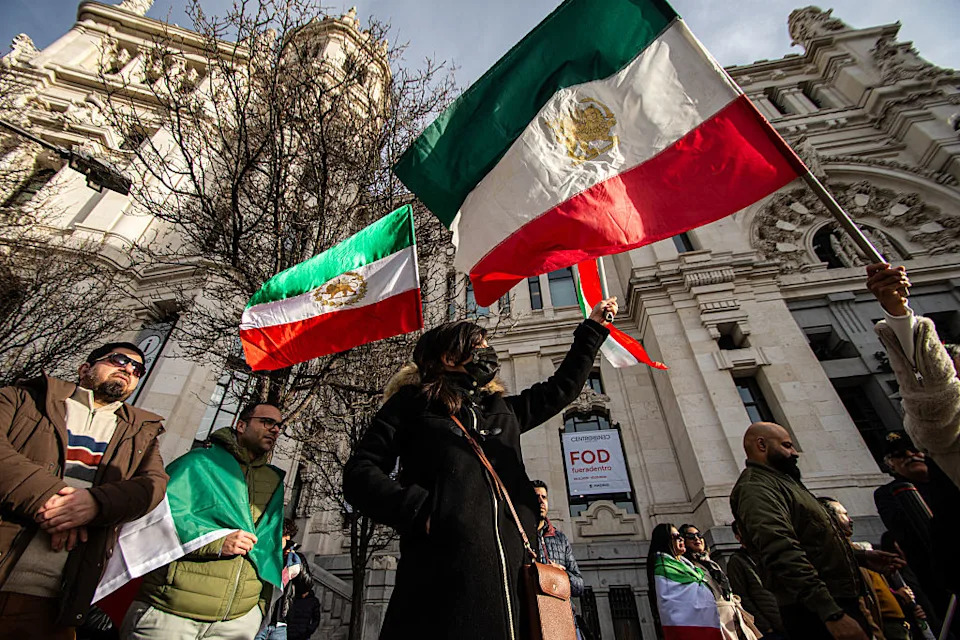
Protesters gather at Plaza de Cibeles for a demonstration in Madrid, Spain, on Jan. 10, 2026.Francesco Militello Mirto—Getty Images
Paris
In France, crowds waved anti-regime flags and displayed images of Reza Pahlavi, son of the late Shah Mohammad Reza Pahlavi and a prominent opposition figure for segments of the diaspora. Some demonstrators burned flags and photographs associated with Iran’s leadership. French President Emmanuel Macron condemned what he called 'state violence that indiscriminately targets Iranian women and men' and said he stood with those defending fundamental freedoms.
Istanbul and Madrid
In Turkey, protesters described themselves as 'a voice for the voiceless' amid Iran’s communications blackout. One Iranian living in Turkey told reporters it had been 72 hours since she had received news from family inside Iran. The Turkish government urged against foreign intervention; Ömer Çelik, a spokesperson for the ruling AK Party, warned that outside interference could worsen the situation. In Madrid, demonstrators waved anti-regime banners and, in some instances, stood on a flag of the Islamic Republic; Spain’s opposition leaders publicly voiced support for the protesters.
International Response and Risks
World leaders have broadly condemned violence against protesters and urged restraint while stopping short in most cases of advocating direct military intervention. The United States’ signaling of possible strong measures has heightened geopolitical concern; Iran’s declarations of preparedness for war add to the risk of escalation. Diplomats and rights groups continue to press for independent monitoring and humanitarian access even as internet restrictions and the security crackdown hamper outside verification of events on the ground.
Looking Ahead
With Iran’s communications largely cut off and conflicting pronouncements from global capitals, the situation remains fluid and dangerous. Diaspora demonstrations from Los Angeles to London and Madrid underscore widespread international sympathy and the political dimensions of the unrest — a domestic uprising with potential geopolitical repercussions.
Contact us at letters@time.com.
Help us improve.