Amber Hagerman, 9, was abducted on Jan. 13, 1996, in Arlington, Texas; her body was found four days later about six miles from the abduction site. The case remains unsolved despite more than 7,000 tips and ongoing forensic review. Amber’s murder inspired the AMBER Alert system—developed in 1996 and first used in 1997—which has helped recover hundreds of children. Investigators continue to pursue leads and urge anyone with information to come forward.
Who Killed Amber Hagerman? The Unsolved 1996 Murder That Sparked the AMBER Alert
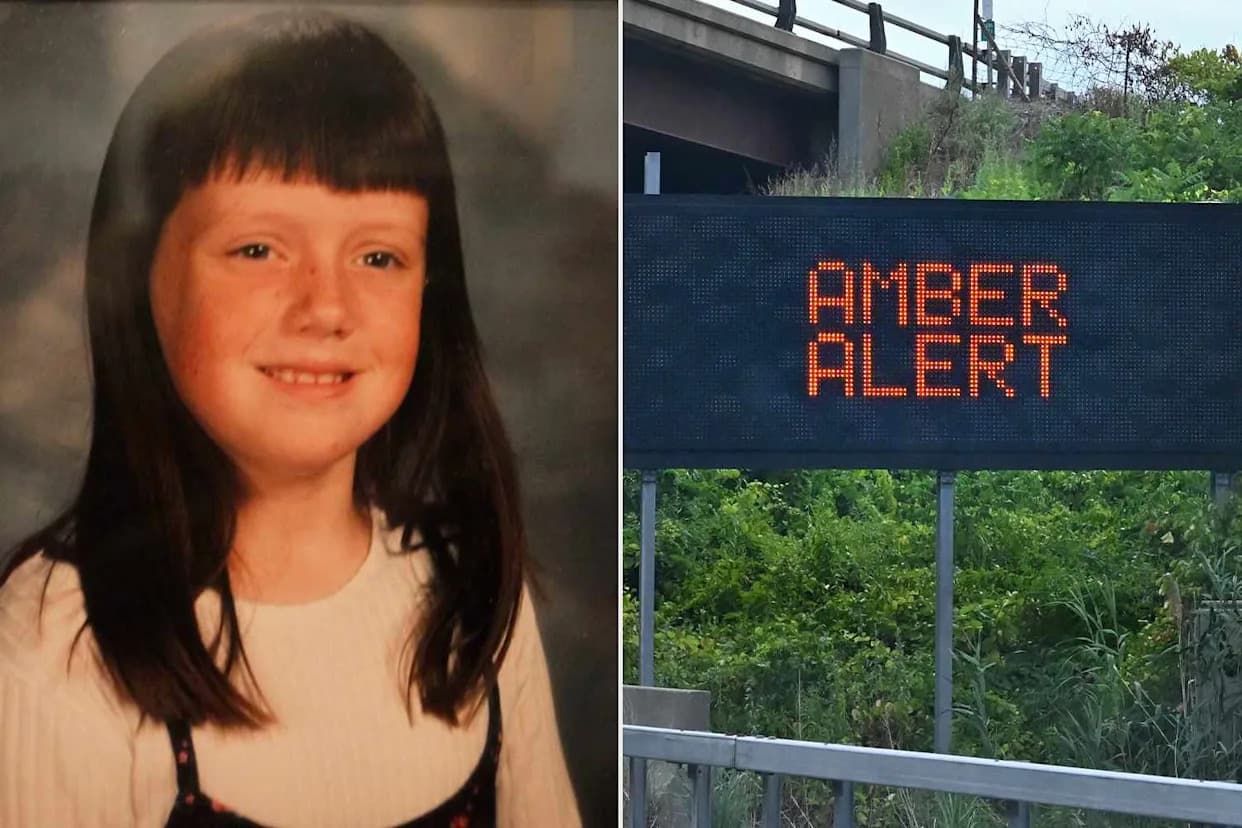
Lori Van Buren/Times Union via GettyAmber Hagerman ; An electric road sign along I-87 shows an Amber Alert message on July 20, 2025 in Colonie, N.Y.
Amber Hagerman, a nine-year-old from Arlington, Texas, was abducted on Jan. 13, 1996, while riding her bicycle near a neighborhood parking lot. Four days later her body was found in a drainage ditch about six miles from the abduction site. Despite thousands of tips and continuing investigative work—including re-examination of evidence with modern DNA methods—Amber’s killer has never been identified. The case, however, led directly to the creation of the AMBER (America’s Missing: Broadcast Emergency Response) Alert system, which has helped recover hundreds of children nationwide.

Amber Hagerman in a school photo.
Timeline of the Abduction and Discovery
On the afternoon of Jan. 13, 1996, Amber and her 5-year-old brother Ricky were riding bikes near their grandparents’ home in Arlington. Ricky returned home while Amber did not. According to witness accounts, a man in a black single-cab pickup drove into the parking lot, grabbed Amber from her bicycle and left the scene in broad daylight at about 3:18 p.m.
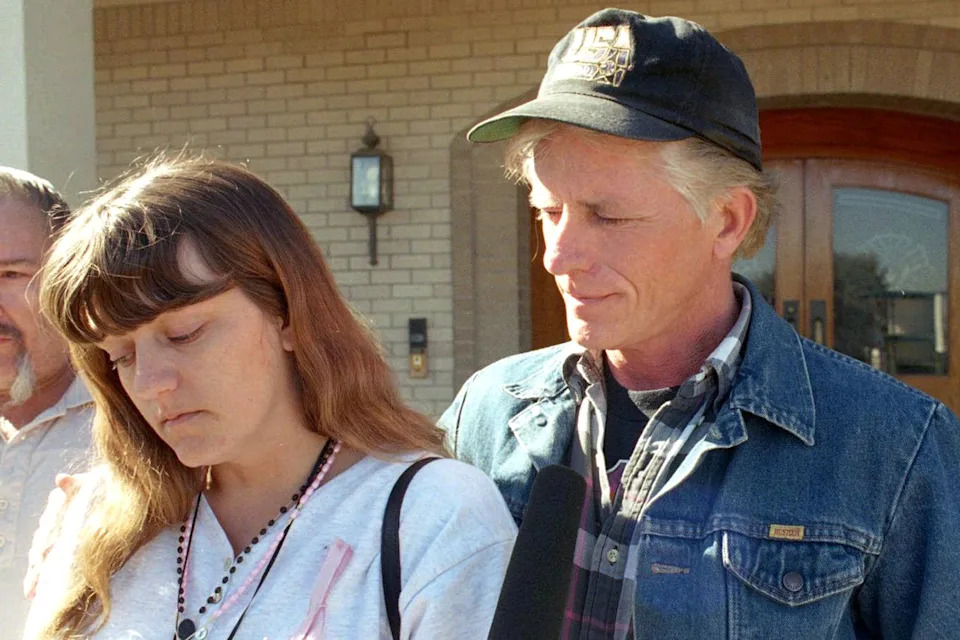
AP Photo/Fort Worth Star-Telegram, Bruce MaxwellDonna Whitson and Richard Hagerman, parents of Amber Hagerman, speak outside the Arlington Funeral Home on Friday morning, Jan. 19, 1996.
Four days later a passerby found Amber’s body behind the Forest Ridge apartment complex, in a secluded drainage area roughly six miles from where she had been taken. Authorities reported cuts on her body, including to her throat, and investigators have said she may have been alive for up to 48 hours after the abduction.
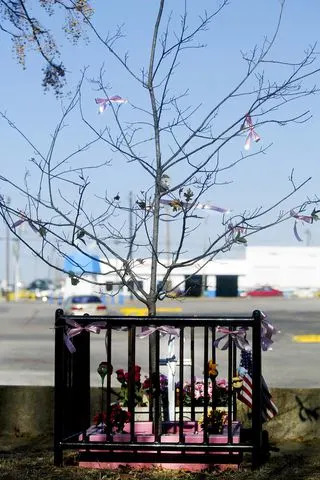
R. Jenna Jacob/Fort Worth Star-Telegram/Tribune News Service via GettyA tree planted in memory of Amber Hagerman stands adorned with pink ribbons on January 10, 2006, in Arlington, Texas.
Evidence, Witnesses and Suspect Description
Investigators received one primary on-scene witness, Jimmie Kevil, who said he observed a black pickup at a nearby laundromat and then saw the abduction from his backyard. Kevil reported the incident to police; he died in 2016. Police have described the likely suspect as a White or Hispanic man in his 20s or 30s, under 6 feet tall, with dark hair. Over the years the Arlington Police Department has logged more than 7,000 tips related to the case.
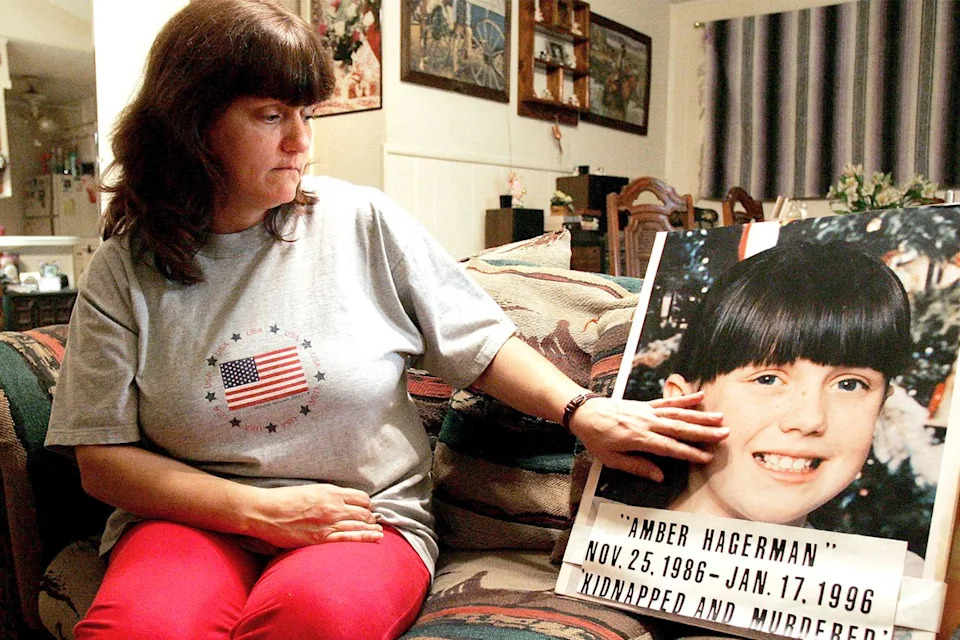
R. Jeena Jacob/Star-Telegram via APDonna Norris touches a photo of her daughter, Amber Hagerman, on January 12, 2006 at her home in Hurst, Texas.
The Birth of the AMBER Alert
Amber’s death moved a Texas mother, Diana Simone, to propose an emergency broadcast system to rapidly alert the public about child abductions in the same way weather or civil defense warnings interrupt programming. Broadcasters, law enforcement and the Child Alert Foundation developed the program in 1996; the AMBER Alert system was first implemented on July 5, 1997, and produced its first documented recovery in November 1998.

AP Photo/J. Scott ApplewhitePresident Bush, joined by Attorney General John Ashcroft, Donna Norris and her son Rick Hagerman, speaks before signing Amber Alert legislation into law on April 30, 2003 at the White House in Washington D.C.
Today the National Center for Missing & Exploited Children (NCMEC) helps manage the program in coordination with law enforcement and broadcasters. AMBER Alerts operate across all 50 U.S. states and many other jurisdictions worldwide. As of Oct. 31, 2024, the NCMEC credits AMBER Alerts with helping to recover at least 1,221 children in the United States.
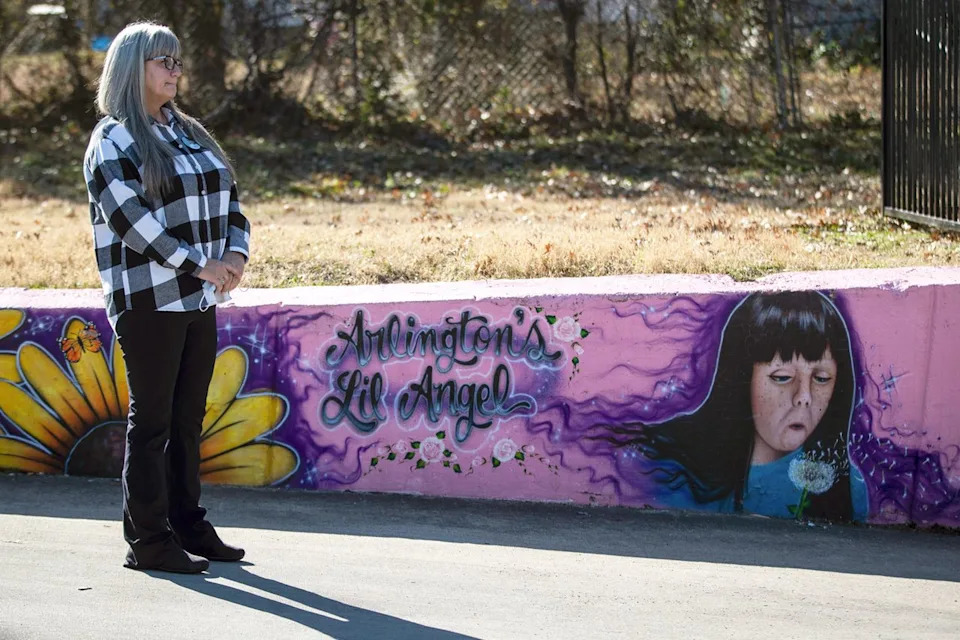
Yffy Yossifor/Star-Telegram via APDonna Williams stands next to a mural depicting her daughter, Amber Hagerman, on January 13, 2021 at the parking lot where she was taken in Arlington, Texas.
Family, Community Response, and Ongoing Investigation
“I miss her voice. I miss her touch. I miss her hugs,” said Donna Williams, Amber’s mother, at a 2021 remembrance. “Please turn yourself in. Give Amber justice.”
Amber’s family has remained active in both the search for answers and in child-safety advocacy. Her brother Ricky has spoken publicly about the loss and continues to cooperate with investigators. Arlington police stress that the case has never truly gone cold for them; they say they have never gone 180 days without receiving some new information and continue to follow leads.
Law enforcement officials remain hopeful that advances in forensic science—especially DNA testing and genealogy techniques—and new tips from the public could lead to an arrest and prosecution. Anyone with information about the case is asked to contact the Arlington Police Department or the appropriate tip line.
Why It Matters: Amber’s tragic death changed how communities respond to child abductions and helped create a system that has directly contributed to saving many lives. Her family and investigators continue to press for justice while the AMBER Alert program remains a lasting legacy of her memory.
Help us improve.