In November 1970 a 45-foot, eight-ton sperm whale beached near Florence, Oregon; officials detonated 20 cases of dynamite to remove it, creating a "blubber snowstorm" that sprayed tissue and blood across the beach and damaged nearby property. The explosion scattered large chunks and left a crater; crews later buried the biggest pieces. Today, authorities usually leave remote carcasses to decompose or inter them above the high-tide line. A 2020 study by James Heiss found buried whales can leach chemicals into surf zones—one compound measured as much as 26× higher—so burial placement matters. Florence later renamed the site Exploding Whale Memorial Park.
When Oregon Dynamited a Beached Whale: The Infamous 1970 "Exploding Whale"
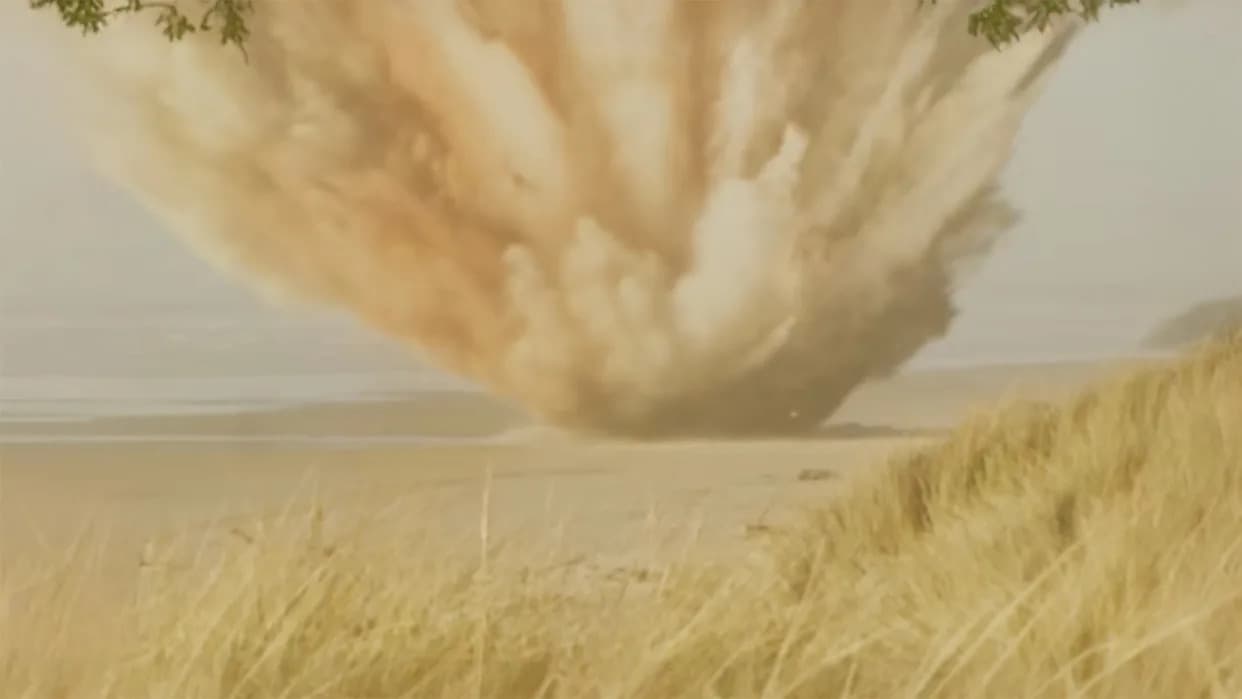
on November 9, 1970, officials in Florence, Oregon, decided a 45-foot-long stinky sperm whale needed to go.
When a whale dies at sea, its massive carcass can become an ecological bonanza: researchers call the phenomenon a whale fall, where deep-sea creatures and microbes consume the body over years and the bones eventually form a reef-like habitat.
A whale that dies ashore tells a different story. Stranded on sand, a carcass becomes a nauseating, rotting mass that seeps fluids into the ground and nearby plants. Birds often cannot pierce the thick hide, but insects and scavengers accelerate decomposition until, under natural conditions, only the skeleton remains—usually after roughly two years.
The 1970 Florence Stranding
On November 9, 1970, a 45-foot sperm whale washed up near Florence, Oregon. The eight-ton carcass filled the town with a nearly unbearable stench. At that time the Oregon State Highway Division managed parts of the coast and treated the whale as a public-obstruction problem: their chosen solution was dynamite.
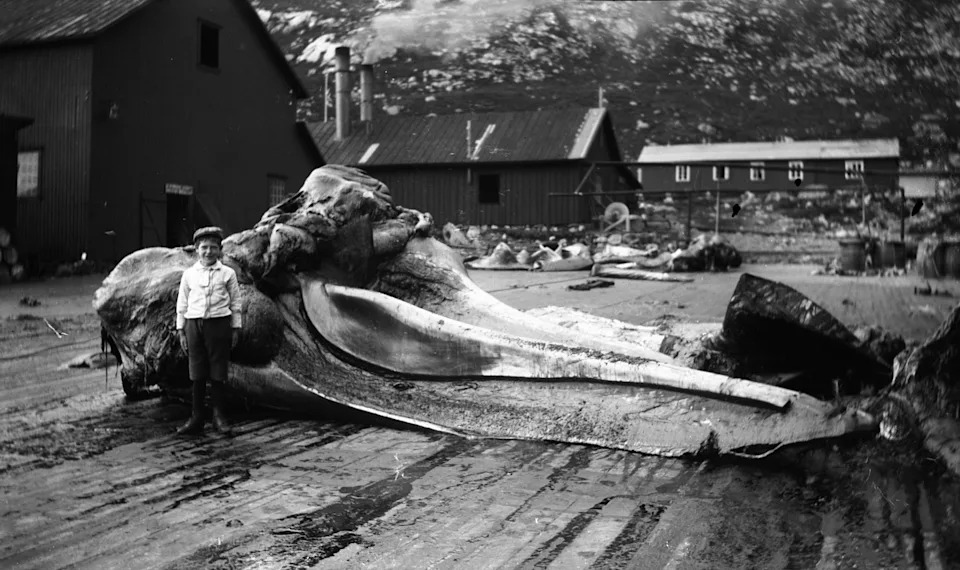
This whaling station in northwestern Norway captured about 180 whales a year before closing in 1920. The whale carcasses were used to produce cooking oil and fat.Image:Public Domain
Crew members dug beneath the bloated carcass and placed 20 cases of explosives, each reportedly weighing about 50 pounds. The detonation produced what an onlooker later called "a blubber snowstorm": a geyser of tissue and blood shot roughly 100 feet into the air and fell across the beach. Spectators gathered as far as a quarter-mile away reported flesh and oil coating their clothes and hair, and the nearby parking lot received debris—one chunk roughly three feet long damaged a car roof.
“It went exactly right,” Assistant District Highway Engineer George Thornton told reporters, seemingly unconcerned as blood and tissue blanketed the sand and onlookers.
The blast left a large crater and the whale’s severed tail; a bulldozer later buried the largest remnants. Thornton expected seagulls to finish what remained, but the smell reportedly remained only slightly reduced after the explosion.
Why That Solution Was Chosen—and Why It Wouldn’t Be Today
Using explosives on large carcasses was not unheard of in mid-20th-century practice. Popular Science and other period outlets documented unconventional uses for dynamite, including at sea. Experts today say the method was effective only in the most literal sense—it removed the visual obstruction but scattered hazardous biological material across a populated beach.
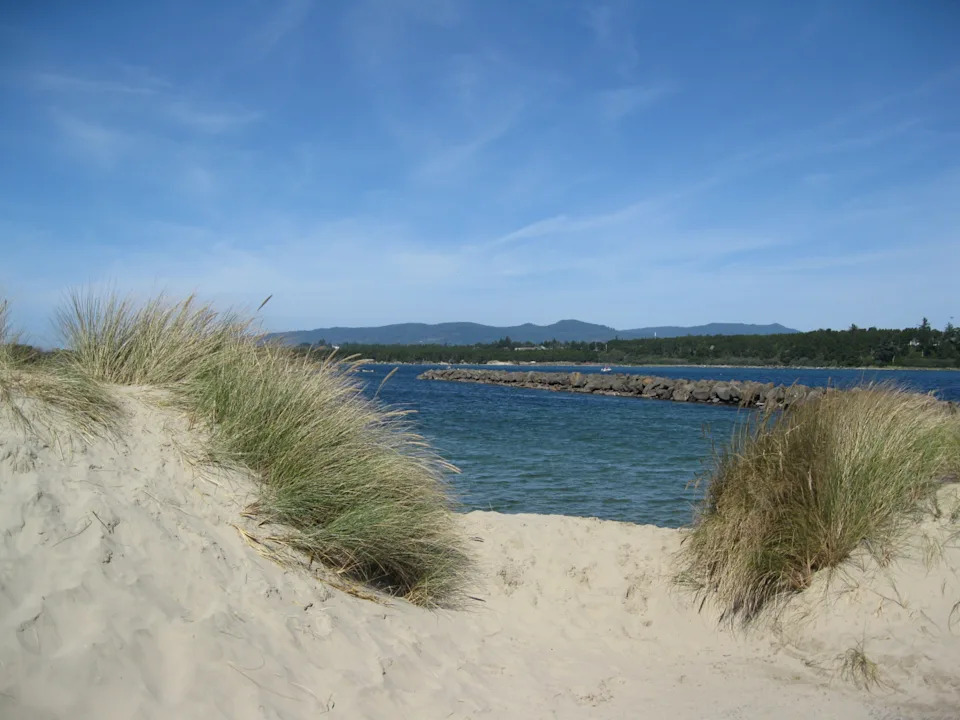
In 1970, officials exploded a 45-foot-long sperm whale carcass that had washed up along the Oregon Coast in the Oregon Dunes National Recreation Area.Image:Dougtone/ CC BY-SA 2.0
Modern coastal managers typically prefer leaving remote carcasses to decompose naturally—an approach that returns nutrients to local food webs—or interring the animal above the high-tide line so scavengers and microbes can break it down without creating a public-health nuisance. When leaving a carcass in place is infeasible near communities, burial is the common alternative, not blasting.
Environmental Questions and Scientific Follow-Up
Some concerns persist about buried carcasses: do they attract sharks, and do decomposing bodies leach chemicals that affect water quality? The shark question remains unresolved, but research led by James Heiss, Associate Professor of Environmental, Earth, and Atmospheric Sciences at UMass Lowell, explored chemical transport from buried whales. In a 2020 study Heiss and colleagues found that compounds originating from buried carcasses can move seaward via groundwater and discharge near the low-tide line. One compound measured was up to 26 times more concentrated in surf zones adjacent to a buried whale than in control sites, though locating the grave closer to the waterline reduced concentrations by limiting reaction time in the sand.
In short, burial can mitigate many public-health and nuisance problems, but it requires careful placement and monitoring to minimize unintentional chemical impacts on nearshore waters.
Legacy
Florence has kept a wry sense of humor about the episode: in 2019 the community renamed the stretch of sand Exploding Whale Memorial Park. The incident endures as a cautionary — and famously odd — example of a pragmatic solution gone wrong, and it helped shape how coastal agencies handle large marine carcasses today.
Help us improve.