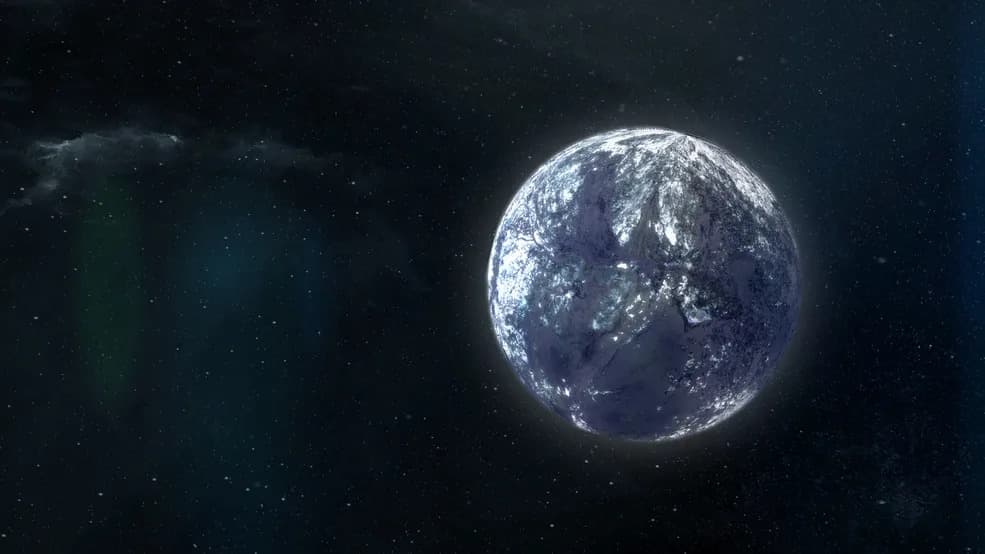
TOI‑1873, a star about 600 light‑years away, hosts three Neptune‑size planets whose spacing breaks the common “peas‑in‑a‑pod” pattern. The inner two planets orbit in roughly 7 and 25 days, which would predict a ~90‑day orbit for the third, but TESS observed the outer planet on occasions separated by roughly 900 days. The outer planet may have missed transits — its true period could still be no less than ~128 days — and ground‑based follow‑up and dynamical modeling are planned to solve the mystery.
Strange Exoplanet System Defies 'Peas‑In‑A‑Pod' Pattern — TOI‑1873's Odd Orbital Gap
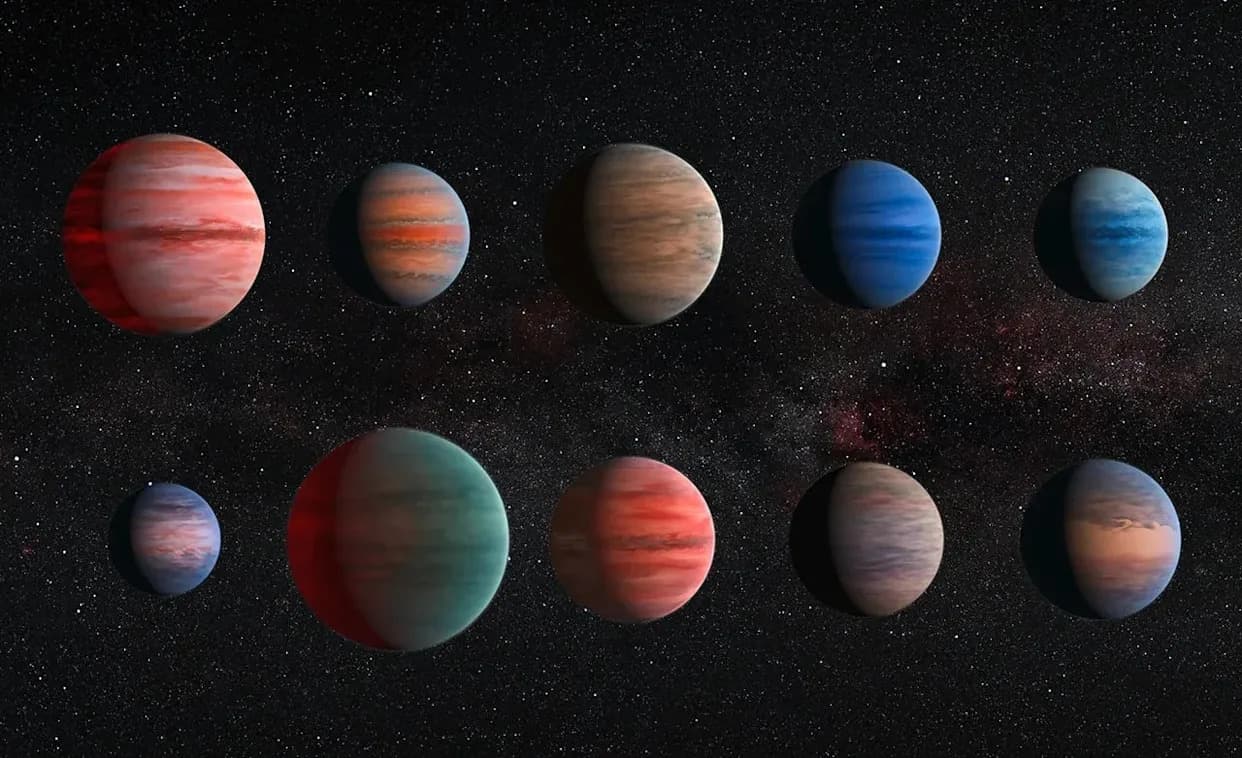
Since NASA's Kepler mission began finding exoplanets in 2009, astronomers have noticed a common pattern in many multi‑planet systems: neighboring planets often show regular, repeating spacing in their orbital periods — a phenomenon dubbed the “peas‑in‑a‑pod” pattern. But a newly reported system, TOI‑1873, breaks that rule in a surprising way.
At the American Astronomical Society’s 247th meeting in Phoenix on January 7, undergraduate researcher Federico Noguer (Arizona State University) described TOI‑1873, a star about 600 light‑years from Earth that hosts three Neptune‑sized planets. The planets were identified in data from the Transiting Exoplanet Survey Satellite (TESS), with two of them first flagged by volunteers in the Planet Hunters TESS citizen‑science project.
Why TOI‑1873 Is Unusual
Transit timing shows the two inner worlds orbit TOI‑1873 in roughly 7 days and 25 days, a ratio that implies each successive orbit should be about 3.6 times longer than the previous one — putting the third planet near a ~90‑day period. Instead, the three occasions when TESS detected the outer planet are separated by roughly 900 days, creating an unexpectedly large gap.
“Regardless, this is a weird spacing,” says ASU astronomer Molly Simon, a member of the team. One simple explanation is that TESS missed some of the outer planet’s transits; if so, the planet’s true orbital period could be shorter than 900 days but still not less than about 128 days based on the current analysis.
Confirmation And Next Steps
The team has measured the masses of the two inner planets and confirmed them as bona fide exoplanets, but the outer world remains uncertain. The researchers are requesting time on ground‑based telescopes to watch for additional transits and pin down the third planet’s period.
“I’m always thinking of what telescopes we can propose for,” Noguer says. “But we’re trying to do something very hard. Even if it’s the shortest [possible] period, if there are clouds in the sky, then you have to wait another 128 days to try again.”
Broader Implications
Observers highlight two important takeaways. First, this discovery underscores the value of crowdsourced science: volunteers helped identify planets that automated algorithms might miss. Second, systems that diverge from the peas‑in‑a‑pod pattern invite deeper questions about formation and evolution. Astronomers are exploring explanations such as undetected companion planets, past gravitational interactions that rearranged orbits, or other dynamical processes.
The team plans to submit a formal paper this summer reporting the full analysis and confirmation of the TOI‑1873 system.
Help us improve.