
Over the past year space photographers and missions delivered striking imagery and milestones: James Webb captured an exquisite Einstein ring, the Giant Magellan Telescope rose in Chile’s Atacama, and Lucy flew within 600 miles of asteroid Donaldjohanson. Commercial and national missions made headlines too — Firefly’s Blue Ghost completed the first fully successful private lunar landing, Tianwen-2 photographed Earth from over 366,000 miles, and Boeing’s Starliner crew endured a prolonged 288-day return. Artemis II’s diverse crew is training for a historic lunar voyage slated for the mid-2020s.
Stunning Space Photography of the Year: Webb’s Einstein Ring, Giant Magellan Rising, Lunar Firsts and More

Space continues to be uniquely photogenic: a realm of vivid color, dramatic light, and breathtaking scale. Over the past year professional explorers, observatories and ambitious new missions produced a remarkable collection of images — from spectacular gravitational lenses to intimate asteroid flybys and historic private lunar achievements. Below are the standout photographs and the stories behind them.
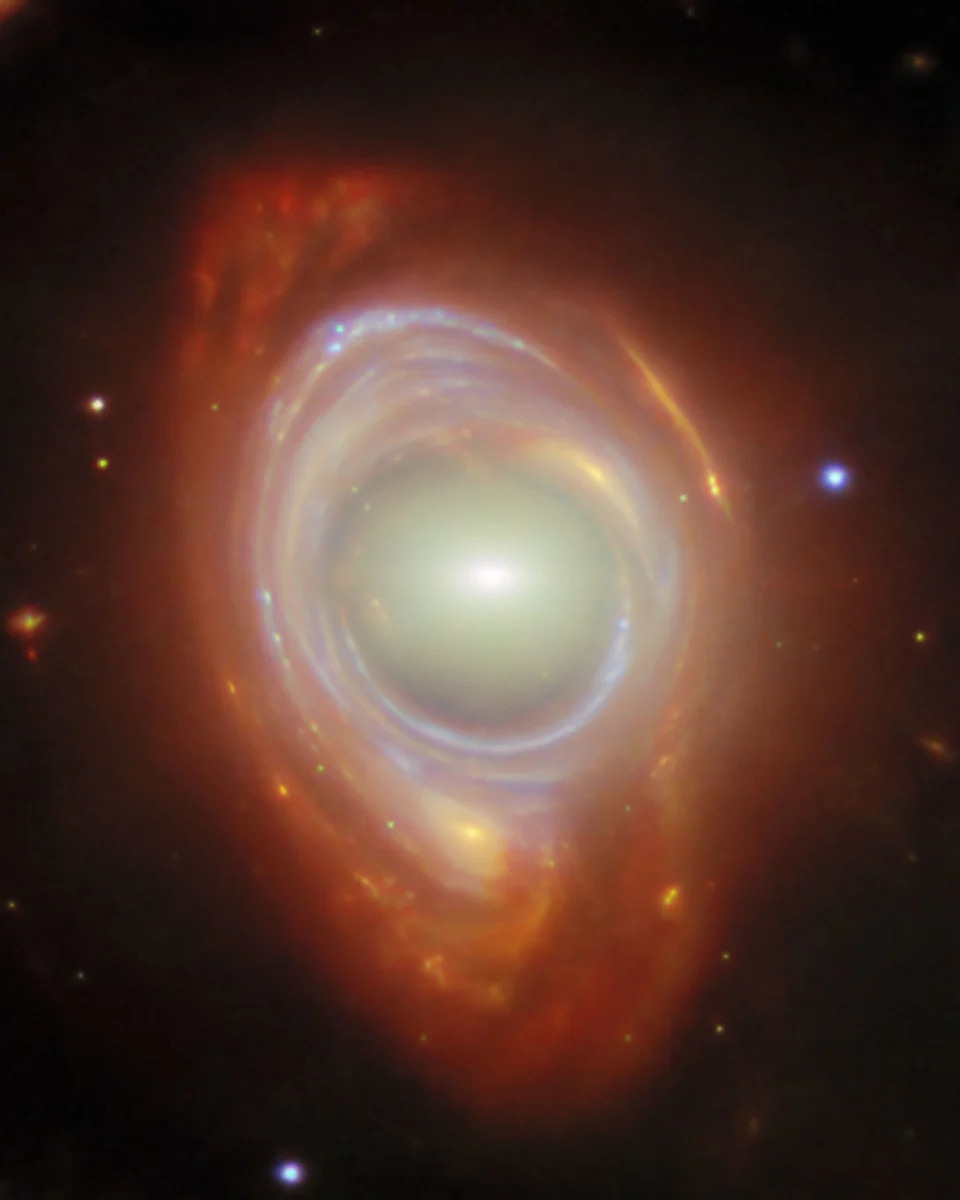
A foreground galaxy cluster lensing the light of a background spiral galaxy.ESA/Webb/NASA/CSA/G. Mahler
Einstein Ring Captured by James Webb
Albert Einstein predicted gravitational lensing in 1912 — the bending of light by massive foreground objects — and it was famously confirmed during the 1919 solar eclipse. This year the James Webb Space Telescope produced one of the most visually striking examples: a foreground galaxy cluster so precisely aligned with a background spiral galaxy that the lensed light forms a near-perfect Einstein ring. The image is both beautiful and scientifically valuable, helping astronomers probe the mass distribution in the lensing cluster and study the distant galaxy’s structure.
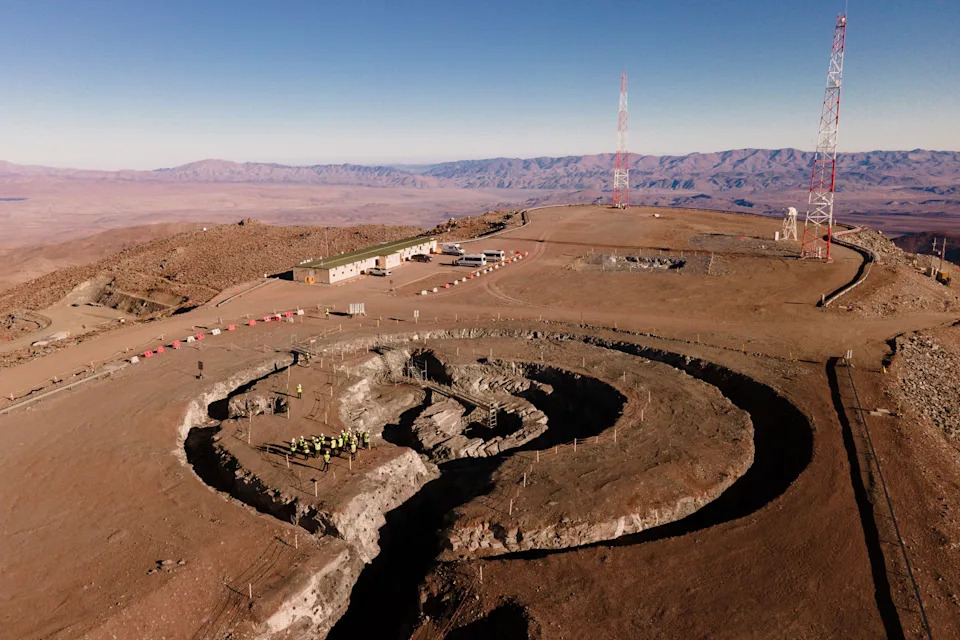
Construction site for the Giant Magellan Telescope.Gonzalo Torres
Giant Magellan Telescope Rises in the Atacama
Chile’s Atacama Desert remains the premier site for large observatories thanks to high altitude, exceptionally dry air and low light pollution. Near La Serena, construction of the Giant Magellan Telescope (GMT) is progressing: its seven primary mirrors are being fabricated across 36 U.S. states and multiple countries, with final assembly on site. When complete, GMT is expected to be among the most powerful ground-based telescopes — enabling searches for biosignatures on distant worlds, detailed studies of dark matter and dark energy, and sharper views of star formation.
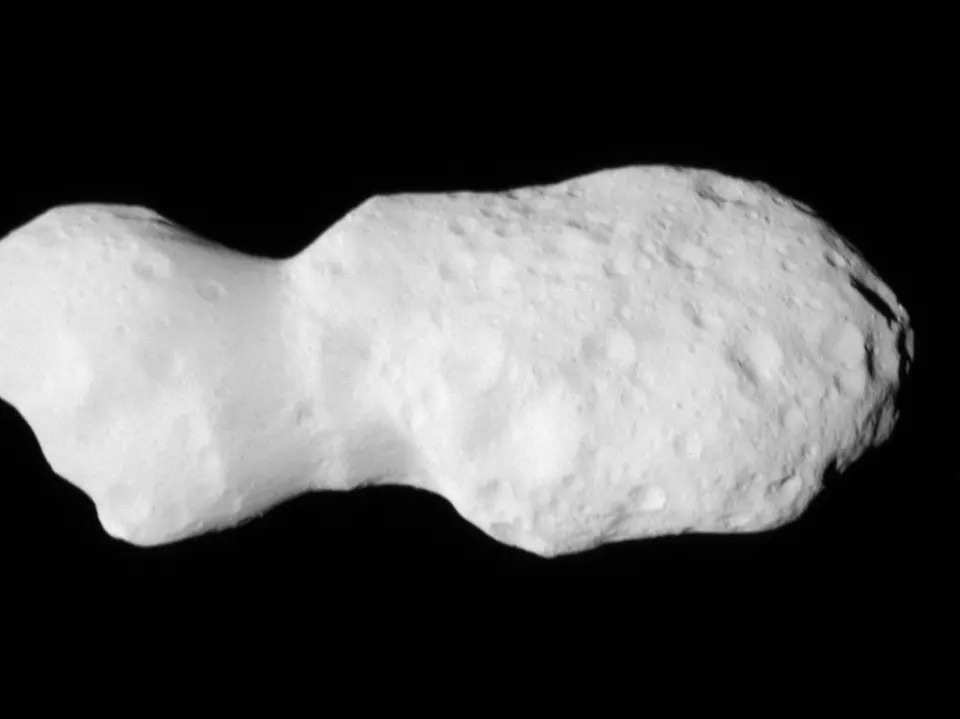
The asteroid known as Donaldjohanson gets a close-up look.Goddard/SwRI/Johns Hopkins APL—NASA
Lucy’s Close Encounter With Donaldjohanson
NASA’s Lucy spacecraft, launched in 2021 to study Jupiter’s Trojan asteroids, made an unexpected but rewarding detour through the main asteroid belt. On April 20 Lucy approached the asteroid Donaldjohanson to within roughly 600 miles, returning a rapid sequence of images (each separated by about two seconds) and improved size measurements of the roughly five-mile-long, two-mile-wide object.
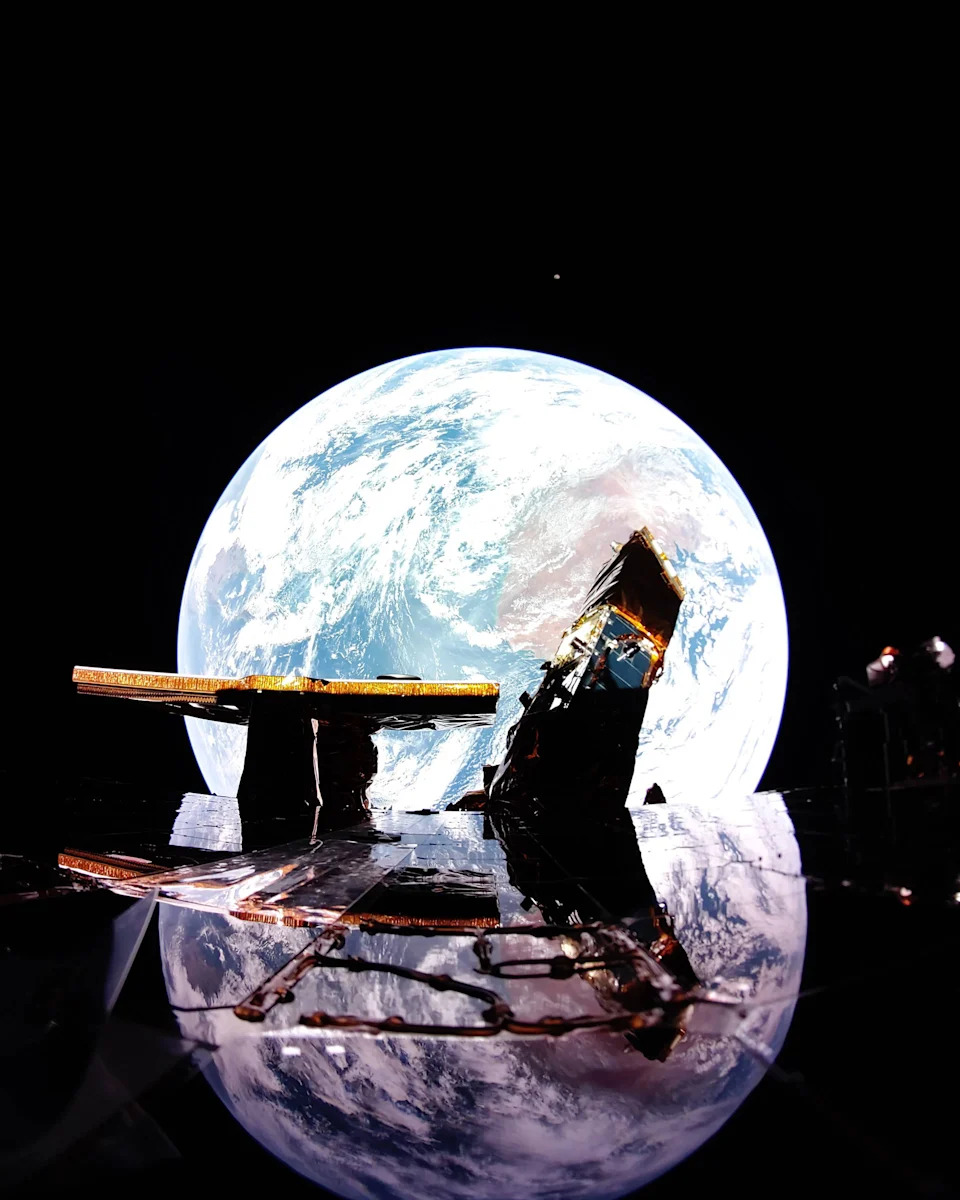
The Blue Ghost spacecraft snaps an image of Earth.Firefly Aerospace
Blue Ghost: First Fully Successful Private Lunar Landing
Commercial participation in lunar exploration is growing. Firefly Aerospace’s Blue Ghost lander, launched January 15, captured a haunting image of Earth reflected in its solar panels during transit and then achieved a successful touchdown on the Moon on March 2, marking an important milestone for private lunar missions and NASA’s Commercial Lunar Payload Services initiative.
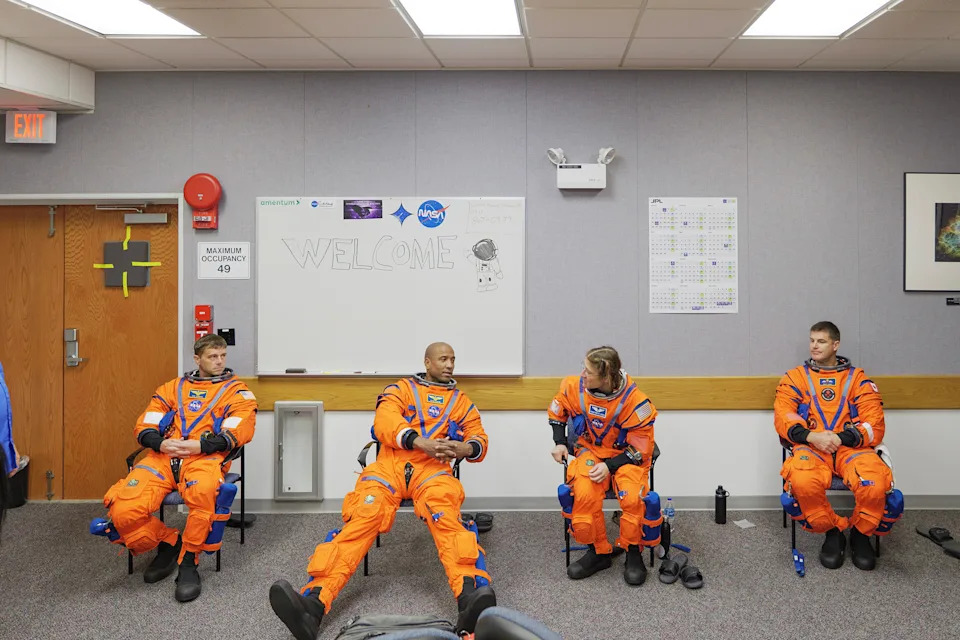
The Artemis II crew from left to right: NASA astronauts Reid Wiseman, Victor Glover, and Christina Koch, and Canadian Space Agency astronaut Jeremy Hansen.Rad Sinyak—NASA
Artemis II Crew Trains for a Historic Voyage
Human lunar missions will see fresh milestones with Artemis II, expected as early as February 2026. The crew — Reid Wiseman, Victor Glover, Christina Koch and Jeremy Hansen — trained together and posed for a crew photo on July 31. The mission is notable for its historic crew composition and for sending astronauts farther from Earth than anyone has in decades.
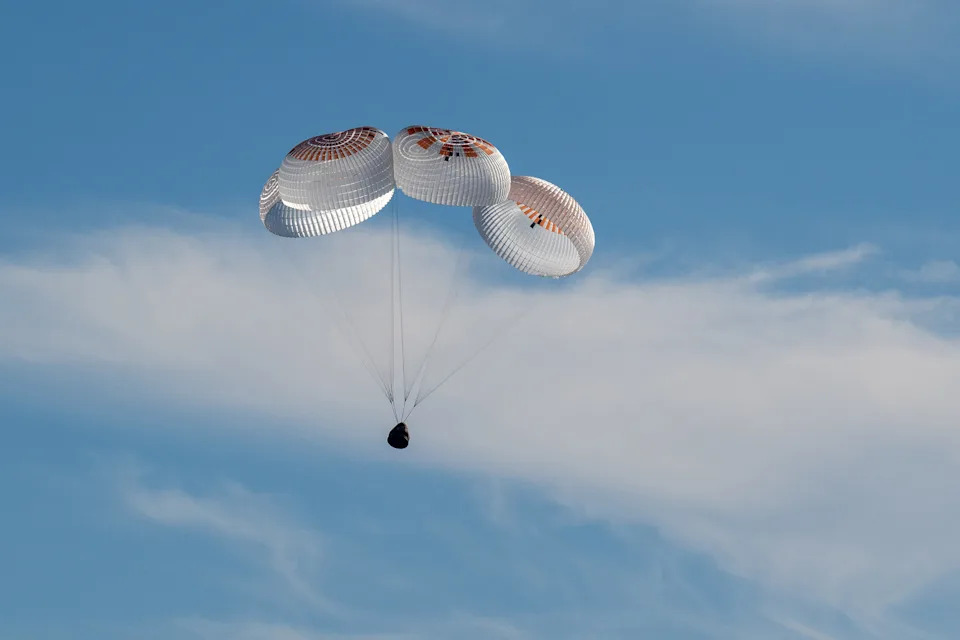
Butch Wilmore and Suni Williams splash down on March 18, 2025.Keegan Barber—NASA/Getty Images
Boeing Starliner’s Unexpected Long Stay
Boeing’s Starliner launched June 5, 2024, carrying astronauts Butch Wilmore and Suni Williams for an eight-day test mission to the International Space Station. Persistent thruster problems forced an extended stay, and the crew did not return until March 18, 2025, when they splashed down after an unusual 288-day mission — a reminder of the complexity of crewed spaceflight and the value of redundancy in orbital operations.
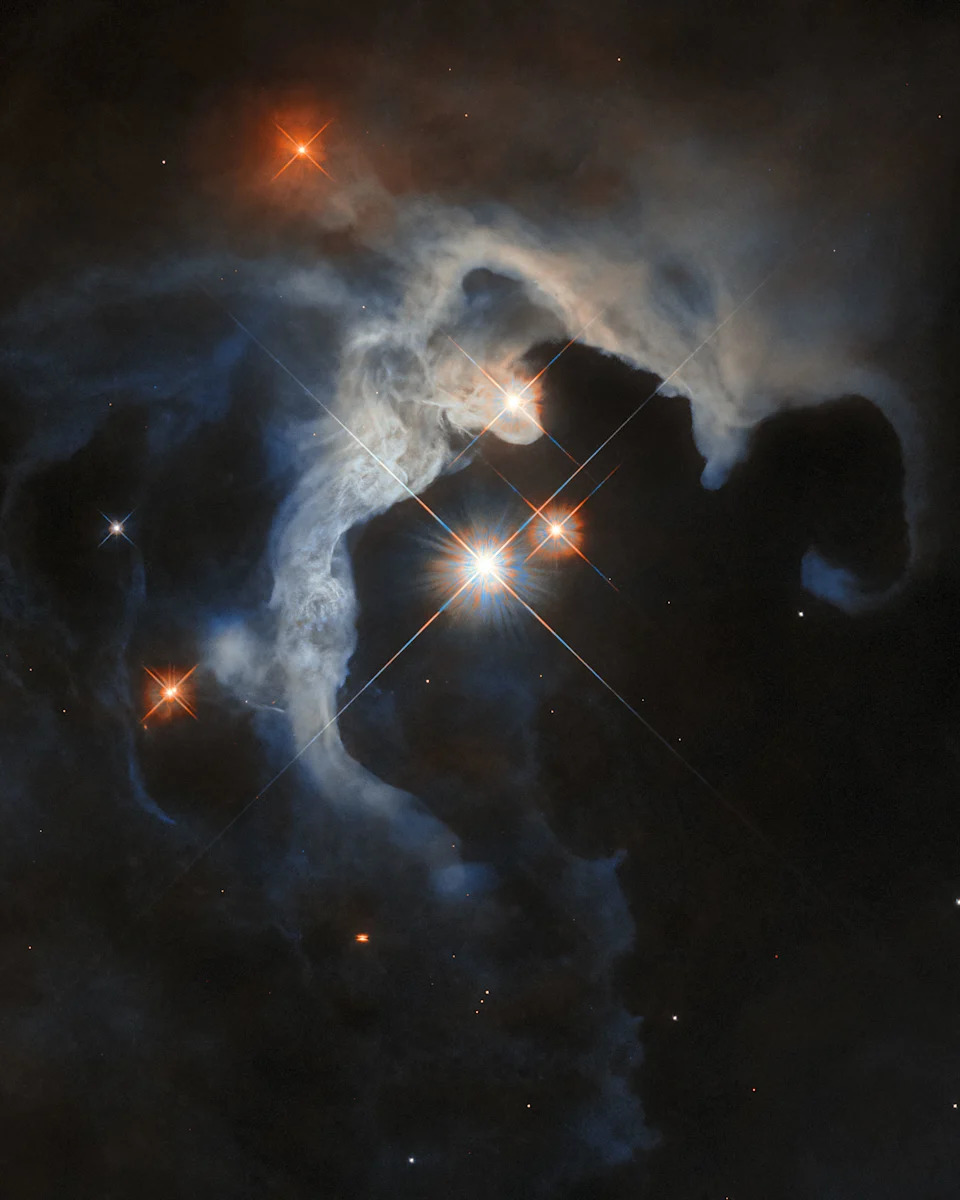
The Taurus Molecular Cloud.ESA/Hubble/NASA/G. Duchêne
Hubble’s View of a Reflection Nebula: Taurus Molecular Cloud
The Hubble Space Telescope captured a reflection nebula in the Taurus Molecular Cloud, about 480 light-years away. Unlike emission nebulae that glow from ionized gas, reflection nebulae shine by scattering starlight; here the cloud is lit primarily by three central stars. Its proximity makes it a valuable laboratory for studying star and protoplanetary-disk formation.
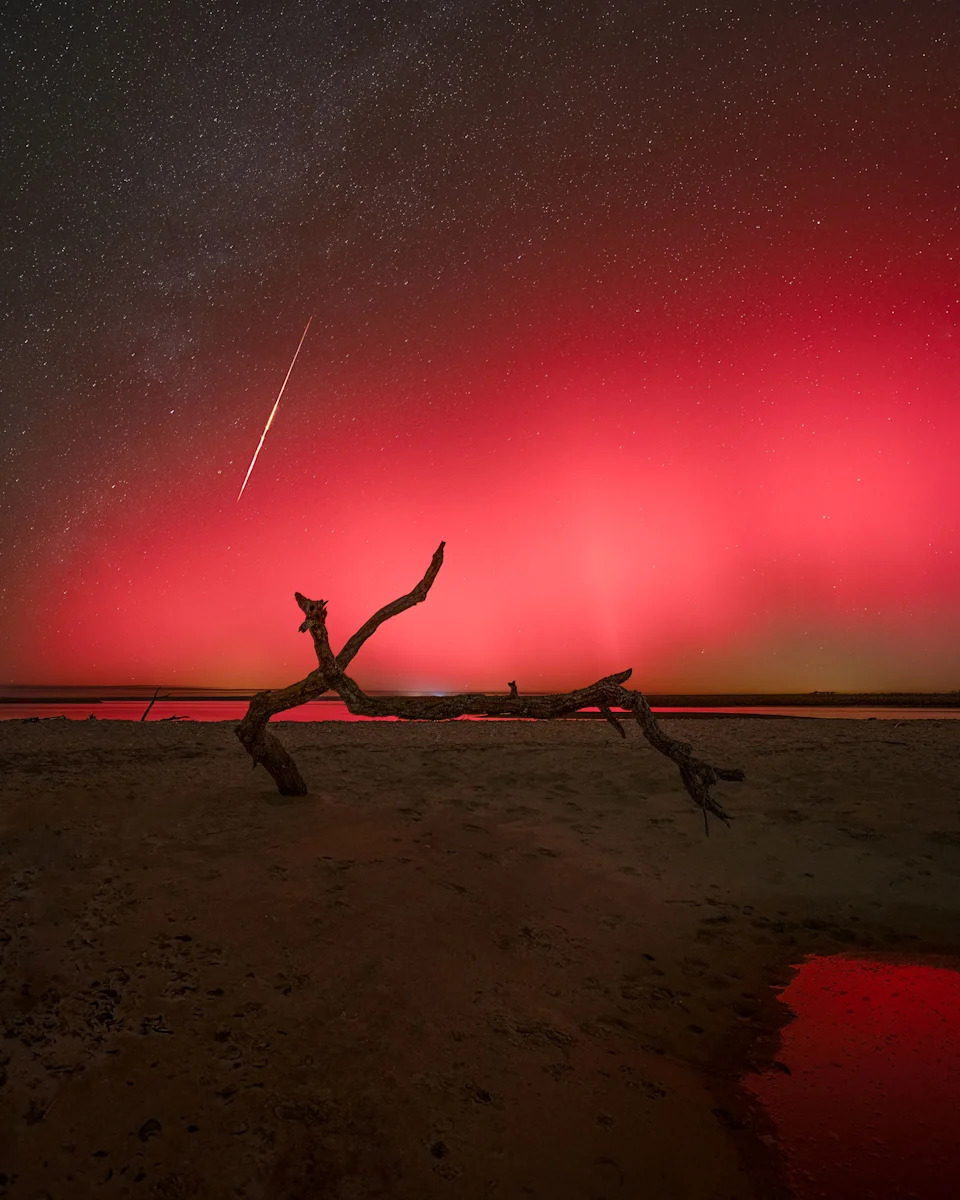
In November 2025, the northern lights reached as far south as Florida.Samil Cabrera—NASA APOD
Auroras Far From Home
Intense solar activity, including multiple coronal mass ejections, expanded auroral displays far from polar regions. In November dramatic northern lights were visible across much of the continental United States — including a striking image from Shired Island, Florida, that even captured a meteor streaking beneath the auroral curtains.

An image of Earth taken by China's Tianwen-2 spacecraft.CNSA/CAS/The Planetary Society
Tianwen-2’s Remote Portrait of Earth
China’s Tianwen-2, launched in May, is headed to sample a near-Earth asteroid and later visit a main-belt comet. On May 30 the probe returned a remote portrait of Earth from more than 366,000 miles away — a small but poignant reminder of how quickly our planet shrinks as spacecraft venture into deep space.
Contact: Jeffrey Kluger — jeffrey.kluger@time.com


