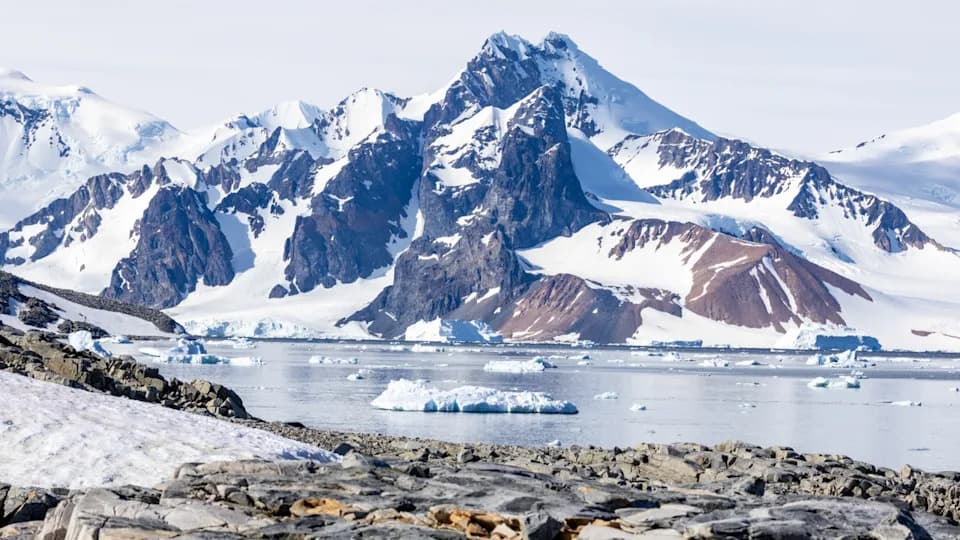
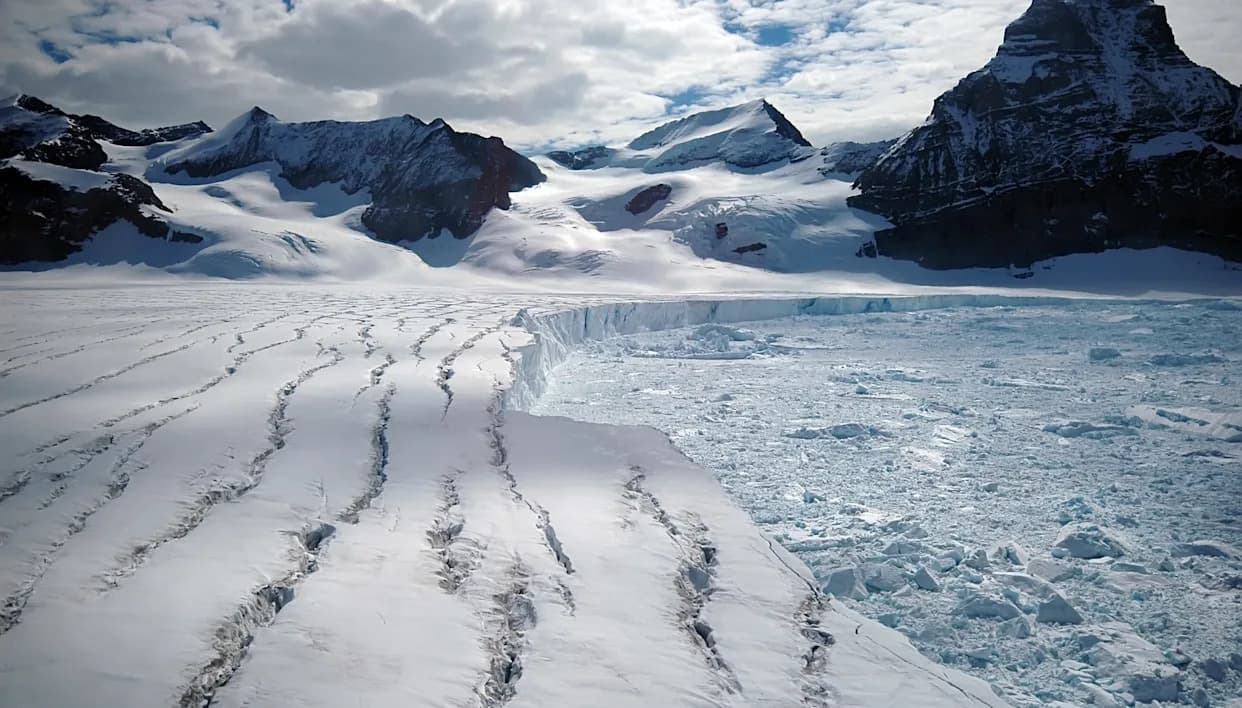
At the start of 2026, staff at the Amundsen-Scott South Pole Station moved the physical marker that denotes the geographic South Pole because the ice sheet beneath it drifts roughly 10 meters per year. The geographic pole is fixed by Earth’s rotation and is distinct from the drifting magnetic and geomagnetic poles. The relocation is a routine, practical task that also draws attention to how warming oceans are eroding coastal ice and destabilizing glaciers — a risk for future sea-level rise.
They Moved the South Pole Marker — Why It Was Relocated for 2026
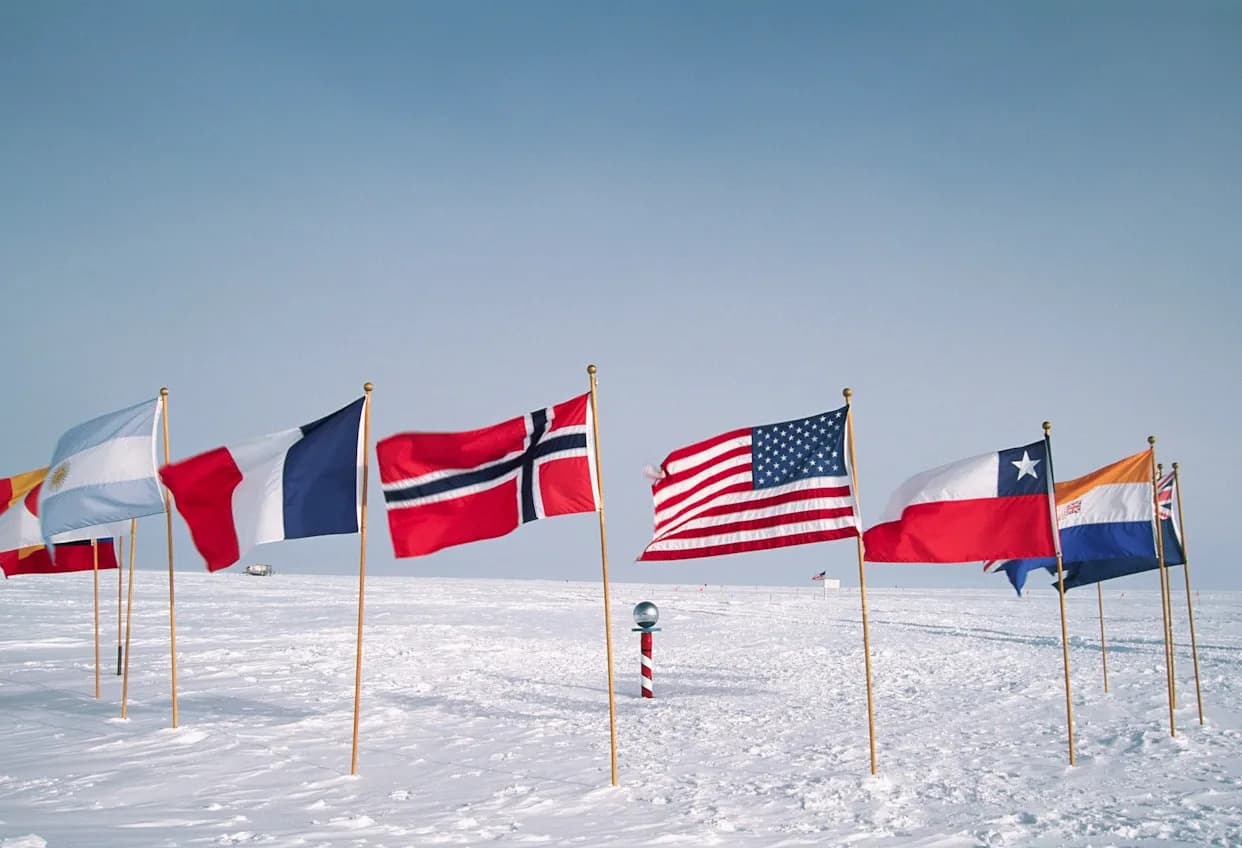
Flags mark the ceremonial South Pole.
As the world rang in 2026, researchers at the U.S. Amundsen-Scott South Pole Station performed a task that may sound impossible to many: they moved the physical marker that denotes the geographic South Pole.
Geographic vs. Magnetic Poles
The geographic South Pole is the point where Earth’s axis of rotation meets the surface of the planet and, strictly speaking, does not move. It sits roughly in the middle of Antarctica. By contrast, the magnetic and geomagnetic South Poles are distinct points tied to Earth’s magnetic field; they lie near the Adélie Coast and close to Russia’s Vostok Station, respectively, and drift over time as the planet’s magnetic field evolves.
Why the Marker Moves
The action at the South Pole station had nothing to do with magnetism. The station’s marker is embedded in the Antarctic ice — and that ice is not fixed. The Antarctic ice sheet behaves like an enormous, slow-moving frozen river, flowing from the continent’s interior toward the coast. Because the surface ice at the Pole moves roughly 10 meters (about 33 feet) a year, the physical marker must be repositioned regularly to remain directly above the true geographic pole.
Practical And Symbolic Rituals
Each year, staff members mark the relocation with a small ceremony. In 2026, the New Year’s observance at Amundsen-Scott included a stuffed penguin, bagpipes and the unveiling of a newly placed marker — a ritual that blends practicality with a touch of Antarctic tradition.
Why It Matters
Beyond the novelty, the event highlights broader environmental concerns. Warmer ocean waters are eroding Antarctic coastline ice and destabilizing some glaciers. If large glaciers collapse or accelerate into the sea, they could contribute substantially to global sea level rise. The routine task of moving a pole marker is a quiet reminder that the Antarctic environment is dynamic and changing.
Bottom line: The geographic South Pole remains fixed by Earth’s rotation, but because the ice carrying the marker drifts, researchers must reposition the marker annually — an act that is practical, ceremonial, and a reminder of changing polar conditions.
Help us improve.