The Landsat 9 satellite captured a rare June–July 2025 snow event that dusted the Chajnantor Plateau in Chile's Atacama Desert, briefly forcing the ALMA radio observatory into "survival mode" and halting observations. The Atacama — about 40,500 sq mi (105,000 sq km) between the Pacific and the Andes — is one of the driest non-polar deserts, with some locations receiving as little as 0.002 inches (0.5 mm) of rain per year. The snowfall largely disappeared by mid-July, often sublimating under intense sunlight, and scientists note similar events in recent years that may be linked to changing climate patterns.
Rare Snow Dusts Atacama Plateau, Forcing ALMA Into "Survival Mode" — Landsat 9 Captures Event

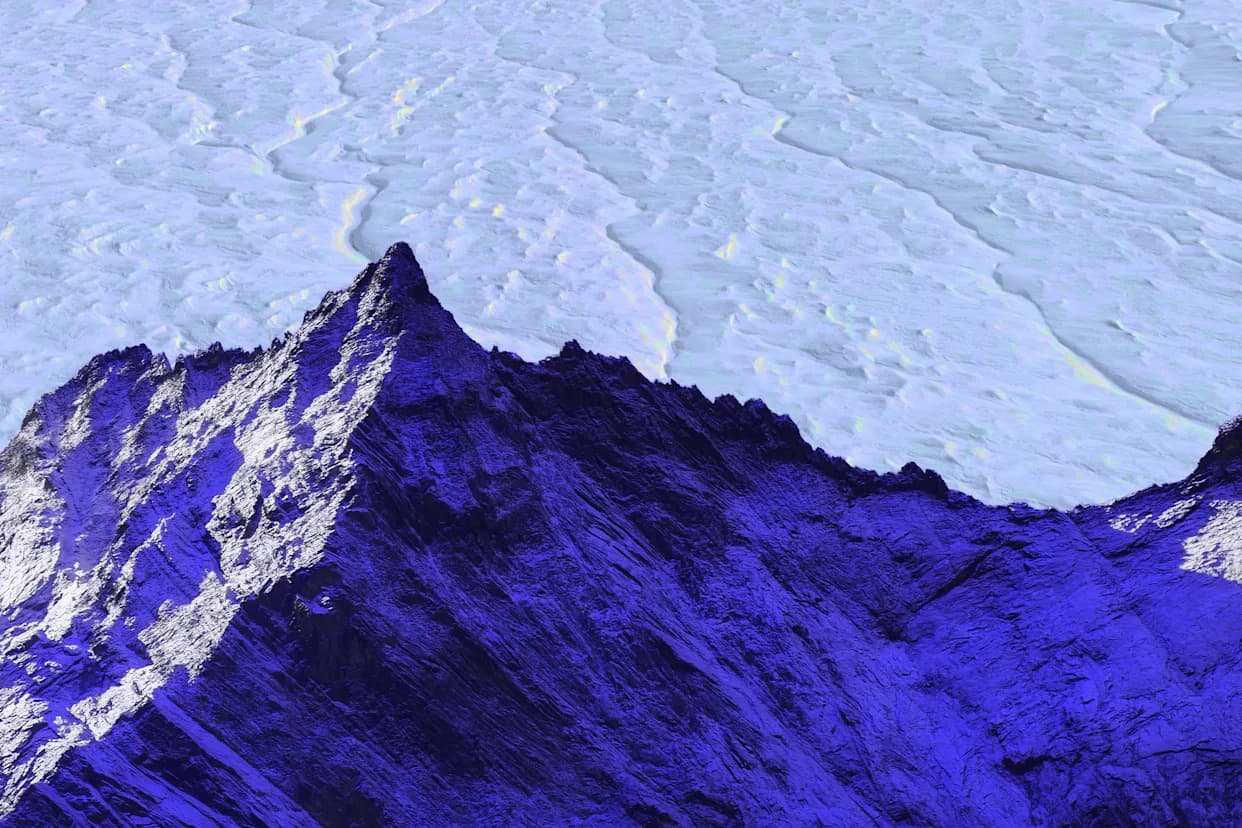
The Atacama desert is widely considered to be one of the driest places on Earth. But in July, large parts of the region experienced a thick dusting of snow. . | Credit: NASA/Landsat 9
A striking Landsat 9 image taken on July 10, 2025, shows a rare dusting of snow on the Chajnantor Plateau in Chile's Atacama Desert — briefly turning parts of one of Earth's driest regions white and temporarily halting normal operations at the Atacama Large Millimeter/submillimeter Array (ALMA).
Where and why this matters
Stretching roughly 40,500 square miles (about 105,000 km2) along a roughly 1,000-mile (1,600 km) corridor between the Pacific Ocean and the Andes, the Atacama is one of the planet's oldest and driest non-polar deserts. Some locations receive as little as 0.002 inches (0.5 mm) of rain per year, and earlier research suggests parts of the region went almost 400 years (1570–1971) without recorded rainfall. Its high, dry plateaus — including the Chajnantor area at about 16,000 feet (5,000 m) elevation — make it ideal for astronomy because thin, dry air reduces atmospheric interference.
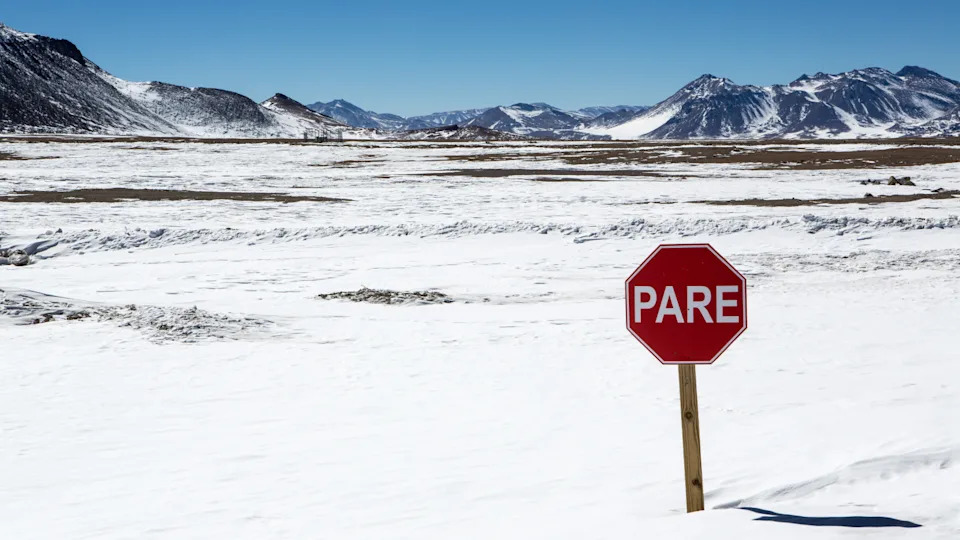
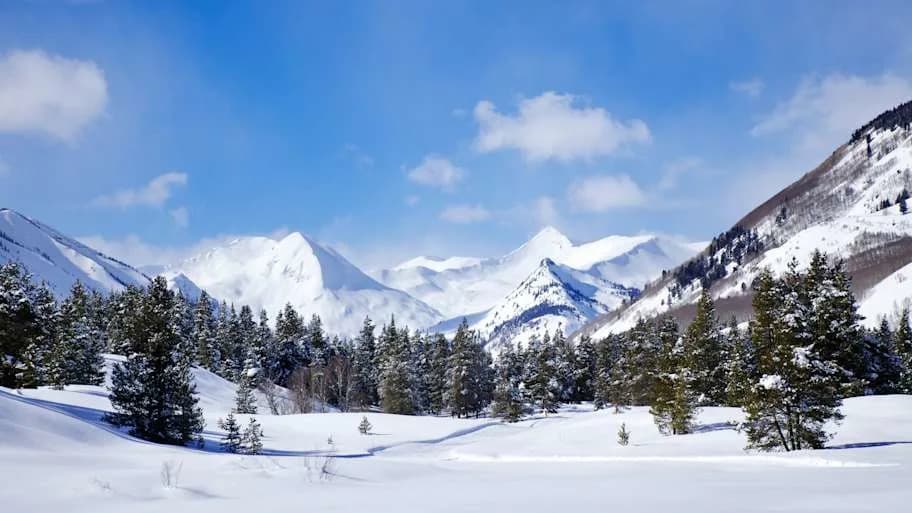
Snowfall in the Atacama is very rare. This photo shows the area surrounding ALMA after a similar event in 2013. | Credit: Ronald Patrick/Getty Images
The unusual snow event
On June 25, 2025, a cold-core cyclone moved unexpectedly southward into the region and produced an uncommon snow event that covered large portions of the desert, according to NASA's Earth Observatory. The Landsat 9 image from July 10 documents the extent of that dusting across the Chajnantor Plateau; most of the snow had largely disappeared by July 16. In many locations intense sunlight likely caused sublimation, where ice turns directly to vapor without melting first.
Impact on observatories
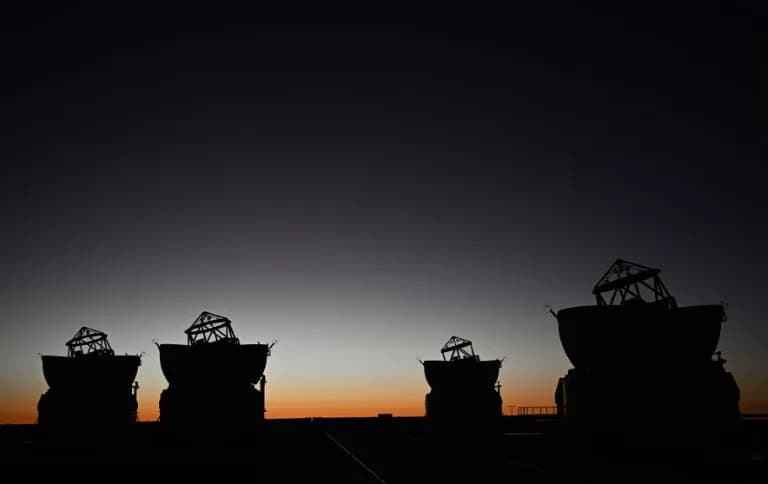
ALMA — an array of more than 50 radio dishes situated on the Chajnantor Plateau — entered a temporary "survival mode." Technicians repositioned dishes to reduce snow accumulation, pausing routine scientific observations until conditions allowed safe restart. Reports indicate the Southern Astrophysical Research (SOAR) Telescope, located roughly 530 miles (850 km) southwest of ALMA, experienced only minor effects, while the newly constructed Vera C. Rubin Observatory in the broader Atacama region was not affected by this particular storm.
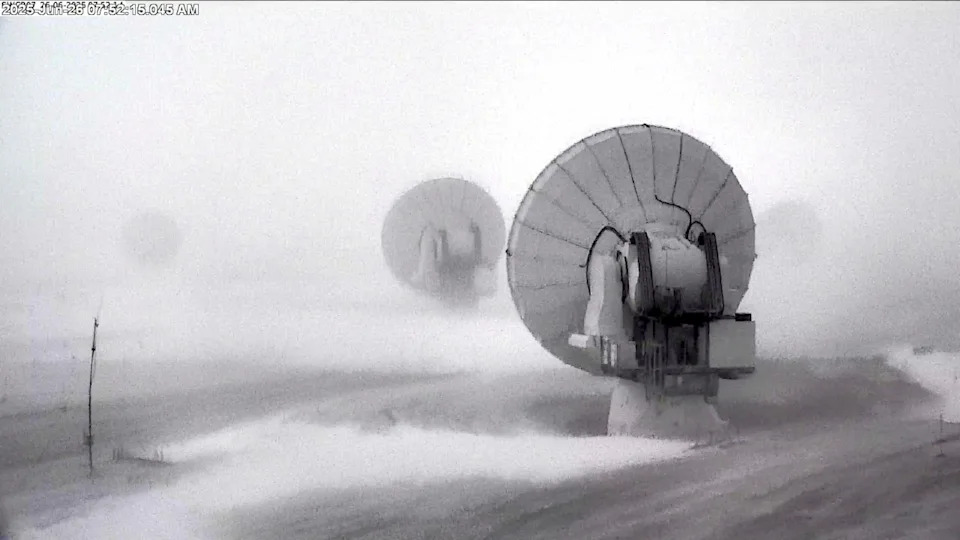
ALMA was forced into "survival mode" as snow fell on its array of radio dishes. This meant realigning the dishes to be perpendicular to the ground to stop snow gathering on them. | Credit: ALMA
Context: a region of extremes
Snowfall in the Atacama is uncommon but not unprecedented: similar events were recorded in 2011, 2013 and 2021. The region has also seen episodes of unusually heavy rain in recent years; the most catastrophic in modern times occurred in March 2015, when intense rainfall triggered floods that killed at least 31 people. Conversely, off-season rains can also spark spectacular desert blooms — most recently observed in 2024 — when dormant seeds quickly sprout after rare moisture.
Climate considerations
Scientists caution that clusters of unusual precipitation in traditionally hyperarid regions could be tied to human-caused climate change, which can alter storm tracks and the frequency of extreme events. If such trends continue, the Atacama's long-standing reputation as one of Earth's driest regions could be affected.
Sources: NASA Earth Observatory, Live Science / Space.com, Guinness World Records, published peer-reviewed studies on Atacama hydrology and recent observational reports.
Help us improve.