The European Southern Observatory welcomed AES Andes's decision to halt the proposed US$10 billion Inna energy development in Chile's Atacama Desert after concerns it would have increased light pollution around the Paranal Observatory. ESO analysis warned the project would have caused "severe, irreversible damage" to Paranal’s dark skies and increased light over the Very Large Telescope by at least 35%. AES Andes said it will instead focus on renewable energy generation and energy storage, removing a major threat to current and future telescopes including the Extremely Large Telescope, due to start observations in 2029.
ESO Applauds Cancellation Of $10B Chile Energy Project That Threatened Paranal’s Dark Skies
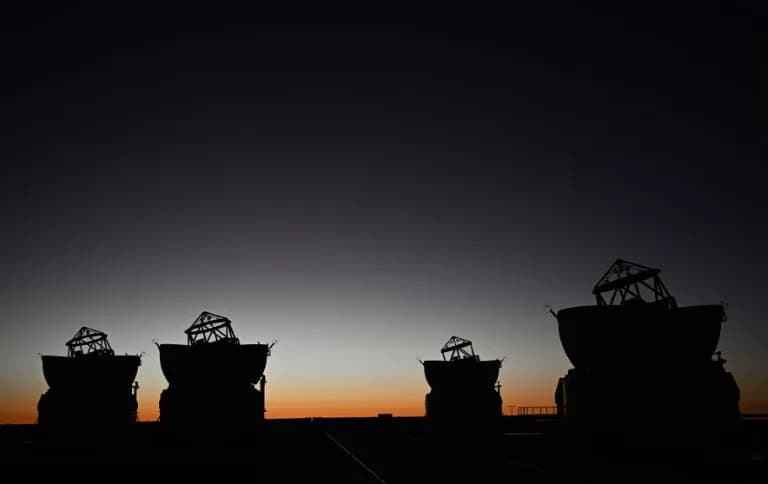
The telescopes in Chile's Atacama desert examine faraway Earth-like planets and galaxies to create a better understanding of our universe (RODRIGO ARANGUA)(RODRIGO ARANGUA/AFP/AFP)
The European Southern Observatory (ESO) has welcomed the decision by AES Andes to halt the proposed US$10 billion Inna energy project in Chile’s Atacama Desert after concerns that the development would have significantly increased light pollution around the Paranal Observatory.
Project Background
In 2024 AES Andes, a subsidiary of US-based AES Corporation, submitted plans for the Inna complex: a 3,000-hectare (7,400-acre) development intended to produce solar and wind power and green hydrogen. The proposal was subject to an environmental impact assessment when AES Andes announced late last month that it had "decided to desist from the execution of the Inna project" and would instead concentrate on renewable-energy generation and energy storage initiatives.
Why Astronomers Were Alarmed
Paranal Observatory, perched at 2,635 metres (8,645 feet) above sea level and located dozens of kilometres from the nearest city, Antofagasta, benefits from exceptionally clear, stable atmospheric conditions. ESO analysis last year concluded the Inna project "would have caused severe, irreversible damage to the dark skies of Paranal." The study estimated that artificial light from the complex would have increased light pollution above the Very Large Telescope (VLT) by at least 35 percent.
Xavier Barcons, ESO Director General: "When the cancellation is confirmed, we'll be relieved that the Inna industrial complex will not be built near Paranal. Due to its planned location, the project would pose a major threat to the darkest and clearest skies on Earth and to the performance of the most advanced astronomical facilities anywhere in the world."
Impact On Current And Future Instruments
The VLT — a suite of four individual telescopes at Paranal — produced the first-ever image of an exoplanet in 2004 and remains a cornerstone facility for observational astronomy. The proposed development also risked impairing the Extremely Large Telescope (ELT), a stadium-sized instrument with a budget of €1.45 billion (about US$1.7 billion) that is scheduled to begin scientific observations in 2029.
Public Response And Significance
ESO said it was "incredibly reassuring" to see strong concern from people in Chile and around the world for the protection of dark and quiet skies. The decision to abandon the Inna project removes a major threat to Paranal's unique observing conditions, helping to protect both current astronomical work and future scientific capabilities planned for the site.
Although AES Andes will refocus on other renewable and storage projects, the episode highlights the delicate balance between expanding green-energy infrastructure and preserving globally important scientific sites. Ongoing dialogue between developers, local communities, regulators and the scientific community will remain essential to reconcile these priorities.
Help us improve.