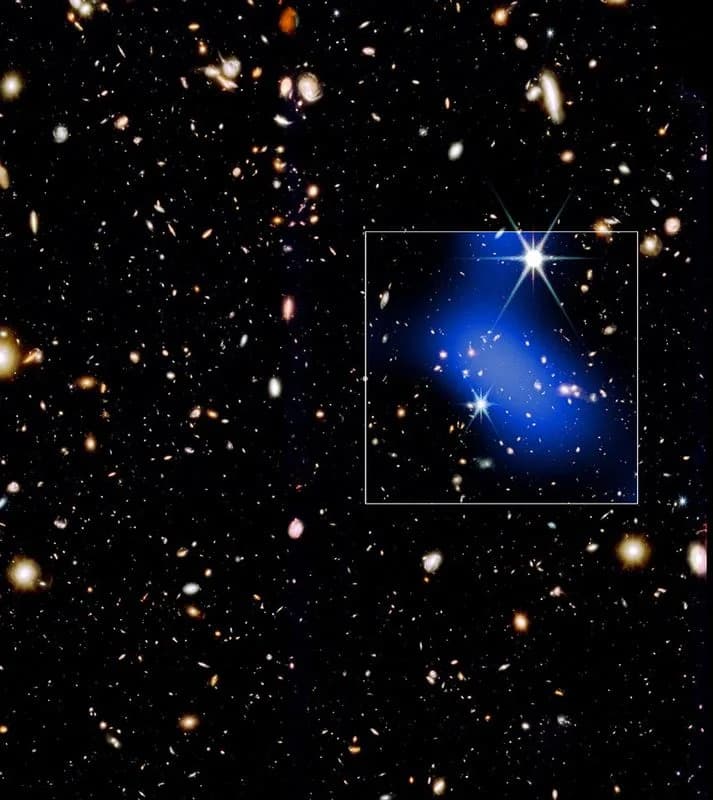
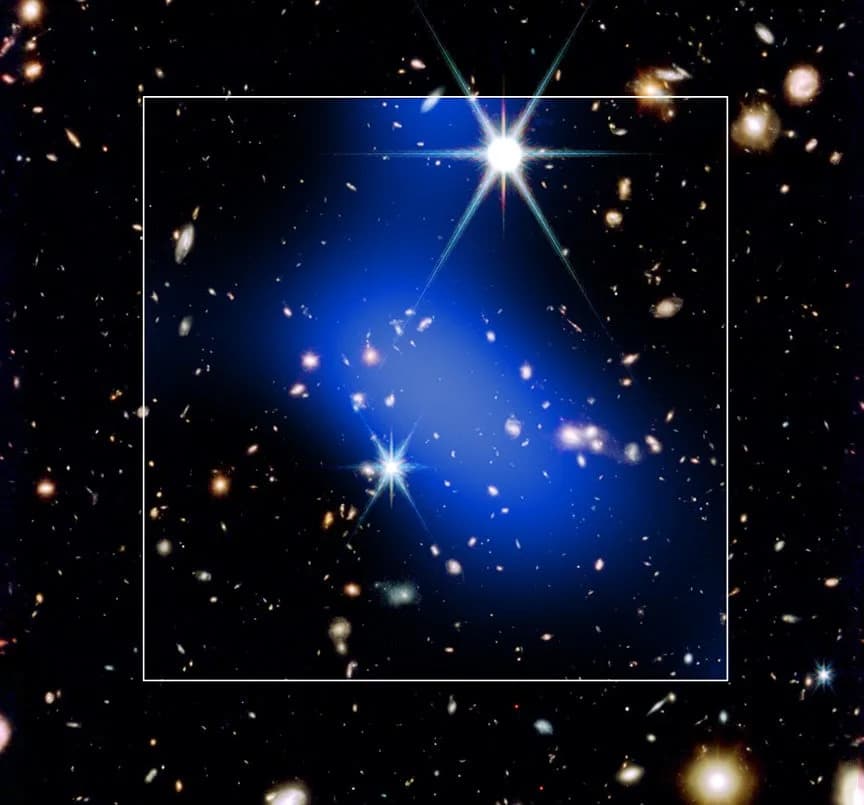
The James Webb Space Telescope has produced the most detailed dark-matter map yet for a single sky region, observing a field in the Sextans constellation for 255 hours and cataloging nearly 800,000 galaxies. Scientists converted subtle gravitational lensing distortions into a high-resolution chart of dark matter, showing how it guided ordinary matter into dense regions that formed stars and galaxies. NASA’s upcoming Roman Space Telescope will map a vastly larger area at lower resolution to extend this work.
James Webb Reveals the Universe’s "Invisible Scaffolding": Most Detailed Dark Matter Map Yet
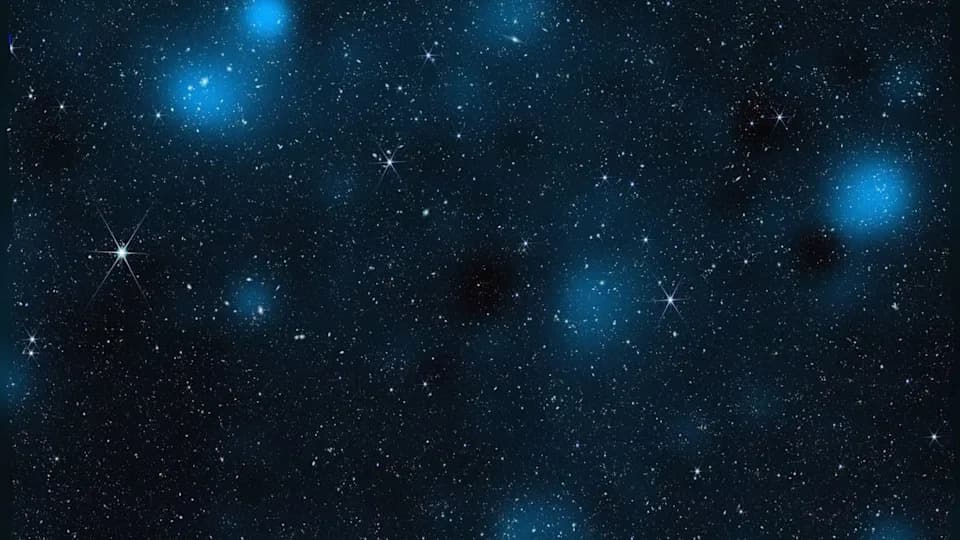
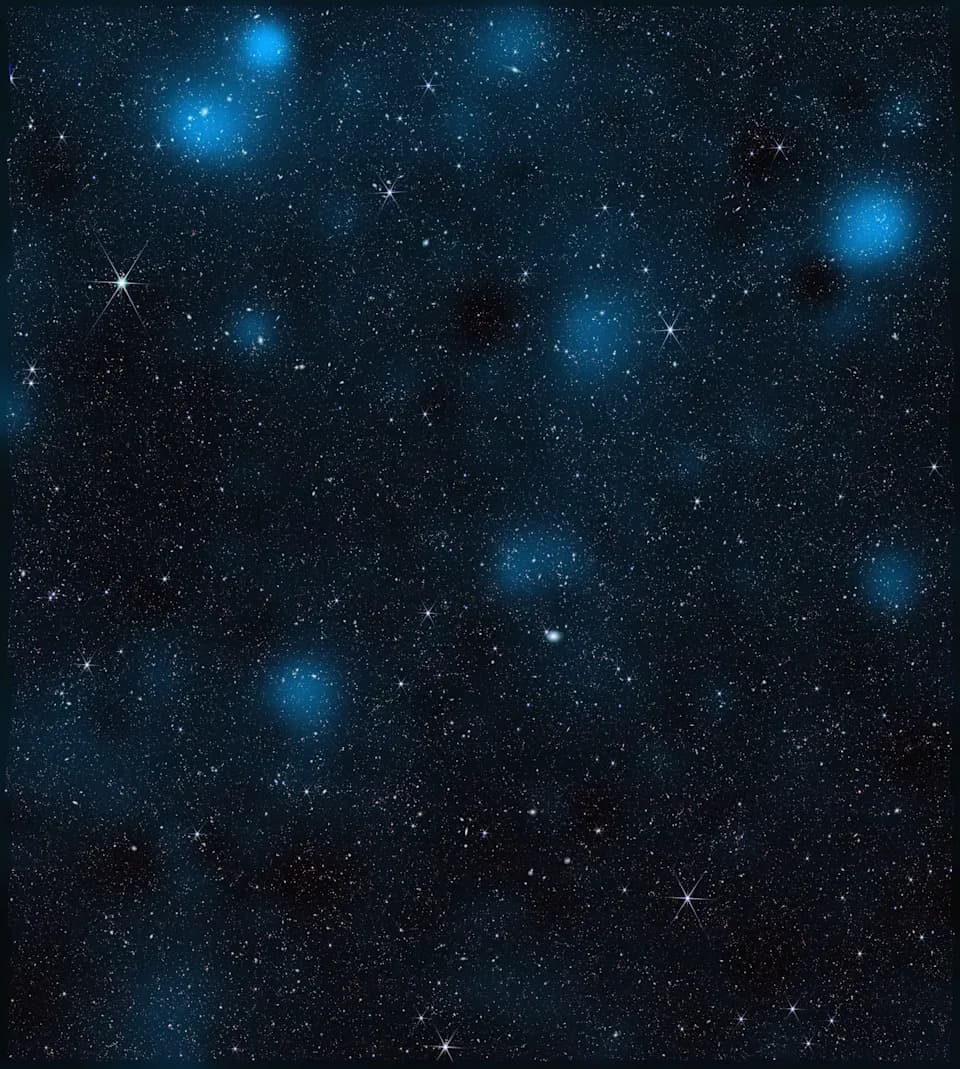
Blue blobs represent invisible dark matter in this sliver of JWST's impressive new matter map. | Credit: NASA/STScI/J. DePasquale/A. Pagan
Using the James Webb Space Telescope (JWST), astronomers have produced the most detailed map to date of dark matter in a single patch of sky, revealing the fine-scale structure that shaped galaxies and cosmic evolution.
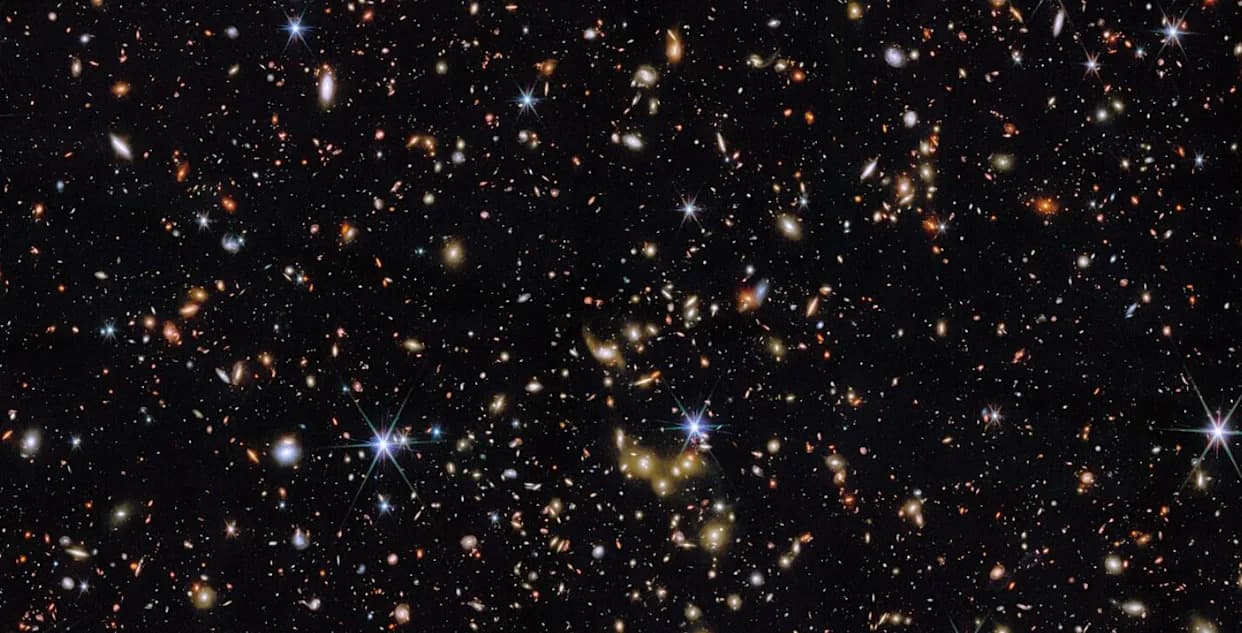
The analysis, published Jan. 26 in Nature Astronomy, targeted a field in the Sextans constellation. The team observed that region for 255 hours with JWST, building a deep catalog of visible matter — stars, galaxies and cosmic dust — and identifying nearly 800,000 galaxies, roughly ten times the count from ground-based surveys in the same patch and nearly twice the number previously detected there by the Hubble Space Telescope.
Mapping the Invisible
After assembling the visible-galaxy map, researchers translated distortions in the shapes of background galaxies into a chart of how dark matter bends space. This technique, based on gravitational lensing (weak lensing of background sources), reveals the mass distribution of otherwise invisible dark matter, producing a high-resolution picture of the universe’s underlying "scaffolding."
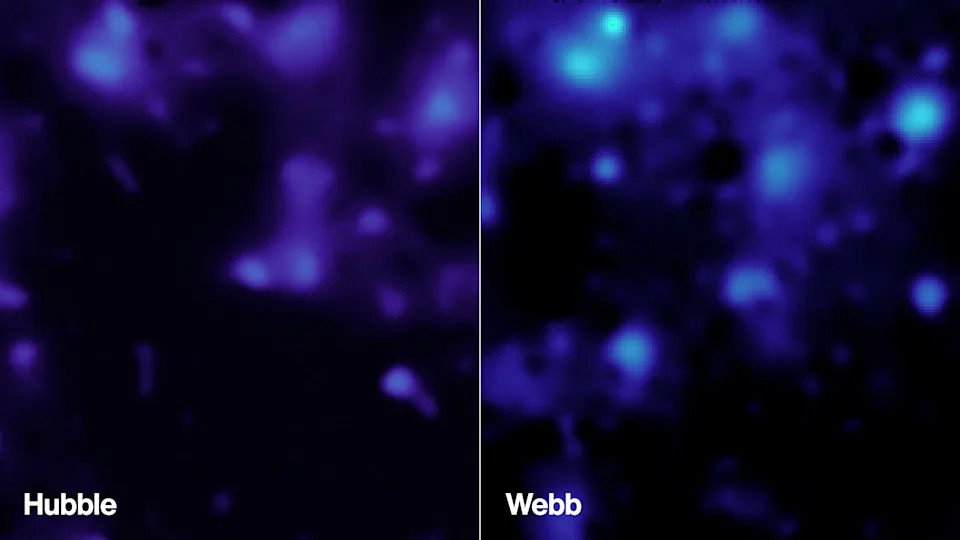
Two maps showing the distribution of dark matter in the same region of sky, created using data from JWST in 2026 (right) and from Hubble in 2007 (left). Webb's higher resolution is providing new insights into how dark matter influences ordinary matter in the universe. | Credit: NASA/STScI/A. Pagan
“Previously, we were looking at a blurry picture of dark matter,” said Diana Scognamiglio, an astrophysicist at NASA’s Jet Propulsion Laboratory (JPL) and a co-lead author of the paper. “Now, we’re seeing the invisible scaffolding of the universe in stunning detail.”
Dark matter does not emit, absorb or reflect light, so astronomers infer its presence from gravity. Current estimates indicate there is about five times more dark matter than ordinary (baryonic) matter in the cosmos. Models suggest dark matter began clumping earlier than ordinary matter after the Big Bang, pulling baryonic gas into dense pockets that later formed stars and galaxies; high-resolution dark-matter maps help test and refine those models.
Looking Ahead
The JWST map covers a relatively small but richly detailed patch of sky. The research team plans to expand this work with NASA’s Nancy Grace Roman Space Telescope, due to launch soon. Roman will survey a region roughly 4,400 times larger than the JWST field, delivering much broader coverage but at lower spatial detail compared with JWST’s deep, high-resolution map.
“This map provides stronger evidence that without dark matter, we might not have the elements in our galaxy that allowed life to appear,” said Jason Rhodes, a senior research scientist at JPL and a co-author of the study.
By combining JWST’s depth with Roman’s wide-area surveys, astronomers expect to produce a far more complete picture of dark matter’s role in shaping the large-scale structure of the universe and in driving galaxy formation over cosmic time.
Help us improve.