SETI@home, the distributed computing initiative launched in 1999 at UC Berkeley, will end after 27 years. Volunteers analyzed Arecibo data and produced roughly 12 billion candidate detections, most of which proved to be human-made interference. Researchers narrowed the archive to about 100 top candidates that are now being reobserved with China’s FAST telescope. SETI@home’s technical advances and large-scale public engagement are cited as its lasting legacy.
SETI@home Winds Down After 27 Years; 100 Top Signals to Be Rechecked Using China’s FAST Telescope
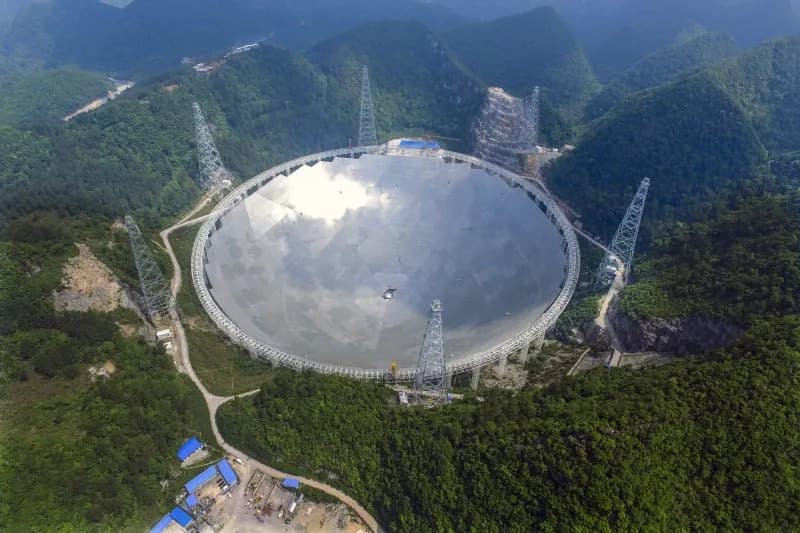
Scientists from the University of California at Berkeley are using the 500-meter Aperture Spherical Telescope in China to check out a final batch of 100 candidate "ET" radio signals detected through the "SETI@home" program. File Photo by STR/EPA
SETI@home, one of the longest-running public searches for extraterrestrial intelligence, will conclude this year after 27 years of volunteer-driven analysis. Launched in 1999 at the University of California, Berkeley, the distributed-computing project asked millions of people to donate spare processor cycles from their home computers to sift radio data gathered by the Arecibo Observatory.
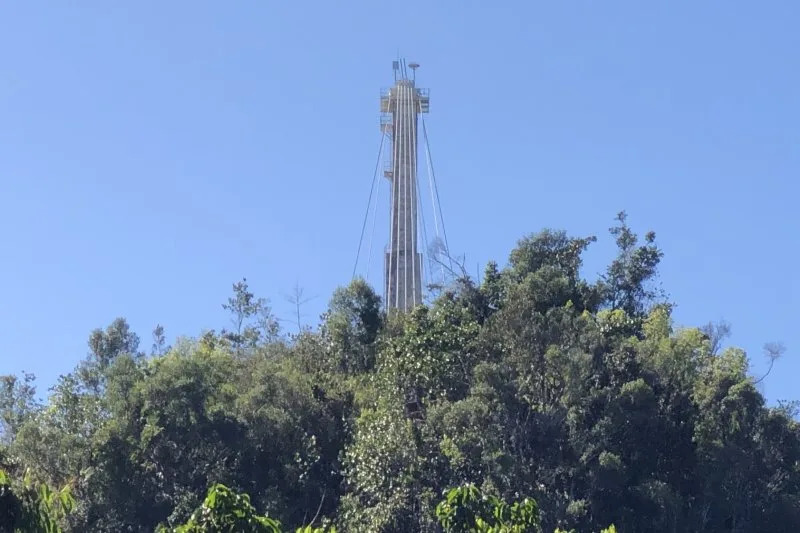
The Arecibo Observatory in Puerto Rico included the world’s most powerful radar telescope built into the rugged terrain in the mid-1960s. The observatory was the foundation of the SETI project for 14 years. File Photo by Paul Brinkmann/UPI
Final Follow-Up: The Strongest Candidates
Researchers have winnowed roughly 12 billion candidate detections from 14 years of Arecibo observations down to about 1 million and now to a final set of roughly 100 top candidates. Those candidates are being rechecked with the Five Hundred-Meter Aperture Spherical Telescope (FAST) in China in the hope of re-detecting persistent emissions from the same sky locations and frequencies. Once that follow-up is complete, the SETI@home effort will be formally wound down.
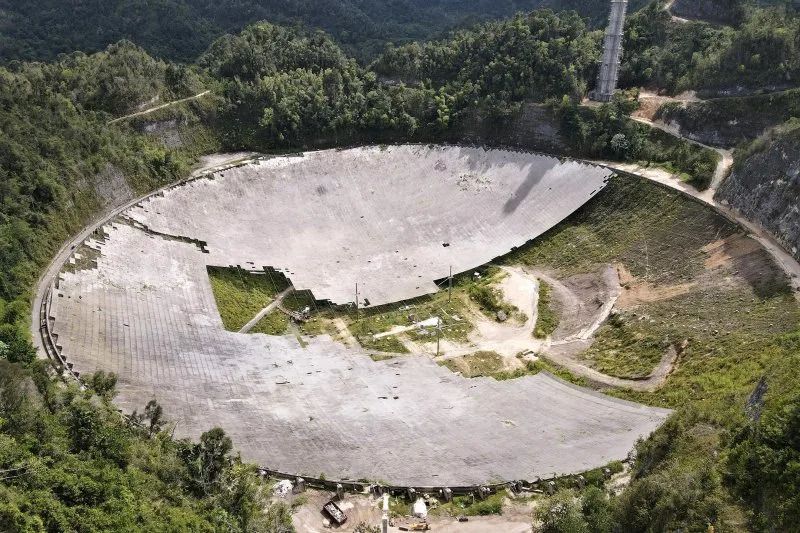
Debris from the Arecibo Observatory collapse was mostly cleaned up and removed toward the end of 2021. Before its collapse, the massive radio telescope provided billions of deep space signals to analysts over a 14-year span as part of the "SETI@home" project in the search for evidence of extraterrestrial life. File Photo courtesy of Arecibo Observatory/NAIC
How the Project Worked
At its peak the project enlisted more than 5 million volunteers, who installed free software that analyzed raw Arecibo data for brief energy spikes that might indicate an artificial signal. SETI@home was a pioneering example of distributed computing in an era before widely available high-speed internet and modern cloud computing.
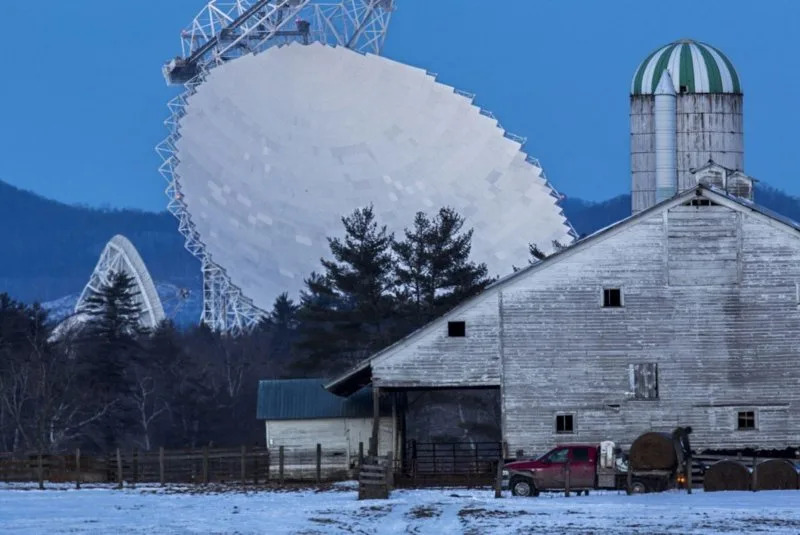
The Robert C. Byrd Green Bank Telescope, the largest steerable radio telescope in the world, is shown at dusk in Green Bank, WVa. Officials of the Green Bank Observatory this week praised the legacy of the SETI@home project, which is wrapping up after more than two decades of searching for "ET." File Photo by Jim Lo Scalzo/EPA
- Data Archive: Volunteers processed data collected over about 14 years, covering nearly the entire sky visible to Arecibo while it performed other observations.
- Candidate Volume: The analysis produced roughly 12 billion candidate detections, the vast majority of which were later identified as radio-frequency interference from satellites, terrestrial transmitters and other human-made sources.
- Blind Tests: To calibrate detection software, researchers injected artificial test signals called "birdies" into the data stream to measure sensitivity and validate algorithms.
Legacy and Lessons
Project co-founders and collaborators highlight several enduring accomplishments: the demonstration of large-scale citizen science, advances in signal-detection sensitivity beyond conventional spectroscopic methods, and a robust distributed-computing platform that can be repurposed for other scientific problems such as cosmology, pulsar research and even biomedical computation.
"We had to automate much of the cleanup, but in the end we manually inspected candidates to discard obvious interference," said David Anderson of UC Berkeley's Space Sciences Laboratory, summarizing the decade-long effort to refine billions of detections into the final candidates.
Co-founder Eric Korpela said the project also proved that public engagement could complement mainstream astronomy rather than hinder it, sparking broad interest in the search for life beyond Earth. Other leaders in the field — including Breakthrough Listen collaborators at NSF, NRAO and the Green Bank Observatory, and researchers at METI International — praised SETI@home for its technical innovations and for inspiring a new generation of researchers.
Arecibo: From Repair to Collapse
The Arecibo Observatory, which provided the raw data SETI@home analyzed, was damaged by Hurricane Maria in 2017 and returned to service, but it ultimately collapsed in 2020 after long-term structural degradation of the filled spelter sockets that anchored its support cables. The Arecibo dataset nevertheless remains a rich scientific resource.
What Comes Next
With the FAST follow-up under way and two methodology papers published recently describing lessons learned, SETI@home's infrastructure and human-network model remain valuable. Researchers say the project's tools and public-engagement lessons will inform future searches for techno-signatures and other collaborative scientific efforts.
Help us improve.