Researchers led by Harold “Sonny” White and colleagues at Casimir Space propose a new warp-drive topology that funnels exotic negative-energy requirements into Gaussian-cylinder 'nacelles,' making warp metrics resemble conventional engine placement. The idea extends Miguel Alcubierre’s 1994 proposal and appears in Classical and Quantum Gravity. Although the design reduces some practical hurdles, it still depends on negative energy — only observed in tiny quantum effects — so a major scientific breakthrough would be required to make warp travel feasible.
New Warp-Drive Geometry Moves Exotic Energy to ‘Nacelles’ — Still Hinges on Negative Energy

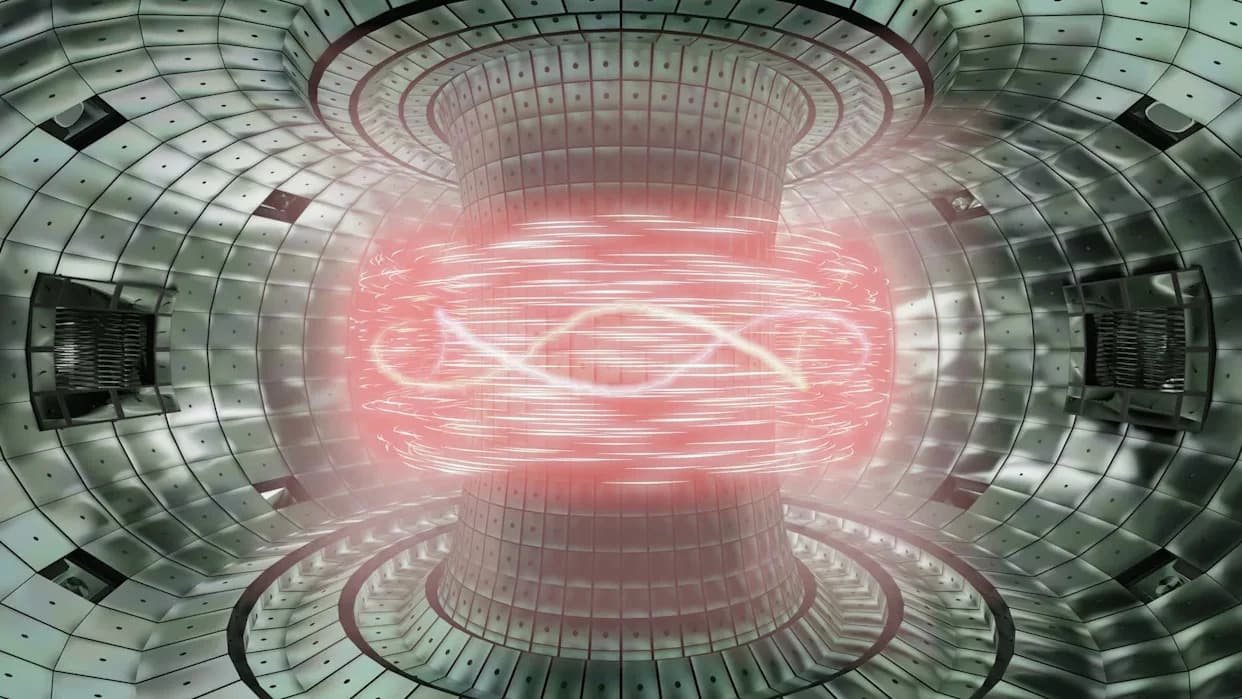
Scientists Designed a Warp Drive That Might WorkEDUARD MUZHEVSKYI / SCIENCE PHOTO LIBRARY - Getty Images
Researchers have proposed a redesigned warp-drive geometry that channels the exotic negative-energy requirements into nacelle-like Gaussian cylinders, making warp metrics look more like conventional starship architectures. The work builds on Miguel Alcubierre’s influential 1994 warp-bubble proposal and is led by Harold “Sonny” White and colleagues at Casimir Space, with results published in Classical and Quantum Gravity.
The original Alcubierre metric successfully showed a mathematical way to contract space in front of a craft and expand it behind, producing an apparent faster-than-light (FTL) effect without locally breaking the speed of light. However, that solution required vast amounts of negative energy — an exotic form of stress–energy not allowed by classical physics. Only tiny, local negative-energy-like effects are seen in quantum phenomena such as the Casimir effect.
White and his collaborators move away from the continuous spherical warp bubble and instead propose a modular topology built from discrete Gaussian cylinders — often called 'nacelles' in science fiction. By concentrating the exotic-energy requirements in those end-cap cylinders, the design keeps the main body of a hypothetical spacecraft in a relatively benign region of spacetime, resembling conventional engine placement.
'The study derives a new class of warp bubbles built from discrete warp nacelles rather than the single continuous ring used in the traditional Alcubierre model,' White told a popular-science outlet, noting that the approach creates a more modular, engine-like architecture to shape spacetime.
This architectural advance lowers some practical barriers that have made earlier warp metrics overwhelmingly impractical. Over the past three decades researchers have steadily reduced the total negative-energy requirement, but the new nacelle-focused topology still fundamentally depends on producing, concentrating, and controlling negative energy — a capability that would require a major breakthrough in physics or engineering.
Because negative energy remains the chief unresolved obstacle, some researchers explore alternative concepts that avoid exotic matter entirely, including radiation-driven or concentrated-light schemes sometimes described as sunlight- or photon-driven warp proposals. For now, warp-drive research remains theoretical and speculative — scientifically intriguing and mathematically rich, but not yet a practical engineering project.
Bottom line: The new nacelle geometry is an important conceptual advance that aligns warp metrics with ship-like designs and reduces some energy burdens, but it does not remove the central problem: the need for negative energy beyond tiny quantum effects.
Help us improve.