The researchers produced an ultracold rubidium gas whose atoms flow with negligible resistance or diffusion despite undergoing collisions. Using evaporative and laser cooling plus a magnetic trap, they generated a sustained atomic current that preserves momentum in ordered collisions, similar to a Newton’s cradle. Though the motion resembles ballistic transport, it does not fit classical ballistic or diffusive categories because collisions occur without causing dissipation. The work, led by Frederik Møller and published in Science Advances, raises questions about implications for shock waves and future quantum technologies.
Ultracold Rubidium Gas Shows Dissipationless Flow — A Step Toward a 'Perfect' Conductor

Scientists Finally Created a Perfect ConductorEugene Mymrin - Getty Images
Researchers have engineered an ultracold rubidium gas that conducts mass and energy with virtually no measurable resistance or diffusion, even though atoms in the cloud still collide. The work, led by physicist Frederik Møller at the Atominstitut, Vienna University of Technology, was published in Science Advances.
What the Experiment Showed
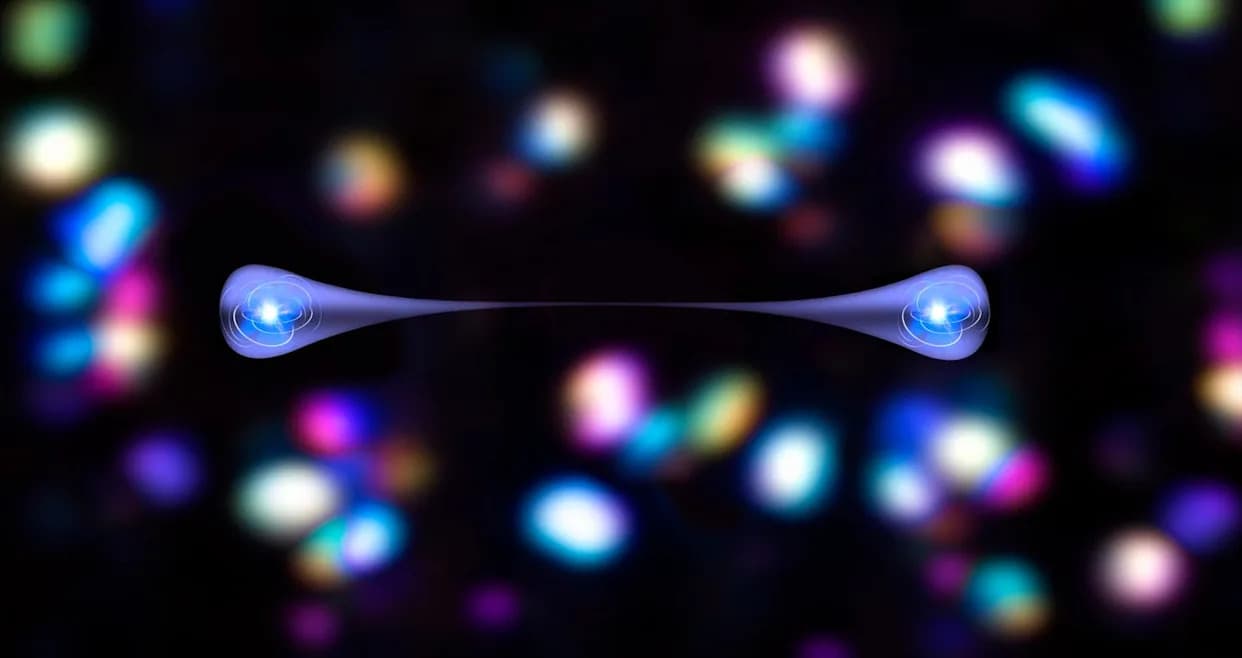
The team created a sustained atomic current in an ultracold quantum gas whose atoms travel along straight paths and transfer momentum in ordered collisions that do not dissipate energy. Although collisions occur, the collective flow persists without frictional loss, producing the most efficient transport regime measured to date in this kind of system.
How They Did It
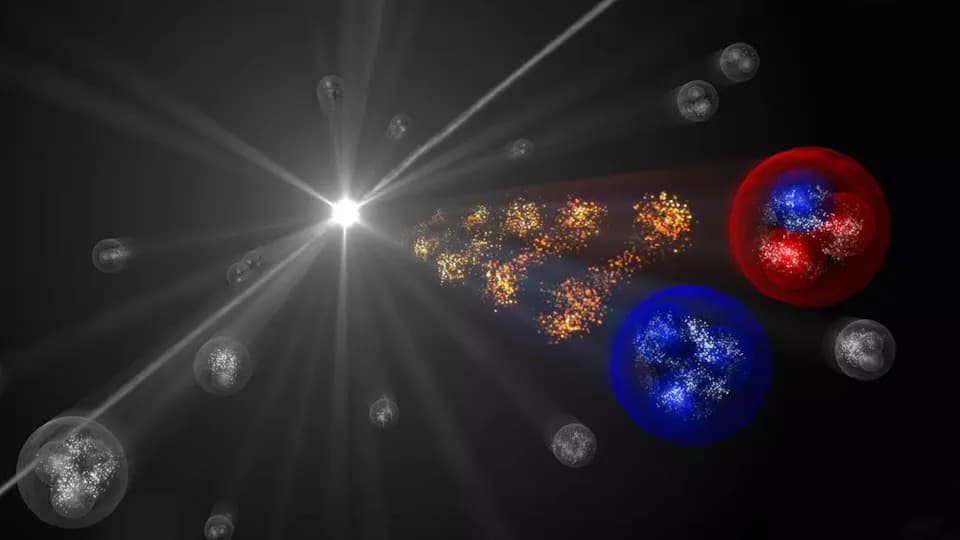
Researchers used bosonic rubidium atoms cooled to ultracold temperatures (microkelvin–nanokelvin range) by combining evaporative cooling and laser cooling. A microfabricated chip generated a magnetic trap above the cloud to confine and guide the atoms. These techniques reduced random thermal motion so that atoms could move coherently while still interacting.
Why This Is Unusual
Conventional transport falls into two broad categories: diffusive (many random collisions that equalize energy) and ballistic (collision-free trajectories). The transport observed here resembles ballistic motion in that currents propagate without dissipation, but it is not strictly collision-free — collisions occur but transmit momentum in an orderly way. The researchers liken this to a Newton’s cradle, where impulses pass through a chain of masses and emerge at the far end without loss.
“If currents are dissipationless, the corresponding charge carriers propagate ballistically,” the authors note in their paper.
Implications and Next Steps
This near-dissipationless regime challenges conventional limits on resistance and scattering and could inform future work in quantum simulation, precision sensors, and atom-based circuits. The team also explored, on a theoretical level, whether similar dissipationless behavior might alter phenomena such as shock waves, but experimental investigation of such effects remains for future studies.
Bottom line: The experiment demonstrates that sustained, lossless transport is possible in an interacting ultracold gas, opening new avenues for studying nonequilibrium quantum systems and developing technologies that exploit dissipationless atomic currents.
Help us improve.