Ginestra Bianconi proposes that gravity may emerge from quantum relative entropy, treating spacetime as a quantum operator that couples to matter fields through an entropic action. The model introduces a G-field as a variational constraint, predicts a small cosmological constant, and raises the possibility that G-field excitations could relate to dark matter. The idea is speculative but suggests a novel path toward quantum gravity that will require extensive theoretical and observational follow-up.
Could Gravity Arise From Entropy? A New Proposal Links Quantum Entropy, Spacetime and Dark Matter

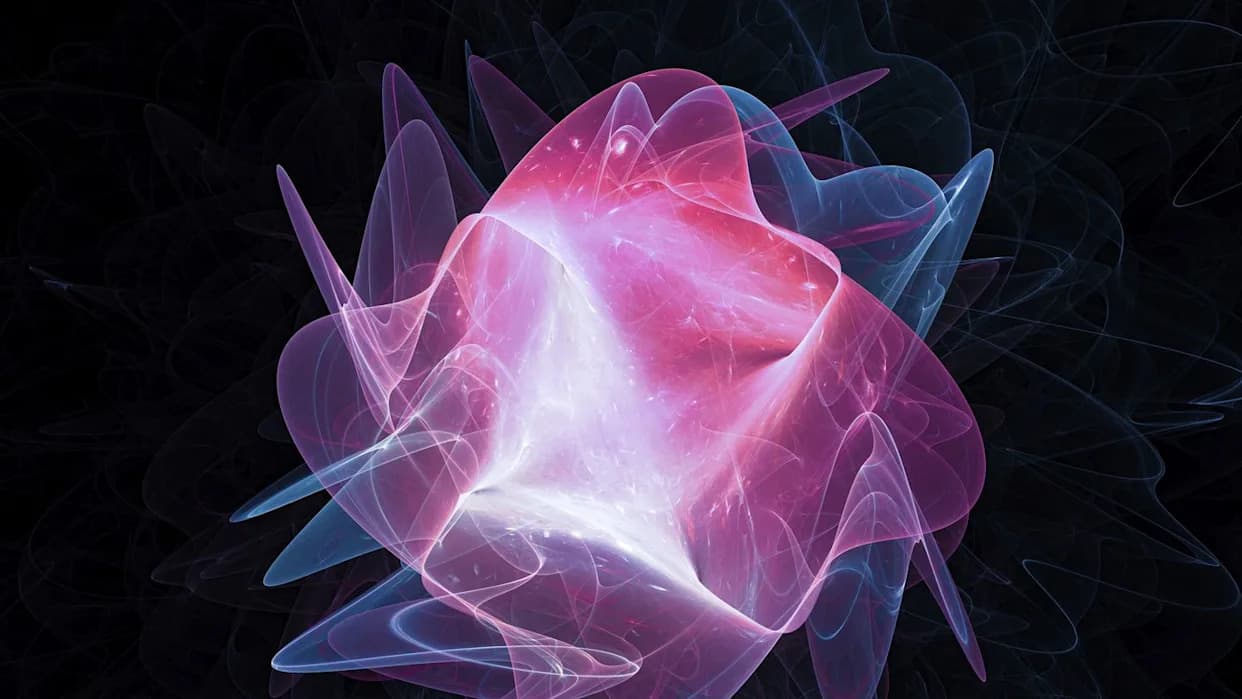
A New Theory Says Gravity May Come From Entropyoxygen - Getty Images
A provocative new theoretical proposal argues that gravity might not be a fundamental force but an emergent effect of quantum entropy. If correct, the idea could provide a fresh route toward uniting Einstein's general relativity with quantum mechanics—and may even offer new clues about dark matter.
Background: Two Great Theories in Tension
General relativity describes gravity as the curvature of spacetime produced by mass and energy, while quantum theory governs the probabilistic behaviors of particles and fields at the smallest scales. These frameworks work extremely well in their respective domains, but marrying them into a single consistent theory (quantum gravity) remains one of physics' central challenges.
The Core Idea: Quantum Relative Entropy Drives Gravity
Physicist and mathematician Ginestra Bianconi (Queen Mary University of London) proposes that quantum relative entropy—a measure of distinguishability between quantum states—could appear in an “entropic action” that couples matter fields to spacetime geometry. In this view, spacetime itself behaves like a quantum operator that acts on quantum states, and changes in relative entropy determine the effective gravitational dynamics.
"Gravity is derived from an entropic action coupling matter fields with geometry [of spacetime],"
What the Model Adds: A G-Field and a Small Cosmological Constant
The proposal introduces a G-field, modeled as a vector field that can act as a Lagrange multiplier to enforce variational constraints linking wave-function descriptions to spacetime geometry. The theory also yields a low-energy baseline for the fabric of spacetime and predicts a small cosmological constant that could be compatible with the observed slow expansion of the universe.
Why This Matters: Quantum Gravity and Dark Matter
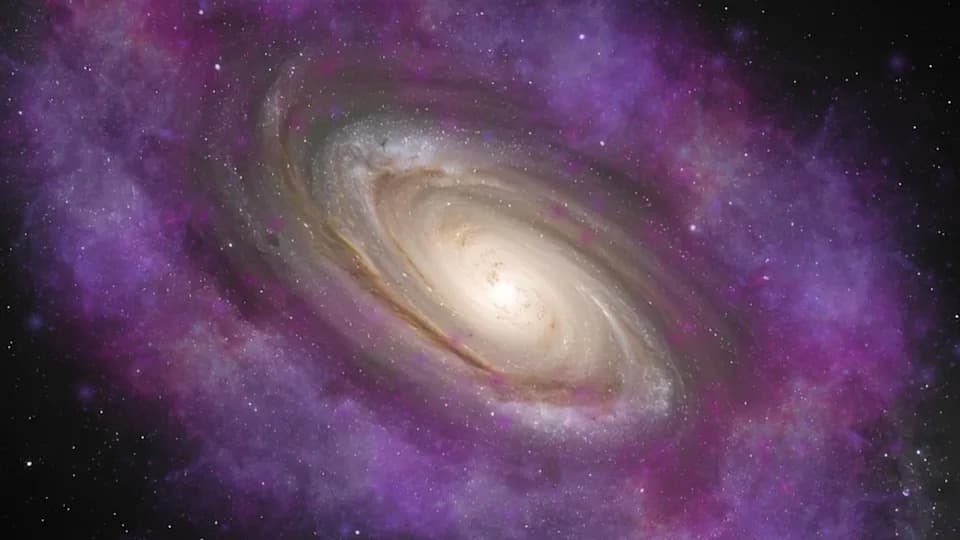
If entropy-driven gravity successfully reconciles the two frameworks, it would produce a quantum description of gravity in which gravitational phenomena have both particle-like and wave-like aspects. Bianconi speculates that particle excitations associated with the G-field might behave like dark matter—an intriguing hypothesis, since dark matter so far is inferred only through its gravitational effects.
Limitations and Next Steps
The idea is speculative and theoretical at present. Substantial mathematical development, consistency checks, and potential observational or experimental signatures will be needed before the proposal can be confirmed or falsified. Nonetheless, by linking thermodynamic concepts to spacetime dynamics, the work points to a novel direction for research on quantum gravity and cosmology.
Bottom line: The proposal reframes gravity as an emergent, entropic phenomenon governed by quantum relative entropy, introduces a G-field that could connect gravitational excitations to dark matter, and offers a new conceptual bridge between quantum mechanics and general relativity—an idea that now requires rigorous follow-up.
Help us improve.