Khan's arXiv preprint proposes that the vacuum may have bulk viscosity, a subtle resistance that arises as space expands. He models the vacuum as supporting longitudinal "spatial phonons," whose motion would damp cosmic expansion and could reduce a small tension between DESI observations and Lambda-CDM predictions. The viscous model reportedly fits DESI data well, but the work is preliminary and not peer-reviewed. Upcoming data from DESI and the Euclid mission will be key to confirming or refuting the idea.
Could Space Be a 'Sticky Fluid'? New Preprint Suggests Vacuum Might Have Bulk Viscosity
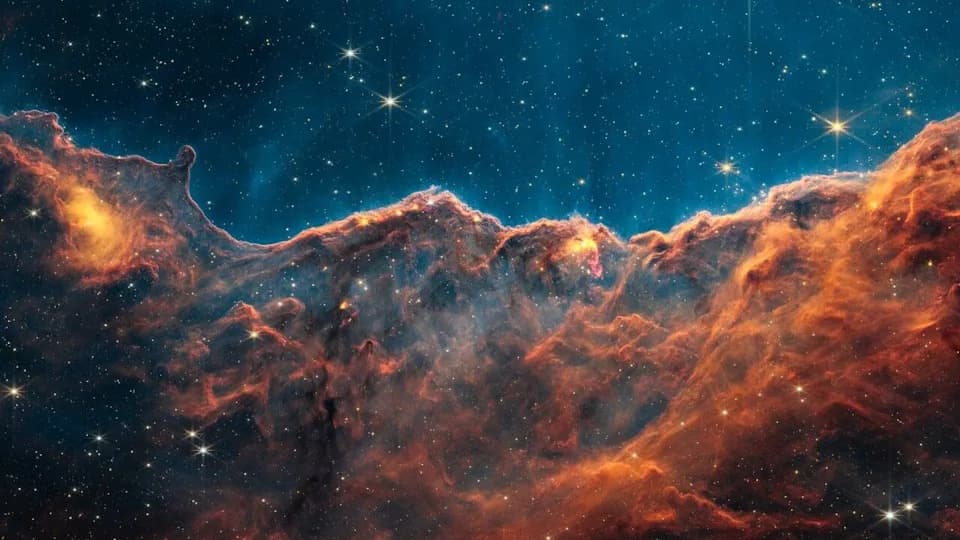
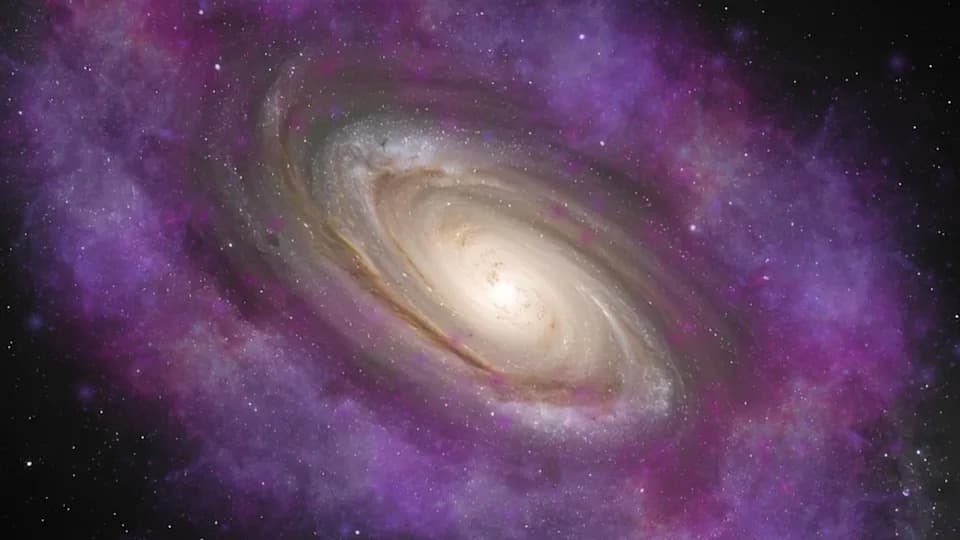
What if space is much more liquid-like than we thought? New research says it could solve a major cosmological problem. | Credit: NASA, ESA, CSA, and STScI, J. DePasquale (STScI)
Recent research proposes a provocative tweak to our standard cosmological picture: the vacuum of space might exert a faint, fluid-like resistance as the universe expands. In a preprint posted to arXiv that has not yet undergone peer review, Muhammad Ghulam Khuwajah Khan of the Indian Institute of Technology suggests the vacuum could have a property called bulk viscosity.
What the Paper Proposes
Viscosity measures how a fluid resists flow or deformation — imagine the difference between pouring water and pouring honey. Khan's proposal is that the expanding vacuum behaves similarly: when space stretches, it could generate a subtle resistance that changes the expansion history of the universe.
How It Connects To Observations
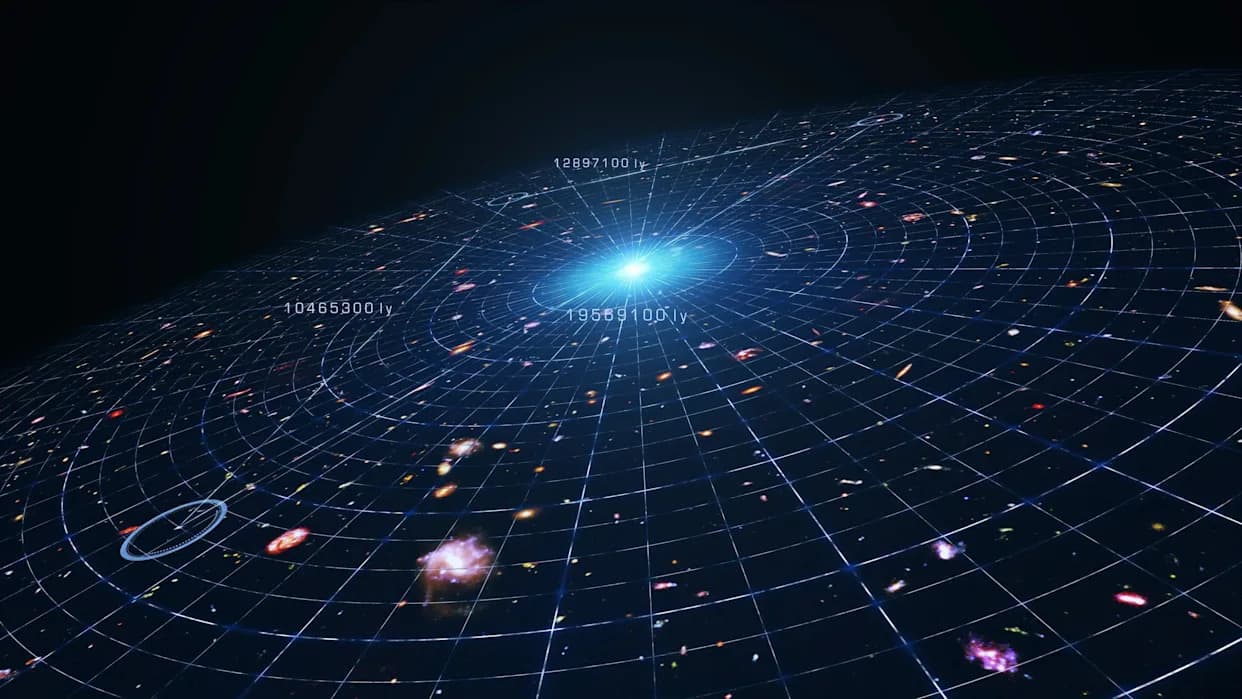
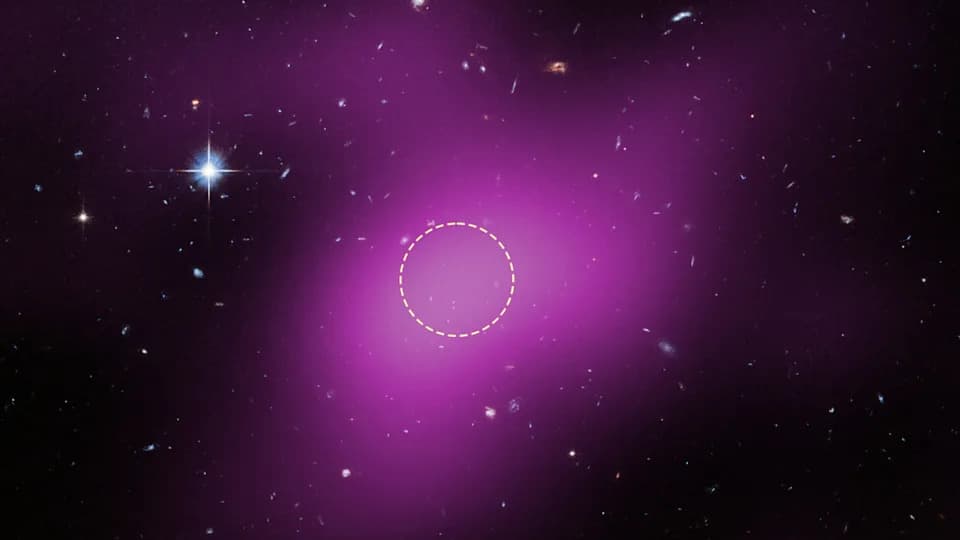
Last year, data released by the Dark Energy Spectroscopic Instrument (DESI), mounted on the Mayall Telescope at Kitt Peak National Observatory, revealed a small tension with the predictions of the standard Lambda-CDM model. DESI's measurements of how fast galaxies are receding suggested a slight discrepancy in expansion rate compared with the simplest cosmological-constant description of dark energy.
The Spatial 'Phonon' Analogy
To explain the mismatch, Khan borrows an idea from solid-state physics. He models space as supporting longitudinal collective excitations — analogous to phonons (sound-like vibrational modes in a crystal). These "spatial phonons" would act like internal degrees of freedom in the vacuum that produce a viscous damping effect, opposing expansion and producing a small drag on cosmic acceleration.
Model Performance And Caveats
According to the preprint, this simple, data-driven viscous model can fit the DESI results closely, potentially alleviating some tension produced by treating dark energy only as a cosmological constant. However, the work remains a hypothesis: the paper is a preprint on arXiv and has not been peer-reviewed. It is unclear whether the inferred viscosity would be a fundamental physical property or an artifact of current data or analysis methods.
Important: This idea is preliminary. It offers an intriguing alternative explanation for a small observational tension, but it does not yet replace the standard Lambda-CDM framework.
What Comes Next
Definitive tests will require more and better data. Upcoming and ongoing efforts — including further DESI observations and the Euclid space telescope mission — will provide higher-precision measurements of cosmic expansion and large-scale structure. Those datasets will show whether a viscosity term is supported by independent evidence or fades as an observational artifact.
For now, the suggestion that space might be a little "stickier" than previously thought is an intriguing possibility that merits careful follow-up, but it remains speculative until confirmed by multiple, peer-reviewed analyses.
Help us improve.