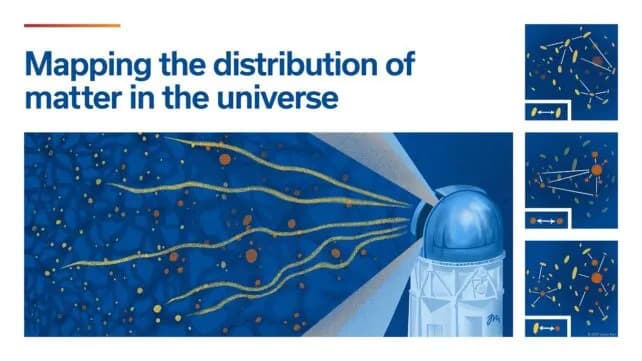
Naman Kumar proposes that subtle, scale-dependent changes in gravity — an "infrared running" effect in a quantum-field description — could mimic the gravitational signals usually attributed to dark matter. His model produces a long-range 1/r component that can reproduce flat galaxy rotation curves while remaining consistent with early-universe constraints. The idea must now be tested against gravitational lensing and cluster dynamics to see whether it can replace or complement particle dark matter.
Could Dark Matter Be an Illusion? New Study Suggests Gravity Changes at Galactic Scales
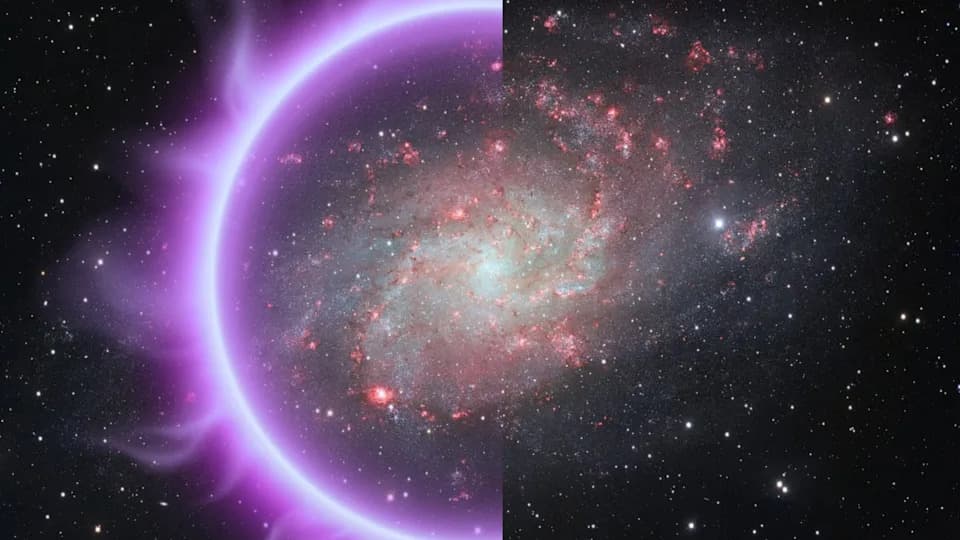
The galaxy Messier 33, according to competing models of the universe (left), with a dark matter halo (right) without a bubble of this mysterious "stuff.". | Credit: ESO/S. Brunier
New research challenges the conventional view that unseen particles — collectively called dark matter — are required to explain a range of astronomical observations. Instead, Naman Kumar of the Indian Institute of Technology proposes that gravity itself may change subtly over very large distances, producing effects that mimic dark matter.
Why dark matter was proposed
Dark matter was originally inferred because galaxies rotate faster than can be explained by the gravity of visible matter alone. Additional evidence comes from gravitational lensing, where the bending of light by massive objects often exceeds what the luminous matter can produce. Since these discrepancies show up only through gravity, they admit the logical possibility that our theory of gravity is incomplete on galactic and larger scales.
Kumar's idea: infrared running of gravity
Kumar analyzes gravity from the perspective of quantum field theory and considers an "infrared running" scenario, in which the effective strength of gravity changes slowly with scale at low energies (long distances). In technical terms this allows Newton's gravitational constant ("Big G") to run with scale in the infrared regime. The result is a modified gravitational potential with a long-range component that falls off roughly as 1/r instead of the usual 1/r^2.
"The mystery of dark matter — unseen, pervasive, and essential in standard cosmology — has loomed over physics for decades," Kumar wrote. "Rather than postulating new particles, I explore the possibility that gravity itself behaves differently on the largest scales."
What this could explain
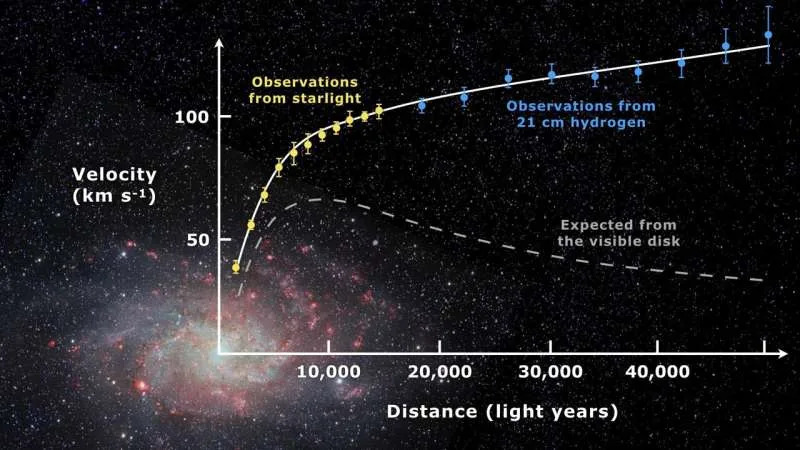
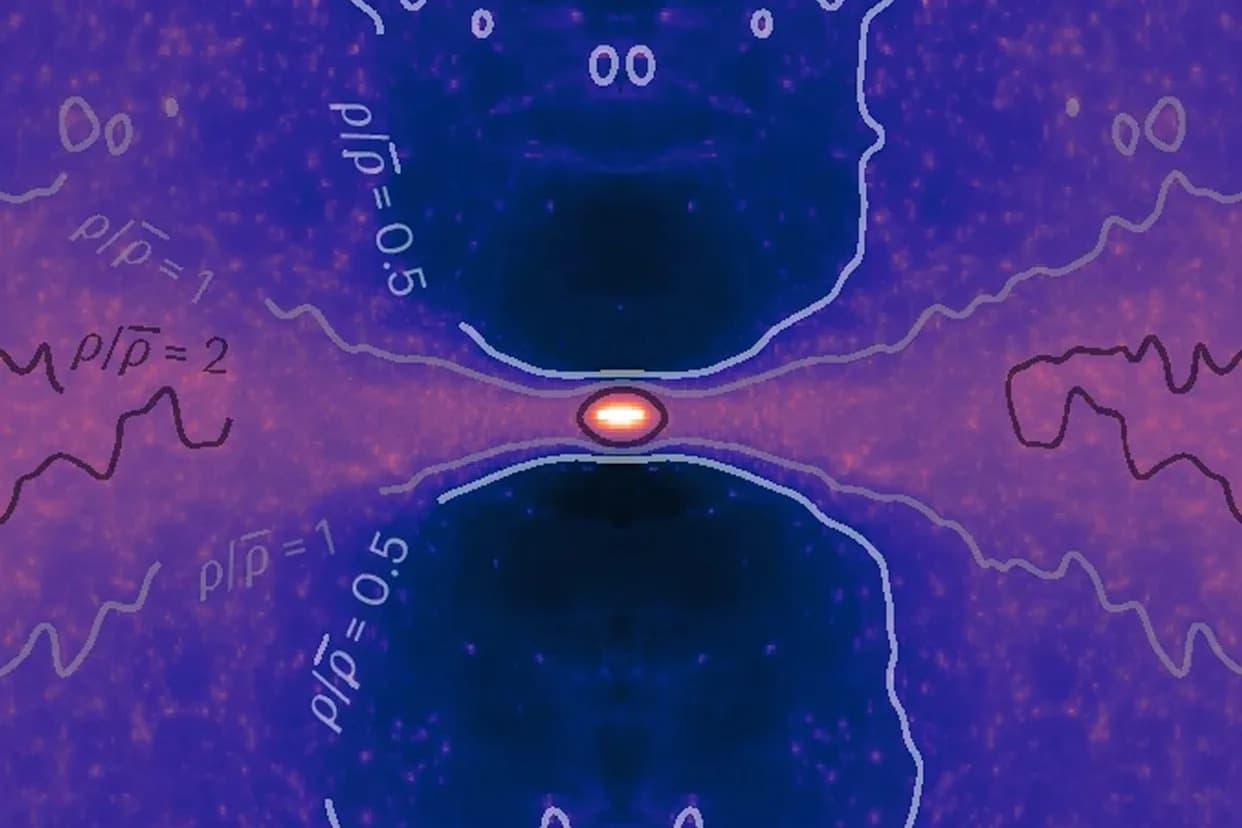
The galaxy Messier 33 and a diagram comparing Kumar's infrared running model to other accounts of galactic rotation. | Credit: Roen Kelly. M33: ESO
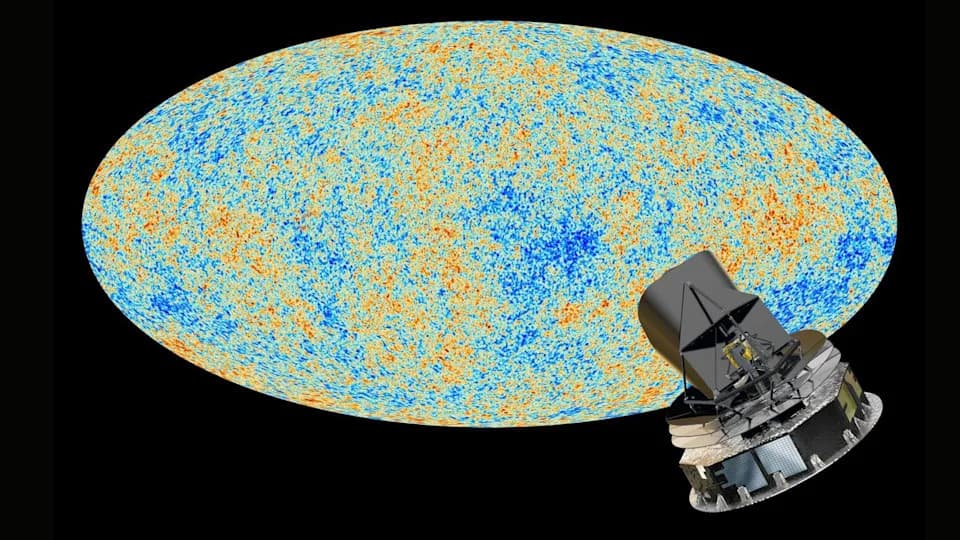
A 1/r long-range term can naturally produce the approximately flat galaxy rotation curves that are commonly attributed to massive dark matter haloes. Kumar argues that, because the corrections grow slowly with scale and time, this infrared-running effect can remain small enough in the early universe to preserve consistency with precision cosmological measurements such as the cosmic microwave background and early structure formation.
Limitations and next tests
Kumar acknowledges that his proposal does not yet replace the dark matter paradigm across the board. The next crucial tests are whether the model can reproduce detailed gravitational-lensing measurements and the dynamics of galaxy clusters — phenomena that have strongly shaped the dark matter hypothesis. These observational confrontations will determine whether scale-dependent gravity can fully account for the data or only complement dark-matter explanations.
"My work opens a path toward understanding dark matter phenomena not as missing particles, but as a subtle feature of gravitation itself — a deep consequence of scale dependence in a quantum field theory of gravity," Kumar wrote.
Publication note
Kumar's paper outlining the infrared-running proposal was reported in media coverage and cited as appearing in a journal named in the source. Independent verification of the exact journal and peer-review status is advised when citing the work.
Bottom line: The proposal is a provocative alternative to particle dark matter that is theoretically motivated and observationally testable. It highlights that some of the universe's biggest mysteries might arise from how gravity operates across vast distances, but decisive empirical tests remain necessary.
Help us improve.