Summary: Taiwan President William Lai has proposed a $40 billion defence procurement plan for 2026–2033 to bolster the island’s deterrence against rising pressure from China. The United States and the American Institute in Taiwan publicly welcomed the announcement while preliminary talks on specific procurements are underway. Japan’s new prime minister signalled that a Chinese attack on Taiwan could be considered a threat to Japan, escalating regional tensions. Domestically, the plan faces political resistance over funding, but analysts say it could pass with targeted negotiations and clearer financing details.
Taiwan Proposes $40 Billion Defence Plan for 2026–2033 to Counter Rising Pressure from China

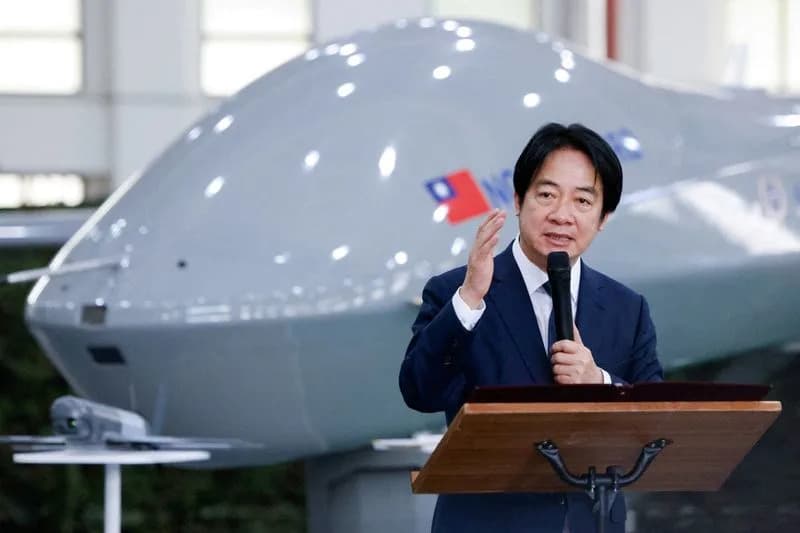
Taiwan President William Lai has proposed a $40 billion supplemental defence procurement package to cover 2026–2033, saying the investment is necessary to deter increasing military pressure from the People’s Republic of China (PRC). Lai framed the plan as a long-term effort to strengthen Taiwan's self-defence capabilities, expand domestic defence production and modernize the island's armed forces.
U.S. and international responses
A U.S. State Department spokesperson welcomed the announcement, saying Washington supports Taiwan's acquisition of critical defence capabilities consistent with longstanding U.S. policy and the Taiwan Relations Act. The American Institute in Taiwan (AIT), the de facto U.S. mission, also reacted positively. Analysts say those reactions signal continuing U.S. willingness to support Taiwan's defensive needs.
Negotiations and procurement plans
Taiwan’s defence minister, Wellington Koo, has said preliminary talks have already been held with U.S. counterparts about the kinds of systems Taipei may pursue under the plan. Koo added that formal details cannot be released until the appropriate congressional notifications are made. The package is expected to include both foreign procurements and significant investments in local defence manufacturing—ranging from interceptor "dome" systems to missiles and shipbuilding capacity.
Regional ripple effects
Japan's new prime minister, Sanae Takaichi, raised regional concern when she suggested in parliament that a Chinese attack on Taiwan could be seen as "a situation threatening Japan’s survival." Under Japan’s 2015 security legislation, that designation could make it easier for Japan to take defensive military measures in close coordination with allies. Beijing denounced the remarks, and a Chinese diplomat publicly criticized the statement on social media.
Security experts note that such comments increase diplomatic tensions in the region, prompting calls for clear and consistent messaging from major powers. Some analysts also caution that public rhetoric does not necessarily reflect formal national policy or legal commitments.
Domestic politics and budgetary hurdles
Despite international support, President Lai faces a difficult domestic path. Taiwan’s Democratic Progressive Party (DPP) does not hold a majority in the unicameral legislature. The main opposition, the Kuomintang (KMT), led by Cheng Li-wun, opposes raising defence spending to 5% of GDP and has warned against what it calls excessive military budgets at the expense of social services. Opponents point to possible cuts to healthcare and other programs and demand greater transparency about financing and procurement plans.
Supporters of the plan argue it will increase Taiwan's deterrence, bolster local defence industry capacity and reduce long-term reliance on foreign suppliers. Some analysts believe President Lai could secure the narrow set of defections needed to pass the proposal, but they also emphasize that political negotiation and clearer funding details will be crucial.
Outlook
The proposal represents a major shift in Taiwan’s defence posture by committing large sums to both capability acquisition and domestic production over an extended period. It is likely to prompt further diplomatic exchanges and will test Taiwan’s ability to balance deterrence needs with domestic political realities. Observers say the next steps will hinge on detailed budget plans, legislative negotiations and how regional actors respond to Taipei’s strengthened posture.
Key names quoted or referenced: President William Lai; Defence Minister Wellington Koo; Courtney Donovan Smith; Ross Feingold; Sanae Takaichi; Kerry K. Gershaneck; Cheng Li-wun; Bryce Barros.
Help us improve.