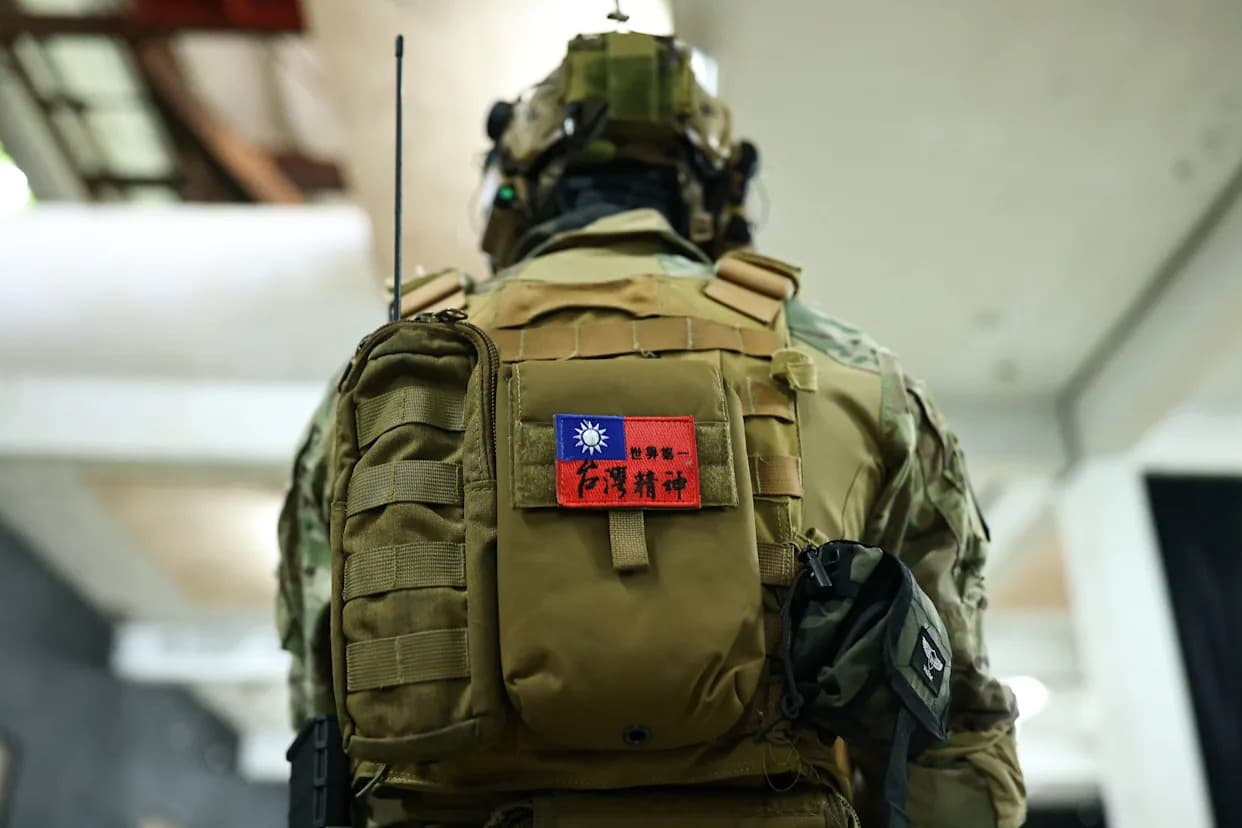
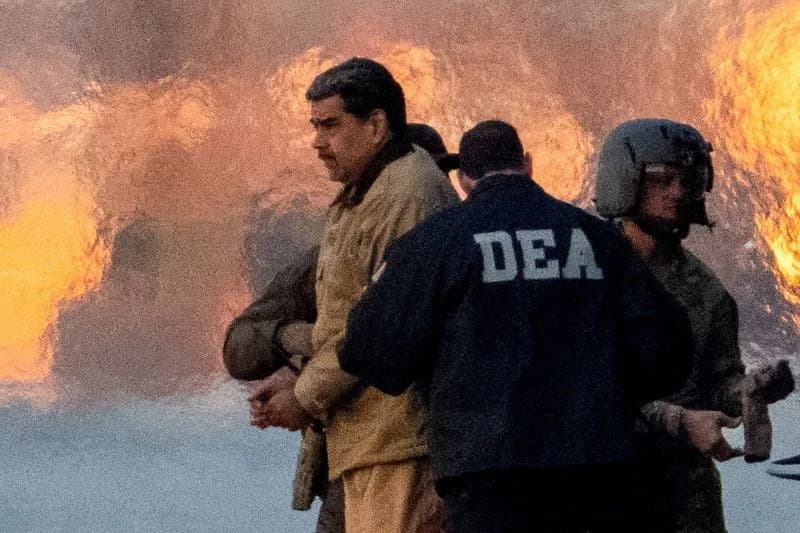
Some Chinese social media users have speculated about a rapid, "Venezuela-style" seizure of Taiwan’s leaders, but analysts and Taiwanese officials say such a plan would be risky and likely to fail. Taiwan has layered air defenses, early-warning radars and contingency plans designed to detect and repel a "decapitation" operation, and could receive U.S. and allied support in a crisis. Experts note the PLA has modernized its platforms but still lacks fully validated joint-operations experience and electronic-warfare testing for high-risk missions.
Venezuela-Style Snatch Of Taiwan’s Leaders: Why Analysts Say It Would Be Risky And Likely To Fail
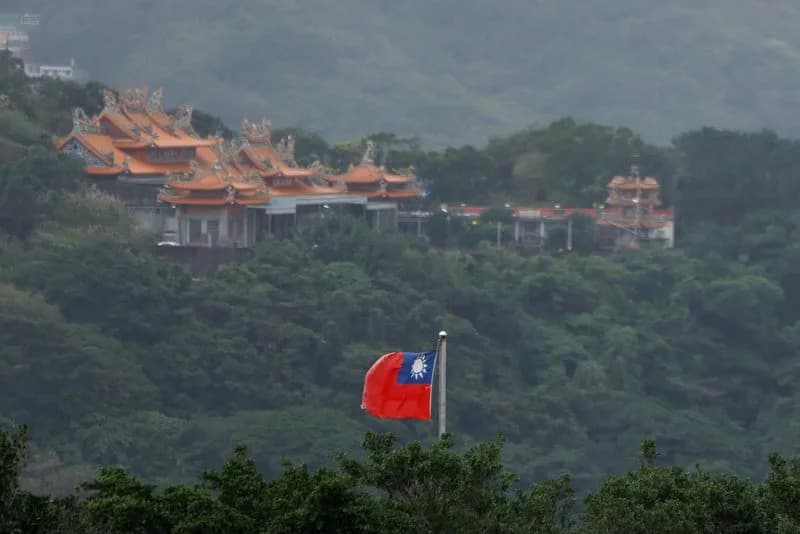
A Taiwan flag flutters in Keelung, as China conducts "Justice Mission 2025" military drills around Taiwan, in Keelung, Taiwan, December 30, 2025. REUTERS/Ann Wang
HONG KONG/TAIPEI — Some posts on Chinese social media have floated the idea of a rapid, “Venezuela-style” seizure of Taiwan’s leadership as a precursor to forcing control of the island. Analysts, scholars and security officials warn that such a plan would face steep military, political and operational obstacles and could quickly escalate into a broader conflict.
Why A Targeted Snatch Would Be Difficult
Prepared defenses: Taiwan has spent years preparing for a possible “decapitation” strike against its leaders. Layered air defenses, early-warning radars and dispersed command nodes are designed to detect and blunt airborne or special-operations attempts to seize political leaders.
Risk of rapid escalation: Lawmaker Chen Kuan-ting of Taiwan’s ruling Democratic Progressive Party warned that a failed or contested operation would likely trigger full-scale hostilities, carrying very high political and military risk.
U.S. and allied support: Taiwan’s systems and plans are likely to attract U.S. and allied intelligence, surveillance and possibly direct military assistance in a crisis, increasing the chance that any hostile operation would face robust opposition.
Limitations Cited For The PLA
Experts say the People’s Liberation Army (PLA) has acquired advanced platforms but still faces challenges translating hardware into effective, high-risk joint missions. Singapore-based scholar Collin Koh and other analysts point to gaps in:
- Real-world joint-operations experience integrating air, sea, cyber and special forces;
- Electromagnetic and electronic-warfare capabilities and tested countermeasures;
- Command-and-control arrangements that allow field commanders sufficient initiative under combat conditions.
China has added aircraft intended to replicate capabilities similar to Boeing’s EA-18G Growler (electronic warfare) and Northrop Grumman’s E-2D Advanced Hawkeye (early warning), but experts say the exact operational effectiveness of these additions remains unclear.
Taiwan’s Defensive Measures
Taiwan has taken visible steps to protect its leadership and critical infrastructure. President Lai Ching-te has emphasized stronger defenses following recent Chinese drills that included live-fire exercises and missile launches. In October Taiwan unveiled the multi-layered "T-Dome" project, intended to link sensors and shooters — integrating indigenous Sky Bow missiles with U.S.-supplied systems such as HIMARS — to improve interception rates.
Drills around Taipei have included airport defense scenarios and deployment of long- and short-range systems, with military police and shoulder-fired air-defense weapons positioned to complicate any airborne infiltration.
Online Talk Versus Operational Reality
Some Chinese online commentators explicitly cited a recent U.S. operation as inspiration, portraying a quick seizure and immediate administrative takeover as feasible. Analysts and Taiwan officials dismissed those scenarios as unrealistic, emphasizing that online speculation glosses over the operational, political and escalation risks of such an attempt.
“Operationally, while the PLA is trying to accelerate force integration, it is still at baby steps compared with decades of U.S. experience,” said Collin Koh.
What This Means
While the PLA is modernizing rapidly, the combination of Taiwan’s layered defenses, early-warning systems, contingency planning and potential U.S. ally involvement means a lightning snatch of Taiwan’s leadership would be hard to pull off without triggering a wider conflict. Analysts say Beijing may continue to test and refine options, but policymakers on all sides must weigh the high risks that any such operation would carry.
Reporting by Greg Torode in Hong Kong and Yimou Lee in Taipei; additional reporting attributed to Laurie Chen, Tiffany Le and Reuters’ Beijing newsroom.
Help us improve.