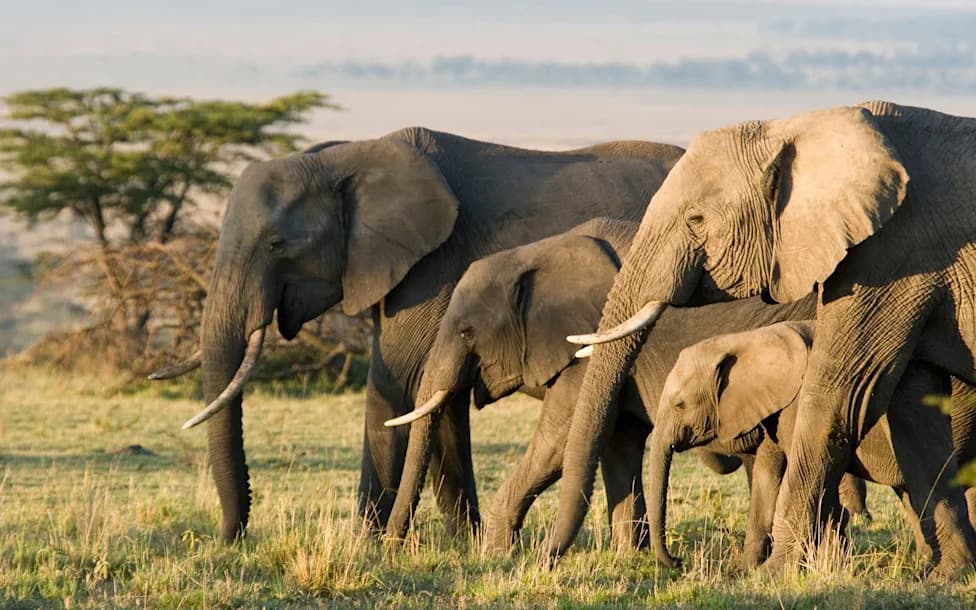
Researchers found African savannah elephants can habituate to quadcopter drones when flights follow low‑disturbance protocols. In 35 trials across two reserves in northern Kenya, drones triggered disturbance about half the time, but reactions were usually brief (mostly within the first minute). Some individuals showed reduced reactivity on repeat exposures, with tolerance persisting up to 355 days. Carefully operated drones could therefore be a low‑impact, cost‑effective tool for monitoring elephant behavior and population health.
Elephants’ Memory Makes Drones a Viable, Low‑Impact Tool for Conservation Monitoring

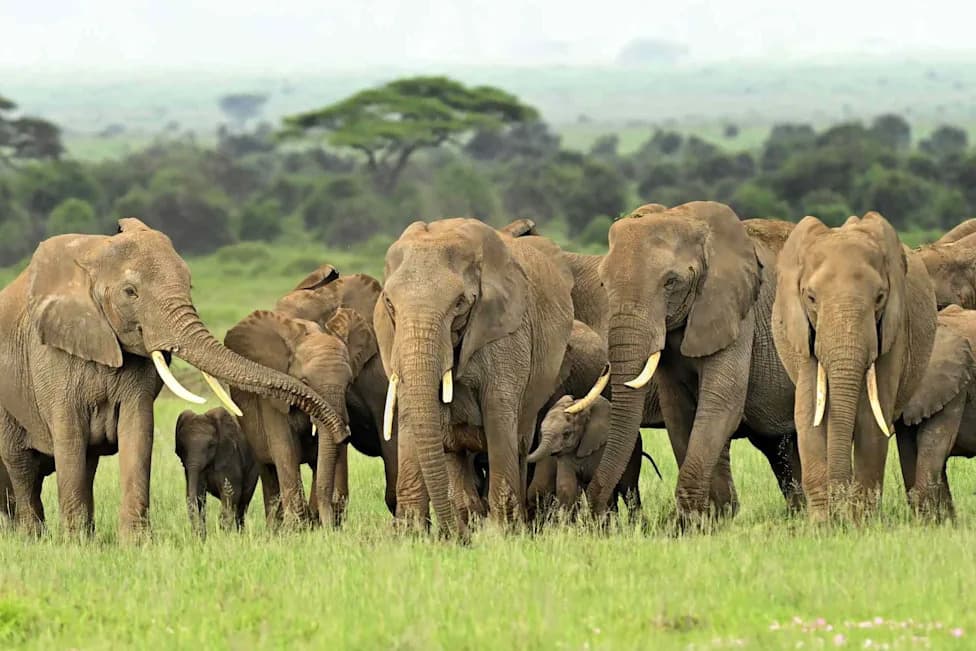
Elephants are famed for their memory and recognition skills, and new research shows those abilities may help conservationists use drones to monitor threatened herds with minimal disturbance.
Study and methods
Scientists from Save the Elephants, the University of Oxford, the University of Sussex and the University of Colorado Boulder published a study in Scientific Reports testing whether African savannah elephants (Loxodonta africana) can habituate to quadcopter drones. The team carried out 35 drone trials across two reserves in northern Kenya, following protocols designed to reduce disturbance: drones were launched at least 1,600 feet (≈488 m) away and always from the downwind side so noise reaching the animals was dampened.
Findings
About half of the drone approaches produced observable disturbance responses — behaviors such as pausing feeding with trunks raised or head‑shaking. Importantly, these reactions were typically brief, concentrated in the first minute after a drone’s arrival, after which most elephants resumed normal activities. In repeated exposures, some individuals showed reduced reactivity relative to their first encounter; in a subset of animals tolerance persisted even after intervals as long as 355 days.
“Our results suggest that these habituation effects may last over many months if not years, demonstrating the capacity for learning and adaptability for which elephants are already well known,” said Angus Carey‑Douglas of Save the Elephants, a co‑author of the study.
Co‑author Fritz Vollrath of the University of Oxford added that drones equipped with cameras and sensors can reveal previously hard‑to‑observe aspects of individual and social behavior, offering a scalable, affordable approach to tracking population health and movement patterns.
Implications and cautions
These results indicate that, when operated under careful, low‑disturbance protocols, drones can be a useful, minimally invasive tool for monitoring elephant behavior and populations. Because elephants are large and often move in groups, aerial observation can efficiently cover wide areas and collect data on social structure, body condition, and habitat use.
However, the study also underscores that drones can cause disturbance if flown too close or without mitigation measures. Conservation practitioners should adopt best practices — keeping sufficient distance, approaching from downwind, avoiding flashing lights, and limiting flight time — and continue research to define welfare thresholds across different contexts and populations.
Overall, these findings highlight both the potential and the responsibility of using emerging technology in wildlife conservation: drones can expand our knowledge of elephant societies if deployed thoughtfully and ethically.
Help us improve.