The column critiques efforts by Sens. Ted Cruz and John Cornyn to move the space shuttle Discovery from the Smithsonian’s Udvar‑Hazy Center to Space Center Houston, noting the Smithsonian’s warning that relocation could cost $120–$150 million and risk permanent damage to the orbiter. Rather than pursue a costly and risky transfer, the author argues Texas should aim to acquire a flown SpaceX Starship as a far more compelling and future‑oriented museum exhibit. A flown Starship would draw larger crowds, offer stronger educational value, and could be obtained through public–private cooperation, minimizing taxpayer burden.
Drop the Shuttle Fight — Houston Should Chase a Flown Starship

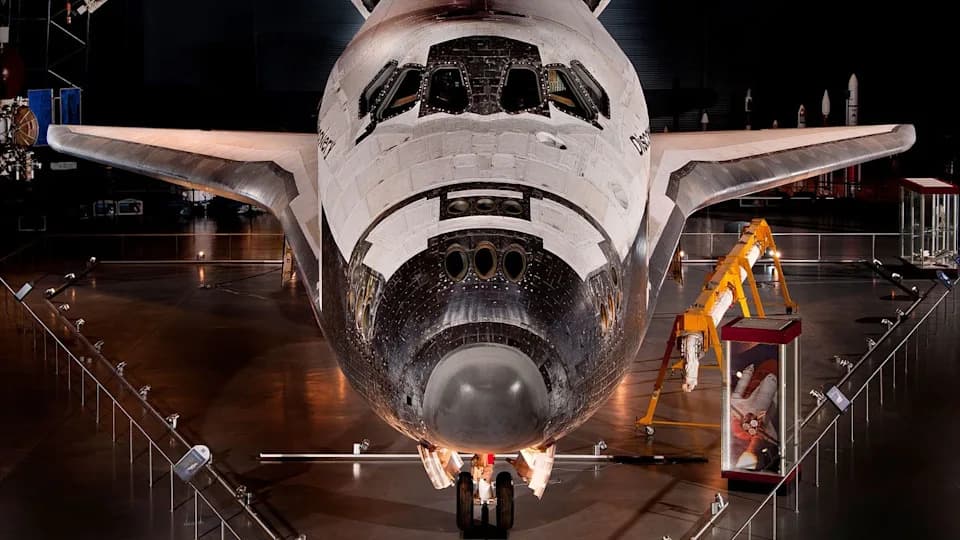
Sens. Ted Cruz and John Cornyn of Texas are pressing to transfer the space shuttle Discovery from the Smithsonian’s Steven F. Udvar‑Hazy Center near Washington, D.C., to Space Center Houston. The proposal has sparked a heated dispute over cost, conservation and the proper stewardship of a historic spacecraft.
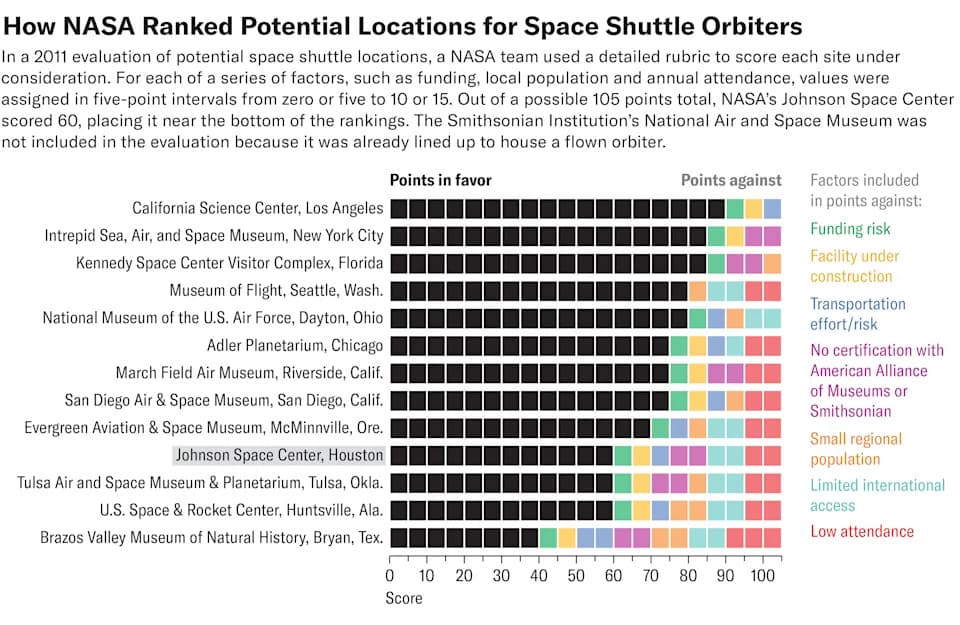
The controversy dates to the 2011 retirement of the shuttle fleet, when orbiters and the prototype Enterprise were distributed to museums and visitor centers. Today the vehicles are on display at separate venues: Atlantis at the Kennedy Space Center Visitor Complex in Florida; Discovery at Udvar‑Hazy in Virginia; Endeavour at the California Science Center; and Enterprise at the Intrepid Sea, Air & Space Museum in New York. Space Center Houston, adjacent to NASA’s Johnson Space Center and Mission Control, currently displays a full‑scale replica called Independence, but no flown orbiter.
Proponents in Texas have long argued that a flown shuttle belongs in Houston. In response, the Smithsonian cautioned Congress that moving Discovery would be complex and risky: the orbiter likely would need to be partially disassembled for transport, a process that Virginia senators have warned could permanently damage the vehicle. The institution also estimated transportation and related costs could total roughly $120–$150 million — well above the approximately $85 million allocated in the appropriations language that prompted this dispute — and that that estimate does not include building a new Houston facility to house the orbiter.
Lawmakers supporting the move have escalated the fight, alleging improper lobbying by the Smithsonian and prompting letters to state and federal officials. Legal and political wrangling appears likely, turning what began as a curatorial debate into a partisan spectacle.
But there is a better alternative. A short drive from Space Center Houston, SpaceX’s Starbase in Boca Chica, Texas, is testing Starship — a stainless‑steel vehicle designed to carry people to the Moon, Mars and beyond. The program includes ambitious recovery techniques, such as the so‑called Mechazilla "chopsticks" intended to catch and berth an upper stage after flight. When SpaceX achieves a successful capture and inspection of a flown Starship, that vehicle would make an extraordinary museum centerpiece.
Imagine a gleaming, flown Starship displayed near NASA Road 1: a modern icon that could outdraw any static shuttle exhibit and serve as a tangible link to the next era of human exploration. A flown Starship would not only excite visitors but also offer economic and educational benefits for Houston — and it could plausibly be transported and installed with private funding or public–private cooperation, reducing taxpayer exposure.
Texas senators who want to enrich Space Center Houston should consider abandoning a risky, expensive battle over Discovery and instead pursue a forward‑looking prize: a flown Starship. That approach would demonstrate strategic leadership, minimize risk to historic artifacts, and place Houston at the forefront of the next chapter in space exploration.
Author: Mark R. Whittington, frequent commentator on space policy and author of books including Why Is It So Hard to Go Back to the Moon? and The Moon, Mars and Beyond. He writes at Curmudgeons Corner.
Help us improve.