
Readers most engaged with stories that combined high-stakes policy and striking science: the controversy over moving shuttle Discovery topped the list, followed by dramatic celestial and scientific developments such as Perseverance’s new Martian samples and the arrival of interstellar comet 3I/ATLAS. Other major themes included the growing threat of satellite megaconstellations to astronomy, surprising international cooperation in orbit, and human and ecological impacts from events on Earth.
The 12 Biggest Space Stories of 2025 — Readers' Picks and Why They Mattered

A drained lake, the Trump administration's "Big Beautiful Bill," a spacecraft carrying 1,500 flies and an interstellar comet make the list. | Credit: Samuel Corum/Getty Images; NASA Earth Observatory/images by Wanmei Liang; Roscosmos/Ivan Timoshenko; NASA/ESA/David Jewitt (UCLA)/ Image Processing: Joseph DePasquale (STScI); created in Canva
It was a blockbuster year for space news: policy shake-ups, rare celestial visitors, surprising moments of international cooperation, and scientific milestones that will echo for years. We analyzed readership data to find the 12 most-read space stories of 2025 and present them below — ranked and summarized for busy readers.

Space debris continues to be a growing problem for space exploration. | Credit: NASA Goddard Space Flight Center
12. A Rare Gesture of In-Orbit Cooperation
In an unexpected move, officials at the Chinese National Space Administration contacted NASA about a potential satellite collision and suggested that NASA hold one of its satellites temporarily while they worked on a maneuver. The exchange — notable because U.S. agencies have long been the party to send such alerts — highlights both the growing congestion in Earth orbit and improvements in space situational awareness globally.

Lac Rouge suddenly disappeared in Quebec. | Credit: NASA Earth Observatory/images by Wanmei Liang, using Landsat data from the U.S. Geological Survey.
11. Sudden Lake Collapse Devastates Waswanipi Cree Lands
A dramatic Space Photo of the Day captured the moment land around a Quebec lake collapsed, draining the water and triggering landslides. The event destroyed traditional hunting, fishing and camping grounds for members of the Waswanipi Cree First Nation, underscoring how environmental and geologic surprises can profoundly affect Indigenous communities.

The James Webb Space Telescope turned its eye on interstellar comet 3I/ATLAS, resulting in these images. | Credit: NASA/James Webb Space Telescope
10. Interstellar Comet 3I/ATLAS — A Visitor From Afar
Comet 3I/ATLAS, only the third confirmed interstellar object observed in our solar system, drew intense interest. Astronomers raced to collect observations, including infrared data from the James Webb Space Telescope, to learn about material formed around other stars before the comet leaves our neighborhood for good.

The second shortest Earth day occurred this summer. | Credit: joecicak/Getty Images
9. One of the Shortest Days on Record
On July 22 Earth experienced the second-shortest day ever recorded, about 1.34 milliseconds shorter than 24 hours; that brief record was eclipsed again on Aug. 5. Small changes in Earth’s rotation come from factors such as lunar gravity, mass redistribution inside the planet and seasonal effects.
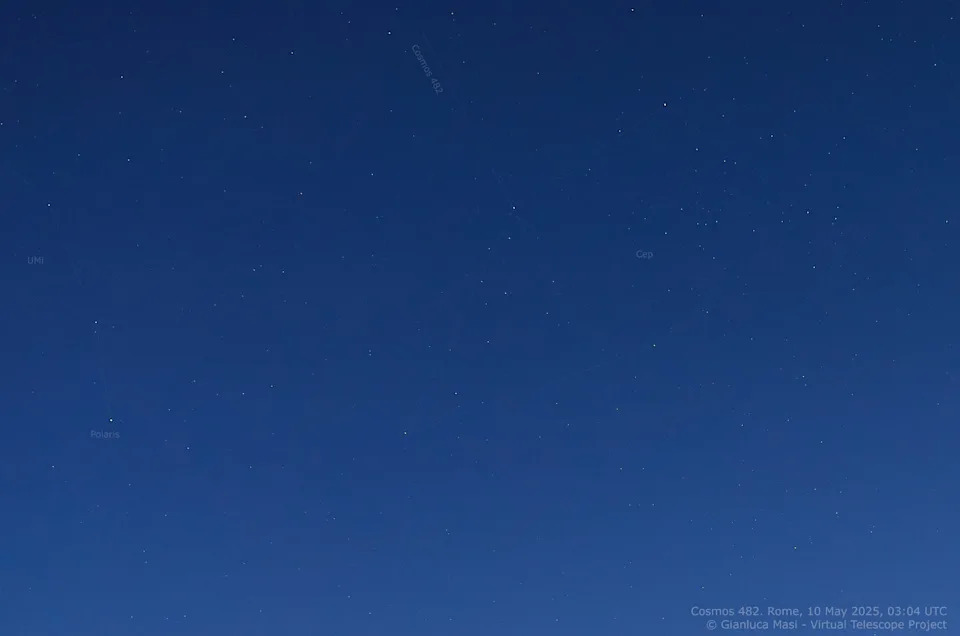
A streak against the dark sky shows Kosmos 482 landing back on Earth | Credit: Gianluca Masi/The Virtual Telescope Project
8. Kosmos 482 Re-enters After Five Decades
On May 10, Kosmos 482 — a Soviet-era spacecraft that failed to depart Earth orbit for Venus during its original launch — finally plunged back to Earth after more than 50 years spent in limbo. Its reentry closed a long chapter in Cold War-era space history.
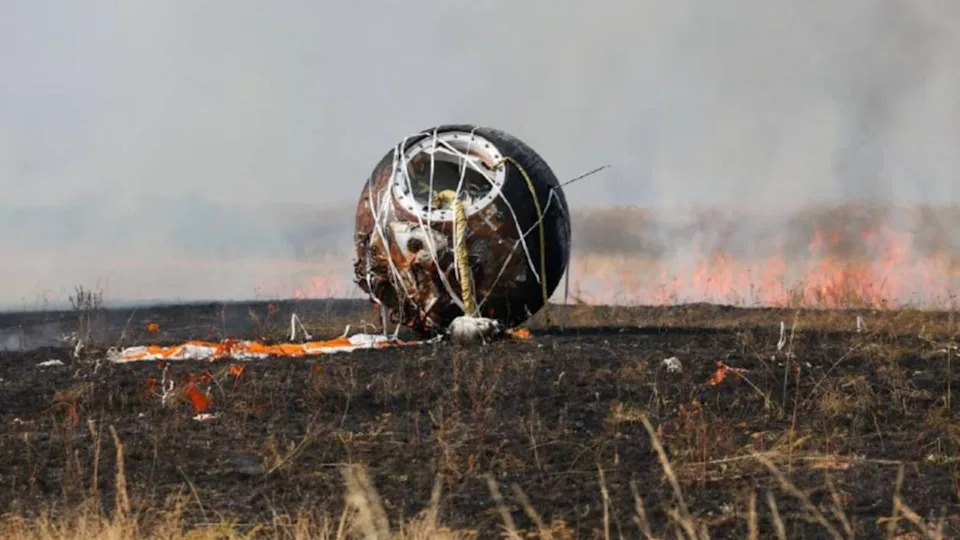
The landing spot of Russia’s Bion-M No. 2 descent module, on the steppes of the Orenburg region. | Credit: Roscosmos/Ivan Timoshenko
7. Russian Biological Capsule Returns to Earth
A spherical Russian capsule returned after 30 days in orbit carrying biological specimens: 75 mice, roughly 1,500 flies, microorganisms and plant seeds. Most animals survived, though 10 mice and some flies died. The mission provided valuable data on how microgravity and cosmic radiation affect living organisms.
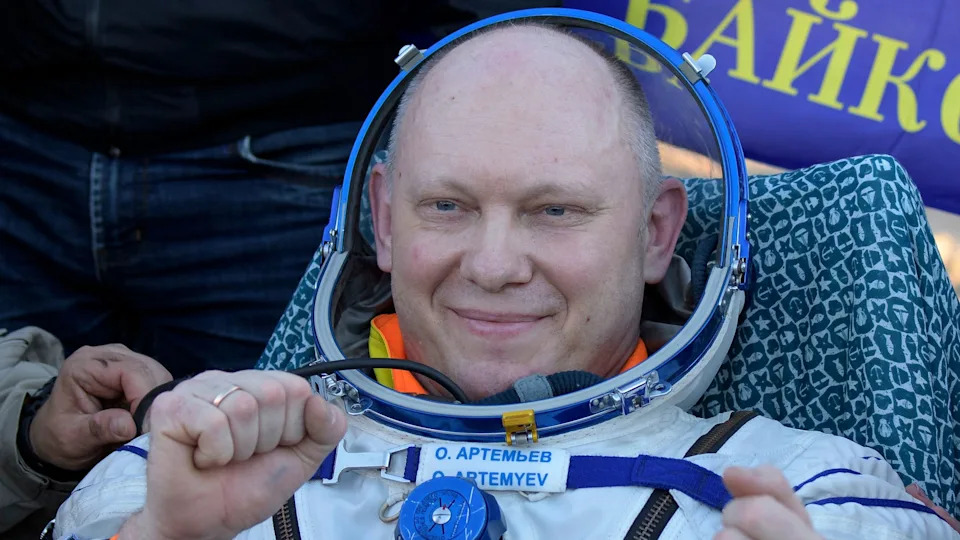
Cosmonaut Oleg Artemyev was removed from the SpaceX Crew 12 mission. | Credit: NASA/Bill Ingalls
6. Crew Swap After Leak Allegations
An investigative report by independent Russian outlet The Insider alleged that cosmonaut Oleg Artemyev leaked confidential SpaceX documents and photos. Artemyev was removed from the planned Crew-12 mission to the International Space Station and replaced by Andrei Fedyayev; the launch was tentatively scheduled for as early as February.

An astronomical image marred by trails caused by satellites of SpaceX's Starlink megaconstellation. | Credit: Victoria Girgis/Lowell Observatory
5. Satellite Megaconstellations Threaten Astronomy
The surge in satellite megaconstellations — most prominently SpaceX's Starlink, with over 10,000 satellites deployed — continued to alarm astronomers. Studies this year warned that, if current trends continue, satellite networks could severely interfere with ground- and space-based astronomical observations by the late 2030s.
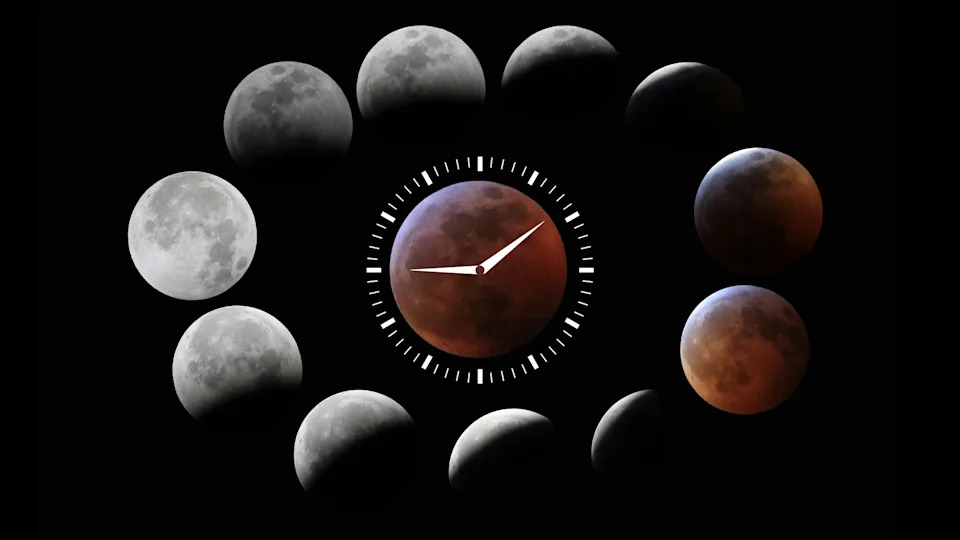
The total lunar eclipse happened on Sept. 7-8, 2025. | Credit: Created in Canva Pro by Daisy Dobrijevic
4. A Widely Seen Blood Moon (Total Lunar Eclipse)
Multiple popular stories covered the total lunar eclipse of Sept. 7–8, when the moon took on a deep red hue visible across Asia and Europe. The exact color of a "blood moon" depends on Earth's atmospheric conditions, which scatter sunlight into the planet's shadow.
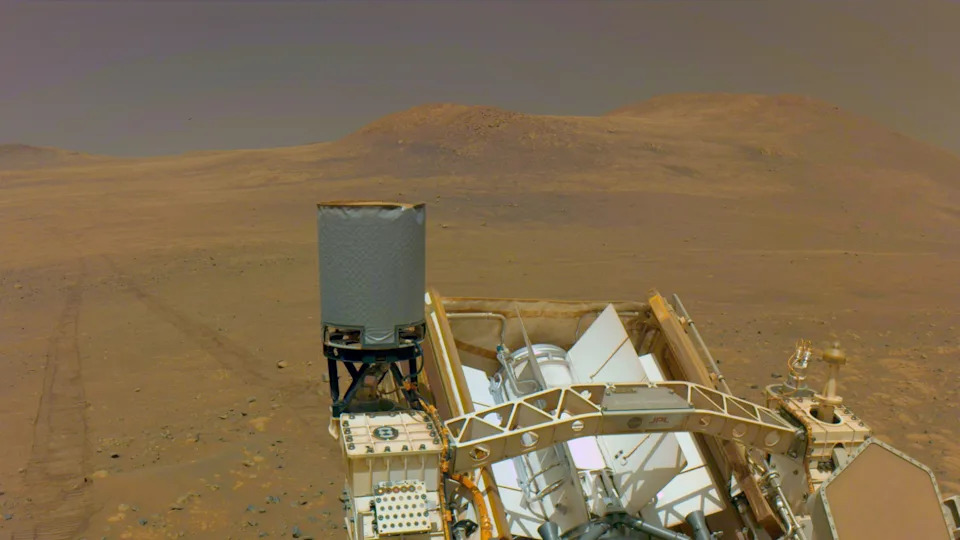
One of the navigation cameras on NASA’s Perseverance captured the rover’s tracks coming from an area called “Witch Hazel Hill,” on May 13, 2025, the 1,503rd Martian day, or sol, of the mission. | Credit: NASA/JPL-Caltech
3. Perseverance's Rich Year of Martian Finds
NASA's Perseverance rover had a banner year near Jezero Crater, collecting diverse and intriguing rock samples at a site nicknamed "Witch Hazel Hill." Among the finds was a sample dubbed "Silver Mountain," notable for unusual textures and composition. For the first time in the mission, material from the crater rim was sampled — a discovery expected to inform Mars geology and habitability studies for years.

The northern lights put on a spectacular display in 2025. | Credit: Noppawat Tom Charoensinphon via Getty Images
2. Northern Lights Illuminate Unusual Latitudes
An active solar cycle produced spectacular auroras that reached far beyond typical polar regions, delighting viewers around the globe. The phenomenon prompted wide public interest and discussion about how future, less-active solar cycles might affect the visibility of auroral displays.
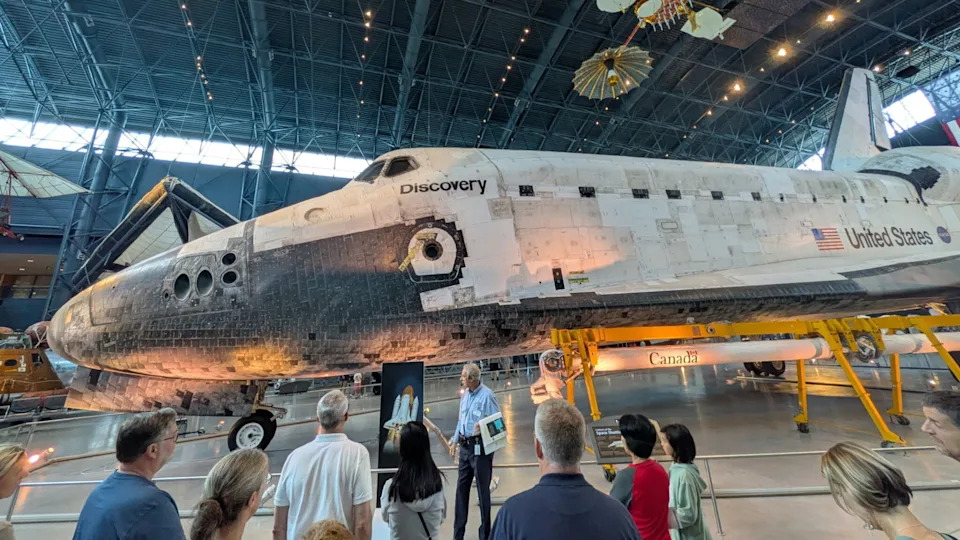
The future of Space Shuttle Discovery is questionable. | Credit: Space.com/Chris Daniels
1. Controversy Over Moving Space Shuttle Discovery
The most-read story of 2025 described plans in the Trump administration's "Big Beautiful Bill" to relocate the retired space shuttle Discovery from the Smithsonian National Air and Space Museum in Washington, D.C., to Space Center Houston. Experts criticized the idea — in part because it could require dismantling the orbiter — and questioned the allocation of funds amid other agency budget needs. The debate became emblematic of broader changes in U.S. science policy this year, including agency restructuring, workforce disruptions, and contentious edits to scientific guidance.
Looking Ahead
These 12 stories span policy, planetary science, human and biological experiments, and breathtaking celestial displays. Together they illustrate a year in which space exploration and space policy were both deeply consequential and intensely public. We’ll be watching to see which themes carry into 2026.


