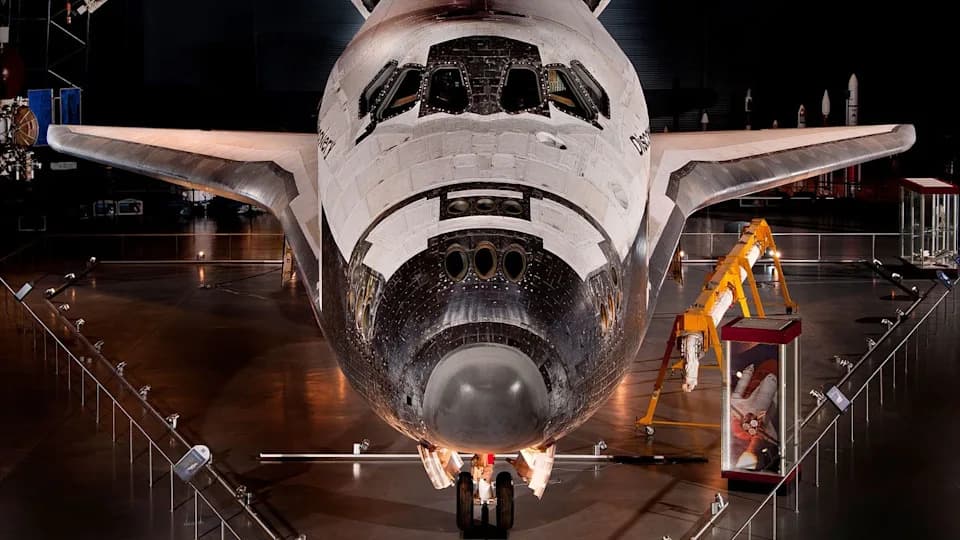
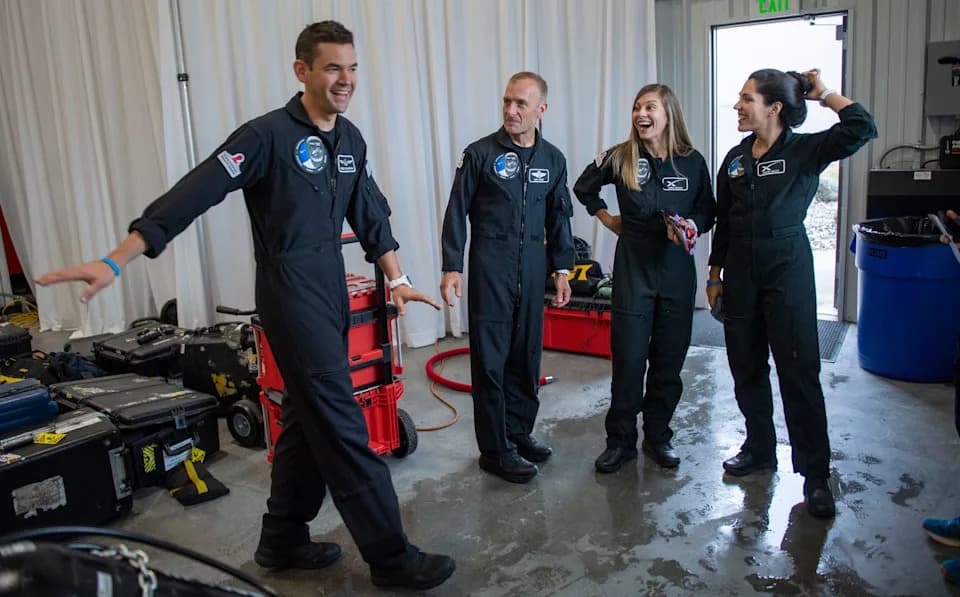
Jared Isaacman, President Trump’s nominee to head NASA, said the planned transfer of the space shuttle Discovery from the Smithsonian to Space Center Houston may not be feasible due to safety and budget concerns. Congress allocated $85 million for the move, but NASA and the Smithsonian estimate the cost could reach at least $120 million. Isaacman said NASA would prioritize the shuttle’s safety and could instead send an alternate historic spacecraft to Johnson Space Center if Discovery cannot be moved. Critics have called the plan a "theft" or "vanity project" and worry about the orbiter’s care.
NASA Nominee Says Shuttle Discovery Might Stay at Smithsonian — Transfer to Houston Uncertain
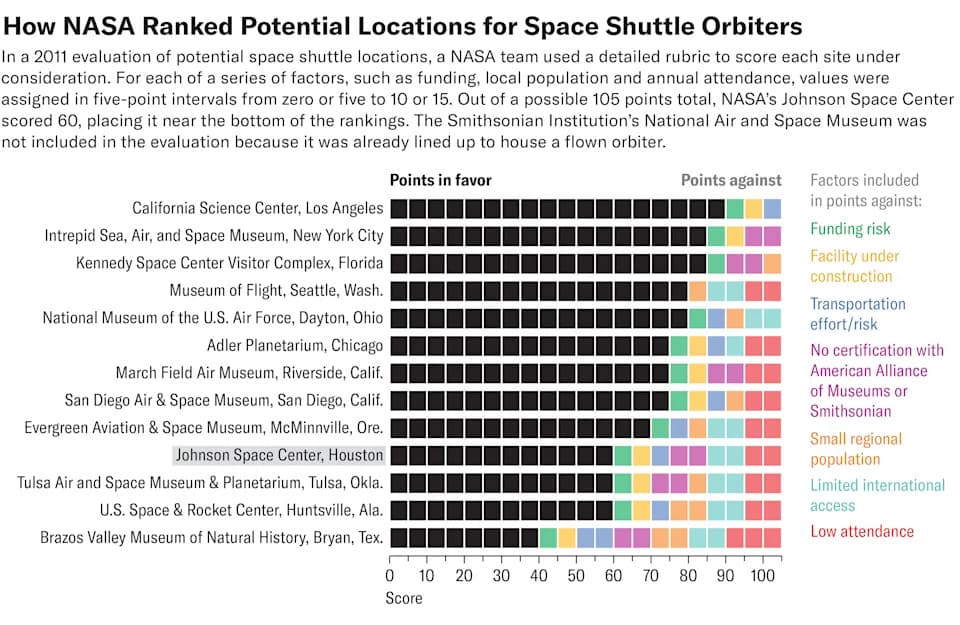
Amanda Montañez; Source: NASA Office of Inspector General (data)
The long-running debate over the future of the space shuttle Discovery took a new turn after Jared Isaacman, President Donald Trump’s nominee to lead NASA, said the orbiter may remain at its Smithsonian retirement site rather than being transferred to Space Center Houston.
The plan to relocate Discovery from its hangar in Chantilly, Va., an annex of the Smithsonian’s National Air and Space Museum, was pushed for over the past year by Texas advocates. Senator Dick Durbin of Illinois called the effort a “heist” in July, and that same month Congress included $85 million in the One Big Beautiful Bill Act to fund a move to the Space Center Houston museum within 18 months.
In a recent interview with CNBC, Isaacman emphasized that safety and budget constraints will determine whether the shuttle can be moved.
"My job now is to make sure that we can undertake such a transportation within the budget dollars that we have available and, of course, most importantly, ensuring the safety of the vehicle," Isaacman said.
NASA and the Smithsonian estimate that transporting Discovery could cost at least $120 million, significantly more than the $85 million congressional appropriation. Isaacman said that if Discovery cannot be moved safely and within budget, NASA could instead arrange for another historic spacecraft to be displayed at the Johnson Space Center in Houston.
"We’ve got spacecraft that are going around the moon with Artemis II, III, IV and V. One way or another, we’re going to make sure that Johnson Space Center gets their historic spacecraft," he said.
Critics — including space scientists, legal scholars and museum experts — have been vocal about the proposed transfer. In interviews with Scientific American, some called the relocation a "theft" or a "vanity project," and others questioned whether the Texas museum could properly house and care for the orbiter.
"Such a move would be a waste of money — a vanity project that is apt to destroy a near-priceless American treasure," said Matthew Hersch, a fellow in legal history at New York University School of Law and an associate of Harvard’s Department of the History of Science.
"The removal of Discovery from the Smithsonian Institution would be a theft, by the federal government, of a $2-billion artifact from a private museum that owns it and has been maintaining it properly for over a decade," he added.
Discovery first launched in 1984 and completed 39 missions — more than any of NASA’s other flown orbiters — including the 1990 mission that deployed the Hubble Space Telescope. The Smithsonian and NASA continue to assess the technical, financial and preservation challenges involved in any transfer.
Image credit: Amanda Montañez; data source: NASA Office of Inspector General
Help us improve.