
SpaceX’s Starship suffered a late‑November structural rupture at Boca Chica, the latest setback in a year marked by multiple 2025 failures. NASA’s Artemis III — originally planned for 2027 — depends on a Starship‑derived Human Landing System and a complex series of tanker launches, making the schedule vulnerable. Experts and a NASA safety panel say a 2028 landing is more plausible than 2027, while NASA considers alternatives such as proposals from Blue Origin amid growing political pressure to return by 2028.
Starship Setback Tightens Timeline for Artemis III — Moon Return May Slip to 2028

MUSK MOON
Before dawn in late November, technicians at SpaceX’s Boca Chica test site were pressurising the newest Super Heavy booster for Starship with nitrogen when a structural rupture cracked the vehicle and released fumes across the launch complex. SpaceX reported no injuries, calling the event an "anomaly" during structural testing.

Debris from SpaceX rocket, launched in Texas, forced planes over the Caribbean to divert their route - Marcus Haworth/via Reuters
This incident adds to a string of high-profile setbacks for the 400‑ft Starship in 2025, which included an in‑flight explosion early in the year that scattered burning debris and damaged infrastructure after a June pad failure. A September test that proceeded as planned restored some momentum, but the programme’s schedule remains fragile as SpaceX aims to resume major flight activity ahead of a provisional early‑2026 flight window.

Nasa astronauts Christina Koch, Victor Glover, Reid Wiseman, and Jeremy Hansen will fly to the Moon as part of Artemis II - Josh Valcarcel/Nasa via AP
Why This Matters for Artemis
NASA planned to use a modified Starship as the Human Landing System (HLS) for Artemis III, originally targeted for 2027. Under that concept, astronauts would launch on the Space Launch System (SLS), rendezvous in lunar orbit, and transfer to Starship HLS for descent to the surface. However, the HLS design cannot carry all the fuel it needs in a single launch; the mission concept depends on multiple tanker launches to top up propellant in orbit — a logistics chain that could require roughly a dozen successful heavy‑lift missions.
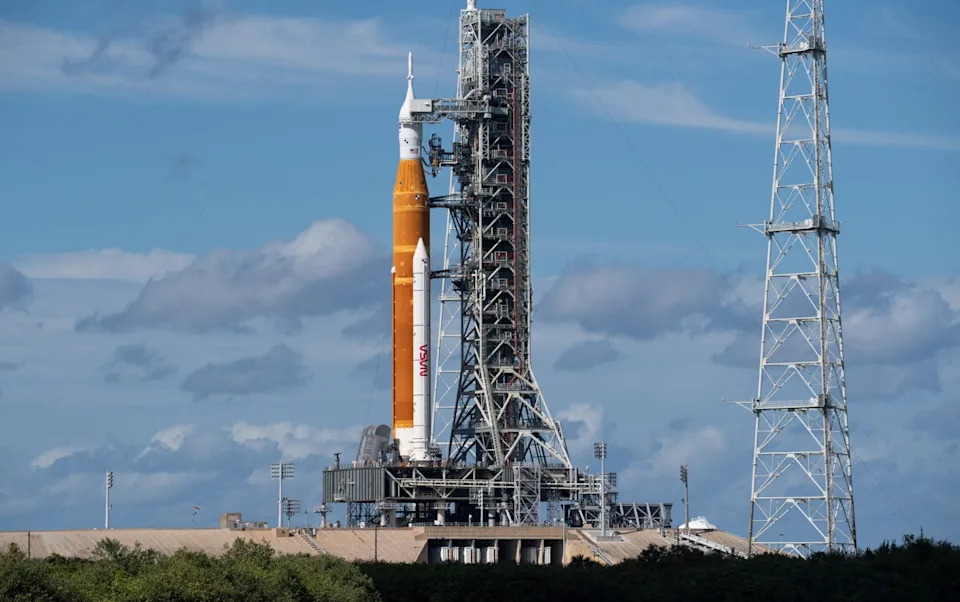
If Artesmis III goes according to plan, astronauts will travel towards the Moon aboard Nasa’s Space Launch System - Joel Kowsky/Nasa
Delays to Starship and the complexity of the rendezvous-and‑refueling plan have convinced many experts a 2027 landing is unlikely. Philip Lucas of the University of Hertfordshire says the earliest plausible date for a surface landing is the end of 2028. A NASA safety panel has warned the lunar lander could be "years late," urging a re‑examination of Artemis III objectives.

Donald Trump signed a new executive order this month demanding a return to the Moon by 2028 - Saul Martinez/Getty Images
Competition and Political Pressure
SpaceX won the HLS contract in 2021 for $2.9 billion, but in October then‑acting NASA head Sean Duffy proposed reopening the competition — a move that prompted public friction with Elon Musk. Blue Origin, Jeff Bezos’s company, has offered alternative plans using its New Glenn rocket and an expendable second stage, arguing it could accelerate the schedule if NASA wants a faster path.
In December, Jared Isaacman replaced Duffy as NASA administrator and said the agency remains open to alternatives that ensure timely achievement of strategic objectives. That same month President Trump issued an executive order pressing for a Moon return by 2028 and a "permanent lunar outpost" by 2030, increasing political pressure on NASA and commercial partners.
What Comes Next
NASA will fly Artemis II — a crewed lunar flyby aboard SLS — as a rehearsal ahead of any Artemis surface mission. Meanwhile, SpaceX is preparing additional Starship tests, and Blue Origin is readying a robotic demonstration of its lunar lander that could launch in the months ahead. The coming tests, contractual decisions, and any shifts in mission design will determine whether the U.S. keeps the 2028 political target within reach or accepts a later timeline.
Bottom line: Starship’s iterative development philosophy accelerates innovation but introduces risk. With mission architecture that depends on multiple launches, the Artemis III timeline is tightly coupled to SpaceX test results and to whether NASA chooses to diversify suppliers.


