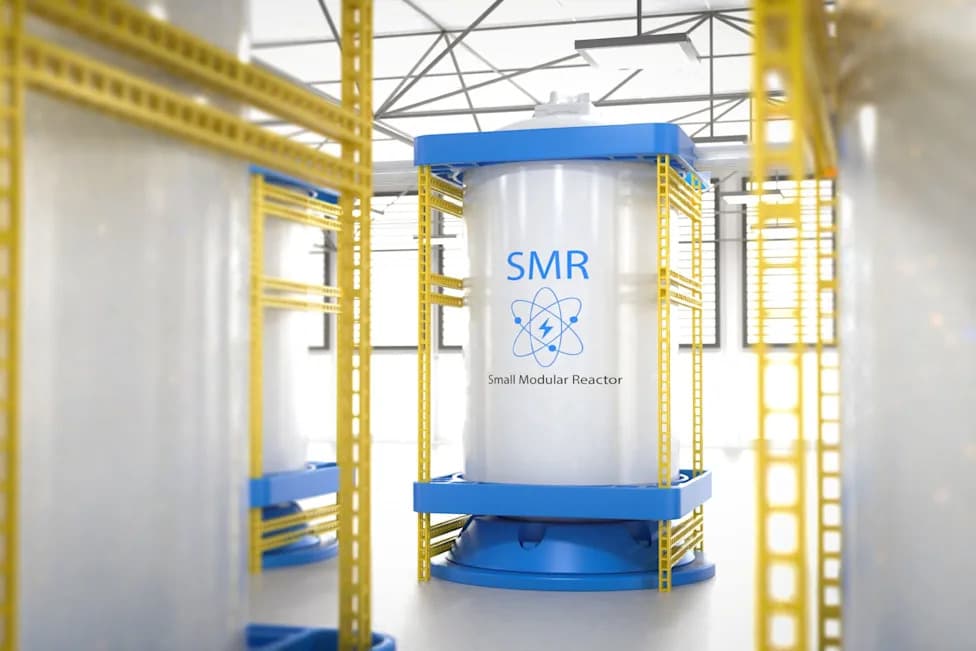
Researchers at the Chinese Academy of Sciences report they have loaded fuel into a 2 MW (thermal) thorium molten-salt reactor in the Gobi Desert, a research-scale milestone that builds on declassified U.S. MSR work from the 1960s. The team says it reproduced earlier experiments and then advanced the design. China aims to build a 10 MW follow-on reactor by around 2030 and is exploring longer-term applications, including marine propulsion, as part of a broader clean-energy push. Experts note the demonstration is an important step but not a commercial deployment.
China Loads Fuel into 2 MW Thorium Molten-Salt Reactor — Small Demonstration Marks Research Milestone
Chinese researchers at the Chinese Academy of Sciences say they have completed construction and loaded fuel into a small thorium molten-salt reactor (MSR) sited in the Gobi Desert, marking a laboratory-scale milestone in advanced nuclear research.
What happened
The experimental unit, rated at about 2 megawatts (thermal), began construction in 2018 and has now reached the stage of having fresh fuel successfully loaded. Project scientists say they studied publicly available U.S. research on MSRs from the 1960s, reproduced earlier experiments, and then extended the designs to reach this operational milestone.
"We mastered every technique in the literature — then pushed further," said Xu Hongjie, the project's chief scientist, describing the team's approach.
Why thorium MSRs matter
Thorium-based molten-salt reactors differ from conventional uranium light-water reactors in several ways: thorium fuel produces less long-lived, highly radioactive waste and is often described as being harder to weaponize than enriched uranium or plutonium pathways, though no technology is entirely proliferation-proof. Molten salt serves as both a fuel carrier and coolant, which can offer passive safety benefits and reduce high-pressure systems common to traditional reactors.
Context and caveats
Historical U.S. research in the 1960s produced valuable MSR data, but those programs were not pursued to commercialization. Today's claims relate to a small experimental reactor, not a commercial power plant. A 2 MW thermal demonstration is useful for materials testing, systems integration and safety validation, but it is far smaller than commercial reactors and does not itself indicate immediate large-scale deployment.
China plans a larger follow-on MSR of about 10 megawatts, with a target operational date around 2030. Officials and industry groups have also discussed longer-term concepts, including marine propulsion using advanced reactors, as part of broader efforts to reduce carbon emissions from shipping — an industry estimated to emit on the order of tens of millions of tonnes of CO2 annually.
Broader energy strategy
This MSR project complements China’s broader clean-energy expansion, which includes large-scale solar and wind developments. While the new reactor is a notable research achievement, experts caution that commercialization will require further validation on materials, regulatory frameworks, economics and supply chain readiness.
Bottom line: Loading fuel into a 2 MW thorium MSR is an important experimental step that demonstrates progress in a promising but still largely experimental technology. The milestone is worthy of attention, but commercial deployment will take substantial additional research, testing and regulatory work.
Help us improve.