The DOE has proposed categorical exclusions that would waive NEPA environmental reviews for certain advanced nuclear reactor demonstrations, following a May 2025 executive order. The plan echoes recommendations from an April INL-linked report and would cover projects such as a 300 MWt Versatile Test Reactor at Idaho and two 35 MWt Kairos Hermes 2 units at Oak Ridge. DOE aims to have at least three reactors reach criticality outside national labs by July 4, 2026, a target industry leaders say could speed prototype development.
DOE Moves To Fast-Track Advanced Nuclear Reactors By Seeking NEPA Waivers
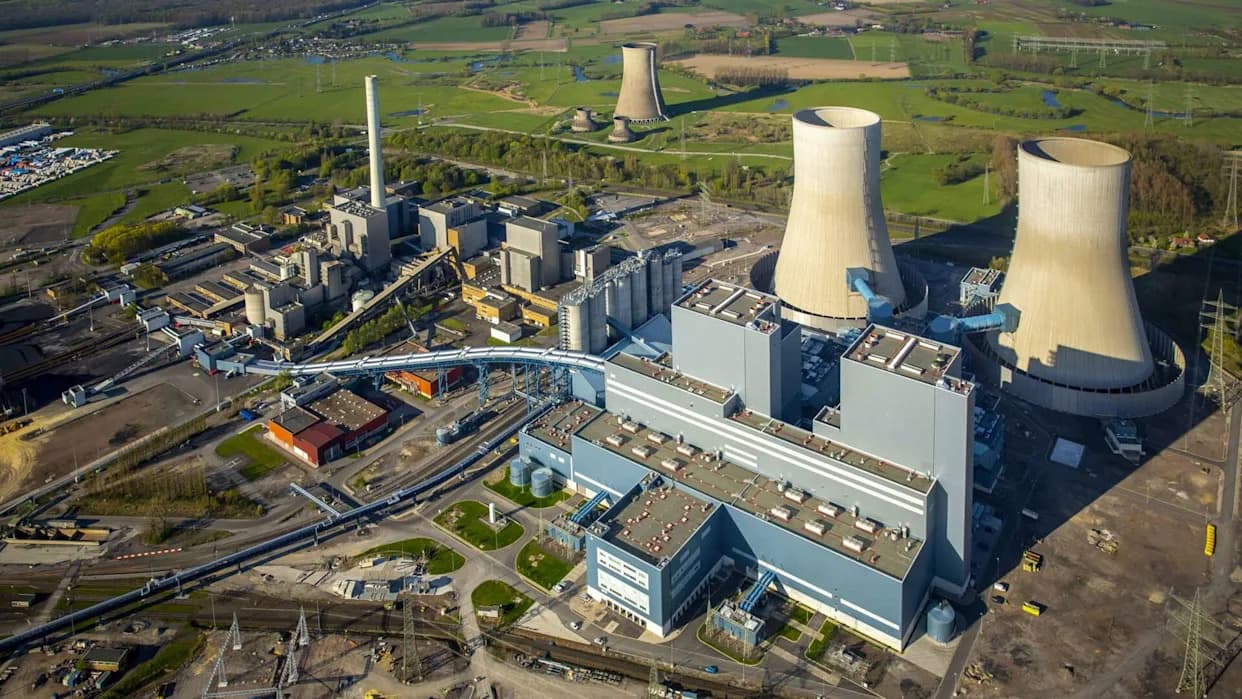
Energy Department Moves To Fast-Track Advanced Nuclear Reactor Approvals
The U.S. Department of Energy (DOE) has proposed a fast-track pathway for advanced nuclear reactors by creating categorical exclusions that would waive certain National Environmental Policy Act (NEPA) reviews. The move follows a May 2025 executive order directing the DOE to use "all available legal authorities" to site, approve, and authorize privately funded advanced reactors on DOE-owned or controlled sites and to pursue new categorical exclusions with the goal of operating an advanced reactor at a first site within 30 months.
What A Categorical Exclusion Would Do
Categorical exclusions remove the requirement for a full NEPA environmental impact statement (EIS) or an environmental assessment (EA) before a project can proceed. Compiling an EIS typically takes nearly three years on average, so an exclusion can significantly shorten review and permitting times for demonstration projects.
Reports and Rationale
The proposal echoes recommendations from an April 2025 report by researchers affiliated with the Idaho National Laboratory (INL). That report called for clarifying DOE authority to "authorize any non-commercial demonstration nuclear reactor projects with no exceptions," and urged expedited licensing pathways for prototypes.
In its notice, DOE states that "advanced nuclear reactors have key attributes such as safety features, fuel type, and fission product inventory that limit adverse consequences from releases of radioactive or hazardous material from construction, operation, and decommissioning."
Projects Named
The proposed categorical exclusion would cover several planned demonstration reactors: a 300 megawatts-thermal (MWt) Versatile Test Reactor proposed for construction at Idaho National Laboratory, and two 35 MWt Kairos Hermes 2 test reactors proposed for Oak Ridge National Laboratory. (MWt — megawatts thermal — measures raw heat output; megawatts electric, MWe, measures delivered electrical power.)
Deployment Goals and Industry View
The DOE has set an ambitious target of "at least three reactors reaching criticality outside of the national laboratories by July 4, 2026." Industry leaders see DOE pathways as helpful for rapid prototype development. As Jordan Bramble, CEO of microreactor company Antares, told NPR: "We believe that licensing through a DOE pathway is absolutely the best way to build prototype reactors, and you absolutely have to build prototype reactors before you build commercial reactors."
Context From Regulatory Reviews
A 2025 Columbia University analysis found that no NRC environmental reviews between 2000 and 2020 concluded a reactor project would cause what the NRC calls "large adverse" environmental impacts. Citing that analysis, the INL-linked report argued Congress should consider exempting new nuclear demonstration projects from NEPA requirements, arguing low likelihood of significant impacts and a national need for cleaner energy and energy security.
Author note: The original article included an editorial aside urging broader repeal of NEPA; this version preserves that as an attribution to the author rather than a reporting fact.
Next Steps and Implications
The DOE notice initiates a proposal that may be subject to public comment and administrative review. If finalized, the categorical exclusion would accelerate siting and demonstration of advanced reactor technologies on federal lands — a change likely to prompt debate among regulators, environmental groups, industry stakeholders, and local communities about risk, oversight, and the pace of deployment.
Help us improve.