As political unease rises, some critics argue the U.S. Constitution has failed and that stronger centralized power or enforced cultural unity is needed. The author counters that the Constitution succeeded by creating a "creedal" nation — one united by principles, not ancestry — and by providing institutions that allow diverse peoples to live together as equals. Amendments like the Fourteenth fulfilled the Founding by making national citizenship and equality real. The Constitution's limits protect pluralism and channel conflict without destroying liberty.
Why the Constitution Still Matters This Thanksgiving

Thanksgiving invites us to reflect on blessings we often take for granted. This year — amid rising political anxiety and competing visions for the nation's future — I am especially grateful for a foundational inheritance: the political creed forged by the Declaration of Independence and embodied in the U.S. Constitution.
Some contemporary critics, especially those who identify as "post-liberal," argue that the Constitution is a failed enterprise. They contend the Founding was overly individualistic, lacked a sufficiently moral or cultural vision, or that the constitutional framework prevents the pursuit of a unified national purpose. A handful of thinkers even call for a stronger centralized state or an assertive executive to impose cohesion from the top.
Those proposals are not merely theoretical. At times, commentators praise unchecked executive power or political systems whose legitimacy rests on hierarchy rather than popular consent. Increasingly, the Founding is dismissed as an obstacle rather than treated as a foundation to be improved.
"Several distinct nations almost," observed John Adams, wondering whether such a collection could cohere.
Yet the American experiment has proved unusually resilient. Unlike many nations that emerged from a shared language, lineage, or ancient customs, the United States essentially built a political order first and then had to invent a national identity. That identity did not grow out of common ancestry but from a creedal set of principles — liberty, equal opportunity, self-government, and the rule of law.
The genius of the Constitution is that it translated those principles into institutions that let people of different backgrounds live together as equals before the law. A family that arrived from Romania in 1980, or from Haiti or Mexico decades later, can stand on the same civic footing as descendants of the founding generation. That inclusiveness is one of the republic's great achievements.
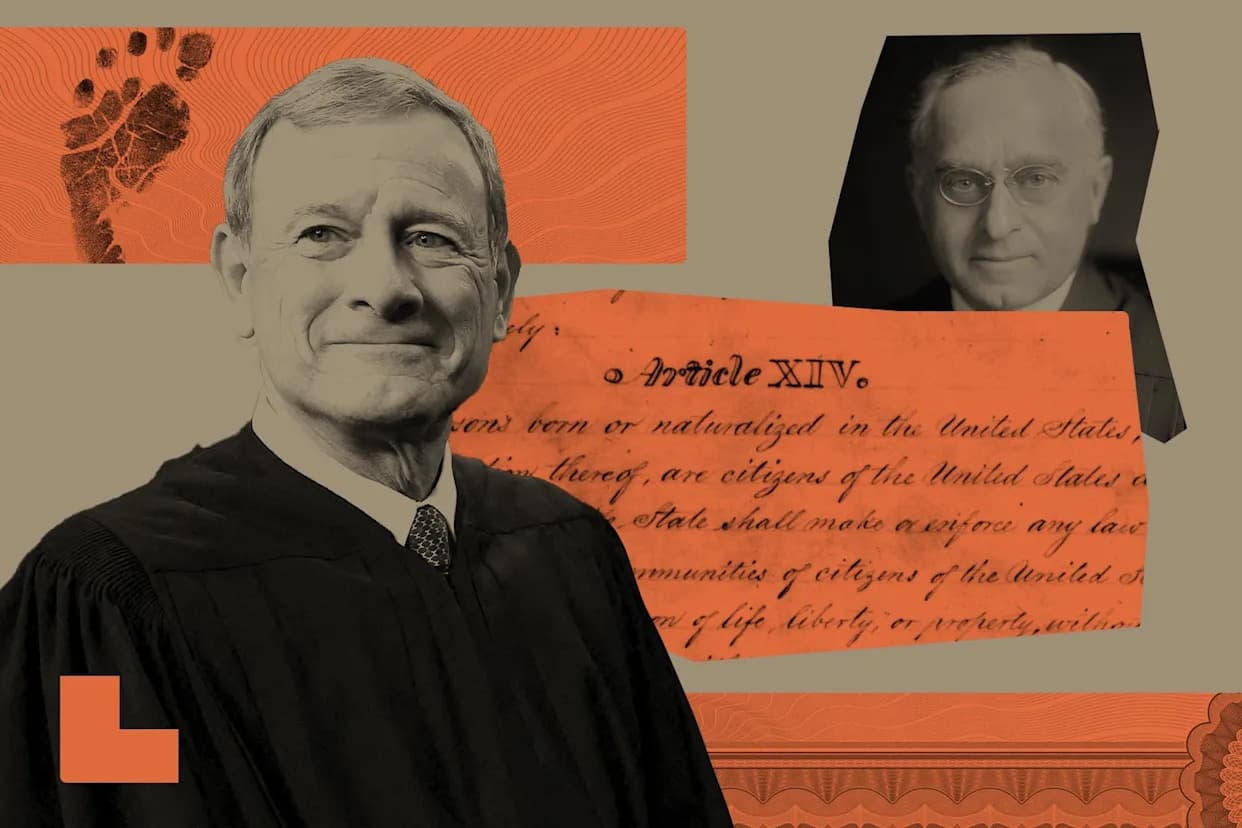
The Constitution has never been static. It has been amended and strengthened through struggle. The post–Civil War Reconstruction Amendments, particularly the Fourteenth Amendment, did not repudiate the Founding; they fulfilled it by making national citizenship concrete and giving legal force to the promise of equality.
Far from being a defect, constitutional limits are a feature. The framers feared unchecked power — whether exercised by a monarch, an ambitious executive, or a majority acting without restraint. Those limits protect pluralism against the hazards of centralized authority and doctrinal certainty. In a diverse nation, protections for speech, conscience, and minority rights are essential, not optional.
Why restraint matters
We live in an era of self-styled saviors who promise simple, sweeping solutions. The Constitution offers a humbler, harder path: persuasion instead of imposition, limits instead of limitless power, deliberation instead of instant consensus. It does not guarantee that we will always agree; it provides a system that channels disagreement without destroying liberty.
That system has sustained the republic through formative crises — waves of immigration, civil war, economic catastrophe, and global conflicts. Remembering that record helps explain why the Constitution remains a valuable framework for managing the conflicts of our time.
This Thanksgiving, I am thankful for institutions that protect liberty even when they frustrate us. In a country bound not by blood but by shared principles, the Constitution is more than a legal text: it is the mechanism through which a diverse people become a nation. That inheritance is worth defending and worth our gratitude.
Help us improve.