
The internet and social media have fractured a once-shared factual reality, normalizing selective information-gathering and eroding trust in credentialed expertise. Gallup data show the share of Americans who view college as "very important" fell from about 70% in 2013 to roughly 35% by September 2025, with only one in five Republicans now rating a degree as very important. This fragmentation — amplified by the Tea Party, the pandemic, and algorithmic echo chambers — helped elevate Donald Trump and made his consolidation of executive power easier to execute. Restoring civic trust will require platform reform, stronger civic education, and renewed faith in institutions.
How the Internet Fractured the Information Age and Weakened Trust in Education

An analysis of data from Gallup.Philip Bump/MS NOW
Donald Trump’s second term has pushed the ideal of “rugged individualism” to a new extreme: the presidency has been reorganized in practice to prioritize the wishes and needs of Donald J. Trump himself. That consolidation of executive authority met far less resistance than might have been expected — in part because of a broader cultural and technological shift that has unfolded over the past two decades.
An analysis of data from General Social Survey.Philip Bump/MS NOW
From Shared Reality to Fragmented Information
For much of modern history, citizens operated within a largely shared factual baseline: ignorance was treated as a shortcoming, and conspiracy thinking remained marginal. The internet promised to democratize access to knowledge, but the rise of social platforms and algorithm-driven feeds instead made selective information-gathering effortless. In short, the net made subjective interpretation more ubiquitous and objective consensus harder to sustain. Put plainly: we have slid from acting on what we know to acting on what we think.
An analysis of data from General Social Survey.Philip Bump/MS NOW
How Bubbles and Tribalism Grew
Right-wing informational bubbles emerged visibly with movements such as the Tea Party during Barack Obama’s first term. Though the 2007–08 economic crisis was a primary catalyst, the internet amplified anti-elite energy and helped institutionalize distrust of experts. The Covid-19 pandemic deepened these fissures: widespread uncertainty, competing claims online, and politicized public health guidance made demagogues’ attacks on expertise easier and more potent.
An analysis of data from Pew Research Center.Philip Bump/MS NOW
Education, Trust, and Political Realignment
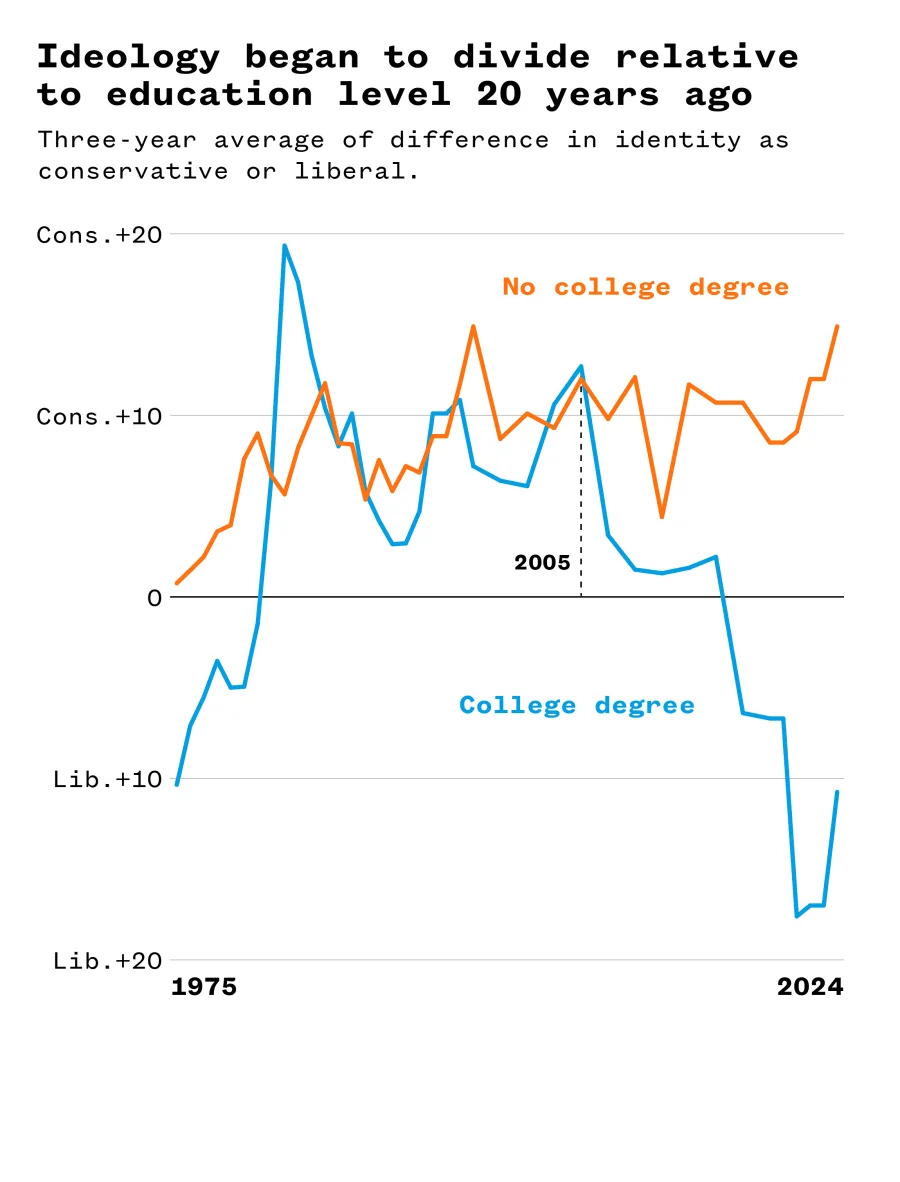
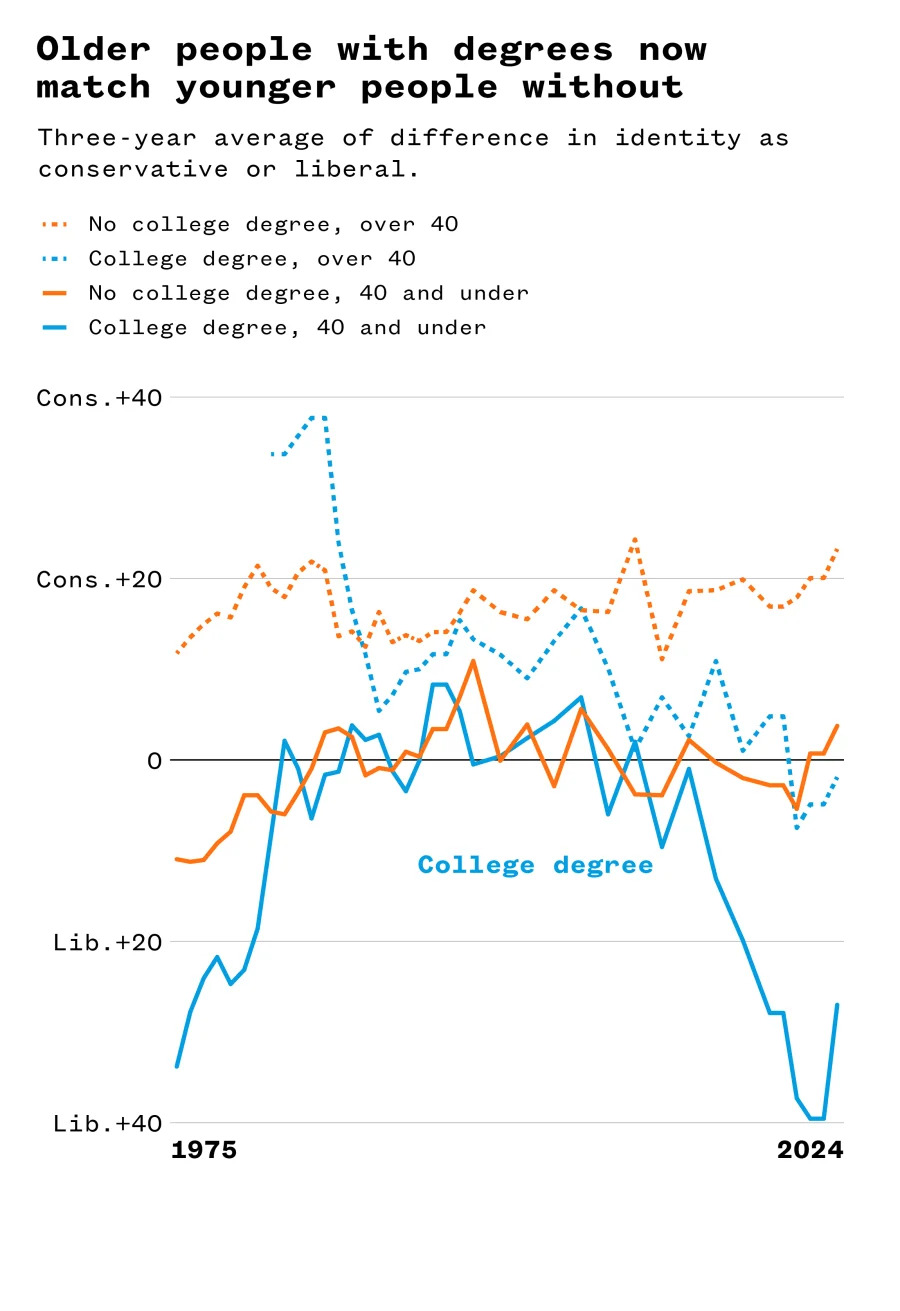
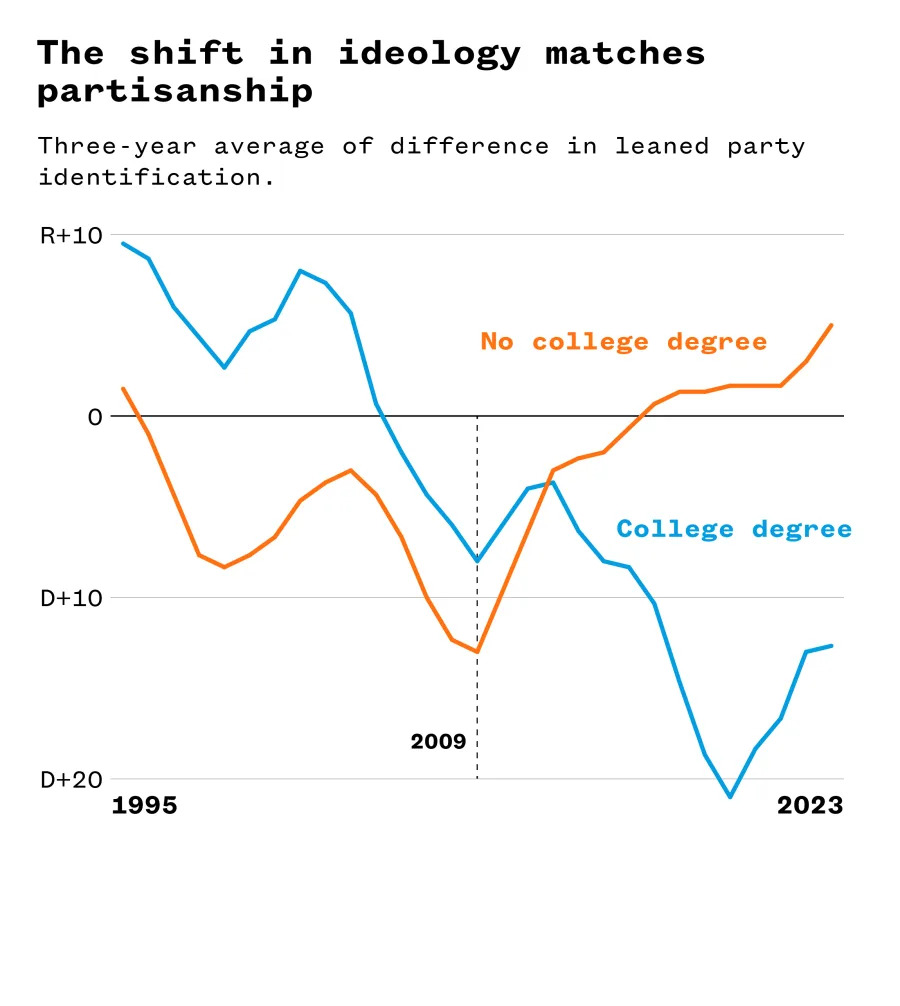
Survey data illustrate the change. In 2013, Gallup reported that roughly 70% of Americans said a college education was "very important"; by September 2025, that figure had dropped to about 35%. The decline is unevenly distributed: only about one in five Republicans in recent polling said a college degree was very important. Meanwhile, the biannual General Social Survey shows that, over roughly two decades, Americans with college degrees increasingly identified as liberal while those without degrees moved toward the Republican Party — a realignment that accelerated around the time of President Obama’s election and continued in subsequent years.
Why This Matters
Holding a college degree is an imperfect but useful proxy for confidence in credentialed expertise and shared standards of evidence. The erosion of respect for expertise makes policy debates harder, amplifies misinformation, and lowers the political costs of consolidating power for those willing to exploit distrust. Donald Trump benefited from and reinforced these dynamics by presenting rejection of experts and institutions as a badge of loyalty: "We’re the smart ones," he told supporters in 2018, reframing anti-elite sentiment as a form of authority.
"When ignorance becomes a virtue and expertise a liability, institutions designed to moderate power can be weakened — with long-term consequences for democratic governance."
Conclusion
The internet’s promise to democratize education and knowledge remains real, but it has been accompanied by an equally powerful tendency to enable cherry-picking, amplify noise, and harden tribal identities. Rebuilding a shared informational baseline will require better platform design, stronger civic education, and renewed public investment in trusted institutions — or the erosion of regard for objective knowledge will continue to shape politics and governance in destabilizing ways.
Help us improve.


