Kenneth D. Nichols led the Manhattan Engineer District through the turbulent transition from wartime to peacetime. He supervised the production of plutonium and uranium-235, directed security and operations at Oak Ridge and Hanford, and managed a critical 17-month interim before the AEC assumed control. Nichols helped establish the national laboratory system, oversaw naval nuclear training that led to the atomic submarine, and represented the project at Operation Crossroads; in March 1946 he was named an Honorary CBE.
The Father of Oak Ridge: How Kenneth D. Nichols Guided the Manhattan Project from War to Peace

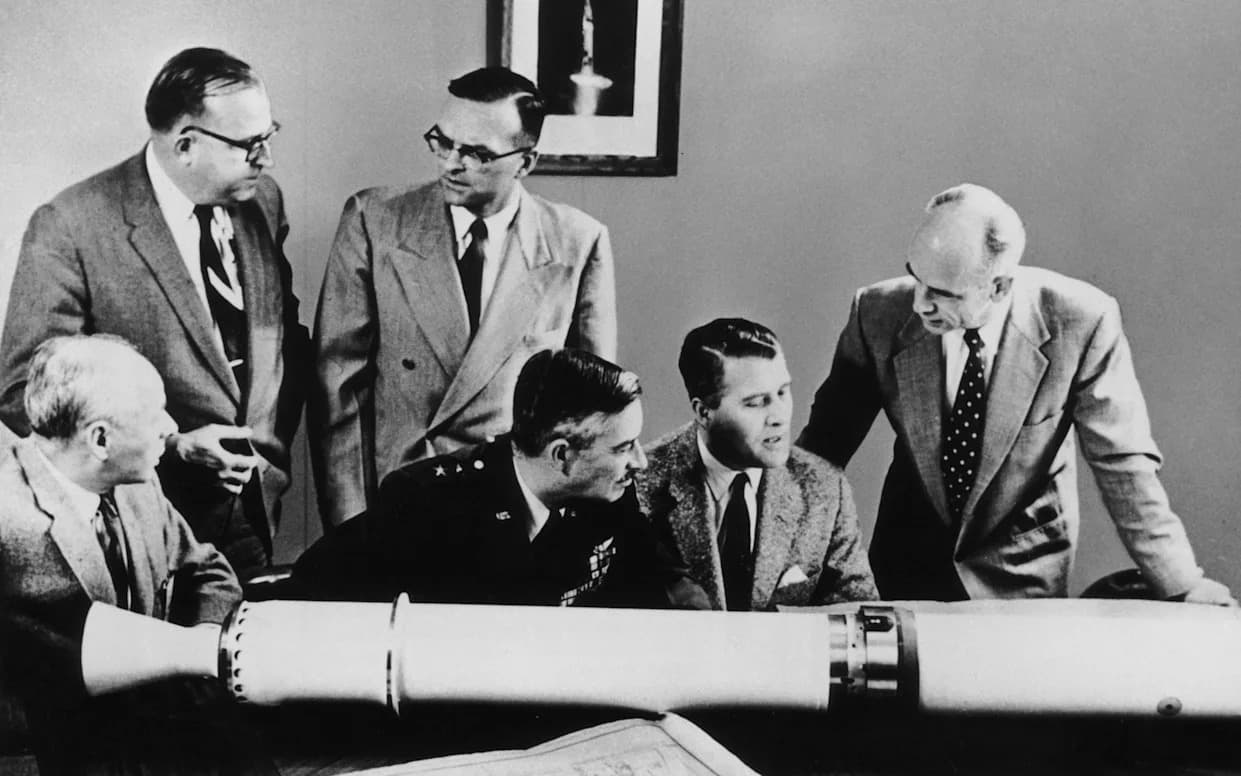
Kenneth D. Nichols was chosen for his leadership, judgment, and technical understanding to serve as Deputy District Engineer and then District Engineer of the Manhattan Engineer District (MED). In that role he supervised research and development and the design, construction, and operation of the production facilities for plutonium and uranium-235 — including the creation of the towns of Oak Ridge, Tennessee, and Richland, Washington.
Vast responsibility at a pivotal moment
Nichols’s responsibilities were enormous. He oversaw roughly 125,000 military and civilian personnel, made Oak Ridge the wartime hub of atomic-energy activity, and directed internal security measures that helped keep the bomb project secret. After World War II he served as deputy to General Leslie Groves and, for a critical 17-month interim (August 1945–January 1947), he and Groves maintained operational control of the nation’s atomic weapons and stockpiles until the Atomic Energy Commission (AEC) assumed full authority.
Managing the wartime-to-peacetime transition
During that interim period Nichols focused on preserving production, securing weapons, and briefing senior Army leaders, including General Dwight D. Eisenhower and Secretary of War Robert Patterson. He negotiated and finalized contracts that would be transferred to the AEC — notable transitions included DuPont’s Hanford operations to General Electric (part of a package that included a laboratory in Schenectady) and transferring the Clinton Laboratories from the University of Chicago to Monsanto. Meanwhile, Union Carbide and Tennessee Eastman continued operating K-25, K-27, and Y-12.
Founding the national laboratory system
An unplanned layover led Nichols, Dr. Arthur Holly Compton, and chemist Charles A. Thomas to brainstorm the future of postwar research. Their discussions helped launch an Advisory Committee on Research and Development and ultimately the national laboratory system. The committee recommended and secured funding for major laboratories that became pillars of U.S. nuclear research:
- Argonne (near Chicago)
- Brookhaven (Upton, Long Island)
- Clinton (Oak Ridge)
- Los Alamos (New Mexico)
These labs were envisioned to focus on distinct research areas, train students, drive power development, and maintain American leadership in nuclear science and technology.
Military applications and the path to the atomic submarine
Nichols also oversaw naval officer training at Oak Ridge, a program that contributed to the Navy’s development of atomic-powered submarines. Working with Admiral Earle Mills, Nichols chose to work through a single officer for efficiency — Captain Hyman Rickover — after an in-person interview despite mixed references. Nichols later acknowledged that while Rickover is widely called the ‘father of the atomic submarine,’ others, including Dr. Philip H. Abelson and Admiral Mills, played important roles in the concept’s early stages.
Personal moments and honors
In early 1946 Nichols and his wife Jackie attempted a short vacation that was interrupted by an urgent mission to Berkeley arranged by General Groves. After resolving the lab problem, they returned to Oak Ridge, where Nichols was promoted to brigadier general and reassigned to Washington, D.C. The Nichols family’s move — including a crowded B-25 flight to Washington with their children — became one of the many wartime anecdotes that mark their years of service. That summer Nichols was the Manhattan Project’s representative at Operation Crossroads, the 1946 atomic tests at Bikini Atoll. Shortly thereafter, effective March 16, 1946, King George VI appointed Nichols an Honorary Commander of the Military Division of the Order of the British Empire (CBE) in recognition of his wartime service.
Legacy
Although his headquarters moved to Washington, Nichols continued to protect production facilities and manage transitions at the Clinton Engineer Works (Oak Ridge) and Hanford Engineer Works. His role in shaping postwar research infrastructure, negotiating key industrial transitions, and supporting early naval nuclear training left a lasting imprint on America’s atomic age.
Author: Barbara Rogers Scollin (grandniece of Major General Kenneth D. Nichols). Acknowledgments to K. David Nichols Jr., D. Ray Smith, Sandy Fye and staff at the National Museum of Nuclear Science & History, and other contributors who aided research for this article.
Help us improve.