Hundreds of Allied POWs — primarily Dutch, but also British, Australian and American servicemen — were held in Nagasaki camps when the U.S. dropped an atomic bomb on Aug. 9, 1945. Fukuoka No. 14, closer to ground zero, suffered the worst damage and at least eight POWs were killed; No. 2 housed nearly 1,500 forced laborers. Families, researchers and advocacy groups have been documenting testimonies, securing survivor certificates for some former POWs, and erecting memorials to recover this neglected chapter of wartime history.
A Forgotten Chapter: Allied POWs in Nagasaki When the Atom Bomb Fell
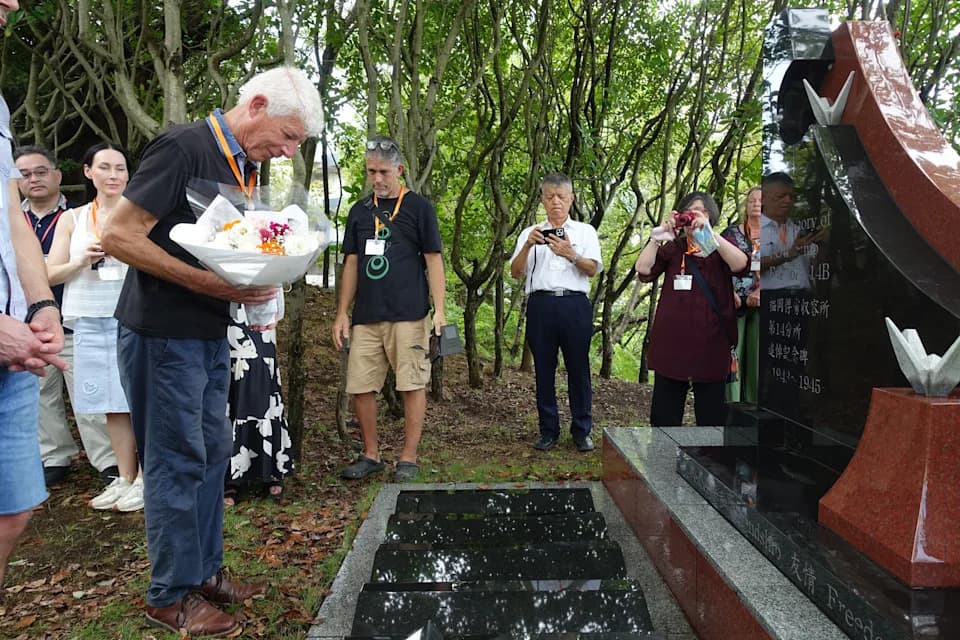
Relatives of former Dutch POWs pay tribute at a monument dedicated to the victims of prison abuse and the atomic bombing of Nagasaki 80 years ago as captives at the Fukuoka No. 14 Camp, at a ceremony, in Nagasaki, western Japan, Friday, Sept. 12, 2025. (AP Photo/Mari Yamaguchi)(ASSOCIATED PRESS)
Nagasaki, Japan — Hundreds of Allied prisoners of war were interned in harsh Japanese camps in Nagasaki when the United States detonated an atomic bomb on Aug. 9, 1945. Their presence at the time of the blast has attracted little attention until families and historians began compiling testimony and records to recover these overlooked stories.
Prison Camps, Forced Labor and the Blast
Nearly 1,500 prisoners were held at the Fukuoka No. 2 Branch Camp for about three years and forced to work at the Kawanami shipyard. Many were Dutch service members captured in the Dutch East Indies (now Indonesia) and transported to Nagasaki on so-called "hell ships." Another facility, Fukuoka No. 14, lay much closer to the hypocenter and suffered far heavier damage from the blast.
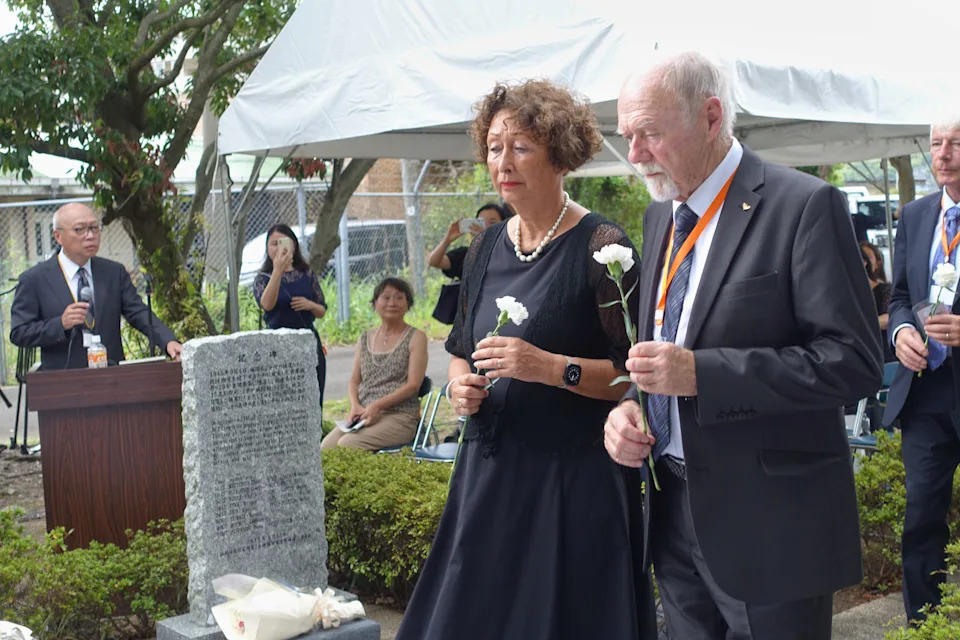
Andre Schram, right, the son of a former Dutch POW, lays a chrysanthemum flower to commemorate the victims at a memorial held at the former site of the Fukuoka No. 2 Camp in Koyagi, Nagasaki City, western Japan, Saturday, Sept. 13, 2025. (AP Photo/Mari Yamaguchi)(ASSOCIATED PRESS)
“It’s an important issue that has long been neglected.” — Taeko Sasamoto, co-founder, POW Research Network
What Witnesses Reported
Prisoners at No. 2, about 10 kilometers (6.2 miles) from ground zero, described a huge orange fireball, purple smoke and a layered mushroom cloud. Windows and doors were blown out and the camp clinic was damaged. At No. 14, brick buildings were destroyed; at least eight POWs were killed and dozens were wounded.
Survivors' recollections underline the violence and confusion. British captive Tom Humphrey recorded shattered windows and collapse of the clinic ceiling in his diary. Former Dutch prisoners such as Rene Schafer and Johan Willem Schram described severe injuries, chronic malnutrition and brutal treatment before and after the blast. Australian Peter McGrath-Kerr recalled being pulled from rubble and remaining unconscious for days with broken ribs and radiation burns.
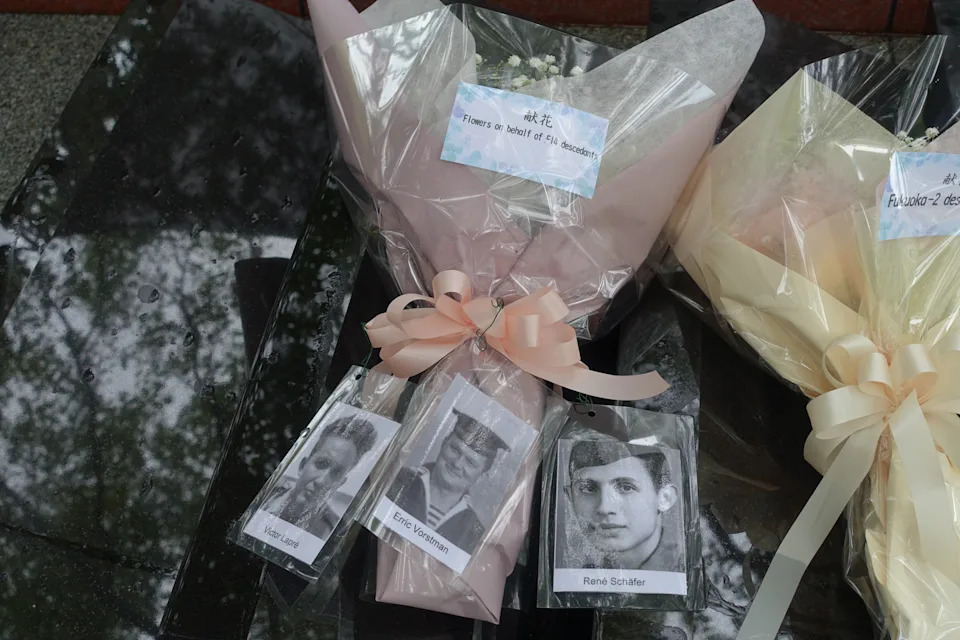
Portraits of Dutch servicemembers held as prisoners of war are placed on a bouquet of flowers laid at a memorial service for those held at the Fukuoka No. 14 Camp in the city of Nagasaki, western Japan, Saturday, Sept. 12, 2025. (AP Photo/Mari Yamaguchi)(ASSOCIATED PRESS)
Aftermath and Relief
In the days after Aug. 9, prisoners from Fukuoka No. 2 provided rice and help to comrades from No. 14. The No. 2 camp was officially notified of Japan’s surrender on Aug. 18, 1945; the first U.S. food drop for Allied POWs occurred on Aug. 26, and many survivors left Nagasaki on Sept. 13 aboard a U.S. carrier bound for the Philippines.
Memory, Research and Recognition
Families and researchers have worked to document testimonies, leading to memorial efforts in Nagasaki — including a granite monument with three inscribed panels unveiled through collaboration between descendants of POWs and Japanese survivors. Dutch families, led by representatives such as Andre Schram, have been central to these efforts.
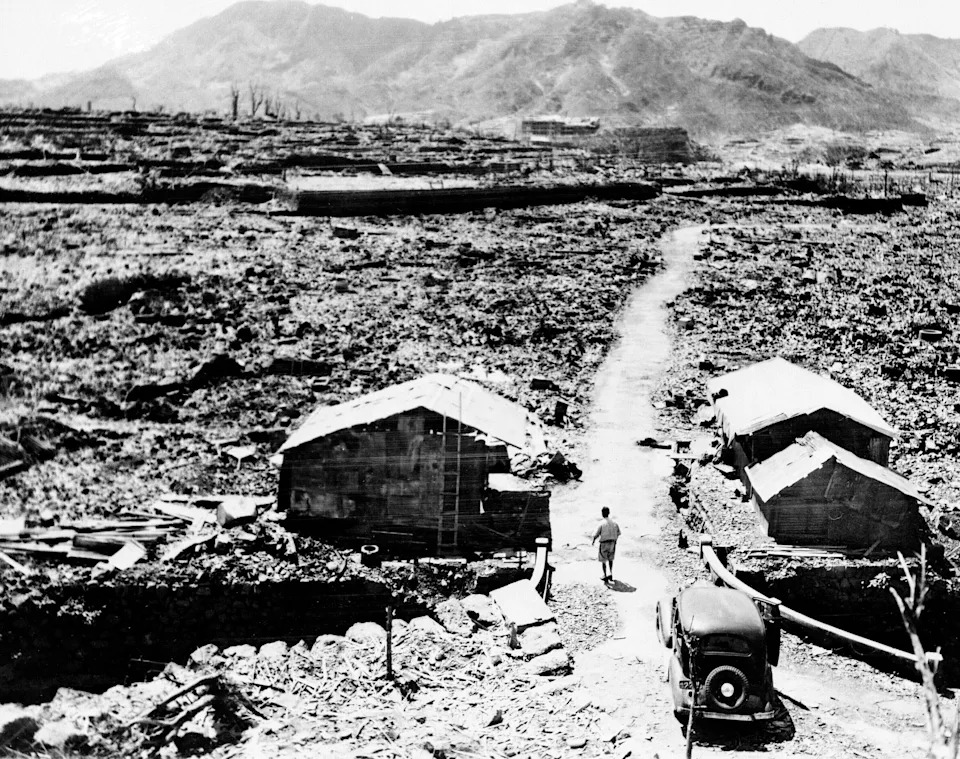
FILE - This Sept. 14, 1945, photo shows shacks made from scraps of debris from buildings that were leveled in the aftermath of the atomic bomb that was dropped over Nagasaki, western Japan. (AP Photo, File)(ASSOCIATED PRESS)
Independent, painstaking research has also clarified other overlooked facts about POWs at atomic-bombed sites. In Hiroshima, Shigeaki Mori’s long-term work led to U.S. confirmation that 12 American prisoners were killed on Aug. 6. In Nagasaki, the POW Research Network reports that at least 11 former POWs who were in the city have received atomic-bomb survivors’ certificates (seven Dutch, three Australian and one British).
Japan’s 1957 law to provide medical support to certified atomic-bomb survivors has expanded over decades; the number of certificate holders peaked at 372,000 in 1980 and stood at about 99,000 in recent counts, with roughly 4,000 living outside Japan.
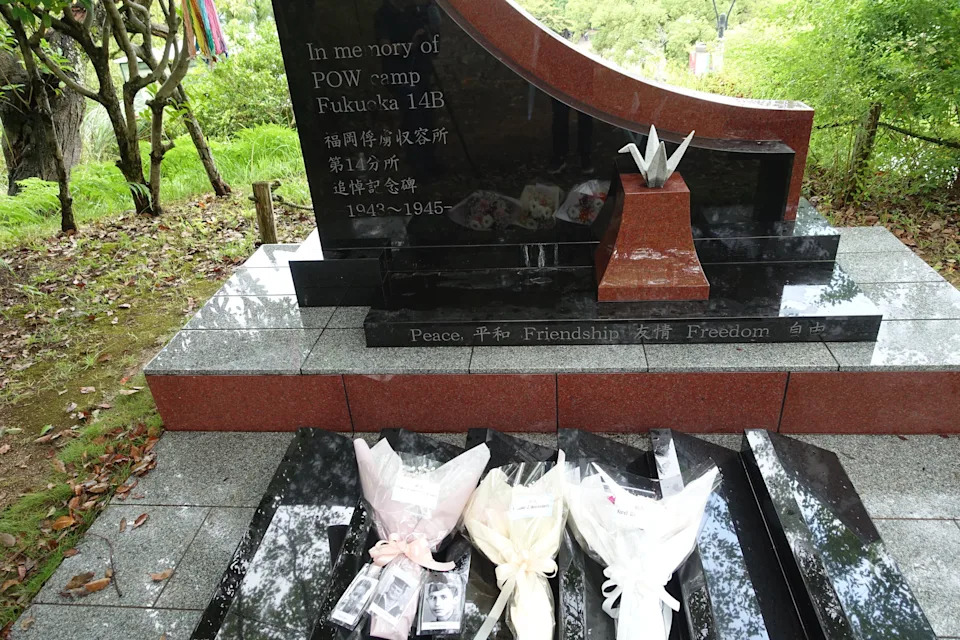
Flowers are placed by relatives of former Dutch POWs at a monument dedicated to those held captive at the Fukuoka No. 14 Camp during a memorial service in Nagasaki, western Japan, Friday, Sept. 12, 2025. (AP Photo/Mari Yamaguchi)(ASSOCIATED PRESS)
Why This History Matters
Researchers say the presence of Allied POWs at the time of the atomic bombings has been largely overlooked and requires detailed archival study. Recovering these testimonies helps broaden our understanding of the human cost of the bombings and connects families across nations in efforts at remembrance and reconciliation.
Sources: Associated Press reporting; POW Research Network Japan; survivor testimony and family accounts.
Help us improve.