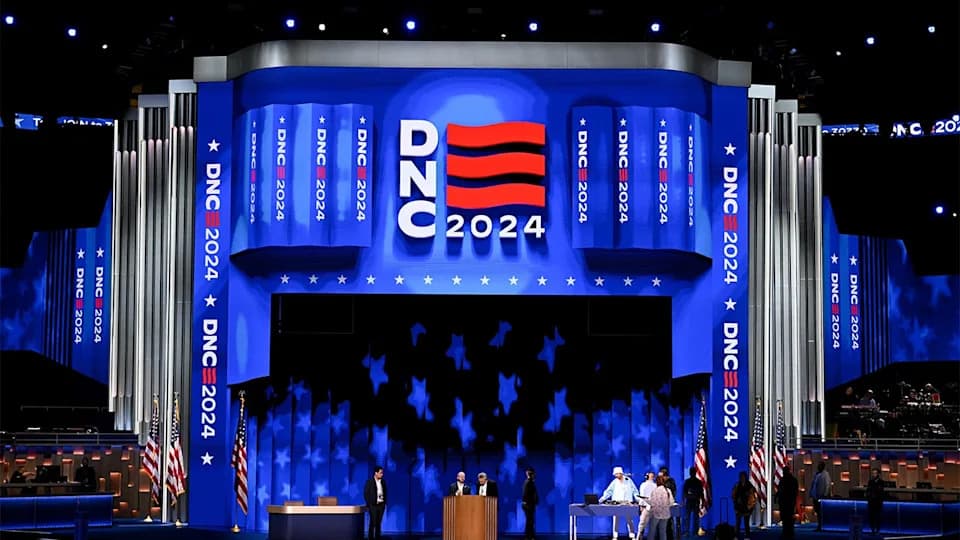
The DNC’s mandate requiring Washington staff to be in-office five days a week has provoked union backlash and public conflict. Research—including a randomized Nature trial of 1,612 employees—shows two remote days can cut quits by roughly one-third without harming performance. For political committees, retaining experienced staff and sustaining engagement are critical; rigid mandates risk a brain drain, narrower recruitment, and slower rapid-response operations. The recommendation: rescind the blanket rule and adopt a clear hybrid standard that treats flexibility as campaign infrastructure.
DNC’s Five-Day Office Mandate Risks Losing Staff, Slowing Campaigns, and Narrowing the Talent Pool
The Democratic National Committee’s decision to require Washington staff to return to the office five days a week sparked immediate union backlash and public controversy. Supporters argued the mandate would speed decision-making and boost collaboration, but a growing body of workplace research suggests the move could undermine retention, inclusion, and operational agility—qualities that matter enormously in tight election cycles.
What the evidence shows
Hybrid work has been tested at scale, not just debated online. A randomized, peer-reviewed experiment published in Nature that followed 1,612 employees found that allowing two days at home reduced voluntary quits by about one-third while leaving performance and promotion rates unchanged over two years. These results translate into real-world talent advantages for organizations that depend on institutional knowledge and long-tenure expertise.
Other analyses reinforce that point. The Becker Friedman Institute has warned that strict attendance mandates push out tenured employees and erode institutional memory, and a large study of more than 3 million workers found unusually high turnover after return-to-office edicts at S&P 500 firms. A Gallup engagement brief also documents higher engagement among hybrid workers compared with fully remote or fully on-site teams—engagement that fuels the stamina and creativity campaign work requires.
Why retention matters more in politics
Political committees are knowledge organizations: judgment, relationships, and pattern recognition compound over election cycles. When experienced staffers leave, operations slow, error rates rise, and the ability to execute rapid-response work suffers. In a midterm cycle decided by narrow margins, that friction can be decisive.
The Nature trial showed especially strong retention gains for women and long commuters—groups critical to field, analytics, compliance, and content teams. Requiring five days in an expensive city like Washington, D.C., reduces who can serve: fewer working parents, fewer people with disabilities, and fewer early-career staff who cannot afford high local rents. Pew Research (2025) found many remote-capable workers would likely quit if they lost the option to work from home.
Operational and legal downsides
Strict return mandates also carry administrative and legal costs. Counsel and HR professionals have flagged higher accommodation disputes and churn after such policies. Employer surveys and HR analyses repeatedly report harder hiring and weaker retention following mandatory returns. Large corporations can sometimes absorb those shocks; a political committee heading into a national campaign cannot without degrading its outreach and rapid-response capacity.
Alternative models that preserve speed
The central case for a five-day decree is speed and coordination. But modern campaign practice shows that distributed teams can achieve—and often exceed—reach and responsiveness. The Biden operation in 2020 built a large digital field program that substituted distributed outreach and relational organizing for planned in-person structures; reporting and vendor case studies (Time, state-level analyses, and platforms such as Impactive and Mobilize) document how relational texting, virtual trainings, and volunteer-hosted events scaled contacts in battleground states.
These tactics are not a pandemic stopgap. Researchers and practitioners have turned lessons from the past few years into guides on distributed organizing and academic reviews of blended tactics. Hybrid structures enable asynchronous collaboration across time zones, faster message testing, and inclusion of specialized volunteers who cannot relocate—advantages that matter for 2026 and beyond.
Recommendation
Rather than a rigid five-day rule, committees should adopt a clear hybrid standard that treats flexibility as campaign infrastructure: protect a baseline of in-person days for essential, high-coordination work while preserving remote options that reduce attrition, broaden the pipeline, and sustain engagement. Rescinding the blanket decree, setting transparent hybrid expectations, and investing in distributed tools will help retain mid-career expertise, speed digital iteration, and avoid handing opponents an easy critique about inconsistent values.
Gleb Tsipursky, Ph.D. is CEO of the hybrid-work consultancy Disaster Avoidance Experts and the author of Returning to the Office and Leading Hybrid and Remote Teams.
Help us improve.