The author reports that his organization helped more than 50,000 public employees opt out of union membership this year, returning about $47.5 million to workers. He argues public-sector unions rely heavily on mandatory dues—about $786 million of 2024 political spending came from dues—and that much of that spending favors Democratic causes. Citing Janus v. AFSCME and federal membership data, the piece says informed workers increasingly refuse to fund politics they oppose.
Public-Sector Unions Face a Turning Point: 50,000 Workers Opt Out, $47.5M Returned
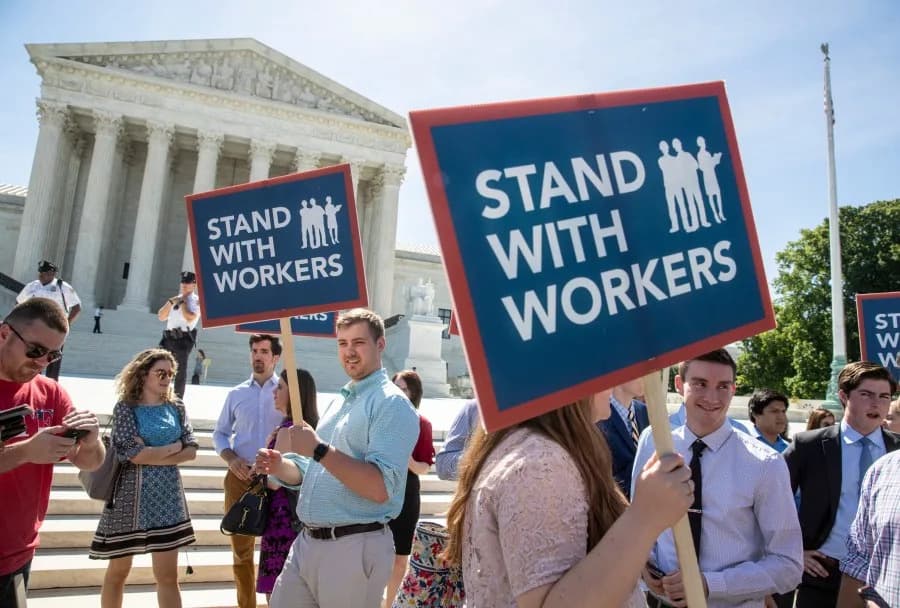
This year, my organization helped more than 50,000 public employees across the United States exercise their First Amendment right to opt out of mandatory union membership and dues. That single figure represents more than an operational milestone — it means roughly $47.5 million remained in workers' paychecks instead of being routed into political spending they may never have agreed to support.
How Public Unions Are Funded—and Why It Matters
Public-sector unions operate under different constraints than private-sector unions. They do not face the same market pressures that can limit demands in a for-profit environment. Instead, their incentive structure often centers on growing government, increasing budgets, and electing sympathetic officials — a cycle powered in large part by steady dues collection from members.
During the 2024 election cycle, the four largest public-sector unions spent about $915 million on elections and progressive political activity. Research by the Commonwealth Foundation estimates that roughly 86 percent of that — about $786 million — came directly from member dues rather than voluntary political donations. Much of that money is deducted automatically from paychecks before workers ever see it.
One-Sided Political Spending
Analysis shows that approximately 96 percent of traceable PAC spending by major public-sector unions went to Democratic candidates and allied causes. Yet polling suggests only about 60 percent of union members identify as Democrats and only 36 percent describe themselves as liberal. That gap suggests leadership-driven priorities that may not reflect the full diversity of rank-and-file views.
When a teacher, firefighter, or motor-vehicle worker opts out, they are not only keeping roughly $950 per year on average — they are choosing not to subsidize political campaigns and advocacy for policies they may oppose. The U.S. Supreme Court affirmed a worker's right not to be compelled to fund union political speech in Janus v. AFSCME (2018).
Janus v. AFSCME (2018) — Held that public employees cannot be forced to pay agency fees that support union political speech they do not agree with.
Barriers To Opting Out
Union leadership understands the risk that informed members pose to their political funding, which helps explain why many employees report confusing or obstructive withdrawal procedures. Plaintiffs in a California lawsuit have even alleged aggressive tactics, including being kept in meeting rooms until they signed membership forms. When a large share of dues is directed to politics, transparency and easy departure become strategic threats to leaders who rely on that revenue.
What This Means For Workers And Politics
Federal data indicate public-sector union membership fell from 33.6 percent in 2019 to 32.2 percent in 2024. That change, while numerically modest, represents thousands of workers and millions of dollars in dues no longer available to the union political apparatus. Our organization’s work is straightforward: inform public employees of their constitutional rights, guide them through opt-out processes that unions often complicate, and litigate when necessary to protect those rights.
This year’s results show a clear dynamic: when workers know their rights and have a practical route to exercise them, many choose not to bankroll political activity they oppose. For unions that depend heavily on mandatory dues to fund politics, that trend reduces the resources available to expand government, fund campaigns, and influence public policy.
Aaron Withe is CEO of the Freedom Foundation.
Help us improve.