
The Democratic National Committee filed an amicus brief asking the Supreme Court to overturn a Fifth Circuit ruling that requires mail‑in ballots to be received by Election Day. The case, Watson v. Republican National Committee, concerns whether states may count ballots postmarked by Election Day that arrive within five business days. The DNC warned a ruling for the RNC could disenfranchise seniors, people with disabilities and military and overseas voters, while the RNC argues the Fifth Circuit ruling prevents post‑election chaos.
DNC Asks Supreme Court To Protect Mail‑In Ballots, Calls RNC Effort "Wholly Un‑American"

EXCLUSIVE: DNC joins Supreme Court voting case, blasts RNC efforts as 'wholly un-American'
The Democratic National Committee filed an amicus brief with the U.S. Supreme Court on Thursday asking the justices to reverse a Fifth Circuit ruling that restricts states' ability to count mail‑in ballots received after Election Day. The brief responds to litigation brought by the Republican National Committee and the Mississippi GOP in Watson v. Republican National Committee, a case that could shape how millions of mail ballots are handled nationwide.

The United Center is packed on the first night of the Democratic National Convention, as President Biden addresses the crowd, on August 19, 2024, in Chicago, Illinois.
Background
The dispute began in 2024, when the RNC and Mississippi GOP challenged a Mississippi law that allows ballots postmarked on or before Election Day to be counted if they arrive within five business days of the election. In 2024 the U.S. Court of Appeals for the Fifth Circuit held that, under federal law, ballots must be both cast and received by Election Day to be counted. The Supreme Court agreed in November to review the case.

Democratic National Committee Chairman Ken Martin.
DNC's Argument
In its brief, the DNC urged the Court to overturn the Fifth Circuit decision and emphasized that roughly 30 states plus the District of Columbia currently permit counting ballots that are postmarked by Election Day but arrive shortly afterward. The filing highlights the long history of absentee and mail voting in the United States—dating back to the Civil War era—and argues the term "election" has historically referred to the voters' act of choosing, not subsequent administrative receipt or counting of ballots.
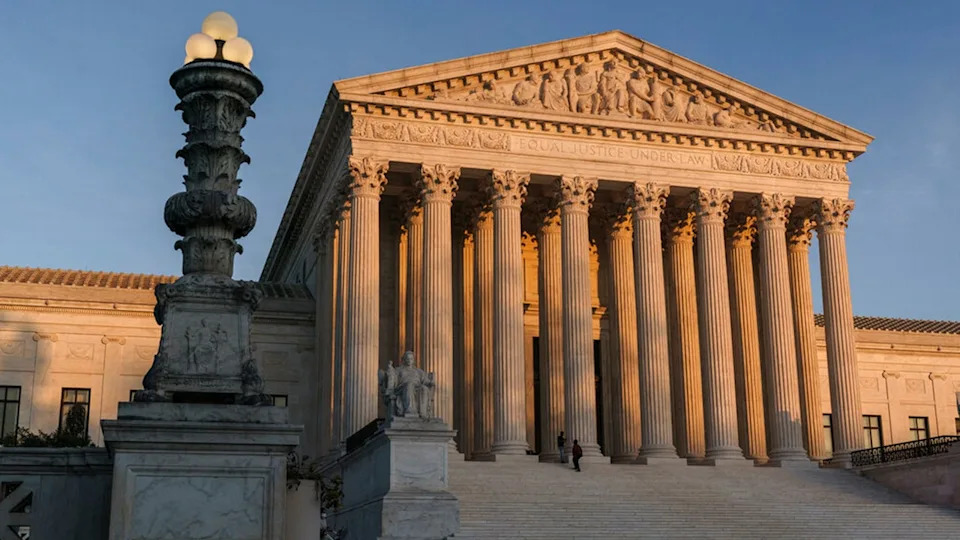
The Supreme Court building in Washington, D.C.
"Throughout this Nation's history, the term 'election' has been universally understood to refer to the voters' act of choosing an officeholder—not to the later administrative acts of receiving or counting ballots," the DNC wrote in its brief.
Potential Effects
The DNC and voting‑rights advocates warn that a ruling for the RNC could disenfranchise voters who rely on the mail, including seniors, people with disabilities and military and overseas voters, particularly if postal delays prevent ballots from arriving by Election Day. Legal observers have also raised concerns that a decision issued close to an election could create confusion and logistical challenges in upcoming midterm contests.
Positions From Both Sides
The DNC framed the RNC's challenge as an effort that would limit access to voting by mail and undermine protections for overseas and military ballots. DNC Chairman Ken Martin called the effort "wholly un‑American" and said mail voting "is safe, secure, and empowers voters who would otherwise struggle to reach a ballot box."
By contrast, the RNC has urged the Supreme Court to let the Fifth Circuit ruling stand, arguing that requiring ballots to be received by Election Day prevents post‑election uncertainty and the appearance of impropriety if large numbers of absentee ballots arrive afterward and could alter results.
The Supreme Court's decision in Watson v. Republican National Committee could affect how dozens of states administer mail voting and impact millions of ballots in future federal, state and local elections.
Help us improve.


