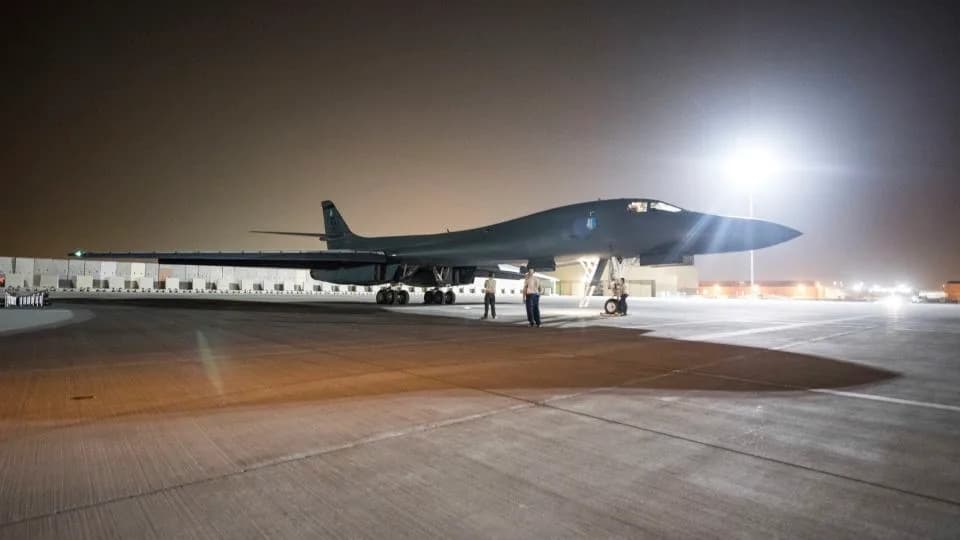
The U.S. says F-35A fighters from the 388th Fighter Wing penetrated deep into Iranian airspace to escort B-2 bombers during Operation Midnight Hammer and were the last U.S. jets to exit. Commanders report the F-35s suppressed Iranian air defenses and covered the withdrawal after B-2s dropped 14 GBU-57 Massive Ordnance Penetrators on three nuclear sites. Officials said Tehran did not fire on American aircraft. Leaders called the mission a validation of the F-35's stealth, sensor fusion and strike support capabilities despite ongoing debate over program costs and sustainment.
F-35s Escorted B-2s Deep Into Iran and Were Last to Exit, Commanders Say

US military commanders say F-35A Lightning II fighters from the 388th Fighter Wing flew hundreds of miles into Iranian airspace to escort B-2 Spirit bombers during Operation Midnight Hammer, and were the final American aircraft to leave the target area.
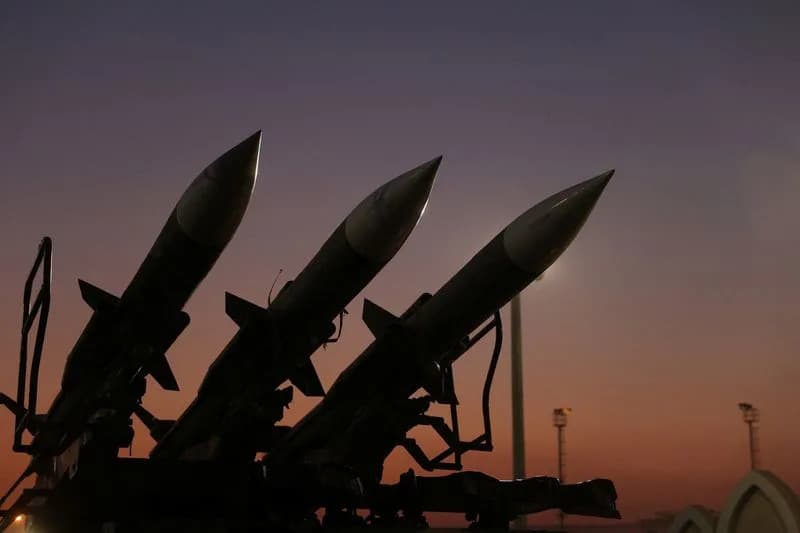
The F-35s provided suppression of enemy air defenses (SEAD), cleared a path for the B-2s and other strike aircraft, and covered the strike package as it withdrew after the attack, commanders said. According to officials, Tehran did not fire on American aircraft during the operation.
What happened
In a complex nighttime mission, F-35 pilots used the jet's low-observable features, radar, targeting systems and fused sensors to locate and counter surface-to-air missile threats. Lt. Col. Aaron Osborne, commander of the 34th Fighter Squadron, said,
"We flew hundreds of miles into Iran, escorting the B-2s the entire way. We employed weapons to great effect against multiple surface-to-air missile sites."
After the B-2s released 14 GBU-57 Massive Ordnance Penetrators — heavy bunker-busters — the F-35s helped protect the exit corridor for all aircraft in the strike package. The Air Force described the F-35s as the last U.S. jets to leave Iranian airspace during the operation.
Scope and participants
U.S. forces struck three Iranian nuclear sites — Fordow, Natanz and Isfahan — using a reported 75 precision munitions that included the bunker-busters and dozens of Tomahawk cruise missiles. In addition to the F-35s and B-2s, the strike group included F-22s, F-15s and F-16s, multiple aerial refueling tankers and a U.S. Navy missile submarine.
Col. Charles Fallon, commander of the 388th Fighter Wing, praised the F-35s' role:
"The effectiveness of this strike validated all of the capabilities of the F-35 we've been talking about for years — stealth, lethality, sensor-fusion, being a force multiplier."
Context and capabilities
Built by Lockheed Martin, the F-35 has been deployed across many theaters since its first flight nearly two decades ago. The jet is operated by the U.S. and numerous allied militaries and is credited for its advanced sensors and low observability. The program has also faced criticism over high lifecycle costs and sustainment challenges, which remain part of public and political debate.
This operation underscores the F-35's role in integrated strike packages: combining stealth, sensor fusion and electronic warfare to penetrate contested airspace and protect high-value assets like the B-2 during long-range precision strikes.
Help us improve.